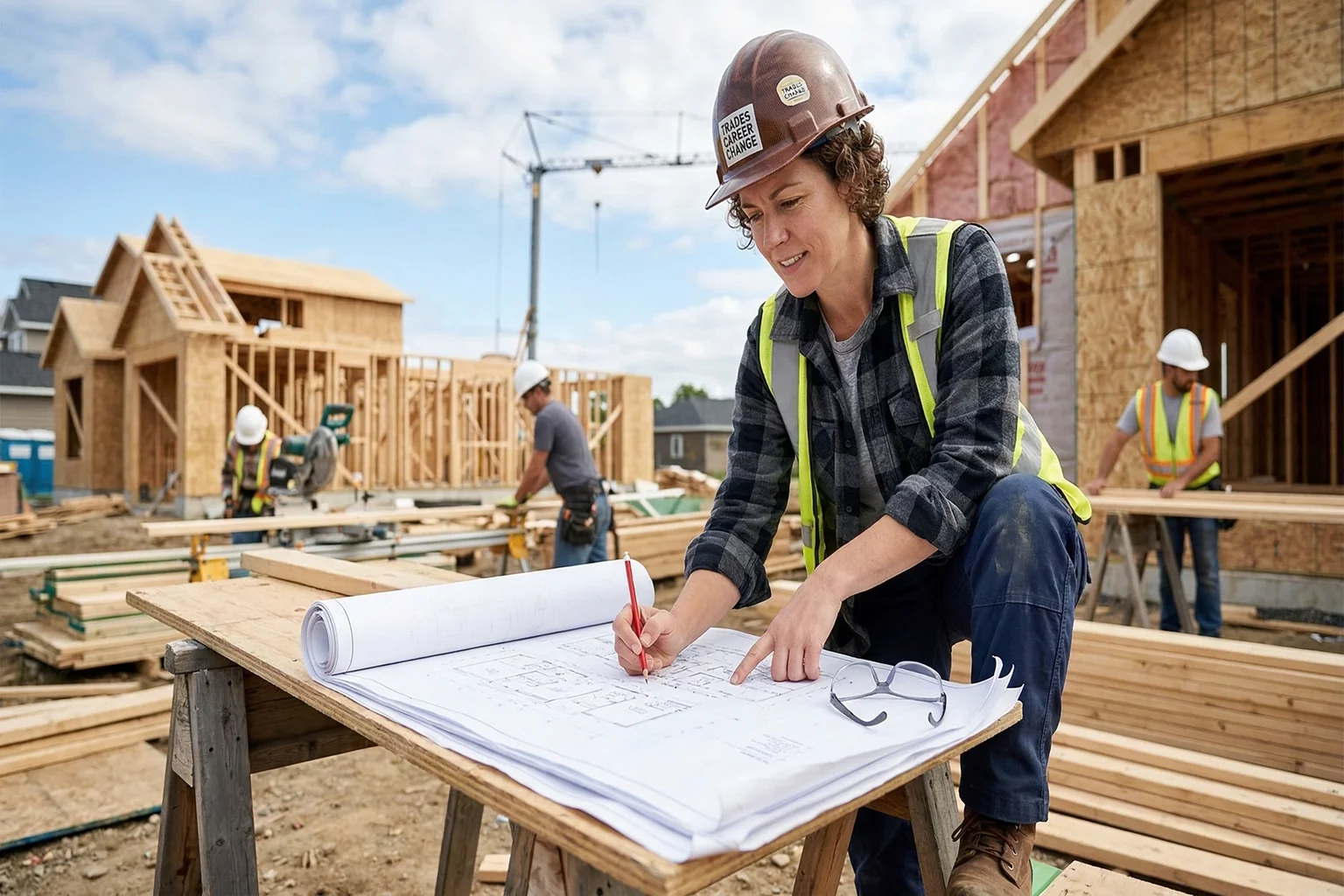

Women make up roughly 9% of the construction and extraction workforce in the United States — a number that looks discouraging until you track the direction it’s moving. Over the past decade, women’s share of active registered apprenticeships has grown from 8.7% to 14.5%, while the total pool of apprenticeships nearly doubled from 360,000 to over 667,000, according to a November 2024 analysis by the White House Council of Economic Advisers. The trajectory is clear.
What’s less visible from the outside is that “the trades” is not a single industry — it spans construction, healthcare, manufacturing, clean energy, and technology. Some of those areas are already well past the tipping point. This guide cuts through the broad statistics to show where the real opportunities are, what the challenges look like honestly, and exactly what steps to take to get started.
The Honest Picture: Where Women Stand Today
The BLS Current Population Survey breaks down employment by occupation and sex. The headline number — ~9% female representation in construction and extraction — reflects the most traditionally male-dominated corner of the trades. But healthcare-adjacent trades tell a completely different story: dental hygiene is roughly 97% female, surgical technology is over 70% female, and medical assisting skews heavily female as well.
Even within construction, the picture varies by trade. Electrical work has seen consistent growth in female participation, while skilled manufacturing and CNC machining have attracted women drawn to precision, indoor environments, and strong wages. The “non-traditional” label is becoming less accurate every year.
What is true across most trades: women are still a minority in the physical field, particularly in construction. But minority does not mean unwelcome — many apprenticeship programs, unions, and employers are actively recruiting women to address workforce shortages.
Trades Where Women Are Already Building Careers
Healthcare trades offer some of the most accessible entry points. Dental hygienists earn a median wage well above $80,000 and work in comfortable clinical settings. Medical assistants and surgical technologists offer clear pathways from short certificate programs into stable healthcare careers. These trades require technical precision and patient interaction rather than physical strength, and accredited programs are widely available.
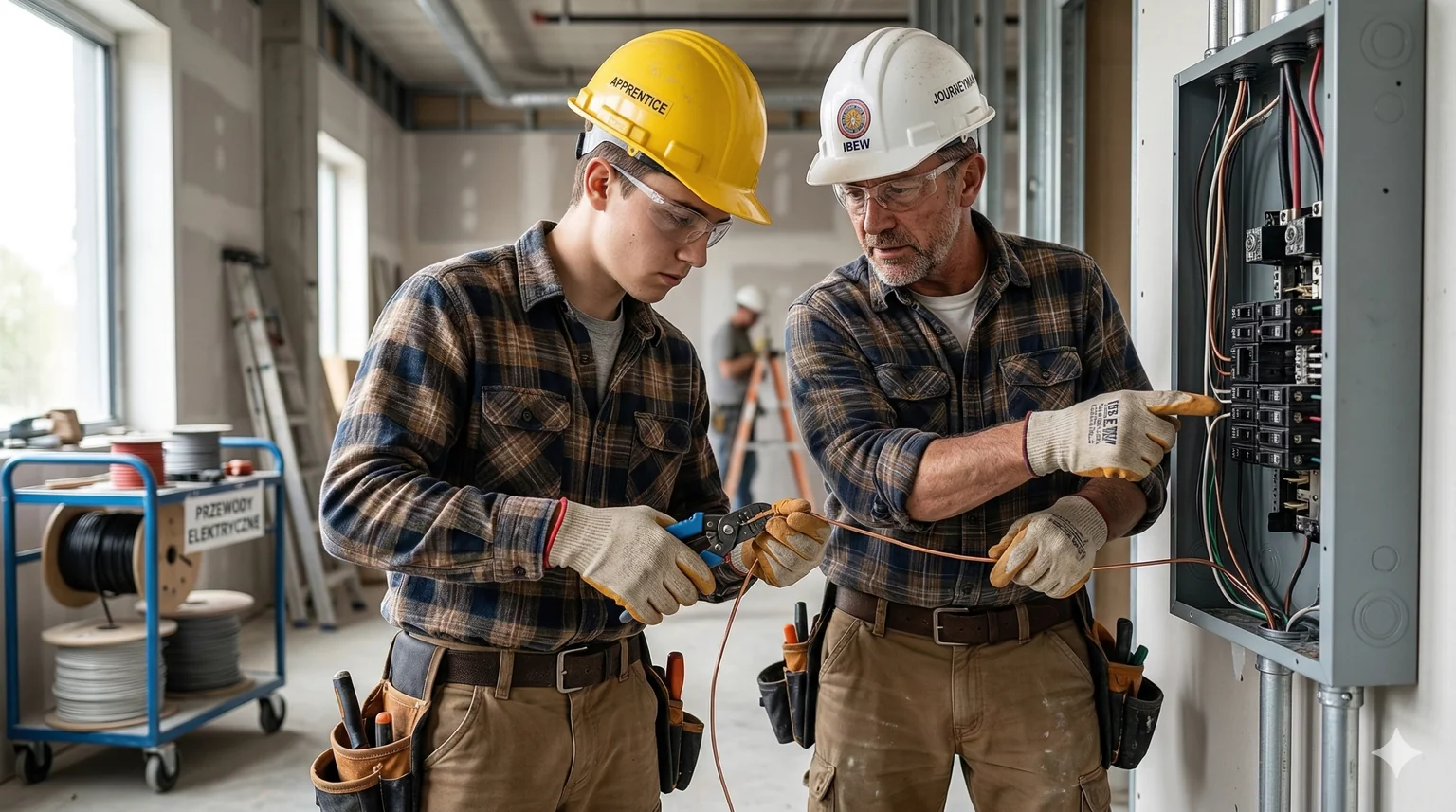
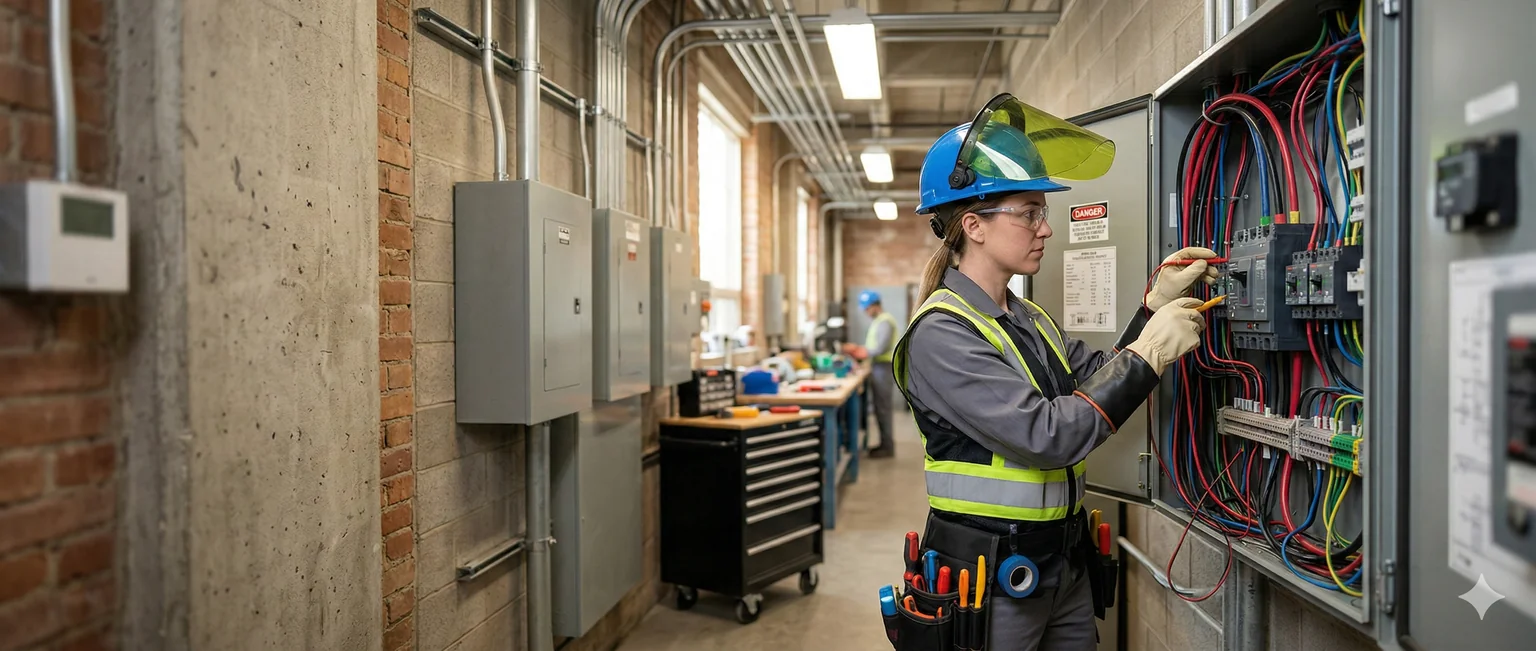
Electrical work stands out among the construction trades. Electricians earned a median annual wage of $62,350 in May 2024, with employment projected to grow 9% from 2024 to 2034 — much faster than average — generating roughly 81,000 job openings per year, according to the BLS Occupational Outlook Handbook. Electrical work is more about problem-solving and fine motor skill than physical labor, and women who enter the field through apprenticeship programs report strong union protections and structured advancement.
CNC machining and manufacturing technology are indoor, precision-driven trades with median wages in the $50,000–$60,000 range. Machinists work with computer-controlled equipment in climate-controlled facilities — a significant departure from outdoor construction work. Advanced manufacturing employers are among the most active in targeting women for skilled roles.
HVAC offers flexible work environments, strong demand driven by green building trends, and salaries ranging from $50,000 to $70,000+ depending on specialization. The push toward energy-efficient systems and heat pump technology has expanded the technical complexity — and the compensation — of HVAC roles.
Apprenticeships: The Fastest Path In
Registered apprenticeships are the earn-while-you-learn route that eliminates student debt while building a career. Women’s participation has grown significantly: their share of active apprentices rose from 8.7% in 2015 to 14.5% in 2024, against a backdrop of overall apprenticeship growth from 360,000 to over 667,000 active participants. Source: White House CEA, November 2024.
Union-based apprenticeship programs consistently show higher female participation rates than non-union programs, in part because unions have formal equity structures and reporting requirements. If you’re entering construction trades, a union apprenticeship is worth prioritizing.
The Department of Labor’s WANTO (Women in Apprenticeship and Nontraditional Occupations) program provides grants specifically to organizations helping women enter and succeed in apprenticeships. In April 2023, DOL announced $5 million in WANTO grants to support pre-apprenticeship training, mentorship, and retention programs for women. These funded programs are often free to participants.
To find registered apprenticeships in your trade and region, search at apprenticeship.gov.
What to Expect on the Job
Being direct about this matters: some job sites and workplaces are further along than others. Women in trades — particularly construction trades — sometimes encounter outdated attitudes, inadequate facilities, or informal exclusion from networks that matter for advancement. These are real challenges, not hypothetical ones.
What has changed: most large union contractors and many private employers have formal harassment policies with enforcement teeth. Women who enter through structured apprenticeship programs, particularly union ones, have clearer grievance pathways than in informal or non-union settings.
What helps practically:
- Finding a mentor early. The difference between a supportive journeyperson and an indifferent one is significant. Ask your apprenticeship coordinator to connect you with women further along in the program.
- Joining a chapter. Organizations like NAWIC and Tradeswomen Inc. (see below) run mentorship programs specifically for women navigating trades workplaces.
- Understanding your rights. Title VII protections apply to trade workplaces. Your union rep or state labor board is the right first stop if issues arise.
On the physical side: most trades are more about technique, learned skill, and tool knowledge than raw strength. Proper body mechanics, the right tools, and experience close most gaps. Women routinely out-perform male counterparts in trades requiring precision and patience — electrical, dental, surgical tech, CNC machining among them.
Scholarships and Funding Specifically for Women
NAWIC Founders’ Scholarship Foundation awards over $250,000 annually to students in construction-related programs. Construction Trades Scholarships are available to high school seniors and current students enrolled in approved trade training programs, with awards starting at $1,000. The 2026 deadline for trades scholarships is March 6, 2026. Source: NAWIC NFSF Scholarships.
Tradeswomen Inc. offers the Madeline Mixer Tradeswomen of the Future Scholarship Fund for women pursuing careers in the skilled trades. Source: Tradeswomen Inc..
DOL WANTO-funded programs sometimes include stipends, tools, and support costs for pre-apprenticeship participants — check with your state’s apprenticeship office or American Job Center for current offerings in your area.
Beyond women-specific funding, the standard financial aid system is fully available: Pell Grants (up to $7,395/year), FAFSA, and state workforce development grants all apply to accredited trade programs. Our complete guide to financing trade school covers every major funding source in detail.
Organizations That Have Your Back
NAWIC — National Association of Women in Construction is the largest professional organization for women in construction-related fields, with more than 6,100 members across 119 chapters nationwide. NAWIC’s Tradeswomen Committee runs monthly webinars, mentorship programs, networking events, and advocacy specifically for women working in the trades (not just in office or management roles). Source: NAWIC.
Tradeswomen Inc. focuses on increasing the number of women in the skilled building and construction trades through outreach, pre-apprenticeship preparation, and ongoing support. Based in the San Francisco Bay Area with national reach.
Nontraditional Employment for Women (NEW) provides hands-on pre-apprenticeship training, job placement, and support services for women pursuing nontraditional careers in New York. Similar organizations operate in most major metro areas — your state’s Department of Labor website is the right place to find local equivalents.
Your state apprenticeship office can connect you with women’s pre-apprenticeship programs that may be free, stipend-paying, or grant-funded through WANTO. These vary significantly by state but are often underutilized.
How to Get Started This Month
The path forward is straightforward once you know which trade fits you:
- Identify your trade — review careers in our programs directory to compare training length, salary ranges, and job outlook across trades
- Find accredited programs — use our college search to find trade schools with strong job placement and value rankings; our Best Value rankings highlight schools that deliver the best return on cost
- Apply for FAFSA — do this before enrolling; it unlocks Pell Grants and other federal aid
- Apply for women’s scholarships — NAWIC deadline is March 6, 2026 for the next cycle; Tradeswomen Inc. and state programs have rolling deadlines
- Find your apprenticeship — search apprenticeship.gov for registered programs in your trade and location
- Connect with a chapter — find your nearest NAWIC chapter at nawic.org, or contact Tradeswomen Inc. for pre-apprenticeship resources
The infrastructure for women entering trades is more developed than it was even five years ago. The gap between where the workforce is and where it needs to be means employers, unions, and training programs are actively looking for candidates. The question is less “will I be welcome?” and more “which door do I walk through first?”
Tools on This Site That Can Help
These free tools can help you find and compare schools as you narrow down your options.
Compare Schools — Put up to three trade colleges side by side and compare tuition, graduation rates, retention rates, financial aid, and diversity metrics. Use this to evaluate schools you’re considering against each other on the numbers that matter to you.
College Rankings — Our most diverse colleges ranking highlights trade colleges with the strongest ethnic representation, gender balance, and international presence. Also browse best value, best by program, and best by trade to find top schools in the field you’re pursuing.
How It Works — New to the site? This interactive guide walks you through how to use our rankings, career data, and college profiles to shortlist schools and choose the best-fit program.
Trade Schools by City — Program quality and support networks vary city to city, so start with what’s actually near you: browse metros like Kansas City, Richmond, Louisville, and Charlotte, or find your city through the state pages.
Sources
- U.S. Bureau of Labor Statistics — Current Population Survey Table 11 — “Employed people by detailed occupation, sex, race, and Hispanic or Latino ethnicity” — https://www.bls.gov/cps/cpsaat11.htm
- White House Council of Economic Advisers — “All Aboard the ApprenticeSHIP: Assessing the Changing Face of Registered Apprenticeships” — November 2024 — https://bidenwhitehouse.archives.gov/cea/written-materials/2024/11/20/all-aboard-the-apprenticeship-assessing-the-changing-face-of-registered-apprenticeships/
- U.S. Bureau of Labor Statistics — Occupational Outlook Handbook — “Electricians” — May 2024 — https://www.bls.gov/ooh/construction-and-extraction/electricians.htm
- NAWIC Founders’ Scholarship Foundation — “NFSF Scholarships” — https://nawic.org/nfsf-scholarships/
- U.S. Department of Labor Women’s Bureau — “$5M WANTO Funding Announcement” — April 2023 — https://www.dol.gov/newsroom/releases/wb/wb20230414
- National Student Clearinghouse — “Vocational-Focused Public 2-Years Lead Spring Enrollment Rise” — Spring 2025 — https://www.studentclearinghouse.org/nscblog/vocational-focused-public-2-years-lead-enrollment-rise/
- Tradeswomen Inc. — Madeline Mixer Tradeswomen of the Future Scholarship Fund — http://tradeswomen.org/programs/madeline-mixer-tradeswomen-of-the-future-scholarship-fund/