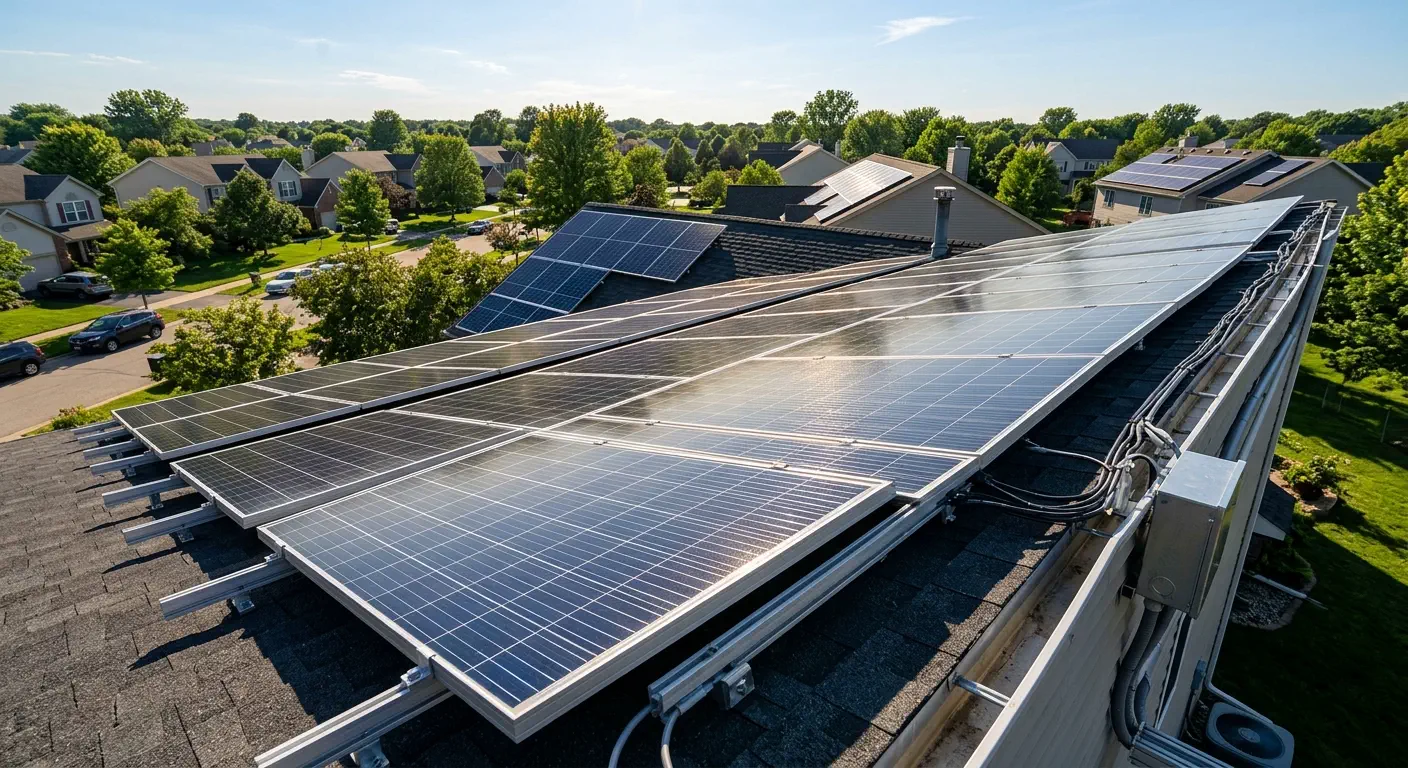
The Bureau of Labor Statistics ranks wind turbine service technician as the #1 fastest-growing occupation in the United States, tied with solar photovoltaic installers, with a projected employment increase of 49.9% by 2034. That is roughly ten times faster than the average for all occupations.
Behind that number is a straightforward reality: the United States now has more than 75,000 onshore wind turbines generating electricity across 42 states, and every one of those turbines needs regular inspection, maintenance, and repair. The industry is investing billions of dollars to add more capacity each year, but the workforce needed to keep the turbines running has not kept pace. For anyone considering a trade career with strong growth potential and a clear training path, wind turbine technology is one of the most compelling options available right now.
Why Wind Turbine Technicians Are in Demand
A massive installed base that keeps growing
The American Clean Power Association reports that the U.S. now has over 161 GW of installed wind capacity and that wind energy accounts for roughly 10% of all U.S. electricity generation. The Department of Energy’s Land-Based Wind Market Report confirms that 6,474 MW of new wind capacity was added in 2023 alone, representing $10.8 billion in investment, with nearly 150,500 MW of cumulative capacity now online nationwide.
These are not numbers that plateau. Following passage of the Inflation Reduction Act, the DOE’s 2026 forecast for new wind installations increased by 60%, to approximately 18,000 MW, with over 11 new manufacturing facility announcements tied to the expanded incentives. The cumulative investment in operational and planned wind projects now exceeds $352 billion.
All of that hardware requires hands-on maintenance, and the demand for technicians scales directly with the number of turbines in the field.
A workforce gap that is getting harder to ignore
The National Renewable Energy Laboratory published a study identifying a projected 124,000 worker shortfall in the wind energy sector by 2030, concluding that 570 or more new training programs will be needed nationwide to close the gap. Today, roughly 68% of wind energy employers report difficulty finding qualified applicants for technician roles.
The broader clean energy sector is pulling away from the rest of the economy in hiring velocity. According to the DOE’s U.S. Energy and Employment Report, clean energy jobs grew at 4.2% in 2023 — more than double the 2.0% rate for overall U.S. employment. Wind specifically grew at 4.5%. The American Clean Power Association counts 275,000 or more jobs across the wind industry, including manufacturing, construction, operations, and maintenance.
For a broader look at how clean energy is reshaping trade careers, see our overview of clean energy trades careers.
What Does a Wind Turbine Technician Do?
Wind turbine technicians — often called wind techs — are responsible for the inspection, maintenance, and repair of wind turbines. The work is hands-on, physically demanding, and highly specialized.
Core responsibilities
- Inspect turbine components: Blades, gearboxes, generators, brakes, and control systems all require scheduled inspections. Technicians look for wear, damage, and signs of malfunction.
- Perform preventive maintenance: Replacing lubricants, tightening bolts, calibrating sensors, and testing safety systems on a regular schedule to prevent unplanned downtime.
- Troubleshoot failures: When a turbine goes offline, technicians diagnose the problem — whether electrical, mechanical, or hydraulic — using diagnostic equipment, schematics, and hand tools.
- Repair and replace components: Swapping out faulty gearboxes, generators, pitch control systems, or blade sections, sometimes using cranes for the heaviest lifts.
- Climb towers: Most utility-scale wind turbines stand 200 to 300 feet tall or more, and the nacelle at the top is where much of the work happens. Technicians climb internal ladders or ride service elevators to reach the equipment.
The environment is not for everyone
According to O*NET data for this occupation, 97% of wind turbine technicians report being exposed to high places on a daily basis, and 91% face hazardous conditions regularly as part of their work. These are among the highest exposure rates of any occupation in the database.
The work happens outdoors, often in remote locations, and in every season. Wind farms operate in extreme heat, cold, and — by definition — wind. Technicians need to be physically fit, comfortable with heights, and disciplined about safety protocols. O*NET also reports that 81% of technicians say errors in their work can have extremely serious consequences — an honest reflection of the stakes involved in working on high-voltage electrical systems hundreds of feet off the ground.
None of this should be sugar-coated. If you are uncomfortable with heights, extreme weather, or physical labor in isolated locations, this trade is probably not the right fit. But for people who thrive on that kind of work, it offers a career that is never boring and never desk-bound.
Salary and Job Outlook
What wind turbine technicians earn
The Bureau of Labor Statistics reports a median annual wage of $62,580 for wind turbine service technicians as of May 2024. The pay range is significant:
- Lowest 10%: Less than $49,110
- Median: $62,580
- Highest 10%: More than $88,090
These figures represent base compensation. Many wind tech positions include additional benefits such as per diem for travel, overtime pay, company vehicles, and health insurance — factors that can meaningfully increase total compensation, particularly for technicians willing to travel between sites.
Job growth projections
The numbers here are worth laying out clearly, because the growth rate tells one story and the absolute numbers tell another:
- Projected growth rate: 50% from 2024 to 2034 — the highest of any occupation, tied with solar PV installers
- Current employment: Approximately 13,600 jobs (2024)
- Annual openings: About 2,300 per year (from growth and replacement combined)
- Projected new jobs: Roughly 6,800 over the decade
It is important to understand what these numbers mean in context. The 50% growth rate is the highest in the country, which reflects enormous proportional demand. However, because the occupation starts from a relatively small base of 13,600 workers, the total number of new positions — around 6,800 over ten years — is more modest than what you would see in a field like nursing or construction. This is a fast-growing niche, not a mass-employment category.
That said, the wind industry as a whole supports 275,000+ jobs across manufacturing, construction, transportation, and professional services. The technician role is the operational backbone of that ecosystem, and its growth rate signals where the broader industry is headed.
For context on how wind tech compares to other fast-growing trades, see our guide to the fastest-growing trade careers.
How to Become a Wind Turbine Technician
Education requirements
According to both the BLS and O*NET, the typical entry-level education for a wind turbine technician is a postsecondary nondegree award — essentially a certificate or technical diploma. O*NET data shows the actual education distribution among working wind techs is:
- 34% hold a postsecondary certificate
- 29% entered with a high school diploma
- 22% completed some college without a degree
The most common and direct route is a certificate or associate degree program in wind energy technology at a community college or technical school. These programs typically take one to two years and cover the core knowledge areas:
- Electrical systems: Wiring, transformers, generators, and power electronics
- Mechanical systems: Gearboxes, bearings, brakes, and drivetrain components
- Hydraulic systems: Pitch and yaw control mechanisms
- Safety training: Climb safety, high-voltage lockout/tagout, rescue procedures
- Composite materials: Blade inspection and repair techniques
On-the-job training
Even with a certificate in hand, most employers require several months of on-the-job training before a new technician works independently. This typically involves shadowing experienced techs, learning site-specific procedures, and completing manufacturer-specific training on the turbine models at a given wind farm.
Apprenticeship programs
Some wind energy companies and unions offer apprenticeship programs that combine paid work with structured training. These are less standardized than apprenticeships in electrical or plumbing trades, but they are becoming more common as the industry matures and the workforce gap widens.
Certifications
There is no mandatory federal license required to work as a wind turbine technician. However, several certifications can improve your employability:
- GWO (Global Wind Organisation) certifications: The international standard for wind industry safety training, increasingly expected by major employers
- OSHA 10 or OSHA 30: General workplace safety credentials
- First Aid/CPR: Often required for remote site work
- CDL (Commercial Driver’s License): Useful for technicians who need to transport equipment between sites
For information on paying for training, see our guide to financing trade school.
Skills and Physical Requirements
What the job demands
Wind turbine technology sits at the intersection of electrical, mechanical, and hydraulic systems. The best technicians bring a combination of technical knowledge and physical capability:
Technical skills:
- Mechanical aptitude — understanding how gearboxes, bearings, and rotating machinery work
- Electrical knowledge — reading schematics, using multimeters, working with medium-voltage systems
- Hydraulic system troubleshooting
- Familiarity with SCADA systems and diagnostic software
- Blueprint and schematic reading
Physical requirements:
- Ability and willingness to climb 200-300+ feet regularly, often multiple times per day
- Carrying tools and equipment up ladders
- Working in confined spaces inside the nacelle
- Operating in all weather conditions: heat, cold, wind, rain
- Sufficient upper body strength for rope-access and rescue scenarios
Professional attributes:
- Strict safety discipline — this is non-negotiable in an occupation where 81% of workers report that errors can have extremely serious consequences
- Problem-solving under pressure — when a turbine is down, the company is losing revenue, and the technician is the one who figures out why
- Comfort with travel — many technicians work across multiple sites and may be away from home for extended periods
- Teamwork — most turbine work is done in pairs or small teams for safety reasons
An honest assessment
This is a physically demanding job in a way that many other trades are not. The height exposure alone eliminates a significant portion of potential candidates. Add extreme weather, remote locations, and the inherent hazards of high-voltage electrical systems, and it becomes clear why 68% of employers struggle to find qualified applicants. The flip side of that difficulty is opportunity: if you can do the work, you are in demand.
Where the Jobs Are
Geographic distribution
Wind energy is not evenly distributed across the country, and that matters for job seekers. According to the DOE Land-Based Wind Market Report, wind installations now operate in 42 states, but capacity is heavily concentrated in certain regions.
Top states by new capacity added in 2023:
- Texas: 1,323 MW
- Illinois: 928 MW
States where wind exceeds 40% of electricity generation:
- Iowa
- South Dakota
- Kansas
- Oklahoma
The central corridor of the United States — from Texas through the Great Plains to the Dakotas — is the heart of the onshore wind industry. Other significant markets include the Midwest (Illinois, Indiana, Minnesota), the Mountain West (Colorado, Wyoming), and increasingly the coastal Northeast as offshore wind development accelerates.
What this means practically
Most wind farms are in rural areas, often far from major cities. Technicians working in the field should expect one or more of the following:
- Relocation to a rural area near a wind farm cluster
- Travel between multiple sites, sometimes spanning several states
- Per diem and travel pay as part of the compensation package
- On-call rotations for emergency repairs
For technicians who prefer not to relocate to rural communities, some roles in turbine manufacturing, training, and regional management are based in urban areas. But the core field technician role is, by nature, where the wind blows — and that is usually not downtown.
Career Growth and Industry Outlook
The industry trajectory
The wind energy sector is not a speculative bet. The DOE reports $10.8 billion invested in new wind capacity in 2023, and the Inflation Reduction Act has pushed forecasts for 2026 installations up by 60% compared to pre-IRA projections, with 11 or more new manufacturing facility announcements tied to the expanded tax credits.
The broader clean energy sector continues to outpace the rest of the economy. The DOE’s 2024 U.S. Energy and Employment Report found that clean energy jobs grew at 4.2% in 2023, compared to 2.0% for overall employment. Union density in clean energy stands at 12.4%, offering some positions with collectively bargained wages and benefits.
Advancement paths
Wind turbine technician is not a dead-end position. Common career progressions include:
- Lead technician: Overseeing a team of techs at a single site, handling the most complex troubleshooting
- Site supervisor: Managing operations and maintenance for an entire wind farm
- Regional manager: Overseeing multiple sites across a geographic area
- Training and development: Experienced techs are in demand as instructors, both at employers and technical schools
- Safety and compliance: Specialized roles focused on regulatory compliance and safety program development
- Related fields: The electrical, mechanical, and hydraulic skills transfer directly to solar energy, power distribution, and industrial maintenance
Veterans in wind energy
The DOE reports that veterans represent 9% of the energy workforce, and many wind energy employers actively recruit from the military. The discipline, mechanical aptitude, comfort with rigorous safety protocols, and experience working in demanding physical conditions make military veterans a natural fit for wind turbine work. Several training programs offer accelerated pathways or tuition support specifically for veterans transitioning into clean energy careers.
Offshore wind: the next frontier
While onshore wind dominates the current market, offshore wind is emerging as a significant growth area along the Atlantic coast. Offshore turbines are larger, more complex, and require specialized marine-based maintenance — which generally commands higher pay. As this segment of the industry matures, it will create additional demand for technicians willing to work in an even more physically demanding environment.
Getting Started
The most direct path into this field is through a wind energy technology program at a community college or technical school. Programs typically run one to two years and prepare graduates for entry-level positions with the major wind energy operators.
If you already have a background in electrical work, mechanical maintenance, or a related trade, the transition into wind energy may require less formal education and more targeted on-the-job or manufacturer-specific training. The core technical skills overlap substantially.
The workforce gap in wind energy is real, documented, and projected to widen. With NREL estimating a 124,000 worker shortfall by 2030 and the cost of wind energy having declined more than 30% since 2015, this is an industry that is scaling up, not winding down. The question for prospective technicians is not whether the demand will be there — it is whether they will be ready for it.
Sources
- U.S. Bureau of Labor Statistics — Occupational Outlook Handbook: Wind Turbine Technicians — bls.gov
- U.S. Bureau of Labor Statistics — “Employment for Wind Turbine Service Technicians Expected to Increase 49.9 Percent by 2034” — bls.gov
- O*NET OnLine — Wind Turbine Service Technicians (49-9081.00) — onetonline.org
- U.S. Department of Energy — Land-Based Wind Market Report 2024 Edition — energy.gov
- American Clean Power Association — Wind Power Facts — cleanpower.org
- U.S. Department of Energy — “DOE Report Shows Clean Energy Jobs Grew More Than Twice the Rate of Overall U.S. Employment” — energy.gov
- National Renewable Energy Laboratory — “Study Unlocks Opportunities to Bridge the U.S. Wind Energy Workforce Gap” — nrel.gov
- U.S. Department of Energy — “Mind the Wind Workforce Gap” — energy.gov
- U.S. Department of Energy — “U.S. Department of Energy Projects Strong Growth for U.S. Wind Power Sector” — energy.gov