
Clean energy is the fastest-growing sector of the U.S. job market right now — not in the abstract, but in measurable numbers. According to E2’s 2024 Clean Energy Jobs Report, clean energy employment grew three times faster than the rest of the U.S. workforce in 2024. The two fastest-growing occupations in the entire Bureau of Labor Statistics database — solar photovoltaic installer and wind turbine service technician — are skilled trade jobs that don’t require a four-year degree.
For students who want work that’s hands-on, physically engaging, and connected to something larger than a quarterly earnings report, these careers are worth a serious look. This guide covers what the data actually shows about pay, growth, geographic demand, and how to get started in each role.
Solar PV Installer: The Standout Growth Trade
What the Work Is
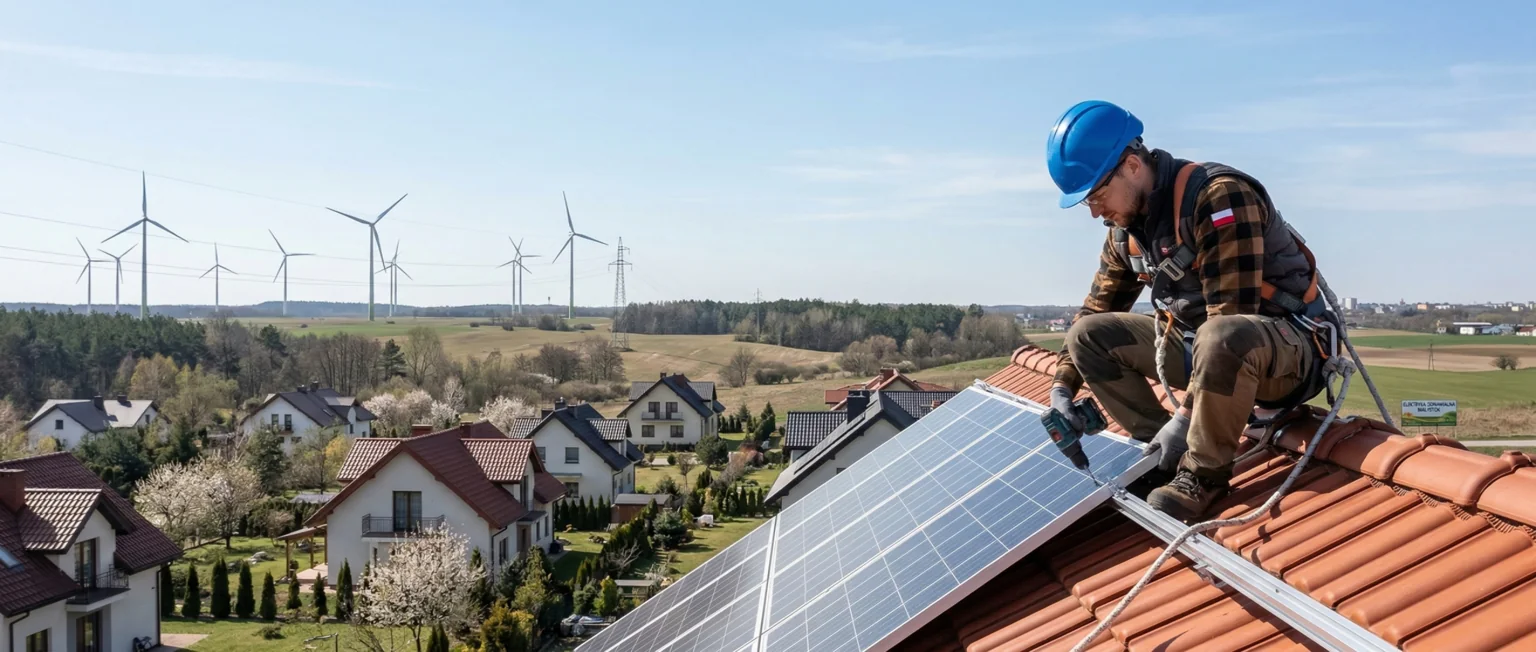
Solar photovoltaic (PV) installers assemble, set up, and maintain solar panel systems on residential rooftops, commercial buildings, and ground-mounted utility arrays. The day-to-day work involves reading blueprints, mounting racking systems, wiring panels to inverters and the electrical grid, and testing system performance. It’s physical, outdoor work — a mix of roofwork, electrical tasks, and construction coordination.
Residential installations are the entry point for most new installers. Commercial and utility-scale projects come with more complexity, higher pay, and typically require more experience.
What the Numbers Say
The BLS Occupational Outlook Handbook projects solar PV installer employment to grow 42 percent from 2024 to 2034 — roughly 14 times the average growth rate for all occupations. The median annual wage was $51,860 in May 2024.
That median figure reflects a field where pay varies significantly by region and employer type. Union-affiliated utility-scale installers and licensed electricians performing solar work often earn considerably more.
Training Requirements
A high school diploma or GED is the typical entry point. Most employers provide on-the-job training, and many community colleges and trade schools offer solar installation certificate programs ranging from a few weeks to several months.
The benchmark credential in the field is NABCEP PV Installation Professional certification — not required to get hired, but increasingly expected for advancement and required for some state incentive programs. The DOE Solar Training Network maintains a directory of training programs by state.
Where the Jobs Are
California, Florida, Texas, New York, and Massachusetts consistently rank as the top states for solar employment, according to IREC’s 2024 Solar Jobs Census. California leads in sheer volume; Texas and Florida have seen some of the strongest recent growth. Installers in high-demand markets like New York and Massachusetts tend to command higher wages to offset cost of living.
Wind Turbine Technician: Fastest-Growing Occupation in the U.S.
What the Work Is
Wind turbine service technicians — sometimes called “windtechs” — inspect, maintain, and repair wind turbines. That means climbing towers that can reach 300 feet or more, performing mechanical and electrical diagnostics, replacing components, and logging performance data. It’s physically demanding, involves working at significant heights in variable weather, and requires comfort operating independently on remote job sites.
This is not a career for everyone. But for those who want work that’s genuinely different from a warehouse or shop floor — and who are comfortable with heights — it’s one of the more distinctive paths the trades offer.
What the Numbers Say
According to the BLS Economics Daily (2025), employment of wind turbine service technicians is projected to grow 50 percent from 2024 to 2034 — the fastest growth rate of any occupation tracked by BLS. The field employed about 13,600 technicians in 2024, with the median annual wage at $62,580.
The relatively small total workforce means the absolute number of annual openings (~2,300 per year) is limited compared to larger trades — but so is the competition from new entrants, since not all trade school graduates target wind.
Training Requirements
Most wind turbine technician positions require an associate’s degree or a two-year technical program in wind energy technology, electrical technology, or a related field. Community colleges in wind-heavy states — particularly in Texas, Iowa, Oklahoma, and the Dakotas — have built dedicated programs specifically for this career track.
The DOE WINDExchange workforce development resources provide a career map and a directory of training programs. GWO (Global Wind Organisation) Basic Safety Training is a near-universal requirement for site access at commercial wind farms.
Where the Jobs Are
Texas leads the nation in wind energy employment by a wide margin. Iowa, Oklahoma, Kansas, Illinois, and the broader Midwest corridor are the next-largest concentration of wind jobs, reflecting where utility-scale wind capacity is built. Students in coastal or urban markets may need to relocate for wind technician work — this is a real consideration that doesn’t apply as heavily to solar.
How Existing Trade Skills Transfer
Clean energy isn’t a parallel universe — it runs on the same electrical, mechanical, and structural systems that other trades already work with. That creates a meaningful entry path for people who start in a traditional trade and want to pivot.
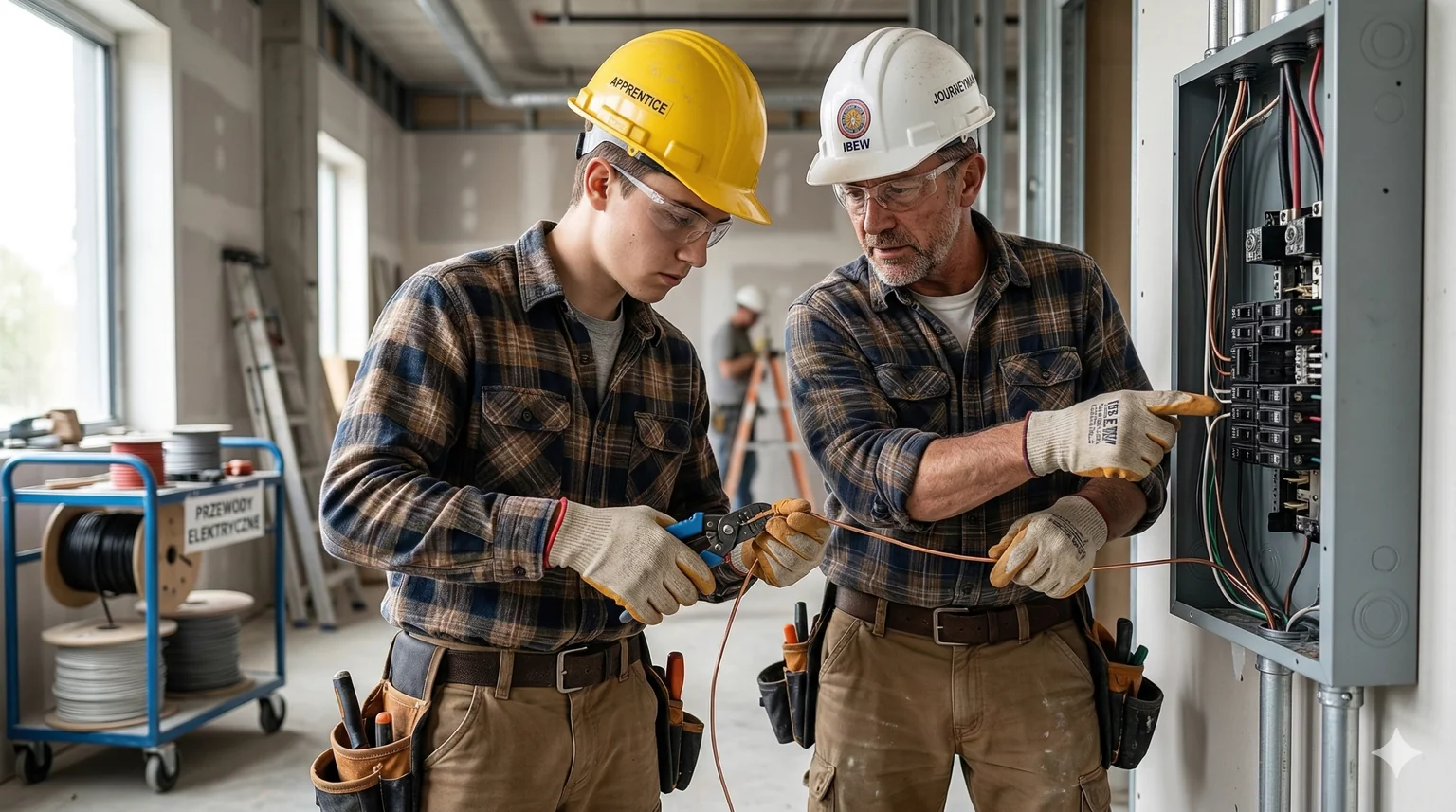
Electricians are the core pipeline for utility-scale solar and wind. Connecting panels to inverters, running conduit, wiring battery storage systems, and interfacing with the grid are all electrical work. A licensed journeyman electrician can move into solar or wind electrical installation with relatively targeted supplemental training. If you’re considering the electrical trade as a starting point, see our overview of electrical trade careers.
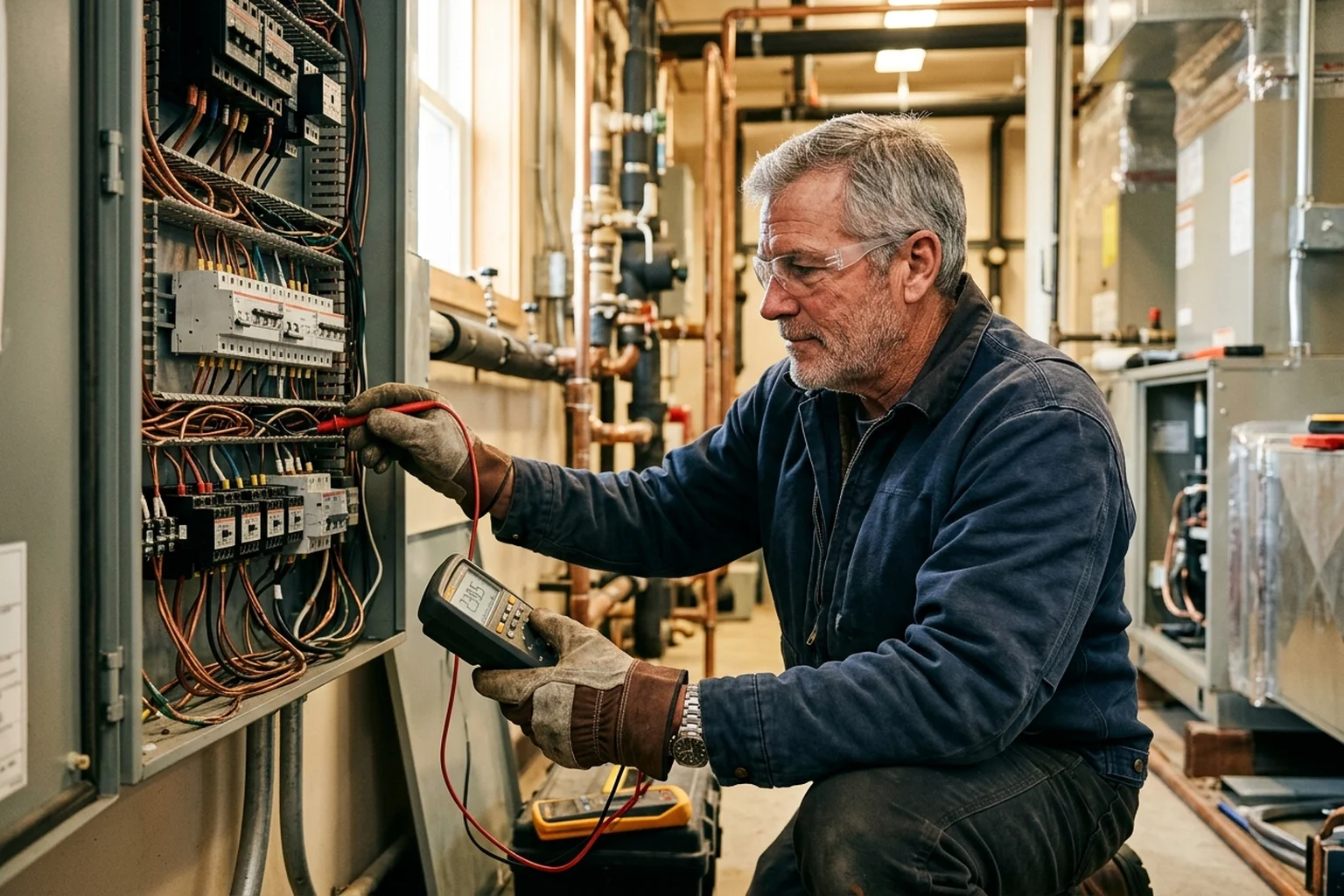
HVAC technicians have a natural path into heat pump systems and geothermal — two clean energy applications that use HVAC fundamentals. The DOE identifies HVAC technicians as a key workforce for the clean energy transition, noting that existing skills in refrigerant handling, ductwork, and controls apply directly. For more on the HVAC career path itself, see HVAC career opportunities.
EV technicians represent the automotive equivalent of this pattern — a traditional automotive tech background applied to a growing clean energy application. We cover that pathway in detail in EV technician career opportunities.
The general principle: if you’re already in a trade, you likely have more transferable footing in clean energy than you realize. The question is usually about targeted certification rather than starting over.
Where the Jobs Are: Geography Matters
The clean energy job market is geographically concentrated in ways that matter for students choosing where to train or where to work.
For solar: California, Florida, Texas, New York, and Massachusetts account for a large share of national solar employment. Growth in 2024 was particularly strong in the South — Southern states added 41,000 clean energy jobs across all sectors, with Georgia, Ohio, and Texas seeing notable solar hiring gains, per E2’s 2024 analysis.
For wind: Texas, Iowa, Oklahoma, Kansas, and Illinois dominate wind employment. The Midwest and Great Plains have the land, wind resources, and existing infrastructure where most utility-scale wind development happens.
This geographic reality affects career planning in a direct way. A student in Florida pursuing solar installation has a robust local market. A student in the same state pursuing wind technician work will likely need to relocate.
Training Paths: What You Actually Need
Solar
- Entry-level installation: High school diploma or GED; most employers provide on-the-job training; some states require an electrical contractor’s license for grid-connected work
- Certificate programs: Community colleges and trade schools offer programs ranging from a few weeks (basic installation) to 6 months (full systems training); costs vary widely
- NABCEP certification: The industry standard for advancement; requires documented hours and a proctored exam; not required for entry but increasingly expected
- DOE resource: The Solar Training Network lists accredited programs by state
Wind
- Two-year associate’s degree: The standard entry credential; programs in wind energy technology exist at community colleges in TX, IA, SD, and other wind-heavy states
- GWO Basic Safety Training: Required for site access; covers working at height, first aid, fire awareness, manual handling, and sea survival (for offshore wind)
- DOE resource: The WINDExchange career map outlines the full credential pathway
Both fields benefit from an underlying foundation in electrical theory. Students considering either path who don’t already have electrical background should look for programs that build in that foundation, not just hands-on panel or turbine work.
A Realistic Assessment
The growth numbers for solar and wind are real and backed by BLS projections from current trend data. These are among the strongest occupational outlooks in any sector, not just in the trades.
That said, a few things are worth knowing before committing:
Policy creates uncertainty. Clean energy hiring is sensitive to federal and state policy in ways that traditional trades like plumbing and electrical are not. E2 noted in early 2025 that companies had canceled more than $22 billion in planned clean energy projects following policy changes, putting some projected jobs at risk. Long-term fundamentals remain strong, but the sector is not immune to short-term disruption.
Wind technician work is physically demanding and geographically restrictive. If you’re not comfortable at heights or unwilling to work in the Great Plains or rural Texas, the wind path has real friction.
Solar remains the more accessible entry point. Lower training barriers, wider geographic distribution, and a broader range of employer types (residential contractors, commercial installers, utilities) make solar the cleaner starting point for most students.
For students who want hands-on careers aligned with where the economy is moving, both trades offer something genuinely rare: projected growth rates that almost nothing else in the job market matches.
Sources
- U.S. Bureau of Labor Statistics — “Solar Photovoltaic Installers” — Occupational Outlook Handbook — https://www.bls.gov/ooh/construction-and-extraction/solar-photovoltaic-installers.htm
- U.S. Bureau of Labor Statistics — “Employment of wind turbine service technicians expected to increase 49.9 percent by 2034” — The Economics Daily, 2025 — https://www.bls.gov/opub/ted/2025/employment-for-wind-turbine-service-technicians-expected-to-increase-49-9-percent-by-2034.htm
- E2 (Environmental Entrepreneurs) — “Clean energy jobs grew 3X faster than rest of U.S. workforce in 2024, but future growth now at risk” — 2025 — https://e2.org/releases/report-clean-energy-jobs-grew-3x-faster-than-rest-of-u-s-workforce-in-2024-but-future-growth-now-at-risk/
- U.S. Department of Energy — “Solar Training Network” — https://www.energy.gov/eere/solar/solar-training-network
- U.S. Department of Energy — “Career Map: Wind Technician” — https://www.energy.gov/eere/wind/career-map-wind-technician
- Interstate Renewable Energy Council (IREC) — “Solar Jobs Census” — 2024 — https://irecusa.org/programs/solar-jobs-census/