
Massage therapy sits at an unusual intersection: it’s a hands-on trade that requires a license, pays reasonably well without a degree, and operates in settings that range from luxury spas to hospital rehabilitation units. For students who want to work with people, contribute to their health, and skip the four-year university path, it’s a trade worth examining seriously.
The numbers from the BLS Occupational Outlook Handbook paint a straightforward picture: 168,000 massage therapists currently employed, a median annual wage of $57,950, and 15 percent projected job growth from 2024 to 2034 — more than four times the average for all occupations. About 24,700 job openings are projected each year over that decade.
This guide covers what the work actually involves, how licensing works, where the wages come from, and what to think about before committing to a program.
What Massage Therapists Do
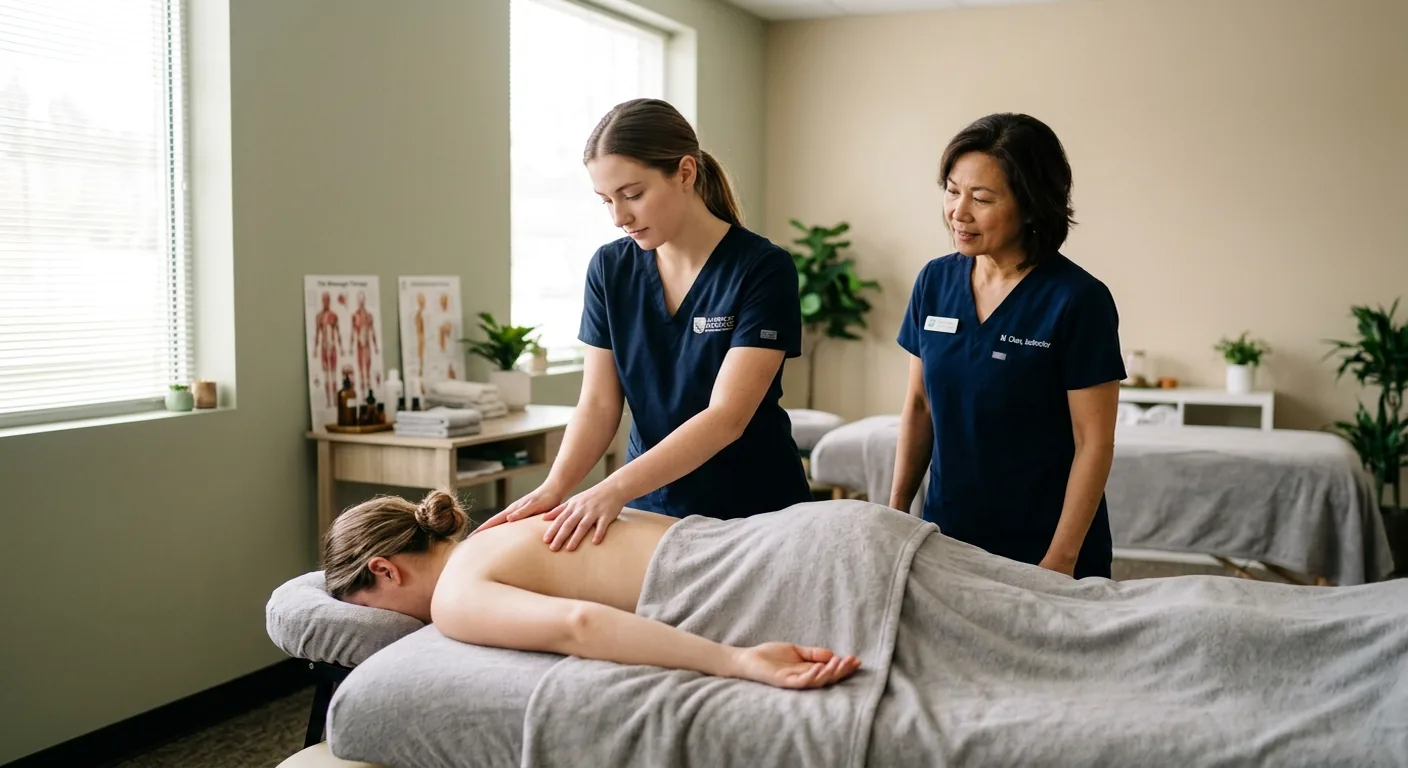
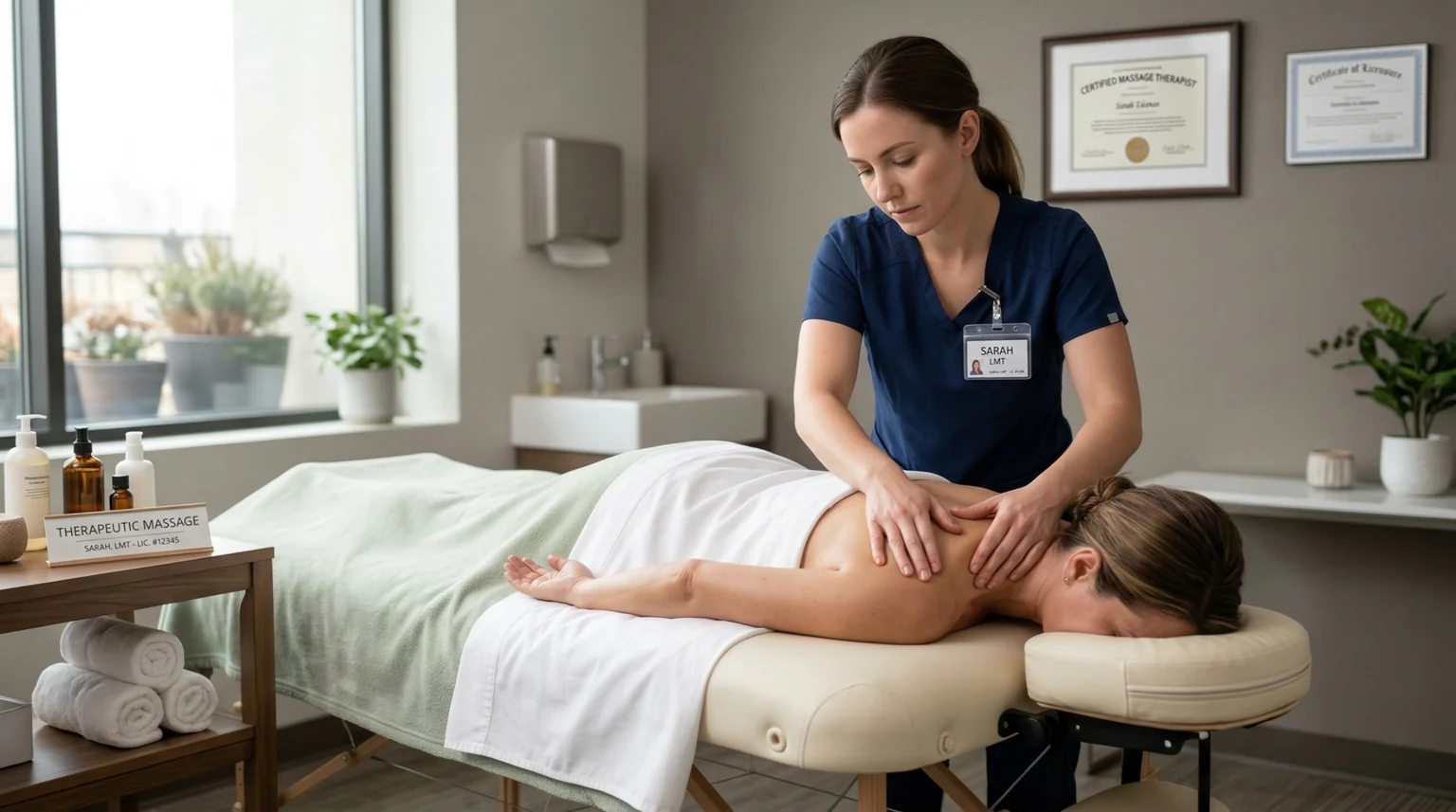
The core of the job is applying manual techniques — kneading, stroking, friction, compression, and stretching — to a client’s soft tissue to reduce pain, relieve tension, improve circulation, or promote relaxation. What that looks like day to day depends heavily on where you work and who you serve.
A typical session involves:
- Intake assessment: Reviewing the client’s health history, identifying areas of concern or contraindications, and setting session goals
- Treatment: Applying techniques specific to the client’s needs — Swedish, deep tissue, trigger point, myofascial, or others — for 30 to 90 minutes
- Documentation: Recording session notes, particularly in clinical settings where therapists work alongside physicians or physical therapists
- Client communication: Adjusting pressure, explaining techniques, and providing post-session guidance
Massage therapy is physically demanding work. Therapists are on their feet for most of the day, using their hands, forearms, and body weight throughout. Most full-time therapists see five to eight clients per day — a pace that, sustained over years without proper body mechanics, leads to wear on the therapist’s own joints and soft tissue. This is one of the career’s less-discussed constraints, covered more in the trade-offs section below.
Where massage therapists work:
- Spas and wellness centers (the largest employer category)
- Chiropractic and physical therapy offices
- Hospitals and rehabilitation centers
- Sports medicine facilities and athletic training rooms
- Hotels and cruise ships
- Self-employed / private practice
The BLS notes that about 44 percent of massage therapists are self-employed — a higher share than most trades — which shapes both the income structure and the career trajectory significantly.
Specializations Worth Knowing
Most massage therapy programs teach general Swedish and relaxation massage as a foundation. But the specializations you add — either during school or through post-graduate continuing education — determine where you can work and how much you can earn.
Sports massage focuses on athletes: pre-event preparation, post-event recovery, and injury rehabilitation. Techniques emphasize muscle flushing, trigger point work, and assisted stretching. Sports massage therapists work with professional and amateur sports teams, university athletic programs, and sports medicine clinics. The specialization typically commands higher hourly rates than spa work.
Medical and clinical massage is the most technically demanding path. Therapists in this category work under or alongside licensed healthcare providers — treating conditions like chronic pain, neuropathy, post-surgical recovery, and fibromyalgia. It requires additional training beyond the basic licensure curriculum and is typically practiced in clinical or hospital settings. Mayo Clinic’s career profile for medical massage therapists describes it as occupying a distinct role in interdisciplinary care teams.
Spa and relaxation massage is the highest-volume employment sector. The work centers on client experience — stress relief, comfort, and wellness — rather than therapeutic treatment. Tips are a meaningful part of total compensation at most spas, particularly high-end hotel and resort properties.
Prenatal massage is a focused specialization requiring specific training in positioning and contraindications for expectant clients. It’s typically offered as a service within broader spa or private practice settings.
Deep tissue and myofascial release aren’t separate careers so much as technique specializations that most therapists layer onto their core training. Clients seeking these specifically tend to be repeat, long-term customers — a stable base for building a private practice.
Salary and Job Outlook
The BLS reports a median annual wage of $57,950 for massage therapists in May 2024. The bottom 10 percent earned under $33,280; the top 10 percent earned above $97,450. That upper range reflects experienced therapists in high-demand clinical settings or therapists who have built successful private practices with loyal client bases.
A few wage realities to understand:
Hourly vs. annual figures: Many massage therapists work part-time or see fewer clients than a full schedule would allow. The BLS notes that part-time work is common in this field. Median hourly wages don’t always translate to full-time annual income — a therapist earning $35/hour who sees 20 clients per week is earning roughly $36,000 annually before expenses.
Self-employment income: Nearly half of massage therapists are self-employed. Income in private practice depends on client acquisition, retention, and local market rates — which can range from $60 to $150+ per hour depending on city and specialization. Self-employed therapists also absorb their own overhead: rent, supplies, liability insurance, marketing, and self-employment taxes.
Employed vs. self-employed: Employed therapists in clinical settings sacrifice some hourly income for stability, benefits, and a built-in client flow. The choice between the two is less a preference question than a business readiness question.
Job growth of 15 percent through 2034 — with 24,700 annual openings — is driven by growing acceptance of massage as a legitimate pain management tool and by continued expansion in wellness spending. The BLS specifically cites increasing demand from people managing chronic pain and stress as the primary driver.
Licensing: What You Need to Practice
Massage therapy is regulated in 47 states plus Washington D.C., Puerto Rico, and the U.S. Virgin Islands, according to the Federation of State Massage Therapy Boards (FSMTB). Kansas, Minnesota, and Wyoming have no statewide licensure requirement, though local (county or municipal) ordinances may still apply.
Licensure comes down to three things: completing a board-approved program (500 to 1,000 hours of training, depending on the state), passing an exam, and meeting renewal requirements. The standard exam in nearly every regulated jurisdiction is the Massage & Bodywork Licensing Examination (MBLEx) — 100 questions, a $265 fee, administered at Pearson VUE centers — though New York and Hawaii use their own state exams and California requires none. Most states then require roughly 12 to 24 continuing-education hours per renewal cycle, per the American Massage Therapy Association (AMTA).
Because hour requirements, exams, and renewal rules vary so much — and directly affect which program you should choose — we cover every jurisdiction in detail in our massage therapy license requirements by state guide.
Finding the Right Program
The most important credential to look for in a massage therapy school is accreditation by COMTA (Commission on Massage Therapy Accreditation) or regional accreditation by an agency recognized by the U.S. Department of Education. Accreditation affects:
- Whether your program meets your state’s licensing requirements
- Whether you’re eligible for federal financial aid
- Whether your training hours will be recognized if you move states
Beyond accreditation, questions worth asking before enrolling:
- Does the school’s curriculum meet the hour requirement for the state you plan to practice in? If you train in a state with a 500-hour minimum but later move to New York (1,000 hours), your license may not transfer directly.
- What is the pass rate on the MBLEx? Schools are generally willing to share this; a significantly below-average rate is a red flag.
- What does the clinic component look like? Hands-on hours with supervised real clients — not just practice on classmates — are the part of the curriculum that builds actual skill.
- What is total cost including fees, supplies, and exam prep? Program tuition typically ranges from $6,000 to $20,000 depending on length and location.
For a broader framework on evaluating any trade program before committing, see How to Evaluate a Trade School. If cost is the primary concern, How to Finance Trade School covers aid options including Pell Grants and institutional scholarships available at accredited schools.
Honest Trade-offs
Massage therapy is a genuinely rewarding trade for the right person. It’s also one where a few structural realities catch some graduates off guard.
Physical wear is cumulative. Therapists who see six to eight clients daily for years develop repetitive strain injuries — particularly in the hands, wrists, and thumbs — at a rate the field doesn’t always advertise upfront. Good body mechanics taught in quality programs reduce risk, but don’t eliminate it. Career longevity requires active management of your own physical health.
Income has a ceiling in hourly employment. An employed spa therapist earning $22–$28 per hour faces a relatively fixed income ceiling without moving into private practice, clinical work, or a management role. Building a private practice takes time, marketing effort, and tolerance for an uneven income while the client base grows.
Part-time prevalence. The BLS data on median wages reflects a field where part-time work is common. The $57,950 median doesn’t mean every massage therapist earns that — it means the median of all employed therapists, including many who work full-time in clinical or high-volume settings, lands there. Starting income in a spa job is often lower.
These trade-offs don’t apply equally across all paths. Clinical massage therapists working in hospital or chiropractic settings tend to have more stable income and more predictable physical demands than spa therapists doing back-to-back relaxation sessions. Choosing a specialization early — and targeting programs that build toward it — matters more in massage therapy than in some other trades.
If you’re considering other healthcare-adjacent trades with similar entry requirements, our guides to dental assistant careers and medical assistant careers cover comparable paths with different income ceilings and physical profiles.
Sources
- U.S. Bureau of Labor Statistics — “Massage Therapists” — Occupational Outlook Handbook — https://www.bls.gov/ooh/healthcare/massage-therapists.htm
- Federation of State Massage Therapy Boards (FSMTB) — “MBLEx” — https://fsmtb.org/mblex/
- Federation of State Massage Therapy Boards (FSMTB) — “Regulated States” — https://fsmtb.org/regulated-states/
- Associated Bodywork & Massage Professionals (ABMP) — “State Requirements” — https://www.abmp.com/practitioners/state-requirements
- American Massage Therapy Association (AMTA) — “State Regulations” — https://www.amtamassage.org/state-regulations/