
Updated March 2026 with new salary data, industry reports, and corporate training investments.
TL;DR: In late 2025, top CEOs predicted that AI would drive massive demand for hands‑on trades. Six months later, the data is in — and it’s bigger than anyone expected. Trades demand is growing 3x faster than professional roles, young electricians are pulling $280K at data centers, and companies like BlackRock and Google are pouring hundreds of millions into training pipelines. AI can write code, but it still can’t wire a substation or plumb a coolant loop.
The predictions came true — by the numbers
When we first published this article in October 2025, the AI‑trades connection was mostly CEO rhetoric. Now it’s backed by hard data.
A Randstad analysis of more than 150 million U.S. job postings (2022–2026) found that demand for skilled trades is growing 3x faster than for professional desk‑based roles. The headline finding: “AI can’t build data centers, upgrade power grids, or maintain its own infrastructure.”
Here’s how specific trades are tracking since generative AI went mainstream in late 2022:
| Trade | Vacancy growth (2022–2026) |
|---|---|
| Robotics technicians | +113% |
| HVAC engineers | +78% |
| Industrial automation technicians | +51% |
| Construction specialists | +30% |
| Electricians | +18% |
| Welders | +25% |
Meanwhile, the construction industry is facing a shortage of roughly 439,000 workers, most of them skilled positions like electricians and pipe layers. The Associated Builders and Contractors estimates the industry needs 349,000 net new workers in 2026 alone — rising to nearly half a million in 2027.
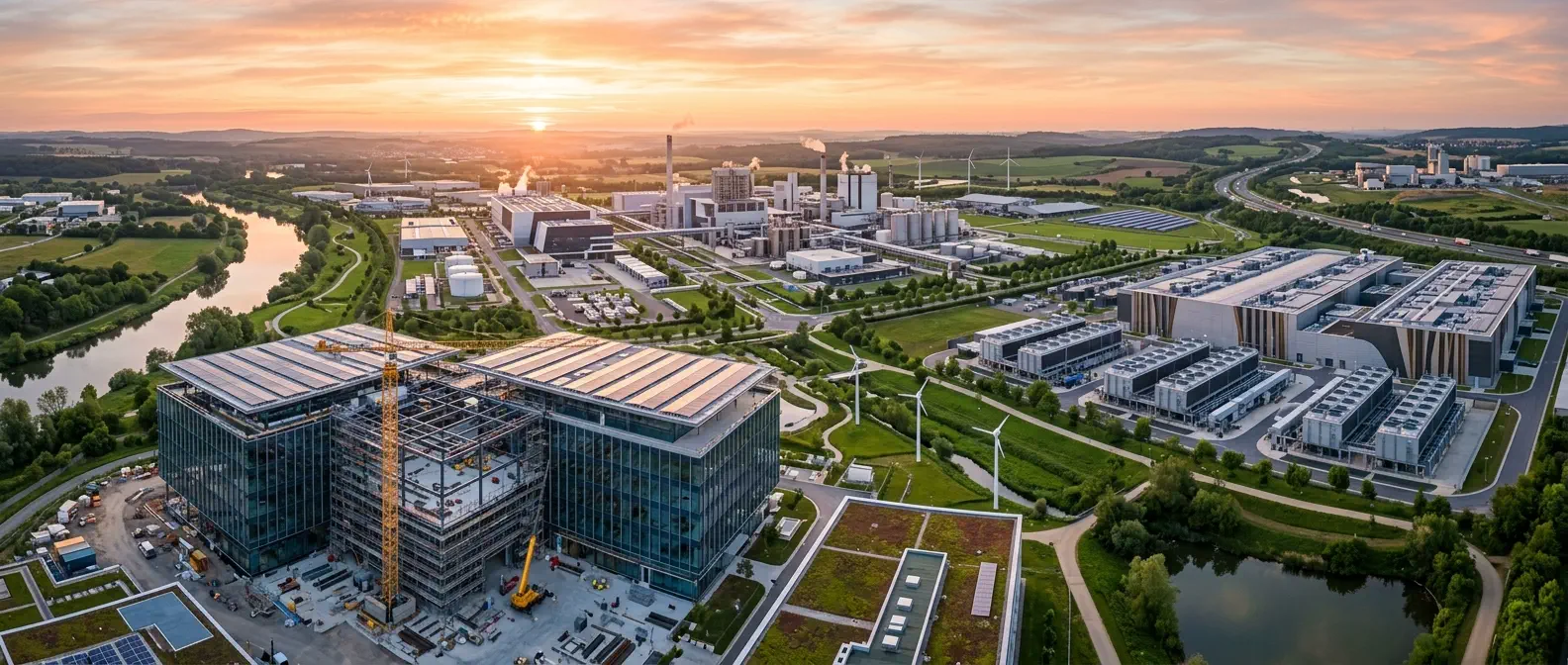
The scale is staggering: McKinsey projects $6.7 trillion in cumulative global data center investment by 2030, and single data center campuses now require 4,000 workers during construction — up from 750 just a few years ago.
The money followed the rhetoric
It’s one thing for CEOs to give speeches. It’s another for them to write checks. In early 2026, that’s exactly what happened.
BlackRock launched a $100 million “Future Builders” initiative (March 2026) to train 50,000 trades workers over five years through nonprofits and workforce development partners. CEO Larry Fink — who warned in 2025 that the U.S. could “run out of electricians” — backed his words with capital. “Throughout our history, tradespeople have built our country,” Fink said. “America needs an estimated $10 trillion in infrastructure investment by 2033.”
Google pledged $15 million through partnerships with the Electrical Training Alliance, IBEW, and NECA to train 100,000 electrical workers and bring 30,000 new apprentices into the pipeline. The program blends traditional electrician training with Google’s AI Essentials course — recognizing that tomorrow’s electricians need digital fluency alongside craft skills.
Nvidia’s Jensen Huang doubled down at the World Economic Forum in January 2026, calling this “the largest infrastructure build‑out in human history.” He was explicit about the payoff: “We’re talking about six‑figure salaries for people who are building chip factories or computer factories or AI factories.” His message: “Everybody should be able to make a great living. You don’t need to have a PhD in computer science to do so.”
Microsoft’s Brad Smith identified electrical talent shortages as the “single biggest challenge” slowing U.S. data center expansion. Some Microsoft data center projects have electricians commuting 75+ miles or temporarily relocating — that’s how acute the supply crunch is.
Real paychecks, not projections
The salary data is where the story gets concrete.
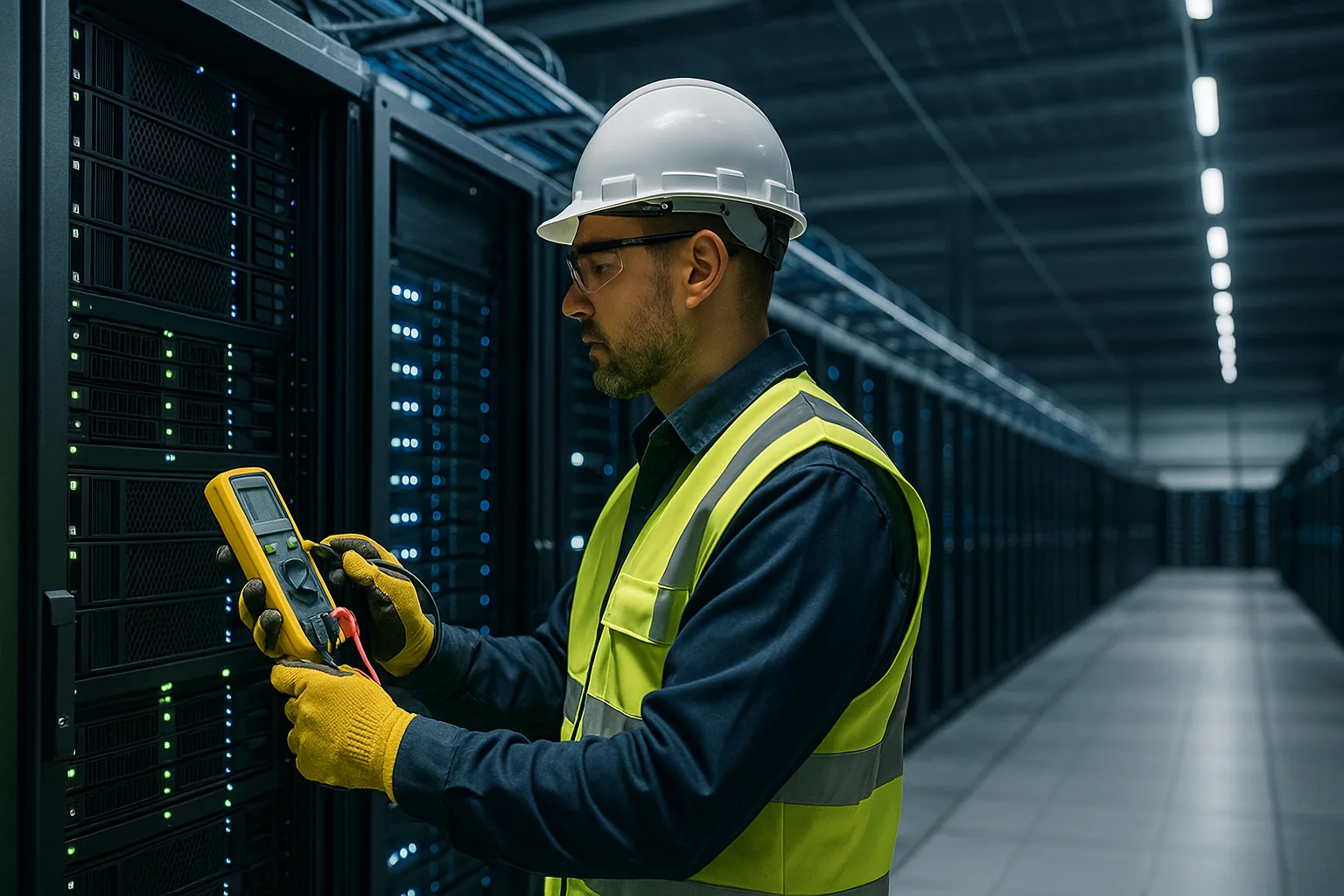
Fortune reported that Dirty Jobs host Mike Rowe recently met three electricians under age 30 at a data center in Plano, Texas earning between $240,000 and $280,000 a year — with zero college debt. All three had been recruited away by competing employers three times within 18 months. That’s the kind of labor market power that used to be reserved for software engineers.
More broadly, CNBC found that construction workers on data center projects earn an average of $81,800 annually ($39.33/hour) — roughly 32% more than those on non‑data‑center builds. Specialized trades moving into data center roles often see a 25–30% pay bump, according to staffing firm Kelly Services.
Here’s what the IBEW Local 26 pay scale looks like in the Washington, D.C. area — one of the hottest data center markets:
- Apprentice starting wage:
$26/hour ($54K/year) - Journeyman electrician: $59.50/hour ($120,000+ annually) plus benefits
- With overtime and foreman roles: approaching $200,000/year
And these numbers don’t factor in the premium that data center–specific work commands on top.
The pipeline is responding
Perhaps the most encouraging development: young people are getting the message. The training pipeline is expanding fast.
- 400% enrollment surge in electrical programs across Midwest Technical Institute’s four campuses over the past four years
- 70% increase in commercial apprenticeship applications nationwide between 2022 and 2024, jumping from ~70,000 to 120,000
- IBEW Local 26 membership doubled since 2018 to over 14,700 electricians in the D.C. area alone
- Rosedale Technical College enrollment up 36% over five years, with students studying automotive technology, diesel mechanics, carpentry, and welding
- Mike Rowe Foundation scholarship applications increased tenfold in one year
But the gap remains wide. For every 100 young workers entering the trade sector, 102 are exiting — an annual decline of 1.72%, driven largely by retirements. The National Electrical Contractors Association reports losing about 20,000 electricians per year while carrying 80,000 open positions. Over the next decade, the U.S. needs 300,000+ new electricians and must replace 200,000+ retirees.
That math adds up to sustained demand — and sustained leverage for anyone entering the field now.
Beyond data centers — where else trades are “AI‑proof”
Data centers get the headlines, but the skilled trades boom extends well beyond server farms.
Shipbuilding faces a 250,000‑worker shortage over the next decade. Shipyards need welders, electricians, pipefitters, and machinists — roles that demand precision and pay increasingly well. The Trump administration’s “Make America Skilled Again” grant program is channeling federal dollars into shipbuilding‑related training.
Grid modernization and renewables require electricians and solar panel installers to rebuild aging infrastructure and connect new capacity. Power‑line installers, substation electricians, and wind turbine technicians are all in growing demand.
EV manufacturing plants are creating thousands of automotive technology and diesel mechanics roles. Ford CEO Jim Farley has noted the U.S. is short hundreds of thousands of factory workers already, and AI‑augmented tools like AR diagnostics are making these roles more sophisticated — not less.
As 22‑year‑old IBEW apprentice Nicholas Bowman told Fortune: “AI hasn’t found a way to turn the wrench yet.”
What the experts are saying now
The conversation has shifted from prediction to prescription.
- Mike Rowe (Dirty Jobs): “Nothing in the history of western civilization has gotten more expensive more quickly than a four‑year degree… Learning a trade was downgraded to a ‘vocational consolation prize.’ Blue collar versus white collar — the color of collars is over.”
- Vicki Salemi (Monster career expert): Skilled trades “are the underdog and so AI‑proof” because “they require physical presence, and they are less likely to be fully automated or offshored.”
- Darrell West (Brookings): “The electrician shortage is quite dire… a leading barrier to data center construction.”
- Nathan Hall (Delta Community College, Louisiana): “Data centers are going to be the new oilfield.”
- Brian Huff (Midwest Technical Institute CEO): “It’s never been brighter than this… job prospects are going to be good.”
What this means for you
Speed to earnings. Many trades offer paid apprenticeships → certifications → solid pay without four years of tuition. Apprentice electricians start around $26/hour; journeymen clear $120K+. With advanced specializations (data center, EV, solar), six figures is increasingly the floor, not the ceiling.
Skills that travel. The same core electrical, plumbing, HVAC, and welding skills apply across data centers, shipyards, grid upgrades, EV plants, and renewable energy. You’re not locked into one employer or one sector.
Future‑proofing. These jobs aren’t just surviving the AI revolution — they’re powering it. And the roles are evolving: Google is embedding AI training into apprenticeship programs, AR diagnostics are standard in auto shops, and digital fluency is now a prerequisite alongside craft skills. The combination of hands‑on expertise plus digital tools is a high‑leverage career position.
The window is open. With 439,000 unfilled construction positions, 80,000 open electrician slots, and training programs expanding, the barriers to entry have never been lower. Enrollment is rising, but the retirement wave means demand will outpace supply for years.
Explore programs on TradeColleges.org
Start with the full index, then jump into specific tracks:
- All Trade Programs (Index)
- Electrician Programs — Career guide
- Plumbing Programs — Career guide
- HVAC Programs — Career guide
- Welding Programs — Career guide
- Automotive / EV Tech — Career guide
- Diesel Mechanics — Career guide
- Construction Technology — Career guide
- Solar Energy Technology — Career guide
How to get started (3 steps)
- Pick a track. Electrician, plumbing, HVAC, welding, automotive/EV tech, diesel, solar, or industrial maintenance. Not sure? Try our career quiz to match your strengths to a trade.
- Choose your pathway. Union apprenticeship (e.g., IBEW, United Association), community‑college certificate, or trade‑school program. Many offer paid apprenticeships — you earn while you learn.
- Stack credentials. OSHA‑10/30 → NCCER/EVSE/NAIT → manufacturer or utility certs. Keep leveling up with digital tools — programs like Google’s AI Essentials are built specifically for trades workers.
Sources
- Randstad USA — “U.S. Demand for Skilled Trades Grows 3x Faster than Professional Roles” — March 26, 2026 — randstadusa.com
- Fortune — “BlackRock is splashing $100 million on training plumbers, electricians, and HVAC technicians” — March 11, 2026 — fortune.com
- BlackRock — “Future Builders” press release — March 11, 2026 — blackrock.com
- Fortune — “The AI data center boom is creating a dire electrician shortage” — March 2, 2026 — fortune.com
- Fortune — Mike Rowe on data center electricians earning $240K–$280K — March 19, 2026 — fortune.com
- Fortune — Jensen Huang at Davos on six‑figure trade jobs — January 21, 2026 — fortune.com
- CNBC — “In a jobs apocalypse, look to ‘AI‑proof’ skilled trades” — March 8, 2026 — cnbc.com
- CNBC — “How the red‑hot AI data center boom is igniting demand for trade workers” — March 18, 2026 — cnbc.com
- ITIF — “Construction Industry Facing a 439,000‑Worker Shortage Driven by Data Centers” — January 12, 2026 — itif.org
- Google — “New AI training for electrical workers and apprentices” — 2025 — blog.google
- CSIS — Microsoft’s Brad Smith: “You can’t have electricity without electricians” — July 9, 2025 — csis.org
- Fortune — “This AI‑proof career faces a 250,000‑worker shortage” (shipbuilding) — March 27, 2026 — fortune.com
Note: U.S. focus; links current as of March 29, 2026. Originally published October 2, 2025.