Provide social services and assistance to improve the social and psychological functioning of children and their families and to maximize the family well-being and the academic functioning of children. May assist parents, arrange adoptions, and find foster homes for abandoned or abused children. In schools, they address such problems as teenage pregnancy, misbehavior, and truancy. May also advise teachers.
Child, Family, and School Social Workers
SOC: 21-1021 O*NET: 21-1021.00
Median Salary
$59,550
per year
Job Growth
📈 4.4%
Faster (2024-2034)
Annual Openings
33.9
projected jobs/year
Education Level
Bachelor's degree or higher
Job Zone 4
Provide social services and assistance to improve the social and psychological functioning of children and their families and to maximize the family well-being and the academic functioning of children. May assist parents, arrange adoptions, and find foster homes for abandoned or abused children. In schools, they address such problems as teenage pregnancy, misbehavior, and truancy. May also advise teachers.
What does a Child, Family, and School Social Workers do?
How much can you earn?
Entry Level
$42,280
10th percentile
Early Career
$48,270
25th percentile
Median
$59,550
50th percentile
Experienced
$76,070
75th percentile
Top Earners
$95,530
90th percentile
National Salary Distribution
10th
$42,280
25th
$48,270
Middle 50%
MEDIAN
$59,550
Mean: $64,000
75th
$76,070
90th
$95,530
Middle 50% of earners
Median salary
Mean (average)
Key Insights
- •Salary range spans $53,250 from entry level to top earners
- •Middle 50% earn between $48,270 and $76,070
- •Salary spread is 46.7% around the median, showing high variation
- •Total national employment: 392,550 professionals
What's the job outlook?
Job Market Intelligence
Medium Demand
Market demand
Medium Risk
Automation risk
Current Employment
National Employment:405,100
Top Industries
Social Assistance29.5%
Individual and Family Services23%
Nursing and Residential Care Facilities4.1%
10-Year Outlook
Growth Rate:+4.4%
Annual Openings:33,900
Employment Projections
2025 (Current)405,100
Current
2035 (Projected)422,900
+4.4%
+17,800
Employment Change
+4.4%
Growth Rate
10
Year Projection
Growth Category: As fast as average
Geographic Salary & Employment Data
Explore where Child, Family, and School Social Workers professionals work across the United States
Showing 15 of 50 locations
California
60,310 jobs$65,2001.31x
New York
30,170 jobs$65,1001.23x
Texas
21,670 jobs$55,6800.61x
Illinois
19,860 jobs$63,2201.29x
Pennsylvania
16,200 jobs$50,8201.06x
Ohio
16,050 jobs$51,5201.15x
Michigan
15,760 jobs$59,2701.42x
Florida
14,000 jobs$56,5500.56x
North Carolina
13,010 jobs$59,6101.04x
Massachusetts
10,900 jobs$75,5701.19x
Washington
10,720 jobs$74,4801.20x
Missouri
9,620 jobs$48,5201.30x
Virginia
9,410 jobs$61,3300.91x
Kentucky
8,470 jobs$59,1001.68x
Colorado
8,200 jobs$63,7201.13x
Understanding the Data
Location Quotient (LQ):
- • LQ > 1.0: More jobs than national average
- • LQ = 1.0: Same as national average
- • LQ < 1.0: Fewer jobs than national average
Data Source:
Bureau of Labor Statistics Occupational Employment and Wage Statistics (OEWS), May 2025
Key Growth Factors
- •Average growth expected
What skills do you need?
Top 10 Most Important Skills
#1
Active Listening
100%
#2
Customer and Personal Service
100%
#3
Oral Expression
100%
#4
Speaking
94%
#5
Psychology
92%
#6
Oral Comprehension
92%
#7
Social Perceptiveness
86%
#8
Therapy and Counseling
82%
#9
Problem Sensitivity
82%
#10
Critical Thinking
80%
Skills Overview
Active Listening
advanced5.0
100%
Customer and Personal Service
advanced5.0
100%
Oral Expression
advanced5.0
100%
Speaking
advanced4.7
94%
Psychology
advanced4.6
92%
Oral Comprehension
advanced4.6
92%
Social Perceptiveness
intermediate4.3
86%
Therapy and Counseling
intermediate4.1
82%
Skills are rated on a scale of 0-5, with 5 being the most important. The complexity level indicates how advanced the skill typically needs to be.
Filter:
Sort by:
Active Listening
advancedImportance100%
skills
5.0/5.0
Customer and Personal Service
advancedImportance100%
knowledge
5.0/5.0
Oral Expression
advancedImportance100%
abilities
5.0/5.0
Speaking
advancedImportance94%
skills
4.7/5.0
Psychology
advancedImportance92%
knowledge
4.6/5.0
Oral Comprehension
advancedImportance92%
abilities
4.6/5.0
Social Perceptiveness
intermediateImportance86%
skills
4.3/5.0
Therapy and Counseling
intermediateImportance82%
knowledge
4.1/5.0
Problem Sensitivity
intermediateImportance82%
abilities
4.1/5.0
Critical Thinking
intermediateImportance80%
abilities
4.0/5.0
Service Orientation
intermediateImportance74%
skills
3.7/5.0
English Language
intermediateImportance74%
knowledge
3.7/5.0
Highly Transferable Skills
These skills are valuable across multiple career paths, making career transitions easier:
Physician Assistants100%
5 shared skills
Dietitians and Nutritionists100%
5 shared skills
Emergency Medicine Physicians100%
5 shared skills
Speech-Language Pathology Assistants100%
5 shared skills
Paralegals and Legal Assistants100%
5 shared skills
School Psychologists100%
5 shared skills
Skills by Career Stage
Entry Level
Must Have:
- ✓Active Listening
- ✓Speaking
- ✓Social Perceptiveness
- ✓Customer and Personal Service
- ✓Psychology
Learn on the Job:
- →Administrative
- →Sociology and Anthropology
- →Judgment and Decision Making
Mid Career
Expected:
- ✓Active Listening
- ✓Speaking
- ✓Social Perceptiveness
- ✓Customer and Personal Service
- ✓Psychology
Senior Level
Mastery Required:
- ★Active Listening
- ★Speaking
- ★Social Perceptiveness
- ★Customer and Personal Service
- ★Psychology
Skill Development Tips
- •Focus on developing the top 5 skills first - they have the highest impact on career success
- •Transferable skills open doors to related careers and provide flexibility
- •Balance technical skills with soft skills for well-rounded professional development
- •Entry-level positions prioritize foundational skills that can be built upon over time
What technology will you use?
Technology & Digital Skills
Essential technology proficiencies for Child, Family, and School Social Workers
Technology Intensity
High
Digital Literacy Requirements
This career requires advanced digital literacy
1
Basic
2
Intermediate
3
Advanced
4
Expert
Key Digital Competencies:
Proficiency with specialized softwareTechnical documentationData analysis toolsSystem integration
🔥
Hot Technologies in Demand
These technologies are currently trending and highly sought after in this field
Microsoft Access
🔥 Hot TechMicrosoft Outlook
🔥 Hot TechMicrosoft Office software
🔥 Hot TechMicrosoft PowerPoint
🔥 Hot TechMicrosoft Excel
🔥 Hot TechMicrosoft Word
🔥 Hot TechTechnology Stack
Technology Stack Overview
Key technologies used in this career
Microsoft Access
Microsoft Outlook
Microsoft Office software
Microsoft PowerPoint
Microsoft Excel
Microsoft Word
📚 Technology Learning Resources
Recommended Certifications
- •Vendor-specific software certifications
- •Industry-recognized technology credentials
- •Professional development courses
Online Learning Platforms
- •LinkedIn Learning - Comprehensive technology courses
- •Coursera - University-level programs
- •Udemy - Practical skills training
💡 Technology Skill Development Tips
- •Focus on mastering hot technologies first - they're currently most in-demand
- •Build a portfolio demonstrating your proficiency with key tools and software
- •Stay current through continuous learning - technology evolves rapidly
- •Consider vendor certifications to validate your skills to employers
What's the work environment like?
🏢
Location
MOSTLY INDOOR
💪
Physical Demand
HIGH
👥
Team Orientation
CONSTANT TEAM
🤝
Customer Interaction
CONSTANT
💡Is This Work Environment Right for You?
Consider these factors when evaluating if you'll thrive in this work environment:
- •Are you comfortable working in mostly indoor environments?
- •Can you meet high physical demands?
- •Do you enjoy constant team team environments?
- •Are you comfortable working with safety protocols and protective equipment?
What are the key tasks?
Tasks & Responsibilities
21
Core Tasks
8
Daily Tasks
20
Work Activities
0
Emerging Tasks
Filter:
Sort by:
Analysis & Evaluation (2)General Responsibilities (12)Documentation & Record-Keeping (2)Training & Development (1)Planning & Development (3)Management & Supervision (1)
1
Interview clients individually, in families, or in groups, assessing their situations, capabilities, and problems to determine what services are required to meet their needs.
🔴Daily
Importance:
Analysis & Evaluation100% perform100%
2
Counsel individuals, groups, families, or communities regarding issues including mental health, poverty, unemployment, substance abuse, physical abuse, rehabilitation, social adjustment, child care, or medical care.
🔴Daily
Importance:
General Responsibilities97% perform98%
3
Maintain case history records and prepare reports.
🔴Daily
Importance:
Documentation & Record-Keeping94% perform96%
4
Counsel students whose behavior, school progress, or mental or physical impairment indicate a need for assistance, diagnosing students' problems and arranging for needed services.
🔴Daily
Importance:
General Responsibilities91% perform94%
5
Consult with parents, teachers, and other school personnel to determine causes of problems, such as truancy and misbehavior, and to implement solutions.
🔴Daily
Importance:
Training & Development88% perform92%
6
Counsel parents with child rearing problems, interviewing the child and family to determine whether further action is required.
🔴Daily
Importance:
General Responsibilities85% perform90%
7
Develop and review service plans in consultation with clients and perform follow-ups assessing the quantity and quality of services provided.
🔴Daily
Importance:
Planning & Development82% perform88%
8
Collect supplementary information needed to assist client, such as employment records, medical records, or school reports.
🔴Daily
Importance:
Documentation & Record-Keeping79% perform86%
9
Address legal issues, such as child abuse and discipline, assisting with hearings and providing testimony to inform custody arrangements.
🟡Weekly
Importance:
General Responsibilities76% perform84%
10
Provide, find, or arrange for support services, such as child care, homemaker service, prenatal care, substance abuse treatment, job training, counseling, or parenting classes to prevent more serious problems from developing.
🟡Weekly
Importance:
Planning & Development73% perform82%
💡 Key Takeaways
- •Daily tasks focus primarily on analysis & evaluation activities
- •33% of tasks are performed by most workers in this occupation
- •Career advancement brings increased leadership and strategic responsibilities
What career paths are available?
Career Pathways
0
Advancement Opportunities
0
Lateral Move Options
0%
Avg. Salary Increase
Advancement Opportunities
Typical career progression paths from Child, Family, and School Social Workers
💡 Career Planning Tips
- •Most successful advancement happens after 3-5 years of experience
- •Lateral moves can provide valuable cross-functional experience for future leadership roles
- •Focus on developing skills that are transferable across multiple career paths
- •Consider industry trends when planning long-term career moves
Is this career right for you?
Personality & Values Fit
Is This Career Right for You?
Child, Family, and School Social Workers professionals typically have a SCI Holland code and highly value relationships
SSocial
CConventional
IInvestigative
Important Personality Traits
Work styles that contribute to success as a Child, Family, and School Social Workers
Concern for Others
CriticalConcern for Others
Importance Level4.62
Dependability
Very ImportantDependability
Importance Level4.49
Stress Tolerance
Very ImportantStress Tolerance
Importance Level4.31
Integrity
Very ImportantIntegrity
Importance Level4.29
Adaptability/Flexibility
Very ImportantAdaptability/Flexibility
Importance Level4.19
Initiative
Very ImportantInitiative
Importance Level4.16
Complete Work Styles Profile
Concern for Others
4.6
Dependability
4.5
Stress Tolerance
4.3
Integrity
4.3
Adaptability/Flexibility
4.2
Initiative
4.2
Persistence
4.1
Self-Control
4.1
Cooperation
4.1
Independence
4.0
💡 Tips for Career Fit Success
- •While personality fit is important, skills can be developed with practice and training
- •Consider informational interviews to better understand the day-to-day personality requirements
- •Work environments vary by employer - research specific companies for cultural fit
- •Your interests and values may evolve - reassess periodically throughout your career
What education is required?
Education Level
Bachelor's degree or higher
Typical duration: 4 years
Preparation Level
Job Zone 4
Considerable Preparation Needed
Experience Needed
A considerable amount of work-related skill, knowledge, or experience needed
📚 Education Requirement
Required Level:Bachelor's degree or higher
Most of these occupations require a four-year bachelor's degree, but some do not.
Training:
Significant preparation with related work experience
💼 Experience Requirement
A considerable amount of work-related skill, knowledge, or experience needed
Common pathways to gain experience:
- • Bachelor's degree in related field
- • Several years of work experience
- • Professional certifications often required
4
Job Zone Four: Considerable Preparation Needed
Most of these occupations require a four-year bachelor's degree, but some do not.
Bachelor's degree in related fieldSeveral years of work experienceProfessional certifications often required
Ready to Start Your Journey?
Explore educational programs that can help you become a Child, Family, and School Social Workers.
Browse Training Programs →Trade Colleges That Train for Child, Family, and School Social Workers
Top trade colleges by completions in fields that prepare students for this career.
City College of San Francisco
San Francisco, CA
1.0k program completions/year
Cerritos College
Norwalk, CA
924 program completions/year
Los Angeles Valley College
Valley Glen, CA
803 program completions/year
College of the Sequoias
Visalia, CA
631 program completions/year
Mt San Antonio College
Walnut, CA
622 program completions/year
Long Beach City College
Long Beach, CA
587 program completions/year
East Los Angeles College
Monterey Park, CA
508 program completions/year
Fresno City College
Fresno, CA
499 program completions/year
Central New Mexico Community College
Albuquerque, NM
449 program completions/year
Connecticut State Community College
New Britain, CT
439 program completions/year
Merced College
Merced, CA
432 program completions/year
El Camino Community College District
Torrance, CA
424 program completions/year
From the Blog
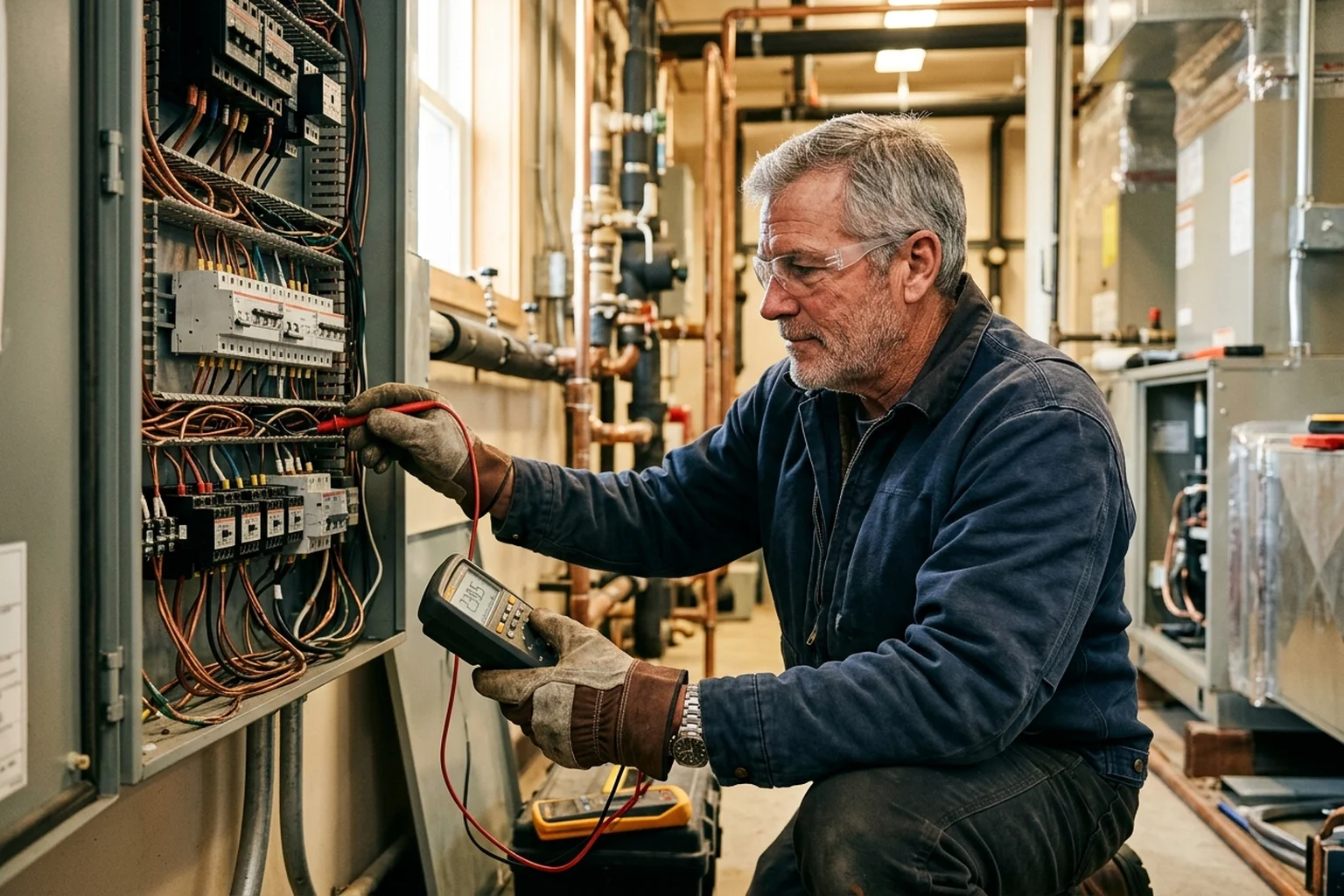
Career Guidance
Trade Careers You Can Start After 50: A Realistic, Data-Driven Guide
A practical guide for adults 50 and older considering a career in the skilled trades — covering which trades suit mature workers, the financial calculus of a shorter career runway, health insurance during training, and how life experience becomes a genuine advantage on the job site.

Skilled Trades Outlook
Robots on the Jobsite in 2026: What They Actually Do — and How Trades Workers Come Out Ahead
Layout printers, rebar-tying robots, and weld cobots are on real jobsites now. Verified 2026 field data on what they do, plus a five-move playbook for trades workers.

Trade Programs
What the Brochure Won't Tell You About HVAC School
HVAC school brochures print the median salary and the sunlit lab photo. Here's the rest of it: the bill past the tuition line, the EPA 608 license, what first-year pay actually looks like, and the paid apprenticeship route the brochure never compares itself against.