Design and develop manufactured products, such as cars, home appliances, and children's toys. Combine artistic talent with research on product use, marketing, and materials to create the most functional and appealing product design.
Commercial and Industrial Designers
SOC: 27-1021 O*NET: 27-1021.00
Median Salary
$83,910
per year
Job Growth
➡️ 2.4%
Average (2024-2034)
Annual Openings
2.8
projected jobs/year
Education Level
Bachelor's degree or higher
Job Zone 4
Design and develop manufactured products, such as cars, home appliances, and children's toys. Combine artistic talent with research on product use, marketing, and materials to create the most functional and appealing product design.
What does a Commercial and Industrial Designers do?
How much can you earn?
Entry Level
$53,460
10th percentile
Early Career
$66,450
25th percentile
Median
$83,910
50th percentile
Experienced
$109,050
75th percentile
Top Earners
$139,770
90th percentile
National Salary Distribution
10th
$53,460
25th
$66,450
Middle 50%
MEDIAN
$83,910
Mean: $93,260
75th
$109,050
90th
$139,770
Middle 50% of earners
Median salary
Mean (average)
Key Insights
- •Salary range spans $86,310 from entry level to top earners
- •Middle 50% earn between $66,450 and $109,050
- •Salary spread is 50.8% around the median, showing high variation
- •Total national employment: 33,490 professionals
What's the job outlook?
Job Market Intelligence
Medium Demand
Market demand
Medium Risk
Automation risk
Current Employment
National Employment:35,400
Top Industries
Manufacturing35.4%
Professional, Scientific, and Technical Services24.1%
Professional, Scientific, and Technical Services24.1%
10-Year Outlook
Growth Rate:+2.4%
Annual Openings:2,800
Employment Projections
2025 (Current)35,400
Current
2035 (Projected)36,300
+2.4%
+900
Employment Change
+2.4%
Growth Rate
10
Year Projection
Growth Category: As fast as average
Geographic Salary & Employment Data
Explore where Commercial and Industrial Designers professionals work across the United States
Showing 15 of 44 locations
California
5,300 jobs$100,7701.35x
Michigan
2,930 jobs$102,1603.09x
New York
2,400 jobs$89,6401.15x
Texas
2,350 jobs$00.78x
Florida
1,990 jobs$78,7200.93x
Virginia
1,480 jobs$82,2301.67x
Massachusetts
1,240 jobs$101,7201.58x
New Jersey
1,230 jobs$90,3101.33x
Ohio
1,190 jobs$79,4701.00x
Indiana
1,110 jobs$88,0401.61x
North Carolina
1,000 jobs$80,6200.94x
Wisconsin
820 jobs$80,5901.30x
South Carolina
810 jobs$77,3001.63x
Pennsylvania
770 jobs$82,6100.59x
Tennessee
750 jobs$71,2301.06x
Understanding the Data
Location Quotient (LQ):
- • LQ > 1.0: More jobs than national average
- • LQ = 1.0: Same as national average
- • LQ < 1.0: Fewer jobs than national average
Data Source:
Bureau of Labor Statistics Occupational Employment and Wage Statistics (OEWS), May 2025
Key Growth Factors
- •Average growth expected
What skills do you need?
Top 10 Most Important Skills
#1
Active Listening
100%
#2
Design
100%
#3
Fluency of Ideas
100%
#4
Engineering and Technology
94%
#5
Reading Comprehension
94%
#6
Originality
92%
#7
Production and Processing
86%
#8
Critical Thinking
86%
#9
Near Vision
82%
#10
Mechanical
80%
Skills Overview
Active Listening
advanced5.0
100%
Design
advanced5.0
100%
Fluency of Ideas
advanced5.0
100%
Engineering and Technology
advanced4.7
94%
Reading Comprehension
advanced4.7
94%
Originality
advanced4.6
92%
Production and Processing
intermediate4.3
86%
Critical Thinking
intermediate4.3
86%
Skills are rated on a scale of 0-5, with 5 being the most important. The complexity level indicates how advanced the skill typically needs to be.
Filter:
Sort by:
Active Listening
advancedImportance100%
skills
5.0/5.0
Design
advancedImportance100%
knowledge
5.0/5.0
Fluency of Ideas
advancedImportance100%
abilities
5.0/5.0
Engineering and Technology
advancedImportance94%
knowledge
4.7/5.0
Reading Comprehension
advancedImportance94%
abilities
4.7/5.0
Originality
advancedImportance92%
abilities
4.6/5.0
Production and Processing
intermediateImportance86%
knowledge
4.3/5.0
Critical Thinking
intermediateImportance86%
abilities
4.3/5.0
Near Vision
intermediateImportance82%
abilities
4.1/5.0
Mechanical
intermediateImportance80%
knowledge
4.0/5.0
Complex Problem Solving
advancedImportance80%
abilities
4.0/5.0
Speaking
intermediateImportance74%
skills
3.7/5.0
Highly Transferable Skills
These skills are valuable across multiple career paths, making career transitions easier:
Upholsterers73%
5 shared skills
Air Traffic Controllers67%
5 shared skills
Aircraft Structure, Surfaces, Rigging, and Systems Assemblers67%
5 shared skills
Anesthesiologists67%
5 shared skills
Architects, Except Landscape and Naval67%
5 shared skills
Art Directors67%
5 shared skills
Skills by Career Stage
Entry Level
Must Have:
- ✓Active Listening
- ✓Design
- ✓Engineering and Technology
- ✓Production and Processing
- ✓Mechanical
Learn on the Job:
- →Operations Analysis
- →Time Management
- →Mathematics
Mid Career
Expected:
- ✓Active Listening
- ✓Design
- ✓Engineering and Technology
- ✓Production and Processing
- ✓Mechanical
Senior Level
Mastery Required:
- ★Active Listening
- ★Design
- ★Engineering and Technology
- ★Production and Processing
- ★Mechanical
Skill Development Tips
- •Focus on developing the top 5 skills first - they have the highest impact on career success
- •Transferable skills open doors to related careers and provide flexibility
- •Balance technical skills with soft skills for well-rounded professional development
- •Entry-level positions prioritize foundational skills that can be built upon over time
What technology will you use?
Technology & Digital Skills
Essential technology proficiencies for Commercial and Industrial Designers
Technology Intensity
Very High
Digital Literacy Requirements
This career requires expert digital literacy
1
Basic
2
Intermediate
3
Advanced
4
Expert
Key Digital Competencies:
Advanced software proficiencySystem architecture understandingAutomation and scriptingEmerging technology adaptationTechnical problem-solving
🔥
Hot Technologies in Demand
These technologies are currently trending and highly sought after in this field
The MathWorks MATLAB
🔥 Hot TechAutodesk AutoCAD
🔥 Hot TechAutodesk Revit
🔥 Hot TechDassault Systemes SolidWorks
🔥 Hot TechMicrosoft Access
🔥 Hot TechAdobe InDesign
🔥 Hot TechApache Maven
🔥 Hot TechC
🔥 Hot TechAdobe Acrobat
🔥 Hot TechSAP software
🔥 Hot TechESRI ArcGIS software
🔥 Hot TechFigma
🔥 Hot TechTechnology Stack
Technology Stack Overview
Key technologies used in this career
The MathWorks MATLAB
Autodesk AutoCAD
Autodesk Revit
Dassault Systemes SolidWorks
Microsoft Access
Adobe InDesign
Apache Maven
C
Adobe Acrobat
SAP software
ESRI ArcGIS software
Figma
📚 Technology Learning Resources
Recommended Certifications
- •Vendor-specific software certifications
- •Industry-recognized technology credentials
- •Professional development courses
Online Learning Platforms
- •LinkedIn Learning - Comprehensive technology courses
- •Coursera - University-level programs
- •Udemy - Practical skills training
💡 Technology Skill Development Tips
- •Focus on mastering hot technologies first - they're currently most in-demand
- •Build a portfolio demonstrating your proficiency with key tools and software
- •Stay current through continuous learning - technology evolves rapidly
- •Consider vendor certifications to validate your skills to employers
What's the work environment like?
🏢
Location
MOSTLY INDOOR
💪
Physical Demand
VERY HIGH
👥
Team Orientation
CONSTANT TEAM
🤝
Customer Interaction
FREQUENT
💡Is This Work Environment Right for You?
Consider these factors when evaluating if you'll thrive in this work environment:
- •Are you comfortable working in mostly indoor environments?
- •Can you meet very high physical demands?
- •Do you enjoy constant team team environments?
- •Are you comfortable working with safety protocols and protective equipment?
What are the key tasks?
Tasks & Responsibilities
17
Core Tasks
8
Daily Tasks
20
Work Activities
0
Emerging Tasks
Filter:
Sort by:
Planning & Development (11)Communication & Coordination (2)General Responsibilities (3)Documentation & Record-Keeping (1)
1
Prepare sketches of ideas, detailed drawings, illustrations, artwork, or blueprints, using drafting instruments, paints and brushes, or computer-aided design equipment.
🔴Daily
Importance:
Planning & Development100% perform100%
2
Direct and coordinate the fabrication of models or samples and the drafting of working drawings and specification sheets from sketches.
🔴Daily
Importance:
Communication & Coordination97% perform98%
3
Modify and refine designs, using working models, to conform with customer specifications, production limitations, or changes in design trends.
🔴Daily
Importance:
Planning & Development94% perform96%
4
Coordinate the look and function of product lines.
🔴Daily
Importance:
Communication & Coordination91% perform94%
5
Confer with engineering, marketing, production, or sales departments, or with customers, to establish and evaluate design concepts for manufactured products.
🔴Daily
Importance:
Planning & Development88% perform92%
6
Present designs and reports to customers or design committees for approval and discuss need for modification.
🔴Daily
Importance:
Planning & Development85% perform90%
7
Evaluate feasibility of design ideas, based on factors such as appearance, safety, function, serviceability, budget, production costs/methods, and market characteristics.
🔴Daily
Importance:
Planning & Development82% perform88%
8
Read publications, attend showings, and study competing products and design styles and motifs to obtain perspective and generate design concepts.
🔴Daily
Importance:
Planning & Development79% perform86%
9
Research production specifications, costs, production materials, and manufacturing methods and provide cost estimates and itemized production requirements.
🟡Weekly
Importance:
General Responsibilities76% perform84%
10
Design graphic material for use as ornamentation, illustration, or advertising on manufactured materials and packaging or containers.
🟡Weekly
Importance:
Planning & Development73% perform82%
💡 Key Takeaways
- •Daily tasks focus primarily on planning & development activities
- •41% of tasks are performed by most workers in this occupation
- •Career advancement brings increased leadership and strategic responsibilities
What career paths are available?
Career Pathways
0
Advancement Opportunities
0
Lateral Move Options
0%
Avg. Salary Increase
Advancement Opportunities
Typical career progression paths from Commercial and Industrial Designers
💡 Career Planning Tips
- •Most successful advancement happens after 3-5 years of experience
- •Lateral moves can provide valuable cross-functional experience for future leadership roles
- •Focus on developing skills that are transferable across multiple career paths
- •Consider industry trends when planning long-term career moves
Is this career right for you?
Personality & Values Fit
Is This Career Right for You?
Commercial and Industrial Designers professionals typically have a ARI Holland code and highly value achievement
AArtistic
RRealistic
IInvestigative
Important Personality Traits
Work styles that contribute to success as a Commercial and Industrial Designers
Attention to Detail
CriticalAttention to Detail
Importance Level4.88
Initiative
Very ImportantInitiative
Importance Level4.25
Dependability
Very ImportantDependability
Importance Level4.18
Analytical Thinking
Very ImportantAnalytical Thinking
Importance Level4.16
Cooperation
Very ImportantCooperation
Importance Level4.12
Persistence
Very ImportantPersistence
Importance Level4.06
Complete Work Styles Profile
Attention to Detail
4.9
Initiative
4.3
Dependability
4.2
Analytical Thinking
4.2
Cooperation
4.1
Persistence
4.1
Adaptability/Flexibility
4.0
Innovation
3.9
Achievement/Effort
3.8
Integrity
3.7
💡 Tips for Career Fit Success
- •While personality fit is important, skills can be developed with practice and training
- •Consider informational interviews to better understand the day-to-day personality requirements
- •Work environments vary by employer - research specific companies for cultural fit
- •Your interests and values may evolve - reassess periodically throughout your career
What education is required?
Education Level
Bachelor's degree or higher
Typical duration: 4 years
Preparation Level
Job Zone 4
Considerable Preparation Needed
Experience Needed
A considerable amount of work-related skill, knowledge, or experience needed
📚 Education Requirement
Required Level:Bachelor's degree or higher
Most of these occupations require a four-year bachelor's degree, but some do not.
Training:
Significant preparation with related work experience
💼 Experience Requirement
A considerable amount of work-related skill, knowledge, or experience needed
Common pathways to gain experience:
- • Bachelor's degree in related field
- • Several years of work experience
- • Professional certifications often required
4
Job Zone Four: Considerable Preparation Needed
Most of these occupations require a four-year bachelor's degree, but some do not.
Bachelor's degree in related fieldSeveral years of work experienceProfessional certifications often required
Ready to Start Your Journey?
Explore educational programs that can help you become a Commercial and Industrial Designers.
Browse Training Programs →Trade Colleges That Train for Commercial and Industrial Designers
Top trade colleges by completions in fields that prepare students for this career.
Chattahoochee Technical College
Marietta, GA
2.2k program completions/year
Mesa Community College
Mesa, AZ
933 program completions/year
Wake Technical Community College
Raleigh, NC
719 program completions/year
Estrella Mountain Community College
Avondale, AZ
583 program completions/year
Chandler-Gilbert Community College
Chandler, AZ
558 program completions/year
Moorpark College
Moorpark, CA
516 program completions/year
Phoenix College
Phoenix, AZ
487 program completions/year
Scottsdale Community College
Scottsdale, AZ
474 program completions/year
Central Piedmont Community College
Charlotte, NC
472 program completions/year
Long Beach City College
Long Beach, CA
470 program completions/year
Orange Coast College
Costa Mesa, CA
466 program completions/year
Fullerton College
Fullerton, CA
451 program completions/year
From the Blog
Trade Programs
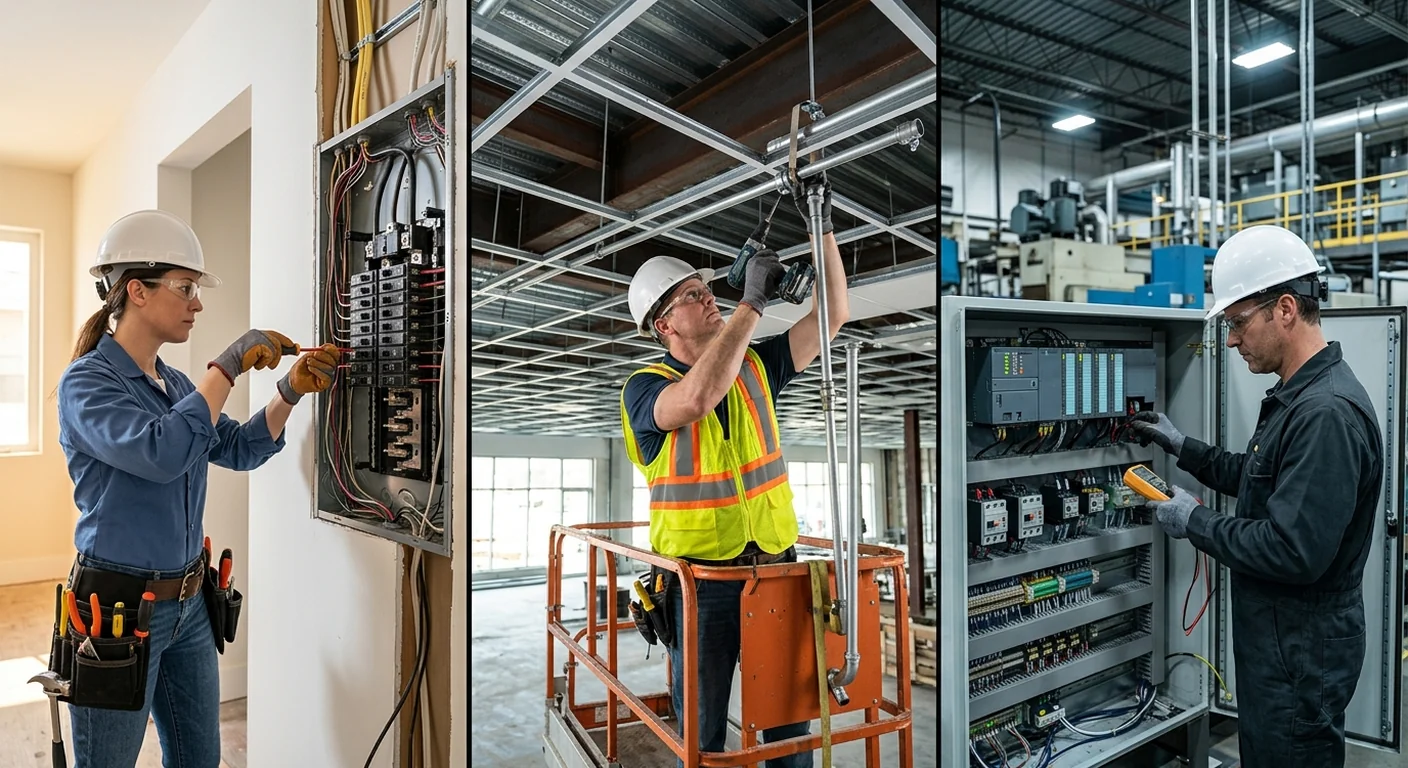
Residential vs Commercial vs Industrial Electrician: Pay, Hours, Career Ceiling
A practical comparison of the three electrician tracks — residential, commercial, and industrial — with BLS pay data, daily-work realities, lifestyle trade-offs, and where each path tops out at the master/foreman/owner level.
State & Regional Guides
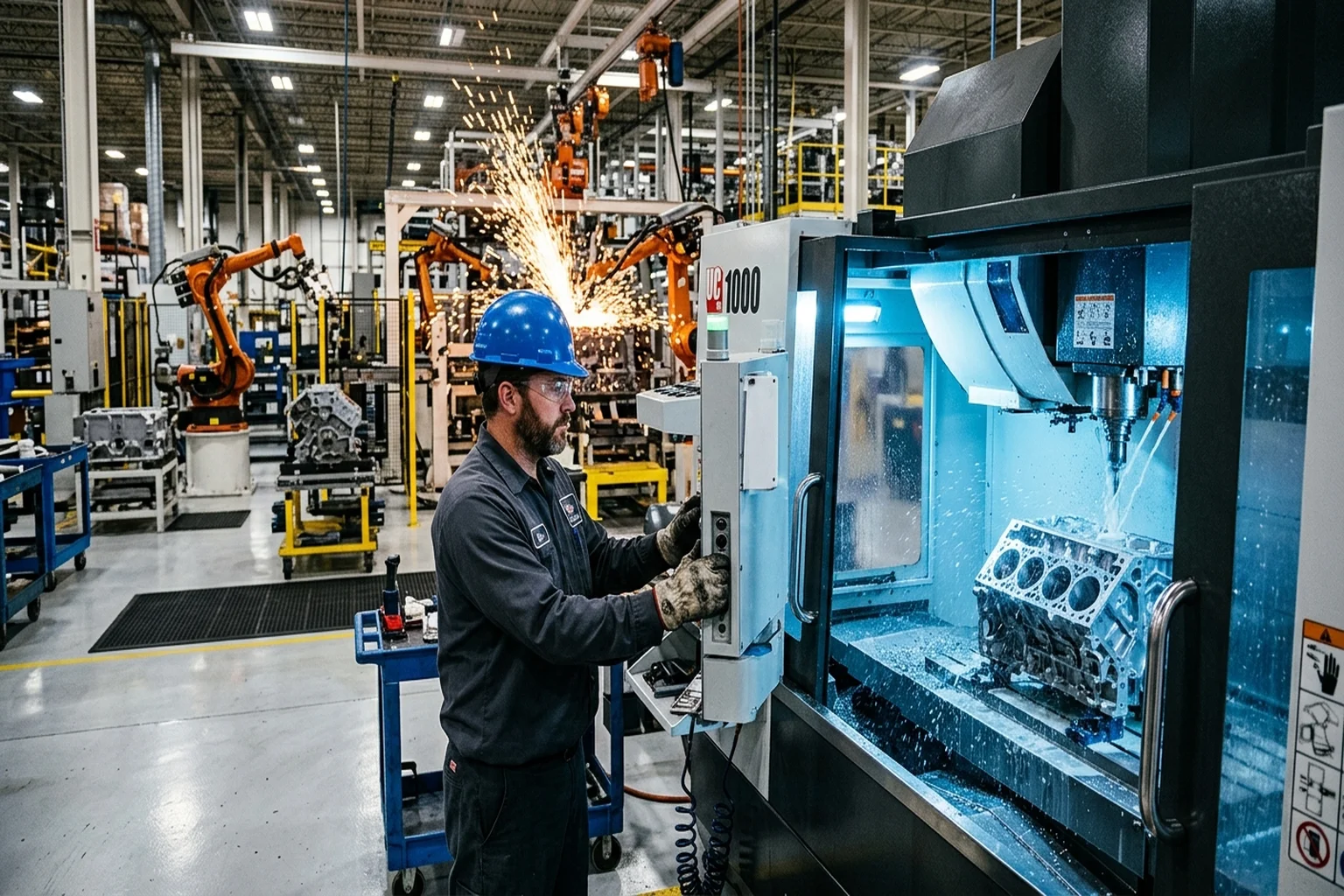
Ohio's Manufacturing Trades Boom: Why Welders, Machinists, and Industrial Electricians Are in High Demand
Ohio's $137.9 billion manufacturing sector — home to Intel's $28B semiconductor campus, Honda's $4.4B EV battery plant, and 687,000 manufacturing jobs — is creating urgent demand for welders, CNC machinists, industrial electricians, and millwrights. Here's what the data says and how to get started.