Repair, test, adjust, or install electronic equipment, such as industrial controls, transmitters, and antennas.
Electrical and Electronics Repairers, Commercial and Industrial Equipment
SOC: 49-2094 O*NET: 49-2094.00
Median Salary
$74,090
per year
Job Growth
📉 0.3%
Slower (2024-2034)
Annual Openings
4.7
projected jobs/year
Education Level
Vocational school, on-the-job training, or associate degree
Job Zone 3
Repair, test, adjust, or install electronic equipment, such as industrial controls, transmitters, and antennas.
What does a Electrical and Electronics Repairers, Commercial and Industrial Equipment do?
How much can you earn?
Entry Level
$46,840
10th percentile
Early Career
$60,040
25th percentile
Median
$74,090
50th percentile
Experienced
$88,710
75th percentile
Top Earners
$105,590
90th percentile
National Salary Distribution
10th
$46,840
25th
$60,040
Middle 50%
MEDIAN
$74,090
Mean: $75,570
75th
$88,710
90th
$105,590
Middle 50% of earners
Median salary
Mean (average)
Key Insights
- •Salary range spans $58,750 from entry level to top earners
- •Middle 50% earn between $60,040 and $88,710
- •Salary spread is 38.7% around the median, showing moderate variation
- •Total national employment: 65,010 professionals
What's the job outlook?
Job Market Intelligence
Medium Demand
Market demand
Medium Risk
Automation risk
Current Employment
National Employment:65,500
Top Industries
Manufacturing23.9%
Wholesale Trade10%
Merchant Wholesalers, Durable Goods8.8%
10-Year Outlook
Growth Rate:+0.3%
Annual Openings:4,700
Employment Projections
2025 (Current)65,500
Current
2035 (Projected)65,700
+0.3%
+200
Employment Change
+0.3%
Growth Rate
10
Year Projection
Growth Category: More slowly than average
Geographic Salary & Employment Data
Explore where Electrical and Electronics Repairers, Commercial and Industrial Equipment professionals work across the United States
Showing 15 of 50 locations
Texas
13,540 jobs$74,4802.30x
California
5,830 jobs$87,0800.77x
Florida
3,650 jobs$61,5300.88x
Georgia
3,040 jobs$68,4701.49x
Pennsylvania
2,710 jobs$65,9601.07x
Colorado
2,200 jobs$79,6101.83x
New York
1,700 jobs$78,1300.42x
Tennessee
1,700 jobs$61,5601.24x
Washington
1,660 jobs$99,2001.12x
North Carolina
1,660 jobs$76,7400.80x
Virginia
1,570 jobs$71,3200.91x
Ohio
1,510 jobs$62,3100.65x
Michigan
1,460 jobs$66,1400.79x
New Jersey
1,290 jobs$74,9800.72x
Minnesota
1,240 jobs$80,2201.00x
Understanding the Data
Location Quotient (LQ):
- • LQ > 1.0: More jobs than national average
- • LQ = 1.0: Same as national average
- • LQ < 1.0: Fewer jobs than national average
Data Source:
Bureau of Labor Statistics Occupational Employment and Wage Statistics (OEWS), May 2025
Key Growth Factors
Standard growth expectations for this occupation
What skills do you need?
Top 10 Most Important Skills
#1
Operations Monitoring
100%
#2
Computers and Electronics
100%
#3
Near Vision
100%
#4
Mechanical
94%
#5
Repairing
94%
#6
Information Ordering
92%
#7
Production and Processing
86%
#8
Critical Thinking
86%
#9
Problem Sensitivity
82%
#10
Quality Control Analysis
80%
Skills Overview
Operations Monitoring
advanced5.0
100%
Computers and Electronics
advanced5.0
100%
Near Vision
advanced5.0
100%
Mechanical
advanced4.7
94%
Repairing
advanced4.7
94%
Information Ordering
advanced4.6
92%
Production and Processing
intermediate4.3
86%
Critical Thinking
intermediate4.3
86%
Skills are rated on a scale of 0-5, with 5 being the most important. The complexity level indicates how advanced the skill typically needs to be.
Filter:
Sort by:
Operations Monitoring
advancedImportance100%
skills
5.0/5.0
Computers and Electronics
advancedImportance100%
knowledge
5.0/5.0
Near Vision
advancedImportance100%
abilities
5.0/5.0
Mechanical
advancedImportance94%
knowledge
4.7/5.0
Repairing
advancedImportance94%
abilities
4.7/5.0
Information Ordering
advancedImportance92%
abilities
4.6/5.0
Production and Processing
intermediateImportance86%
knowledge
4.3/5.0
Critical Thinking
intermediateImportance86%
abilities
4.3/5.0
Problem Sensitivity
intermediateImportance82%
abilities
4.1/5.0
Quality Control Analysis
intermediateImportance80%
skills
4.0/5.0
Customer and Personal Service
intermediateImportance80%
knowledge
4.0/5.0
Equipment Maintenance
intermediateImportance74%
skills
3.7/5.0
Highly Transferable Skills
These skills are valuable across multiple career paths, making career transitions easier:
Electric Motor, Power Tool, and Related Repairers82%
5 shared skills
Farm Equipment Mechanics and Service Technicians82%
5 shared skills
Mobile Heavy Equipment Mechanics, Except Engines82%
5 shared skills
Motorboat Mechanics and Service Technicians82%
5 shared skills
Motorcycle Mechanics82%
5 shared skills
Signal and Track Switch Repairers82%
5 shared skills
Skills by Career Stage
Entry Level
Must Have:
- ✓Computers and Electronics
- ✓Mechanical
- ✓Production and Processing
- ✓Customer and Personal Service
Learn on the Job:
- →Troubleshooting
- →Administration and Management
- →Engineering and Technology
Mid Career
Expected:
- ✓Operations Monitoring
- ✓Quality Control Analysis
- ✓Computers and Electronics
- ✓Mechanical
- ✓Production and Processing
Senior Level
Mastery Required:
- ★Quality Control Analysis
- ★Computers and Electronics
- ★Mechanical
- ★Production and Processing
- ★Customer and Personal Service
Skill Development Tips
- •Focus on developing the top 5 skills first - they have the highest impact on career success
- •Transferable skills open doors to related careers and provide flexibility
- •Balance technical skills with soft skills for well-rounded professional development
- •Entry-level positions prioritize foundational skills that can be built upon over time
What technology will you use?
Technology & Digital Skills
Essential technology proficiencies for Electrical and Electronics Repairers, Commercial and Industrial Equipment
Technology Intensity
High
Digital Literacy Requirements
This career requires advanced digital literacy
1
Basic
2
Intermediate
3
Advanced
4
Expert
Key Digital Competencies:
Proficiency with specialized softwareTechnical documentationData analysis toolsSystem integration
🔥
Hot Technologies in Demand
These technologies are currently trending and highly sought after in this field
Autodesk AutoCAD
🔥 Hot TechMicrosoft Office software
🔥 Hot TechMicrosoft Windows
🔥 Hot TechMicrosoft Excel
🔥 Hot TechMicrosoft Word
🔥 Hot TechTechnology Stack
Technology Stack Overview
Key technologies used in this career
Autodesk AutoCAD
Microsoft Office software
Microsoft Windows
Microsoft Excel
Microsoft Word
📚 Technology Learning Resources
Recommended Certifications
- •Vendor-specific software certifications
- •Industry-recognized technology credentials
- •Professional development courses
Online Learning Platforms
- •LinkedIn Learning - Comprehensive technology courses
- •Coursera - University-level programs
- •Udemy - Practical skills training
💡 Technology Skill Development Tips
- •Focus on mastering hot technologies first - they're currently most in-demand
- •Build a portfolio demonstrating your proficiency with key tools and software
- •Stay current through continuous learning - technology evolves rapidly
- •Consider vendor certifications to validate your skills to employers
What's the work environment like?
🏢
Location
MOSTLY INDOOR
💪
Physical Demand
MODERATE
👥
Team Orientation
CONSTANT TEAM
🤝
Customer Interaction
FREQUENT
💡Is This Work Environment Right for You?
Consider these factors when evaluating if you'll thrive in this work environment:
- •Are you comfortable working in mostly indoor environments?
- •Can you meet moderate physical demands?
- •Do you enjoy constant team team environments?
- •Are you comfortable working with safety protocols and protective equipment?
What are the key tasks?
Tasks & Responsibilities
20
Core Tasks
8
Daily Tasks
20
Work Activities
0
Emerging Tasks
Filter:
Sort by:
Operations & Execution (1)General Responsibilities (11)Analysis & Evaluation (1)Management & Supervision (1)Documentation & Record-Keeping (2)Communication & Coordination (1)Planning & Development (3)
1
Perform scheduled preventive maintenance tasks, such as checking, cleaning, or repairing equipment, to detect and prevent problems.
🔴Daily
Importance:
Operations & Execution100% perform100%
2
Examine work orders and converse with equipment operators to detect equipment problems and to ascertain whether mechanical or human errors contributed to the problems.
🔴Daily
Importance:
General Responsibilities97% perform98%
3
Set up and test industrial equipment to ensure that it functions properly.
🔴Daily
Importance:
General Responsibilities94% perform96%
4
Operate equipment to demonstrate proper use or to analyze malfunctions.
🔴Daily
Importance:
Analysis & Evaluation91% perform94%
5
Test faulty equipment to diagnose malfunctions, using test equipment or software, and applying knowledge of the functional operation of electronic units and systems.
🔴Daily
Importance:
General Responsibilities88% perform92%
6
Repair or adjust equipment, machines, or defective components, replacing worn parts, such as gaskets or seals in watertight electrical equipment.
🔴Daily
Importance:
General Responsibilities85% perform90%
7
Calibrate testing instruments and installed or repaired equipment to prescribed specifications.
🔴Daily
Importance:
General Responsibilities82% perform88%
8
Advise management regarding customer satisfaction, product performance, or suggestions for product improvements.
🔴Daily
Importance:
Management & Supervision79% perform86%
9
Inspect components of industrial equipment for accurate assembly and installation or for defects, such as loose connections or frayed wires.
🟡Weekly
Importance:
General Responsibilities76% perform84%
10
Study blueprints, schematics, manuals, or other specifications to determine installation procedures.
🟡Weekly
Importance:
General Responsibilities73% perform82%
💡 Key Takeaways
- •Daily tasks focus primarily on operations & execution activities
- •35% of tasks are performed by most workers in this occupation
- •Career advancement brings increased leadership and strategic responsibilities
What career paths are available?
Career Pathways
0
Advancement Opportunities
0
Lateral Move Options
0%
Avg. Salary Increase
Advancement Opportunities
Typical career progression paths from Electrical and Electronics Repairers, Commercial and Industrial Equipment
💡 Career Planning Tips
- •Most successful advancement happens after 3-5 years of experience
- •Lateral moves can provide valuable cross-functional experience for future leadership roles
- •Focus on developing skills that are transferable across multiple career paths
- •Consider industry trends when planning long-term career moves
Is this career right for you?
Personality & Values Fit
Is This Career Right for You?
Electrical and Electronics Repairers, Commercial and Industrial Equipment professionals typically have a RCI Holland code and highly value support
RRealistic
CConventional
IInvestigative
Important Personality Traits
Work styles that contribute to success as a Electrical and Electronics Repairers, Commercial and Industrial Equipment
Dependability
Very ImportantDependability
Importance Level4.41
Attention to Detail
Very ImportantAttention to Detail
Importance Level4.38
Analytical Thinking
Very ImportantAnalytical Thinking
Importance Level4.30
Independence
Very ImportantIndependence
Importance Level4.17
Initiative
Very ImportantInitiative
Importance Level4.09
Adaptability/Flexibility
Very ImportantAdaptability/Flexibility
Importance Level4.08
Complete Work Styles Profile
Dependability
4.4
Attention to Detail
4.4
Analytical Thinking
4.3
Independence
4.2
Initiative
4.1
Adaptability/Flexibility
4.1
Integrity
3.9
Persistence
3.9
Self-Control
3.9
Cooperation
3.9
💡 Tips for Career Fit Success
- •While personality fit is important, skills can be developed with practice and training
- •Consider informational interviews to better understand the day-to-day personality requirements
- •Work environments vary by employer - research specific companies for cultural fit
- •Your interests and values may evolve - reassess periodically throughout your career
What education is required?
Education Level
Vocational school, on-the-job training, or associate degree
Typical duration: Varies
Preparation Level
Job Zone 3
Medium Preparation Needed
Experience Needed
Previous work-related skill, knowledge, or experience required
📚 Education Requirement
Required Level:Vocational school, on-the-job training, or associate degree
Most occupations in this zone require training in vocational schools, related on-the-job experience, or an associate's degree.
Training:
Training of more than one year
💼 Experience Requirement
Previous work-related skill, knowledge, or experience required
Common pathways to gain experience:
- • Associate degree programs
- • Apprenticeships (1-2 years)
- • Vocational training with related experience
3
Job Zone Three: Medium Preparation Needed
Most occupations in this zone require training in vocational schools, related on-the-job experience, or an associate's degree.
Associate degree programsApprenticeships (1-2 years)Vocational training with related experience
Ready to Start Your Journey?
Explore educational programs that can help you become a Electrical and Electronics Repairers, Commercial and Industrial Equipment.
Browse Training Programs →The Apprenticeship Route: Earn While You Learn
You don't necessarily need to pay for school to enter this field. There are 249 registered apprenticeship sponsors for this occupation in the U.S. DOL system — including 15 union/joint labor-management programs. Apprentices earn a wage from day one, typically starting at 40–50% of the journeyman rate, and finish with no tuition debt.
Most sponsors: MI (59) , GA (21) , TX (19) , SC (17) , PA (16)
How apprenticeships work →Source: U.S. Department of Labor, Registered Apprenticeship sponsors (apprenticeship.gov)
Trade Colleges That Train for Electrical and Electronics Repairers, Commercial and Industrial Equipment
Top trade colleges by completions in fields that prepare students for this career.
Sonoran Desert Institute
Tempe, AZ
3.3k program completions/year
Ivy Tech Community College
Indianapolis, IN
2.9k program completions/year
South Florida Institute of Technology
Miami, FL
2.4k program completions/year
Central Georgia Technical College
Warner Robins, GA
1.9k program completions/year
Texas State Technical College
Waco, TX
1.3k program completions/year
Jefferson Community and Technical College
Louisville, KY
1.2k program completions/year
Chattahoochee Technical College
Marietta, GA
1.2k program completions/year
Universal Technical Institute of Texas Inc.
Houston, TX
1.1k program completions/year
St Philip's College
San Antonio, TX
1.1k program completions/year
River Parishes Community College
Gonzales, LA
1.1k program completions/year
WyoTech
Laramie, WY
1.1k program completions/year
Universal Technical Institute of Arizona Inc
Avondale, AZ
1.0k program completions/year
From the Blog
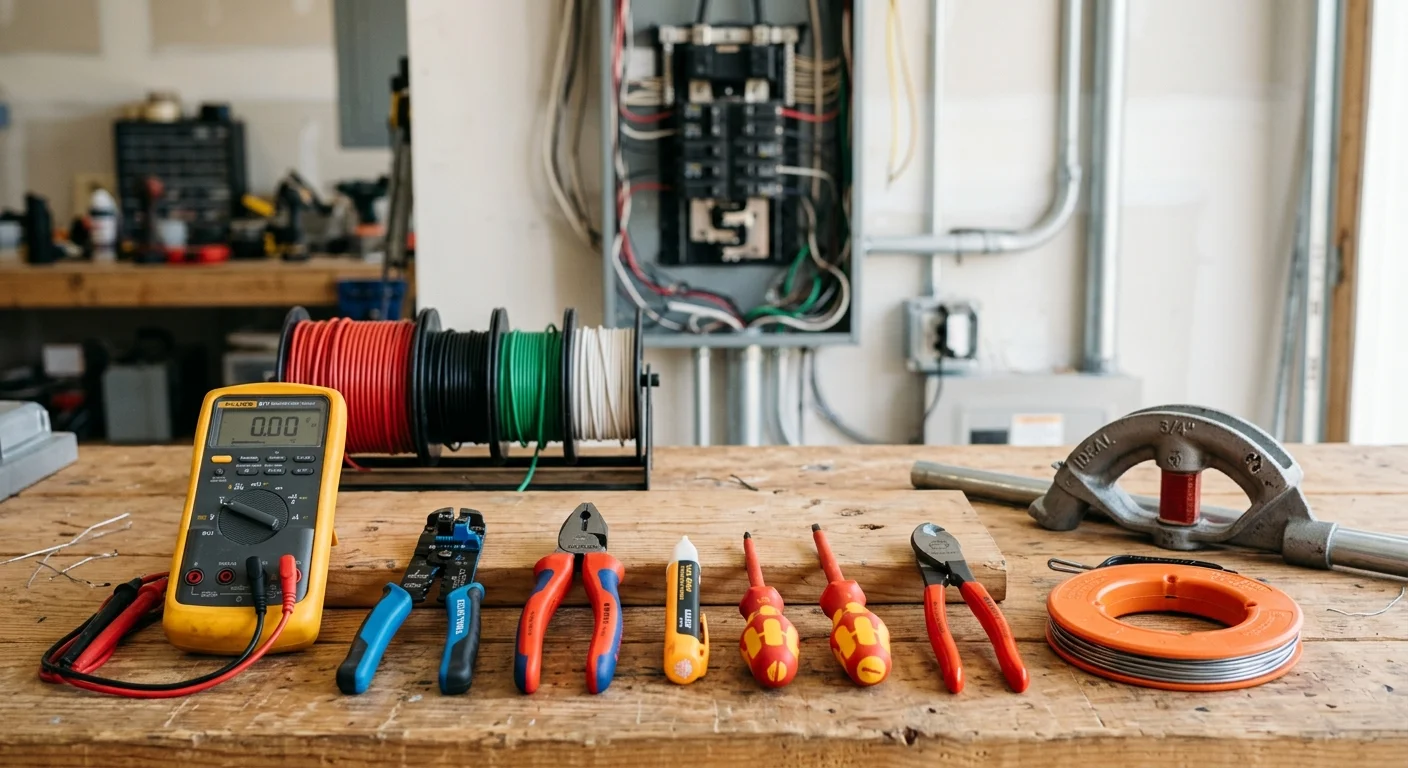
Tools & Equipment
Essential Tools & Gear for Electricians: A Complete Guide
Discover the must-have tools, safety gear, and equipment every electrician needs — from apprentice starter kits to professional setups.
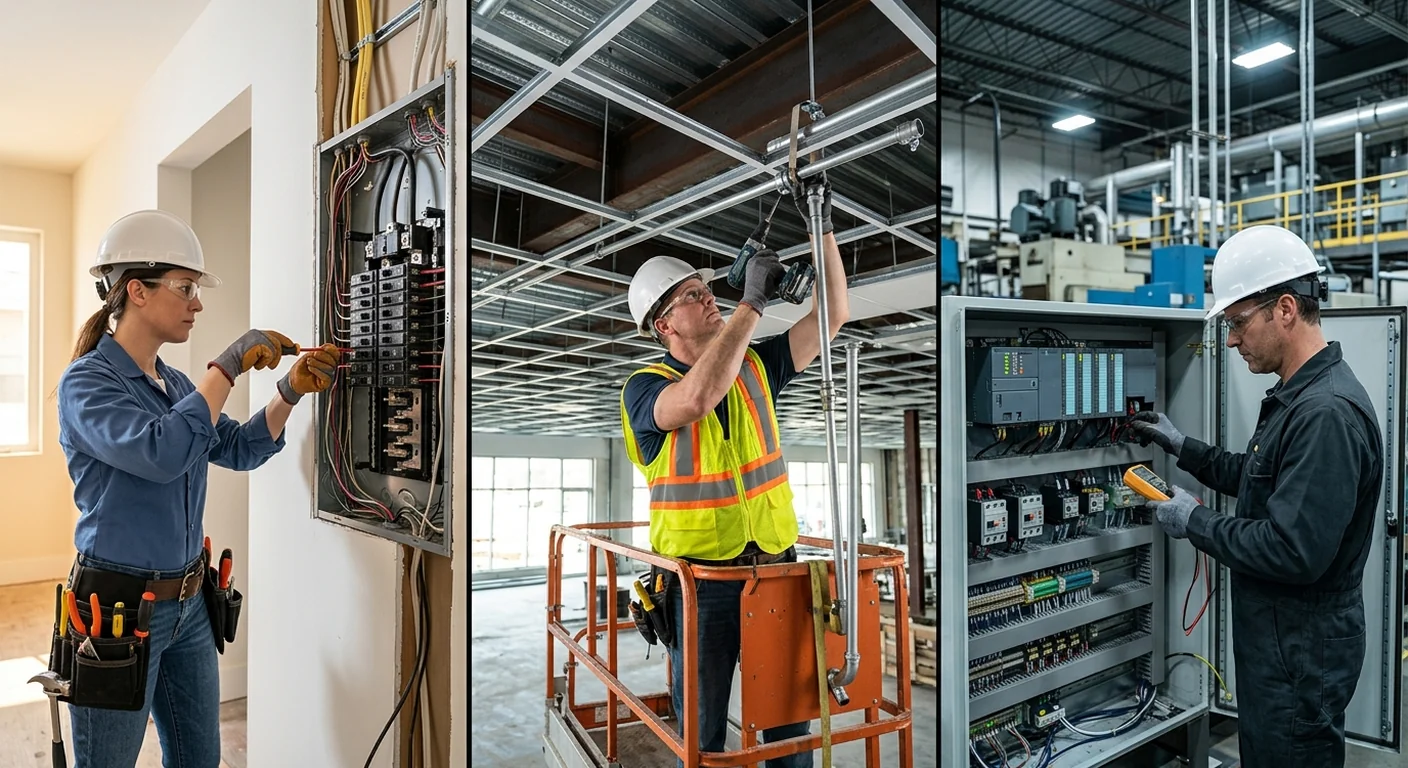
Trade Programs
Residential vs Commercial vs Industrial Electrician: Pay, Hours, Career Ceiling
A practical comparison of the three electrician tracks — residential, commercial, and industrial — with BLS pay data, daily-work realities, lifestyle trade-offs, and where each path tops out at the master/foreman/owner level.
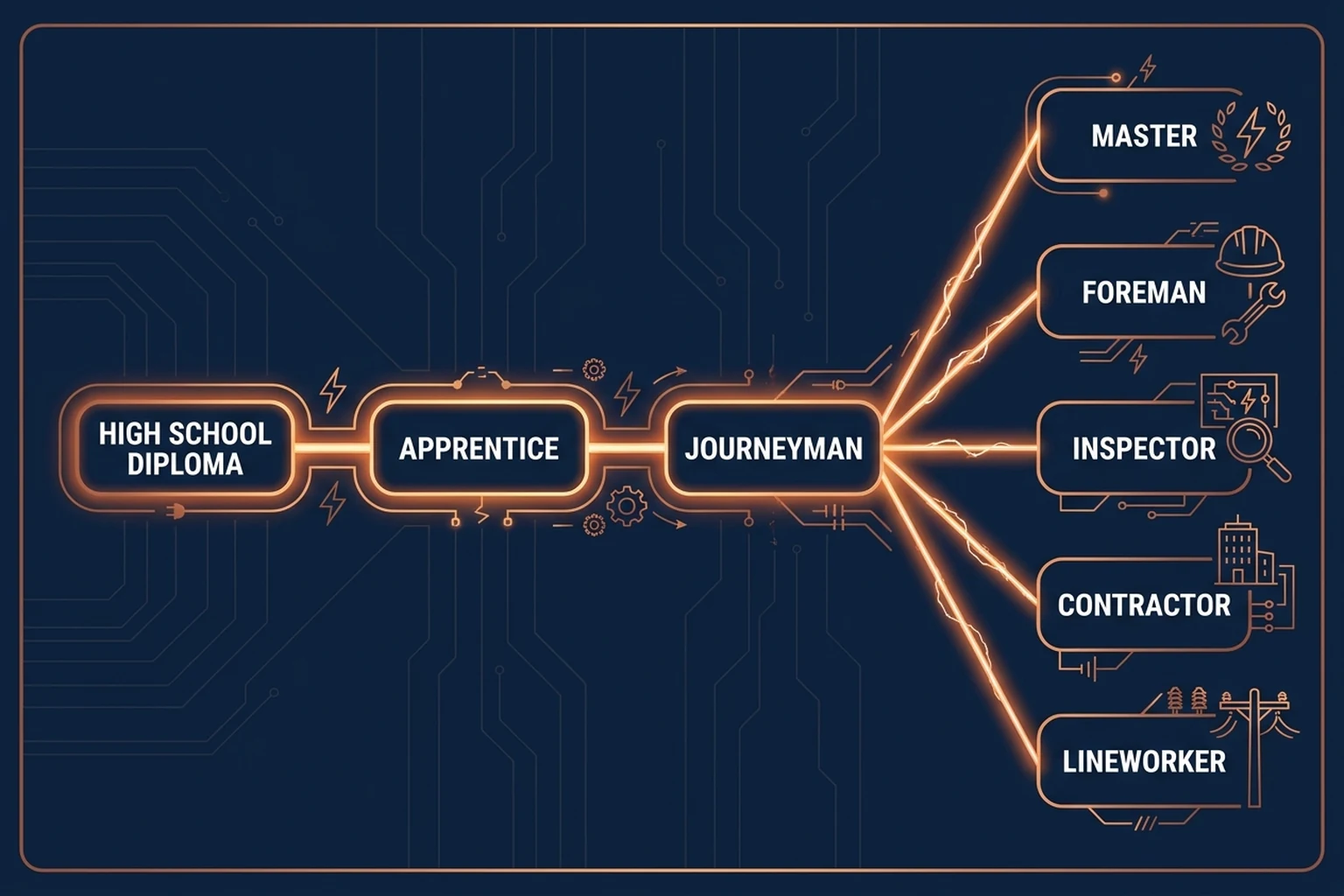
Career Guidance
Electrician Career Paths: From Apprentice to Master, Inspector, or Contractor
The full electrician career map: entry requirements, the apprenticeship, and the five branches after journeyman — what each pays and which are actually growing.
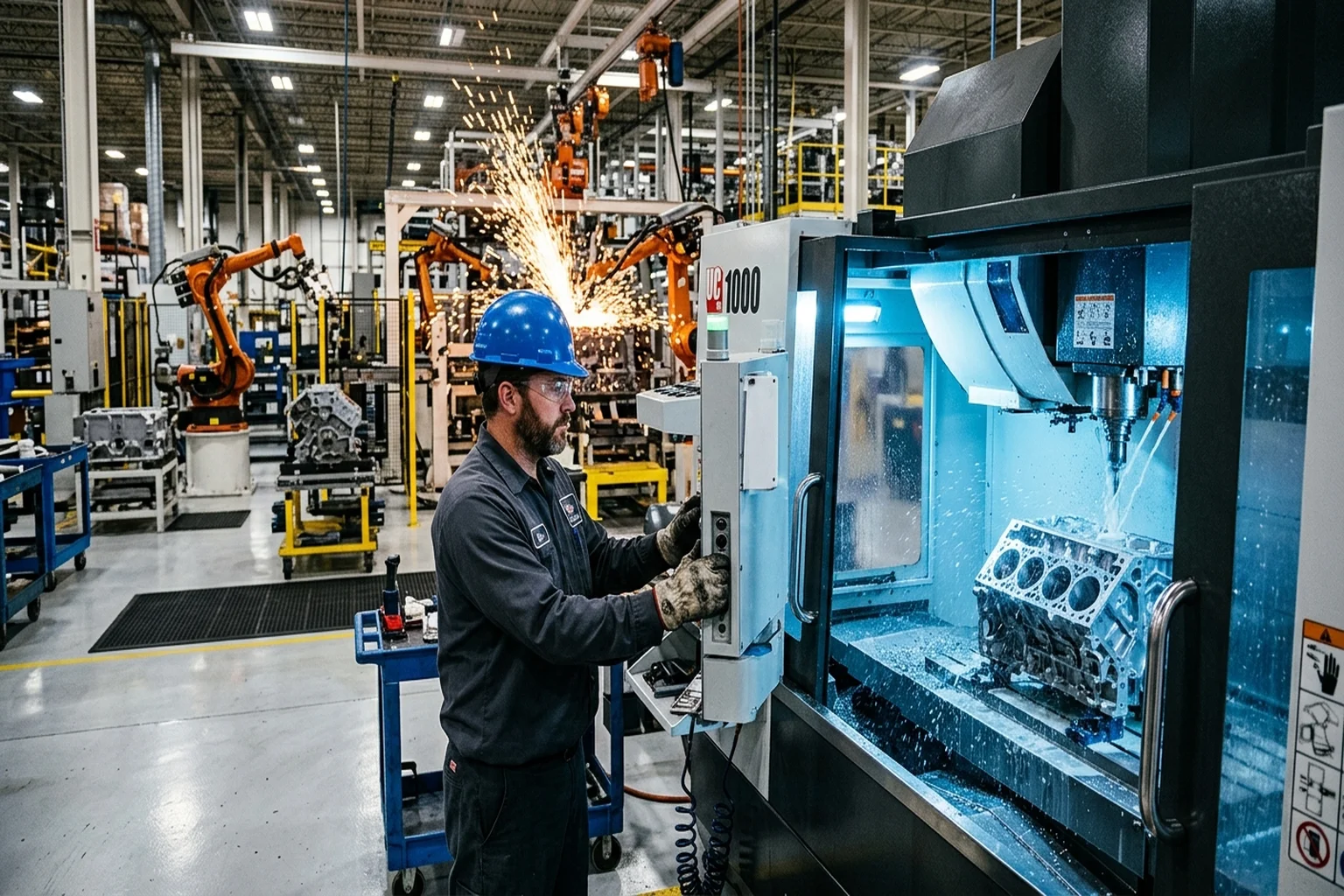
State & Regional Guides
Ohio's Manufacturing Trades Boom: Why Welders, Machinists, and Industrial Electricians Are in High Demand
Ohio's $137.9 billion manufacturing sector — home to Intel's $28B semiconductor campus, Honda's $4.4B EV battery plant, and 687,000 manufacturing jobs — is creating urgent demand for welders, CNC machinists, industrial electricians, and millwrights. Here's what the data says and how to get started.