Apply principles of psychology to human resources, administration, management, sales, and marketing problems. Activities may include policy planning; employee testing and selection, training, and development; and organizational development and analysis. May work with management to organize the work setting to improve worker productivity.
Industrial-Organizational Psychologists
SOC: 19-3032 O*NET: 19-3032.00
Median Salary
$193,950
per year
Job Growth
📈 6.5%
Faster (2024-2034)
Annual Openings
0.3
projected jobs/year
Education Level
Bachelor's degree plus work experience, or graduate degree
Job Zone 5
Apply principles of psychology to human resources, administration, management, sales, and marketing problems. Activities may include policy planning; employee testing and selection, training, and development; and organizational development and analysis. May work with management to organize the work setting to improve worker productivity.
What does a Industrial-Organizational Psychologists do?
How much can you earn?
Entry Level
$79,010
10th percentile
Early Career
$107,310
25th percentile
Median
$193,950
50th percentile
Experienced
$222,280
75th percentile
Top Earners
$247,220
90th percentile
National Salary Distribution
10th
$79,010
25th
$107,310
Middle 50%
MEDIAN
$193,950
Mean: $170,230
75th
$222,280
90th
$247,220
Middle 50% of earners
Median salary
Mean (average)
Key Insights
- •Salary range spans $168,210 from entry level to top earners
- •Middle 50% earn between $107,310 and $222,280
- •Salary spread is 59.3% around the median, showing high variation
- •Total national employment: 790 professionals
What's the job outlook?
Job Market Intelligence
Medium Demand
Market demand
Medium Risk
Automation risk
Current Employment
National Employment:4,000
Top Industries
Professional, Scientific, and Technical Services74.7%
Professional, Scientific, and Technical Services74.7%
Management, Scientific, and Technical Consulting Services67.1%
10-Year Outlook
Growth Rate:+6.5%
Annual Openings:300
Employment Projections
2025 (Current)4,000
Current
2035 (Projected)4,300
+6.5%
+300
Employment Change
+6.5%
Growth Rate
10
Year Projection
Growth Category: As fast as average
Geographic Salary & Employment Data
Explore where Industrial-Organizational Psychologists professionals work across the United States
Showing 2 of 2 locations
Oregon
60 jobs$174,9805.76x
Texas
40 jobs$139,5200.49x
Understanding the Data
Location Quotient (LQ):
- • LQ > 1.0: More jobs than national average
- • LQ = 1.0: Same as national average
- • LQ < 1.0: Fewer jobs than national average
Data Source:
Bureau of Labor Statistics Occupational Employment and Wage Statistics (OEWS), May 2025
Key Growth Factors
- •Average growth expected
What skills do you need?
Top 10 Most Important Skills
#1
Personnel and Human Resources
100%
#2
Reading Comprehension
100%
#3
Written Comprehension
100%
#4
Active Listening
94%
#5
Psychology
94%
#6
Oral Expression
92%
#7
Writing
86%
#8
Education and Training
86%
#9
Written Expression
82%
#10
Administration and Management
80%
Skills Overview
Personnel and Human Resources
advanced5.0
100%
Reading Comprehension
advanced5.0
100%
Written Comprehension
advanced5.0
100%
Active Listening
advanced4.7
94%
Psychology
advanced4.7
94%
Oral Expression
advanced4.6
92%
Writing
intermediate4.3
86%
Education and Training
intermediate4.3
86%
Skills are rated on a scale of 0-5, with 5 being the most important. The complexity level indicates how advanced the skill typically needs to be.
Filter:
Sort by:
Personnel and Human Resources
advancedImportance100%
knowledge
5.0/5.0
Reading Comprehension
advancedImportance100%
abilities
5.0/5.0
Written Comprehension
advancedImportance100%
abilities
5.0/5.0
Active Listening
advancedImportance94%
skills
4.7/5.0
Psychology
advancedImportance94%
knowledge
4.7/5.0
Oral Expression
advancedImportance92%
abilities
4.6/5.0
Writing
intermediateImportance86%
skills
4.3/5.0
Education and Training
intermediateImportance86%
knowledge
4.3/5.0
Written Expression
intermediateImportance82%
abilities
4.1/5.0
Administration and Management
intermediateImportance80%
knowledge
4.0/5.0
Judgment and Decision Making
intermediateImportance80%
abilities
4.0/5.0
Mathematics
intermediateImportance74%
knowledge
3.7/5.0
Highly Transferable Skills
These skills are valuable across multiple career paths, making career transitions easier:
Financial Examiners100%
5 shared skills
Administrative Law Judges, Adjudicators, and Hearing Officers82%
5 shared skills
Urologists82%
5 shared skills
Physician Assistants82%
5 shared skills
Audiologists82%
5 shared skills
Web Administrators82%
5 shared skills
Skills by Career Stage
Entry Level
Must Have:
- ✓Active Listening
- ✓Writing
- ✓Personnel and Human Resources
- ✓Psychology
- ✓Education and Training
Learn on the Job:
- →Systems Evaluation
- →Speaking
- →English Language
Mid Career
Expected:
- ✓Active Listening
- ✓Writing
- ✓Personnel and Human Resources
- ✓Psychology
- ✓Education and Training
Senior Level
Mastery Required:
- ★Active Listening
- ★Writing
- ★Personnel and Human Resources
- ★Psychology
- ★Education and Training
Skill Development Tips
- •Focus on developing the top 5 skills first - they have the highest impact on career success
- •Transferable skills open doors to related careers and provide flexibility
- •Balance technical skills with soft skills for well-rounded professional development
- •Entry-level positions prioritize foundational skills that can be built upon over time
What technology will you use?
Technology & Digital Skills
Essential technology proficiencies for Industrial-Organizational Psychologists
Technology Intensity
Very High
Digital Literacy Requirements
This career requires expert digital literacy
1
Basic
2
Intermediate
3
Advanced
4
Expert
Key Digital Competencies:
Advanced software proficiencySystem architecture understandingAutomation and scriptingEmerging technology adaptationTechnical problem-solving
🔥
Hot Technologies in Demand
These technologies are currently trending and highly sought after in this field
IBM SPSS Statistics
🔥 Hot TechSAS
🔥 Hot TechMicrosoft Access
🔥 Hot TechAdobe Acrobat
🔥 Hot TechMicrosoft Outlook
🔥 Hot TechOracle PeopleSoft
🔥 Hot TechMicrosoft Office software
🔥 Hot TechMicrosoft PowerPoint
🔥 Hot TechMicrosoft Visio
🔥 Hot TechMicrosoft Project
🔥 Hot TechGoogle Sheets
🔥 Hot TechMicrosoft Excel
🔥 Hot TechTechnology Stack
Technology Stack Overview
Key technologies used in this career
IBM SPSS Statistics
SAS
Microsoft Access
Adobe Acrobat
Microsoft Outlook
Oracle PeopleSoft
Microsoft Office software
Microsoft PowerPoint
Microsoft Visio
Microsoft Project
Google Sheets
Microsoft Excel
📚 Technology Learning Resources
Recommended Certifications
- •Vendor-specific software certifications
- •Industry-recognized technology credentials
- •Professional development courses
Online Learning Platforms
- •LinkedIn Learning - Comprehensive technology courses
- •Coursera - University-level programs
- •Udemy - Practical skills training
💡 Technology Skill Development Tips
- •Focus on mastering hot technologies first - they're currently most in-demand
- •Build a portfolio demonstrating your proficiency with key tools and software
- •Stay current through continuous learning - technology evolves rapidly
- •Consider vendor certifications to validate your skills to employers
What's the work environment like?
🏢
Location
MOSTLY INDOOR
💪
Physical Demand
HIGH
👥
Team Orientation
MOSTLY TEAM
🤝
Customer Interaction
OCCASIONAL
💡Is This Work Environment Right for You?
Consider these factors when evaluating if you'll thrive in this work environment:
- •Are you comfortable working in mostly indoor environments?
- •Can you meet high physical demands?
- •Do you enjoy mostly team team environments?
- •Are you comfortable working with safety protocols and protective equipment?
What are the key tasks?
Tasks & Responsibilities
21
Core Tasks
8
Daily Tasks
20
Work Activities
0
Emerging Tasks
Filter:
Sort by:
Planning & Development (5)Analysis & Evaluation (5)General Responsibilities (9)Management & Supervision (1)Training & Development (1)
1
Develop and implement employee selection or placement programs.
🔴Daily
Importance:
Planning & Development100% perform100%
2
Analyze job requirements and content to establish criteria for classification, selection, training, and other related personnel functions.
🔴Daily
Importance:
Analysis & Evaluation97% perform98%
3
Observe and interview workers to obtain information about the physical, mental, and educational requirements of jobs, as well as information about aspects such as job satisfaction.
🔴Daily
Importance:
General Responsibilities94% perform96%
4
Write reports on research findings and implications to contribute to general knowledge or to suggest potential changes in organizational functioning.
🔴Daily
Importance:
General Responsibilities91% perform94%
5
Advise management concerning personnel, managerial, and marketing policies and practices and their potential effects on organizational effectiveness and efficiency.
🔴Daily
Importance:
Management & Supervision88% perform92%
6
Identify training and development needs.
🔴Daily
Importance:
Planning & Development85% perform90%
7
Conduct research studies of physical work environments, organizational structures, communication systems, group interactions, morale, or motivation to assess organizational functioning.
🔴Daily
Importance:
Analysis & Evaluation82% perform88%
8
Formulate and implement training programs, applying principles of learning and individual differences.
🔴Daily
Importance:
Training & Development79% perform86%
9
Develop interview techniques, rating scales, and psychological tests used to assess skills, abilities, and interests for the purpose of employee selection, placement, or promotion.
🟡Weekly
Importance:
Planning & Development76% perform84%
10
Assess employee performance.
🟡Weekly
Importance:
Analysis & Evaluation73% perform82%
💡 Key Takeaways
- •Daily tasks focus primarily on planning & development activities
- •33% of tasks are performed by most workers in this occupation
- •Career advancement brings increased leadership and strategic responsibilities
What career paths are available?
Career Pathways
0
Advancement Opportunities
0
Lateral Move Options
0%
Avg. Salary Increase
Advancement Opportunities
Typical career progression paths from Industrial-Organizational Psychologists
💡 Career Planning Tips
- •Most successful advancement happens after 3-5 years of experience
- •Lateral moves can provide valuable cross-functional experience for future leadership roles
- •Focus on developing skills that are transferable across multiple career paths
- •Consider industry trends when planning long-term career moves
Is this career right for you?
Personality & Values Fit
Is This Career Right for You?
Industrial-Organizational Psychologists professionals typically have a IES Holland code and highly value working conditions
IInvestigative
EEnterprising
SSocial
Important Personality Traits
Work styles that contribute to success as a Industrial-Organizational Psychologists
Analytical Thinking
CriticalAnalytical Thinking
Importance Level4.69
Integrity
CriticalIntegrity
Importance Level4.65
Initiative
CriticalInitiative
Importance Level4.54
Dependability
Very ImportantDependability
Importance Level4.42
Achievement/Effort
Very ImportantAchievement/Effort
Importance Level4.38
Attention to Detail
Very ImportantAttention to Detail
Importance Level4.38
Complete Work Styles Profile
Analytical Thinking
4.7
Integrity
4.7
Initiative
4.5
Dependability
4.4
Achievement/Effort
4.4
Attention to Detail
4.4
Persistence
4.3
Adaptability/Flexibility
4.3
Cooperation
4.2
Independence
4.1
💡 Tips for Career Fit Success
- •While personality fit is important, skills can be developed with practice and training
- •Consider informational interviews to better understand the day-to-day personality requirements
- •Work environments vary by employer - research specific companies for cultural fit
- •Your interests and values may evolve - reassess periodically throughout your career
What education is required?
Education Level
Bachelor's degree plus work experience, or graduate degree
Typical duration: 4 years
Preparation Level
Job Zone 5
Extensive Preparation Needed
Experience Needed
Extensive skill, knowledge, and experience needed
📚 Education Requirement
Required Level:Bachelor's degree plus work experience, or graduate degree
Most of these occupations require graduate school. These may include master's, doctoral, or professional degrees.
Training:
Extensive training and work experience required
💼 Experience Requirement
Extensive skill, knowledge, and experience needed
Common pathways to gain experience:
- • Master's or doctoral degree
- • Extensive work experience in the field
- • State licensure or professional certification
5
Job Zone Five: Extensive Preparation Needed
Most of these occupations require graduate school. These may include master's, doctoral, or professional degrees.
Master's or doctoral degreeExtensive work experience in the fieldState licensure or professional certification
Ready to Start Your Journey?
Explore educational programs that can help you become a Industrial-Organizational Psychologists.
Browse Training Programs →Trade Colleges That Train for Industrial-Organizational Psychologists
Top trade colleges by completions in fields that prepare students for this career.
East Los Angeles College
Monterey Park, CA
1.3k program completions/year
Sierra College
Rocklin, CA
797 program completions/year
College of the Canyons
Santa Clarita, CA
744 program completions/year
American River College
Sacramento, CA
677 program completions/year
Long Beach City College
Long Beach, CA
605 program completions/year
Pasadena City College
Pasadena, CA
539 program completions/year
Fresno City College
Fresno, CA
524 program completions/year
Gaston College
Dallas, NC
512 program completions/year
Ohlone College
Fremont, CA
507 program completions/year
Mt San Antonio College
Walnut, CA
498 program completions/year
Santa Rosa Junior College
Santa Rosa, CA
496 program completions/year
Folsom Lake College
Folsom, CA
494 program completions/year
From the Blog

Trade Programs
Residential vs Commercial vs Industrial Electrician: Pay, Hours, Career Ceiling
A practical comparison of the three electrician tracks — residential, commercial, and industrial — with BLS pay data, daily-work realities, lifestyle trade-offs, and where each path tops out at the master/foreman/owner level.
State & Regional Guides
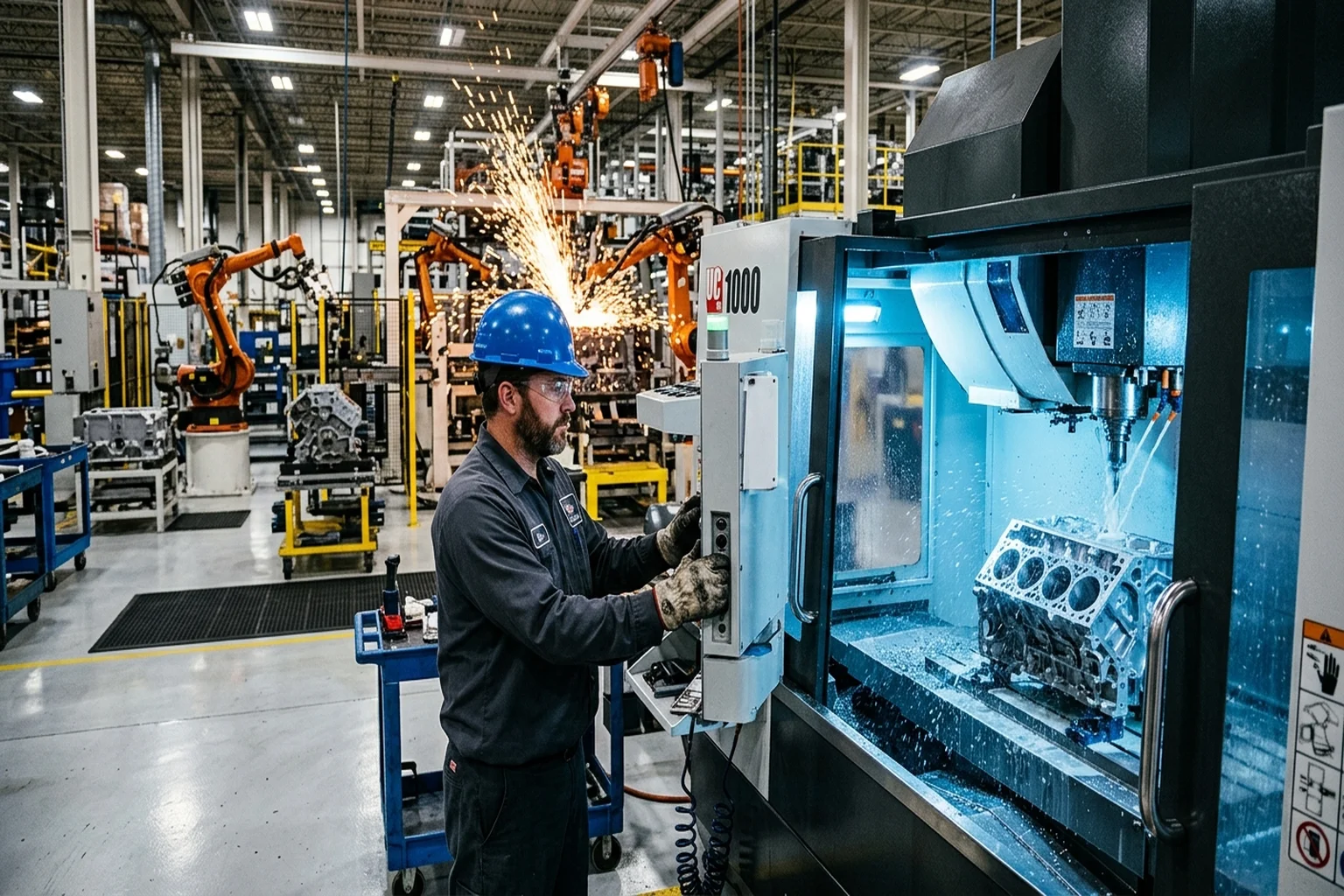
Ohio's Manufacturing Trades Boom: Why Welders, Machinists, and Industrial Electricians Are in High Demand
Ohio's $137.9 billion manufacturing sector — home to Intel's $28B semiconductor campus, Honda's $4.4B EV battery plant, and 687,000 manufacturing jobs — is creating urgent demand for welders, CNC machinists, industrial electricians, and millwrights. Here's what the data says and how to get started.