Operate production machines such as pug mill, jigger machine, or potter's wheel to process clay in manufacture of ceramic, pottery and stoneware products.
Potters, Manufacturing
SOC: 51-9195 O*NET: 51-9195.05
Median Salary
$46,170
per year
Job Growth
📈 5.8%
Faster (2024-2034)
Annual Openings
5.1
projected jobs/year
Education Level
Vocational school, on-the-job training, or associate degree
Job Zone 3
Operate production machines such as pug mill, jigger machine, or potter's wheel to process clay in manufacture of ceramic, pottery and stoneware products.
What does a Potters, Manufacturing do?
How much can you earn?
Entry Level
$35,850
10th percentile
Early Career
$39,280
25th percentile
Median
$46,170
50th percentile
Experienced
$53,000
75th percentile
Top Earners
$61,530
90th percentile
National Salary Distribution
10th
$35,850
25th
$39,280
Middle 50%
MEDIAN
$46,170
Mean: $47,500
75th
$53,000
90th
$61,530
Middle 50% of earners
Median salary
Mean (average)
Key Insights
- •Salary range spans $25,680 from entry level to top earners
- •Middle 50% earn between $39,280 and $53,000
- •Salary spread is 29.7% around the median, showing moderate variation
- •Total national employment: 33,190 professionals
What's the job outlook?
Job Market Intelligence
Medium Demand
Market demand
Medium Risk
Automation risk
Current Employment
National Employment:43,000
Top Industries
Manufacturing82.5%
Nonmetallic Mineral Product Manufacturing66.6%
Construction9.4%
10-Year Outlook
Growth Rate:+5.8%
Annual Openings:5,100
Employment Projections
2025 (Current)43,000
Current
2035 (Projected)45,500
+5.8%
+2,500
Employment Change
+5.8%
Growth Rate
10
Year Projection
Growth Category: As fast as average
Geographic Salary & Employment Data
Explore where Potters, Manufacturing professionals work across the United States
Showing 15 of 48 locations
California
3,590 jobs$49,1900.92x
Texas
2,550 jobs$40,0100.85x
Florida
2,410 jobs$45,0301.14x
Pennsylvania
1,690 jobs$45,3101.30x
Ohio
1,560 jobs$44,5601.32x
Indiana
1,520 jobs$46,4002.23x
Michigan
1,470 jobs$45,2501.56x
Illinois
1,230 jobs$47,1800.95x
Massachusetts
1,200 jobs$50,5501.55x
New York
1,150 jobs$45,9400.56x
Washington
1,130 jobs$51,7801.49x
Minnesota
900 jobs$45,7901.43x
Tennessee
880 jobs$45,8601.26x
Alabama
820 jobs$36,7301.83x
Georgia
760 jobs$47,1600.73x
Understanding the Data
Location Quotient (LQ):
- • LQ > 1.0: More jobs than national average
- • LQ = 1.0: Same as national average
- • LQ < 1.0: Fewer jobs than national average
Data Source:
Bureau of Labor Statistics Occupational Employment and Wage Statistics (OEWS), May 2025
Key Growth Factors
- •Average growth expected
What skills do you need?
Top 10 Most Important Skills
#1
Mathematics
100%
#2
Critical Thinking
100%
#3
Arm-Hand Steadiness
100%
#4
Near Vision
92%
#5
Production and Processing
90%
#6
Control Precision
82%
#7
Mechanical
80%
#8
Manual Dexterity
74%
#9
English Language
70%
#10
Judgment and Decision Making
70%
Skills Overview
Mathematics
advanced5.0
100%
Critical Thinking
advanced5.0
100%
Arm-Hand Steadiness
advanced5.0
100%
Near Vision
advanced4.6
92%
Production and Processing
advanced4.5
90%
Control Precision
intermediate4.1
82%
Mechanical
intermediate4.0
80%
Manual Dexterity
intermediate3.7
74%
Skills are rated on a scale of 0-5, with 5 being the most important. The complexity level indicates how advanced the skill typically needs to be.
Filter:
Sort by:
Mathematics
advancedImportance100%
knowledge
5.0/5.0
Critical Thinking
advancedImportance100%
abilities
5.0/5.0
Arm-Hand Steadiness
advancedImportance100%
abilities
5.0/5.0
Near Vision
advancedImportance92%
abilities
4.6/5.0
Production and Processing
advancedImportance90%
knowledge
4.5/5.0
Control Precision
intermediateImportance82%
abilities
4.1/5.0
Mechanical
intermediateImportance80%
knowledge
4.0/5.0
Manual Dexterity
intermediateImportance74%
abilities
3.7/5.0
English Language
intermediateImportance70%
knowledge
3.5/5.0
Judgment and Decision Making
intermediateImportance70%
abilities
3.5/5.0
Finger Dexterity
intermediateImportance66%
abilities
3.3/5.0
Administration and Management
intermediateImportance60%
knowledge
3.0/5.0
Highly Transferable Skills
These skills are valuable across multiple career paths, making career transitions easier:
Meat, Poultry, and Fish Cutters and Trimmers60%
3 shared skills
Dancers50%
2 shared skills
Fine Artists, Including Painters, Sculptors, and Illustrators50%
3 shared skills
Jewelers and Precious Stone and Metal Workers50%
2 shared skills
Painters, Construction and Maintenance50%
2 shared skills
Pourers and Casters, Metal50%
3 shared skills
Skills by Career Stage
Entry Level
Must Have:
- ✓Mathematics
- ✓Production and Processing
- ✓Mechanical
Learn on the Job:
- →Administration and Management
- →Design
- →Finger Dexterity
Mid Career
Expected:
- ✓Mathematics
- ✓Production and Processing
- ✓Mechanical
- ✓Critical Thinking
- ✓Arm-Hand Steadiness
Senior Level
Mastery Required:
- ★Mathematics
- ★Production and Processing
- ★Mechanical
- ★Critical Thinking
- ★Arm-Hand Steadiness
Skill Development Tips
- •Focus on developing the top 5 skills first - they have the highest impact on career success
- •Transferable skills open doors to related careers and provide flexibility
- •Balance technical skills with soft skills for well-rounded professional development
- •Entry-level positions prioritize foundational skills that can be built upon over time
What technology will you use?
Technology & Digital Skills
Essential technology proficiencies for Potters, Manufacturing
Technology Intensity
High
Digital Literacy Requirements
This career requires advanced digital literacy
1
Basic
2
Intermediate
3
Advanced
4
Expert
Key Digital Competencies:
Proficiency with specialized softwareTechnical documentationData analysis toolsSystem integration
🔥
Hot Technologies in Demand
These technologies are currently trending and highly sought after in this field
Dassault Systemes SolidWorks
🔥 Hot TechMicrosoft Outlook
🔥 Hot TechMicrosoft Office software
🔥 Hot TechMicrosoft Excel
🔥 Hot TechMicrosoft Word
🔥 Hot TechTechnology Stack
Technology Stack Overview
Key technologies used in this career
Dassault Systemes SolidWorks
Microsoft Outlook
Microsoft Office software
Microsoft Excel
Microsoft Word
📚 Technology Learning Resources
Recommended Certifications
- •Vendor-specific software certifications
- •Industry-recognized technology credentials
- •Professional development courses
Online Learning Platforms
- •LinkedIn Learning - Comprehensive technology courses
- •Coursera - University-level programs
- •Udemy - Practical skills training
💡 Technology Skill Development Tips
- •Focus on mastering hot technologies first - they're currently most in-demand
- •Build a portfolio demonstrating your proficiency with key tools and software
- •Stay current through continuous learning - technology evolves rapidly
- •Consider vendor certifications to validate your skills to employers
What's the work environment like?
🏗️
Location
Varies
💪
Physical Demand
LOW
👥
Team Orientation
Varies
🤝
Customer Interaction
NONE
💡Is This Work Environment Right for You?
Consider these factors when evaluating if you'll thrive in this work environment:
- •Are you comfortable working in varies environments?
- •Can you meet low physical demands?
What are the key tasks?
Tasks & Responsibilities
21
Core Tasks
8
Daily Tasks
20
Work Activities
0
Emerging Tasks
Filter:
Sort by:
General Responsibilities (19)Operations & Execution (1)Training & Development (1)
1
Read work orders or examine parts to determine parts or sections of products to be produced.
🔴Daily
Importance:
General Responsibilities100% perform100%
2
Trim or remove excess material, using scrapers, knives, or band saws.
🔴Daily
Importance:
General Responsibilities97% perform98%
3
Brush or spray mold surfaces with parting agents or insert paper into molds to ensure smoothness and prevent sticking or seepage.
🔴Daily
Importance:
General Responsibilities94% perform96%
4
Engrave or stamp identifying symbols, letters, or numbers on products.
🔴Daily
Importance:
General Responsibilities91% perform94%
5
Assemble, insert, and adjust wires, tubes, cores, fittings, rods, or patterns into molds, using hand tools and depth gauges.
🔴Daily
Importance:
General Responsibilities88% perform92%
6
Clean, finish, and lubricate molds and mold parts.
🔴Daily
Importance:
General Responsibilities85% perform90%
7
Separate models or patterns from molds and examine products for accuracy.
🔴Daily
Importance:
General Responsibilities82% perform88%
8
Set the proper operating temperature for each casting.
🔴Daily
Importance:
General Responsibilities79% perform86%
9
Load or stack filled molds in ovens, dryers, or curing boxes, or on storage racks or carts.
🟡Weekly
Importance:
General Responsibilities76% perform84%
10
Align and assemble parts to produce completed products, using gauges and hand tools.
🟡Weekly
Importance:
General Responsibilities73% perform82%
💡 Key Takeaways
- •Daily tasks focus primarily on general responsibilities activities
- •33% of tasks are performed by most workers in this occupation
- •Career advancement brings increased leadership and strategic responsibilities
What career paths are available?
Career Pathways
0
Advancement Opportunities
0
Lateral Move Options
0%
Avg. Salary Increase
Advancement Opportunities
Typical career progression paths from Potters, Manufacturing
💡 Career Planning Tips
- •Most successful advancement happens after 3-5 years of experience
- •Lateral moves can provide valuable cross-functional experience for future leadership roles
- •Focus on developing skills that are transferable across multiple career paths
- •Consider industry trends when planning long-term career moves
Is this career right for you?
Personality & Values Fit
Is This Career Right for You?
Potters, Manufacturing professionals typically have a RCA Holland code and highly value achievement
RRealistic
CConventional
AArtistic
Important Personality Traits
Work styles that contribute to success as a Potters, Manufacturing
Attention to Detail
CriticalAttention to Detail
Importance Level4.64
Independence
Very ImportantIndependence
Importance Level4.45
Initiative
Very ImportantInitiative
Importance Level4.30
Persistence
Very ImportantPersistence
Importance Level4.25
Integrity
Very ImportantIntegrity
Importance Level4.23
Achievement/Effort
Very ImportantAchievement/Effort
Importance Level4.18
Complete Work Styles Profile
Attention to Detail
4.6
Independence
4.5
Initiative
4.3
Persistence
4.3
Integrity
4.2
Achievement/Effort
4.2
Innovation
4.1
Dependability
4.1
Analytical Thinking
3.9
Adaptability/Flexibility
3.8
💡 Tips for Career Fit Success
- •While personality fit is important, skills can be developed with practice and training
- •Consider informational interviews to better understand the day-to-day personality requirements
- •Work environments vary by employer - research specific companies for cultural fit
- •Your interests and values may evolve - reassess periodically throughout your career
What education is required?
Education Level
Vocational school, on-the-job training, or associate degree
Typical duration: Varies
Preparation Level
Job Zone 3
Medium Preparation Needed
Experience Needed
Previous work-related skill, knowledge, or experience required
📚 Education Requirement
Required Level:Vocational school, on-the-job training, or associate degree
Most occupations in this zone require training in vocational schools, related on-the-job experience, or an associate's degree.
Training:
Training of more than one year
💼 Experience Requirement
Previous work-related skill, knowledge, or experience required
Common pathways to gain experience:
- • Associate degree programs
- • Apprenticeships (1-2 years)
- • Vocational training with related experience
3
Job Zone Three: Medium Preparation Needed
Most occupations in this zone require training in vocational schools, related on-the-job experience, or an associate's degree.
Associate degree programsApprenticeships (1-2 years)Vocational training with related experience
Ready to Start Your Journey?
Explore educational programs that can help you become a Potters, Manufacturing.
Browse Training Programs →Trade Colleges That Train for Potters, Manufacturing
Top trade colleges by completions in fields that prepare students for this career.
Ivy Tech Community College
Indianapolis, IN
2.4k program completions/year
South Florida Institute of Technology
Miami, FL
1.4k program completions/year
Texas State Technical College
Waco, TX
1.4k program completions/year
Tulsa Welding School-Houston
Houston, TX
1.1k program completions/year
River Parishes Community College
Gonzales, LA
1.1k program completions/year
Tulsa Welding School-Jacksonville
Jacksonville, FL
1.1k program completions/year
Refrigeration School Inc
Phoenix, AZ
863 program completions/year
Bluegrass Community and Technical College
Lexington, KY
789 program completions/year
Maysville Community and Technical College
Maysville, KY
776 program completions/year
Des Moines Area Community College
Ankeny, IA
685 program completions/year
Arclabs
Piedmont, SC
669 program completions/year
John C Calhoun State Community College
Tanner, AL
649 program completions/year
From the Blog
State & Regional Guides
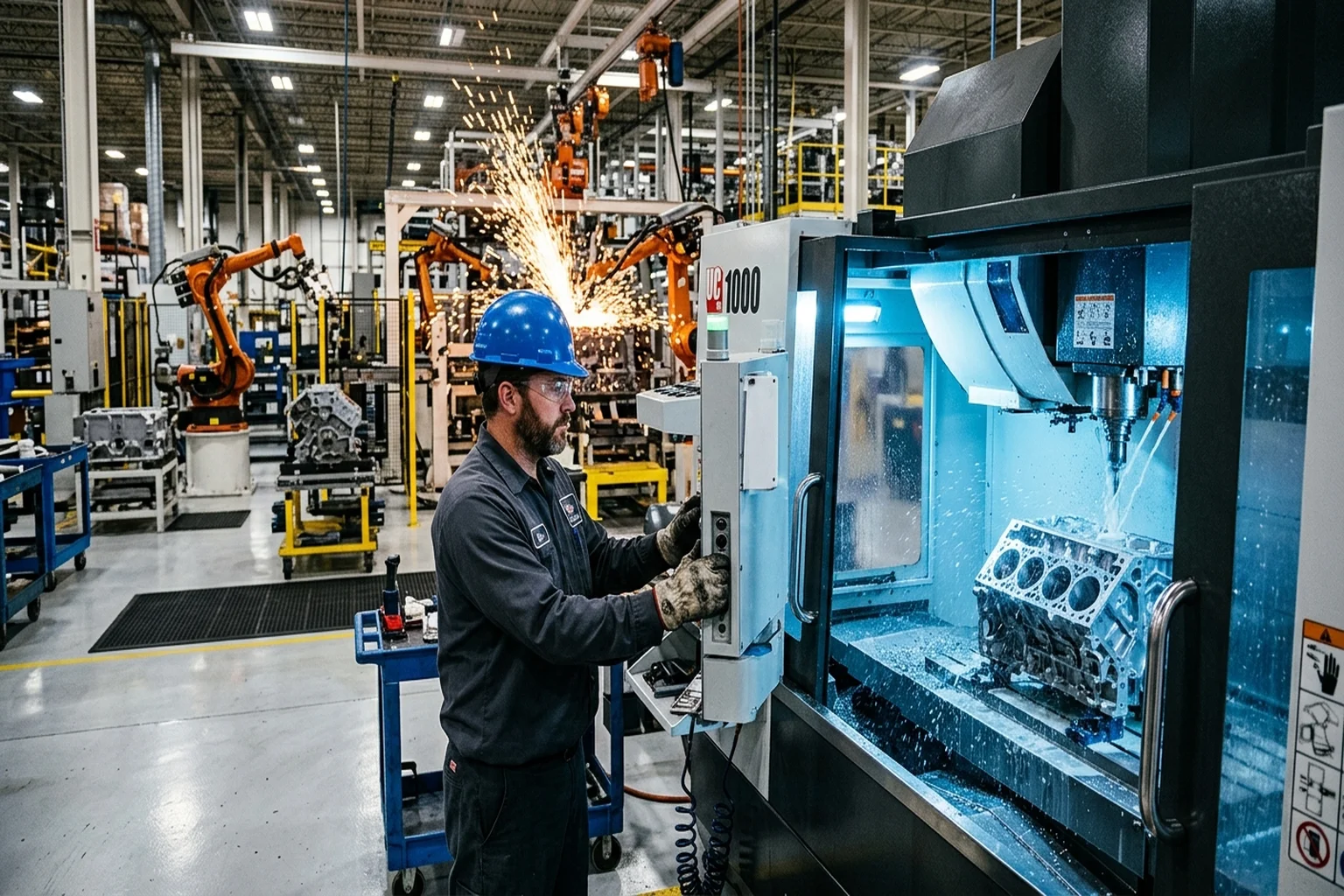
Ohio's Manufacturing Trades Boom: Why Welders, Machinists, and Industrial Electricians Are in High Demand
Ohio's $137.9 billion manufacturing sector — home to Intel's $28B semiconductor campus, Honda's $4.4B EV battery plant, and 687,000 manufacturing jobs — is creating urgent demand for welders, CNC machinists, industrial electricians, and millwrights. Here's what the data says and how to get started.
Skilled Trades Outlook
Trade Career Outlook 2030: Jobs by Industry (BLS Data)
Where the trade jobs will be through 2030: BLS projects 649,300 annual openings in construction alone. Industry-by-industry breakdown for 2026.
Trade Programs
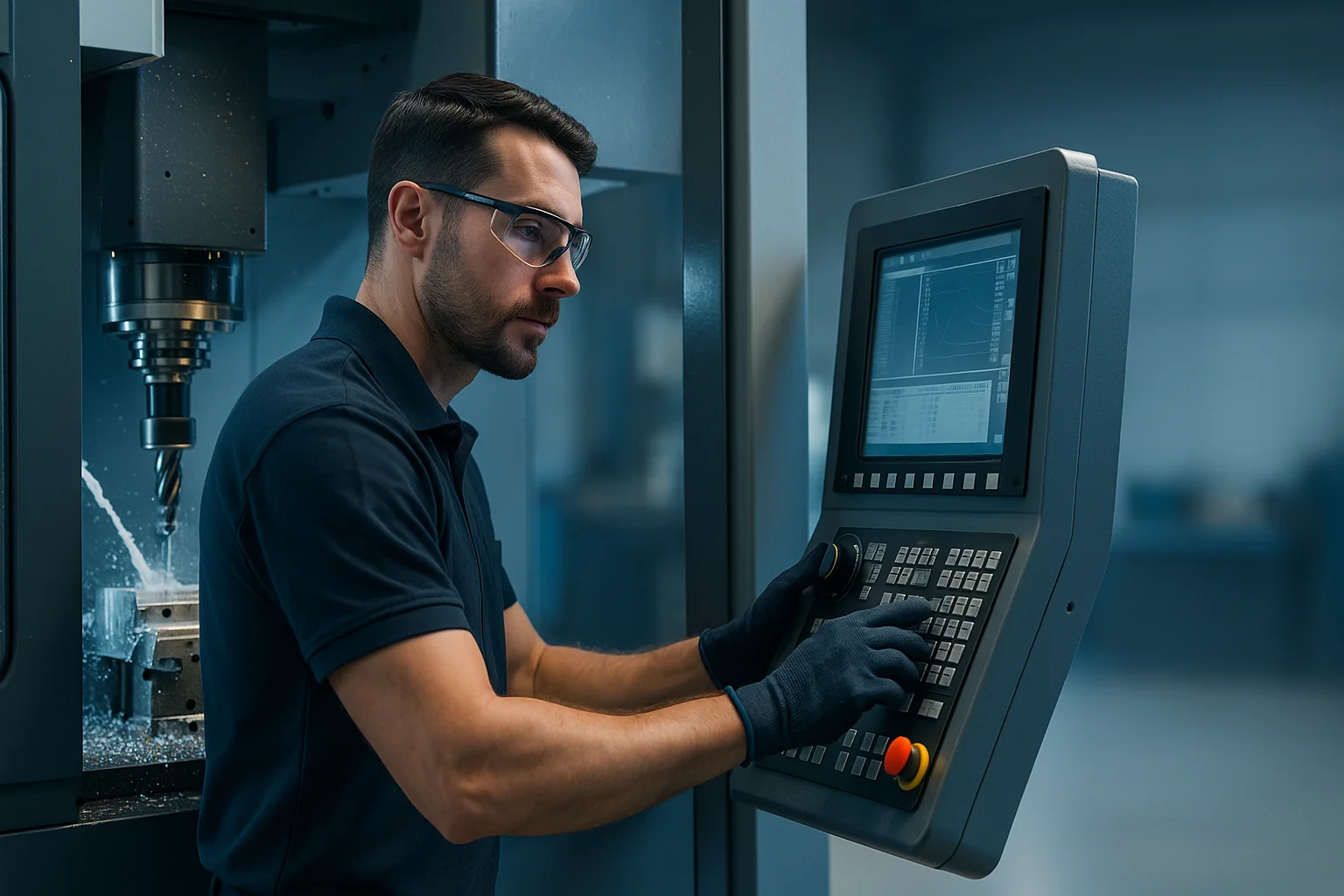
CNC Machining Career Opportunities: What to Expect in 2026 and Beyond
Data-driven look at CNC machining careers, including BLS salary data ($56,150 median for machinists), the 2.1 million manufacturing jobs projected unfilled by 2030, NIMS certification paths, and specializations from aerospace to medical devices.
Career Guidance
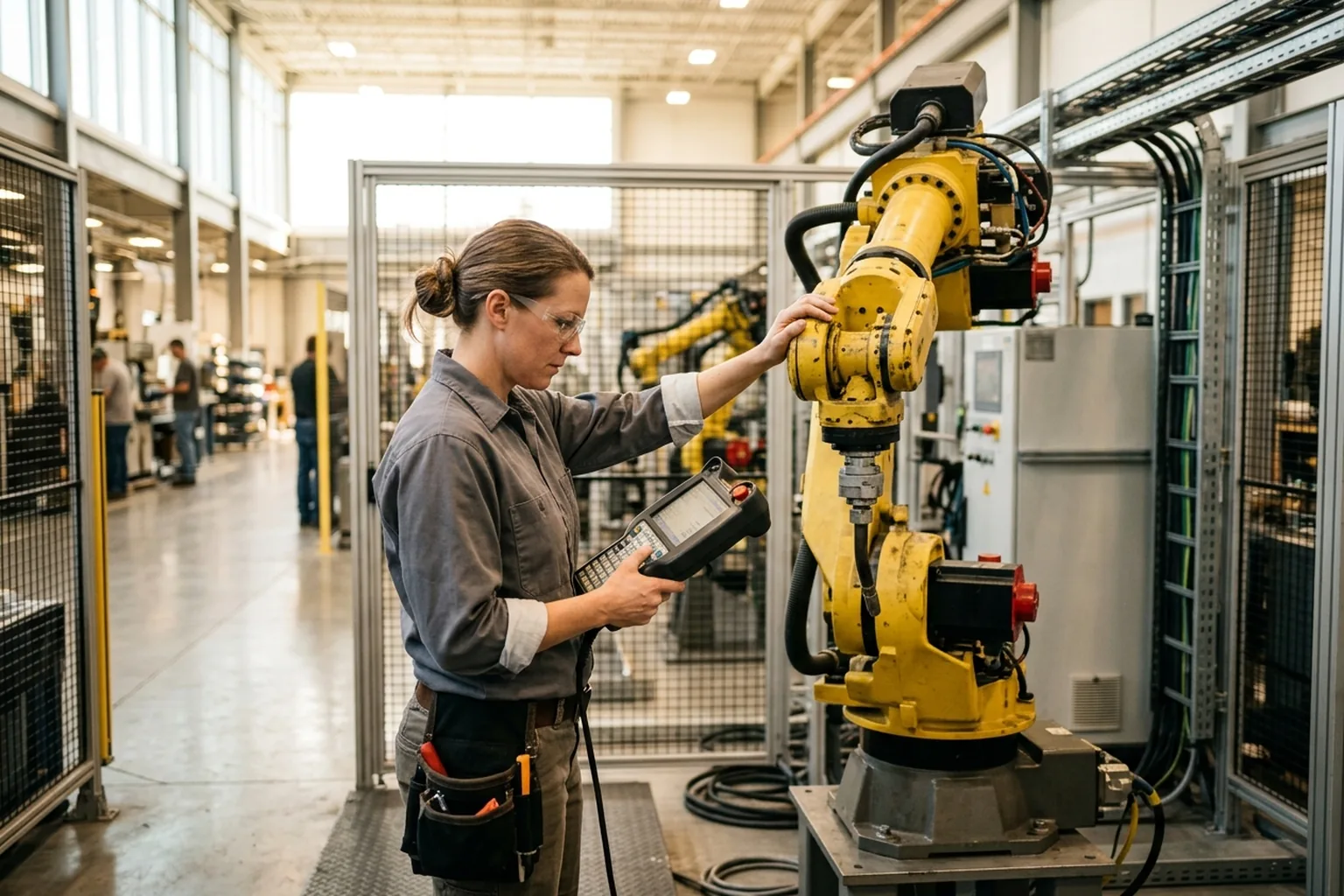
Robotics Technician: The New Trade the Robot Boom Built (2026 Guide)
North American companies ordered 36,766 robots in 2025, and every one of them needs a human technician. Training paths, real BLS pay data, and how to get in.