
Trucks move approximately 71% of all goods in the United States by weight, according to the American Trucking Associations’ 2025 Trends Report. Every item on a store shelf, every construction delivery, every Amazon package — nearly all of it touches a commercial truck before it reaches you.
That scale creates one of the most consistent demand pictures in any trade: the ATA’s driver shortage report estimates the industry is currently short roughly 60,000 drivers, with the need for 1.1 million new drivers projected over the next decade. The BLS projects ~237,600 heavy truck driver openings per year through 2034 — a number that dwarfs most trades and is driven primarily by retirements, not new routes.
For someone willing to get licensed and put in the seat time, the leverage is real: carriers compete for drivers with sign-on bonuses, company-paid training, and premium pay for specialized loads.
What Does a Truck Driver Actually Do?
Not all commercial driving is the same. The license class and route type determine both what you haul and what your daily life looks like.
Class A vs. Class B CDL
A Class A CDL allows you to operate combination vehicles — a semi-truck pulling a trailer over 10,000 lbs. This is the license for long-haul freight, flatbed, tanker, and most high-earning commercial driving jobs.
A Class B CDL covers single vehicles over 26,000 lbs that don’t tow a heavy trailer. Think dump trucks, city buses, box trucks, and concrete mixers. Class B roles are usually local and home-daily, which suits drivers who prioritize schedule predictability over maximum earning potential.
Route Types
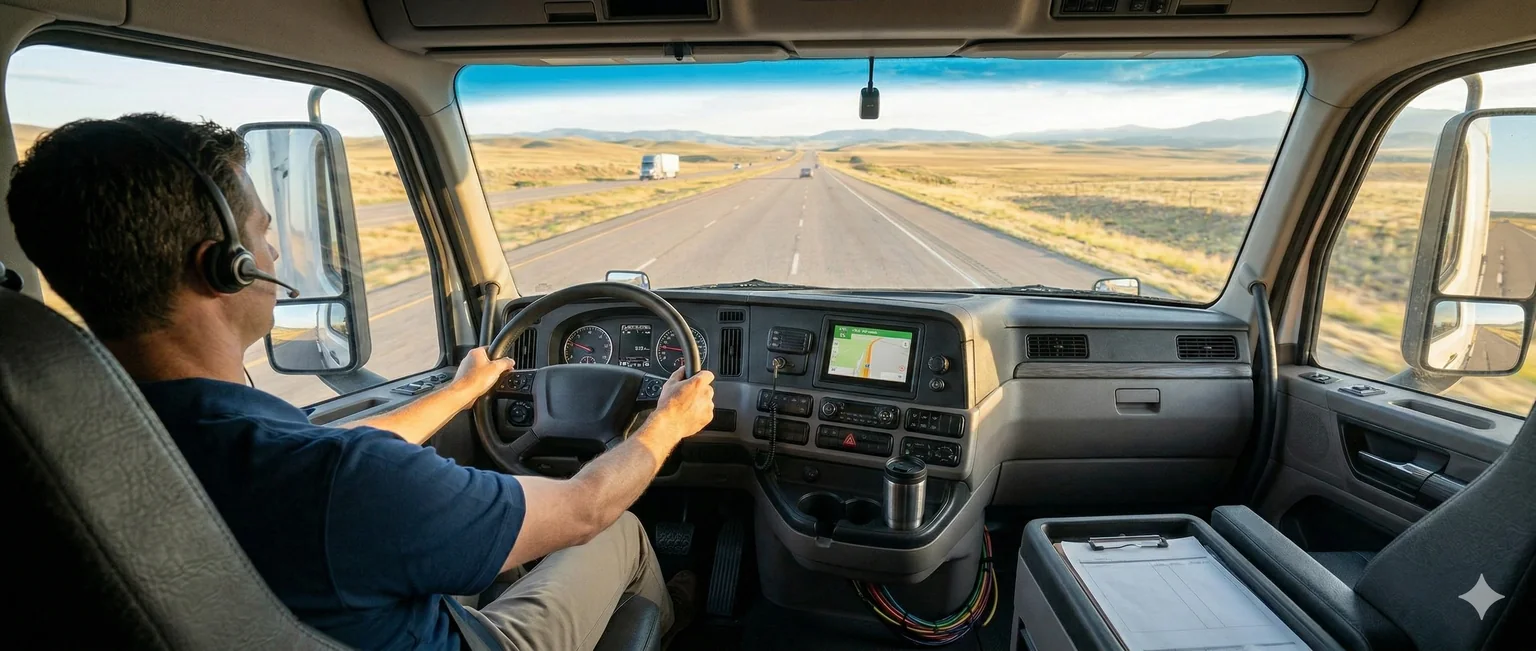
- Over-the-Road (OTR) / Long-Haul: Multi-day or multi-week trips across state lines. Highest per-mile pay. Drivers are often away from home for extended stretches — this is the hardest lifestyle adjustment for new drivers.
- Regional: Shorter multi-day loops within a region, typically home on weekends. A middle ground between OTR earnings and local predictability.
- Local/City Delivery: Home daily. Lower base pay than OTR, but no nights away. Common in food distribution, building materials, and last-mile freight.
Day-to-Day Realities
Every commercial driver starts a shift with a pre-trip inspection — checking brakes, tires, lights, fluids, and coupling equipment. Federal hours-of-service rules limit Class A drivers to 11 hours of driving within a 14-hour window, with mandatory 10-hour rest breaks between shifts. Electronic logging devices (ELDs) automatically track compliance, so there’s no fudging logbooks.
The physical demands vary by freight type. Dry van driving is largely sedentary. Flatbed requires tarping and securing loads. Tanker drivers climb tanks and handle hoses. Reefer (refrigerated) adds temperature monitoring. Anyone expecting to just steer a wheel needs to pick their freight category accordingly.
CDL Training: How to Get Licensed
Getting a commercial driver’s license follows a defined federal process. The FMCSA’s Entry-Level Driver Training (ELDT) rule, effective February 2022, standardized training requirements for first-time CDL applicants nationwide.
The Three-Step Process
Step 1: Obtain a Commercial Learner’s Permit (CLP) Before any behind-the-wheel training, you must pass a written knowledge exam at your state DMV. Most states require you to be at least 18 (21 for interstate commerce). You’ll need a valid medical certificate from a DOT-approved examiner.
Step 2: Complete FMCSA-Approved ELDT Training Training must be completed through a provider listed on the FMCSA Training Provider Registry. Programs cover 30+ theory topics (vehicle systems, regulations, hazard perception, cargo handling) plus skills training until your instructor certifies proficiency. There’s no federal minimum hour requirement for behind-the-wheel time — training ends when you’re proficient, not when a clock runs out.
Step 3: Pass the CDL Skills Test Three-part exam: pre-trip vehicle inspection, basic vehicle control (backing, parking), and an on-road driving test. Pass all three and the CDL is yours.
How Long and How Much
Full-time programs at private truck driving schools run 4–8 weeks. Part-time and weekend programs at community colleges can extend to 12–16 weeks. Cost ranges widely:
- Community colleges: $1,000–$5,000
- Private CDL schools: $3,000–$10,000
Additional expenses — state licensing fees, DOT medical exam, endorsement tests — typically add $500–$1,000 on top of tuition.
One alternative worth knowing: many large carriers offer company-sponsored CDL training at no upfront cost in exchange for a commitment to drive for them for one to two years. The trade-off is that you’re locked into that carrier’s pay rates and routes during the contract period.
See CDL and truck driving programs near you to find accredited training options. If you’re weighing how to pay for school, the trade school financing guide covers federal aid eligibility, community college options, and employer sponsorship in detail.
Truck Driver Salaries: What You Can Expect to Earn
The BLS Occupational Outlook Handbook puts the median annual wage for heavy and tractor-trailer truck drivers at $57,440 as of May 2024. That’s the midpoint — half the workforce earns more.
Salary by Experience
| Stage | Annual Earnings |
|---|---|
| Entry-level (Year 1) | $29,000–$40,000 |
| Experienced (3+ years) | $60,000–$80,000 |
| Specialized endorsements | $95,000–$105,000 |
| Owner-operator (gross) | $300,000+ |
Entry-level pay is lower partly because new drivers are building their safety record, which directly affects which carriers hire them and at what rates. The jump from year one to year three is significant — at that point, drivers have enough history to access premium freight and better carriers.
How Drivers Get Paid
Pay structure varies by employer and route type:
- Per-mile: Most common in OTR. Rates range from $0.45 to $0.75+ per mile depending on experience and carrier. Deadhead miles (empty return runs) are typically paid at a lower rate or not at all.
- Hourly: Common in local and city delivery. Provides more predictable income regardless of traffic or loading delays.
- Percentage of load: Common for owner-operators and some lease drivers. Higher upside but more volatility.
Sign-on bonuses, safety bonuses, and extra-stop pay can add meaningfully to base compensation at larger carriers.
Job Outlook and the Driver Shortage
The BLS projects 4% employment growth for heavy truck drivers from 2024 to 2034 — roughly on par with the national average. That number undersells the actual hiring volume.
The 237,600 annual job openings projection doesn’t represent 237,600 new routes. The overwhelming majority are replacement openings — positions left by drivers who retire, change careers, or leave the industry. The trucking workforce skews older, and the retirement wave is accelerating.
The ATA’s driver shortage analysis details the compounding factors: the current gap sits at roughly 60,000 drivers, down from a record 81,258 in 2021, but the industry will need to hire 1.1 million new drivers over the next decade just to maintain current freight capacity. Annual turnover at large long-haul carriers runs above 90% — meaning even a modest pool of experienced drivers can negotiate strongly with multiple employers.
For new entrants, the practical effect is favorable: carriers are offering sign-on bonuses, covering training costs, and competing on benefits in ways that were uncommon a decade ago. The shortage is an ongoing structural condition, not a short-term blip.
For broader context on which trades are growing fastest overall, see the fastest-growing trade careers guide.
Specializations and Career Paths
The CDL is a floor, not a ceiling. Endorsements unlock higher-paying freight categories, and career progression beyond driving is genuinely accessible.
Endorsements That Raise Pay
After earning a standard Class A CDL, additional endorsements require passing written and/or skills tests:
- Hazardous Materials (H): Required to haul explosives, flammables, gases, and other regulated materials. Also requires a TSA security threat assessment (background check). Hazmat tanker drivers earn a median ~$105,000 annually.
- Tanker (N): Required for hauling bulk liquids — gasoline, milk, chemicals, liquid food products. Tanker drivers average around $95,000/year.
- Doubles/Triples (T): Allows pulling multiple trailers. Common in Western states on certain highway corridors.
- Passenger (P) / School Bus (S): Separate endorsements for carrying passengers — different career track from freight.
Combining Hazmat + Tanker (the “X” endorsement) is one of the fastest ways to command premium pay as a company driver.
Career Ladder Beyond the Cab
Experienced drivers have several paths that don’t require going back to school:
- Driver Trainer: Ride-along mentor for new hires. Many carriers pay a premium per mile while training.
- Dispatcher: Coordinate loads and drivers. Uses industry knowledge without the physical demands of driving.
- Fleet Manager / Safety Manager: Supervisory roles at larger carriers. Often promoted from within.
- Owner-Operator: Buy or lease your own truck and haul freight as an independent contractor or under a carrier’s authority. Gross earnings exceed $300,000 for successful owner-operators, but expenses — truck payments, fuel, insurance, maintenance — are substantial. This is a business ownership model, not just a pay raise.
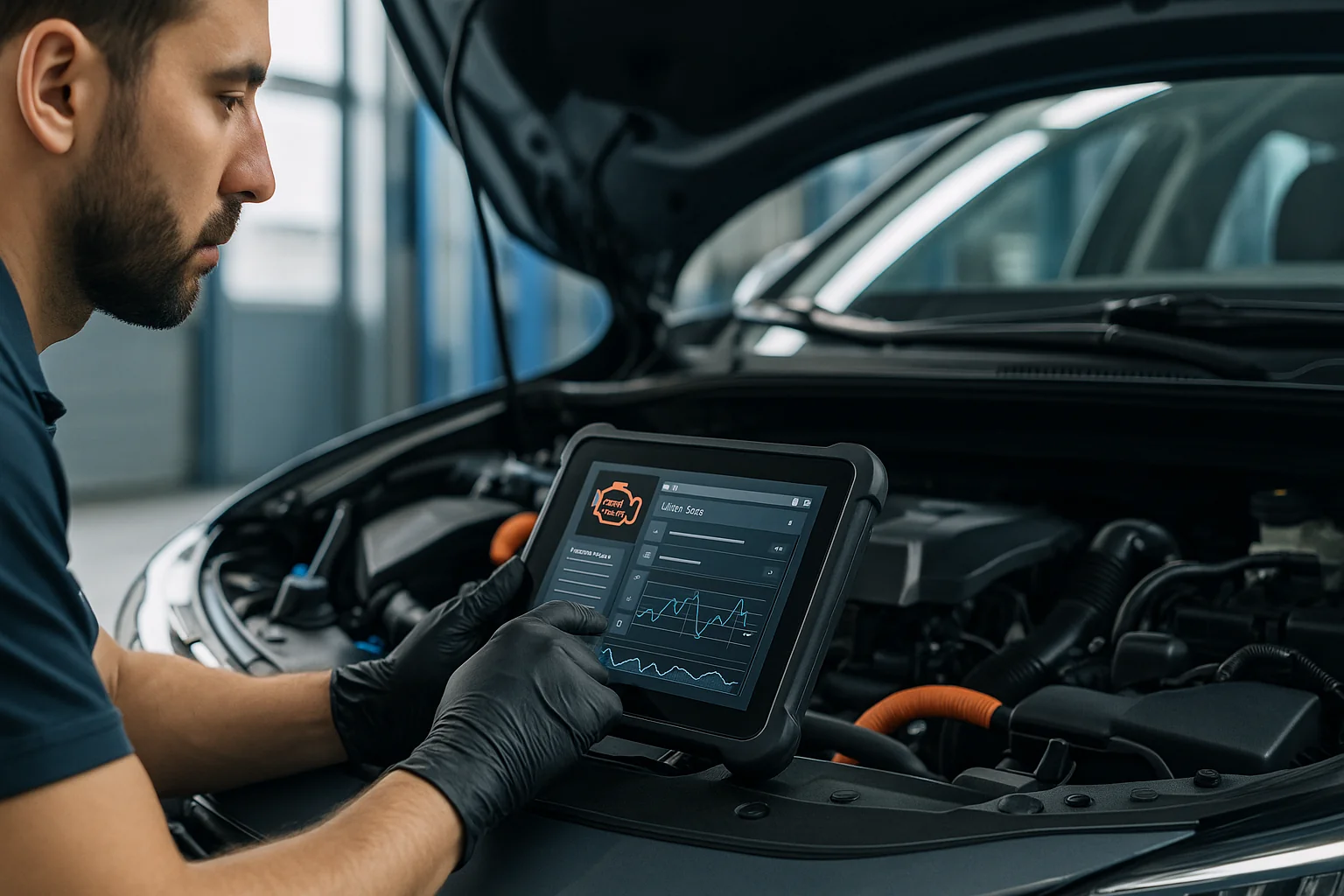
Drivers interested in the mechanical side of the work sometimes cross-train as diesel mechanics, which can open shop-side roles or fleet maintenance positions.
Is Truck Driving Right for You?
The honest answer depends less on aptitude than on lifestyle preferences.
Who tends to thrive:
- People who are self-directed and comfortable working independently for long stretches
- Those who want well-paid work without four-year degree debt
- Anyone who doesn’t mind irregular hours in exchange for higher earning potential
- Drivers willing to start local or regional and build experience before going OTR
Who tends to struggle:
- People who need a predictable daily schedule, especially in OTR roles
- Those with family situations that make extended time away untenable
- Anyone who underestimates the regulatory compliance burden (logs, inspections, weight limits)
The local vs. OTR distinction matters enormously for quality of life. Local drivers are home every night and often work predictable shifts — but earn less than long-haul drivers and have less leverage when negotiating with employers. OTR drivers earn more and face less competition for premium loads, but the weeks away from home are real, and the adjustment period is harder than most people expect.
The financial entry point is low relative to the earning potential: a few thousand dollars and six to eight weeks of training can put a new driver in a job paying $40,000+, with clear incremental steps to $60,000–$80,000 as experience accumulates. For a thorough look at how to fund that training, see the trade school financing guide.
Sources
- U.S. Bureau of Labor Statistics — Occupational Outlook Handbook — “Heavy and Tractor-Trailer Truck Drivers” — 2025 — https://www.bls.gov/ooh/transportation-and-material-moving/heavy-and-tractor-trailer-truck-drivers.htm
- American Trucking Associations — “ATA Releases Updated Driver Shortage Report and Forecast” — https://www.trucking.org/news-insights/ata-releases-updated-driver-shortage-report-and-forecast
- American Trucking Associations — “ATA American Trucking Trends 2025” — https://www.trucking.org/news-insights/ata-american-trucking-trends-2025
- Federal Motor Carrier Safety Administration — “Entry-Level Driver Training (ELDT)” — https://www.fmcsa.dot.gov/registration/commercial-drivers-license/entry-level-driver-training-eldt
- ELDT Nation — “How Much Does CDL School Cost? Pricing Explained in 2025” — https://www.eldtnation.com/blog/how-much-does-cdl-school-cost-pricing-explained-in-2025
- ELDT Nation — “What Is the Average Salary of a Truck Driver in 2025?” — https://www.eldtnation.com/blog/what-is-the-average-salary-of-a-truck-driver-in-2025-table