Place and detonate explosives to demolish structures or to loosen, remove, or displace earth, rock, or other materials. May perform specialized handling, storage, and accounting procedures.
Explosives Workers, Ordnance Handling Experts, and Blasters
SOC: 47-5032 O*NET: 47-5032.00
Median Salary
$61,390
per year
Job Growth
➡️ N/A
Average (2024-2034)
Annual Openings
0.4
projected jobs/year
Education Level
High school diploma or equivalent
Job Zone 2
Place and detonate explosives to demolish structures or to loosen, remove, or displace earth, rock, or other materials. May perform specialized handling, storage, and accounting procedures.
What does a Explosives Workers, Ordnance Handling Experts, and Blasters do?
How much can you earn?
Entry Level
$40,480
10th percentile
Early Career
$49,630
25th percentile
Median
$61,390
50th percentile
Experienced
$80,370
75th percentile
Top Earners
$99,360
90th percentile
National Salary Distribution
10th
$40,480
25th
$49,630
Middle 50%
MEDIAN
$61,390
Mean: $66,640
75th
$80,370
90th
$99,360
Middle 50% of earners
Median salary
Mean (average)
Key Insights
- •Salary range spans $58,880 from entry level to top earners
- •Middle 50% earn between $49,630 and $80,370
- •Salary spread is 50.1% around the median, showing high variation
- •Total national employment: 5,100 professionals
What's the job outlook?
Job Market Intelligence
Medium Demand
Market demand
Medium Risk
Automation risk
Current Employment
National Employment:5,200
Top Industries
Mining, Quarrying, and Oil and Gas Extraction22.4%
Mining (except Oil and Gas)14.5%
Construction13.3%
10-Year Outlook
Growth Rate:0%
Annual Openings:400
Employment Projections
2025 (Current)5,200
Current
2035 (Projected)5,200
0%
0
Employment Change
0%
Growth Rate
10
Year Projection
Growth Category: More slowly than average
Geographic Salary & Employment Data
Explore where Explosives Workers, Ordnance Handling Experts, and Blasters professionals work across the United States
Showing 15 of 32 locations
Texas
460 jobs$56,6000.99x
Kentucky
380 jobs$50,3605.83x
Indiana
330 jobs$59,1103.18x
Oklahoma
330 jobs$55,1805.98x
Nevada
260 jobs$60,5005.19x
California
220 jobs$80,3700.37x
North Carolina
160 jobs$85,6300.96x
Missouri
150 jobs$64,0401.53x
Colorado
140 jobs$69,6401.44x
Louisiana
130 jobs$39,9002.01x
Ohio
120 jobs$46,6300.67x
Hawaii
110 jobs$64,5605.12x
Illinois
110 jobs$60,5200.56x
Alabama
100 jobs$59,8201.40x
Florida
90 jobs$69,7800.27x
Understanding the Data
Location Quotient (LQ):
- • LQ > 1.0: More jobs than national average
- • LQ = 1.0: Same as national average
- • LQ < 1.0: Fewer jobs than national average
Data Source:
Bureau of Labor Statistics Occupational Employment and Wage Statistics (OEWS), May 2025
Key Growth Factors
Standard growth expectations for this occupation
What skills do you need?
Top 10 Most Important Skills
#1
Active Listening
100%
#2
Public Safety and Security
100%
#3
Problem Sensitivity
100%
#4
Monitoring
94%
#5
Law and Government
94%
#6
Manual Dexterity
92%
#7
Mathematics
86%
#8
Judgment and Decision Making
86%
#9
Near Vision
82%
#10
Engineering and Technology
80%
Skills Overview
Active Listening
advanced5.0
100%
Public Safety and Security
advanced5.0
100%
Problem Sensitivity
advanced5.0
100%
Monitoring
advanced4.7
94%
Law and Government
advanced4.7
94%
Manual Dexterity
advanced4.6
92%
Mathematics
intermediate4.3
86%
Judgment and Decision Making
intermediate4.3
86%
Skills are rated on a scale of 0-5, with 5 being the most important. The complexity level indicates how advanced the skill typically needs to be.
Filter:
Sort by:
Active Listening
advancedImportance100%
skills
5.0/5.0
Public Safety and Security
advancedImportance100%
knowledge
5.0/5.0
Problem Sensitivity
advancedImportance100%
abilities
5.0/5.0
Monitoring
advancedImportance94%
skills
4.7/5.0
Law and Government
advancedImportance94%
knowledge
4.7/5.0
Manual Dexterity
advancedImportance92%
abilities
4.6/5.0
Mathematics
intermediateImportance86%
knowledge
4.3/5.0
Judgment and Decision Making
intermediateImportance86%
abilities
4.3/5.0
Near Vision
intermediateImportance82%
abilities
4.1/5.0
Engineering and Technology
intermediateImportance80%
knowledge
4.0/5.0
Critical Thinking
intermediateImportance80%
abilities
4.0/5.0
Administration and Management
intermediateImportance74%
knowledge
3.7/5.0
Highly Transferable Skills
These skills are valuable across multiple career paths, making career transitions easier:
Railroad Conductors and Yardmasters100%
5 shared skills
Captains, Mates, and Pilots of Water Vessels82%
5 shared skills
Drilling and Boring Machine Tool Setters, Operators, and Tenders, Metal and Plastic82%
5 shared skills
Extruding and Forming Machine Setters, Operators, and Tenders, Synthetic and Glass Fibers82%
5 shared skills
Farmworkers, Farm, Ranch, and Aquacultural Animals82%
5 shared skills
Hoist and Winch Operators82%
5 shared skills
Skills by Career Stage
Entry Level
Must Have:
- ✓Active Listening
- ✓Monitoring
- ✓Public Safety and Security
- ✓Law and Government
- ✓Mathematics
Learn on the Job:
- →Operations Monitoring
- →Speaking
- →Customer and Personal Service
Mid Career
Expected:
- ✓Active Listening
- ✓Monitoring
- ✓Public Safety and Security
- ✓Law and Government
- ✓Mathematics
Senior Level
Mastery Required:
- ★Active Listening
- ★Public Safety and Security
- ★Law and Government
- ★Mathematics
- ★Engineering and Technology
Skill Development Tips
- •Focus on developing the top 5 skills first - they have the highest impact on career success
- •Transferable skills open doors to related careers and provide flexibility
- •Balance technical skills with soft skills for well-rounded professional development
- •Entry-level positions prioritize foundational skills that can be built upon over time
What technology will you use?
Technology & Digital Skills
Essential technology proficiencies for Explosives Workers, Ordnance Handling Experts, and Blasters
Technology Intensity
High
Digital Literacy Requirements
This career requires advanced digital literacy
1
Basic
2
Intermediate
3
Advanced
4
Expert
Key Digital Competencies:
Proficiency with specialized softwareTechnical documentationData analysis toolsSystem integration
🔥
Hot Technologies in Demand
These technologies are currently trending and highly sought after in this field
Autodesk AutoCAD
🔥 Hot TechMicrosoft Outlook
🔥 Hot TechESRI ArcGIS software
🔥 Hot TechMicrosoft Office software
🔥 Hot TechMicrosoft PowerPoint
🔥 Hot TechMicrosoft Excel
🔥 Hot TechMicrosoft Word
🔥 Hot TechTechnology Stack
Technology Stack Overview
Key technologies used in this career
Autodesk AutoCAD
Microsoft Outlook
ESRI ArcGIS software
Microsoft Office software
Microsoft PowerPoint
Microsoft Excel
Microsoft Word
📚 Technology Learning Resources
Recommended Certifications
- •Vendor-specific software certifications
- •Industry-recognized technology credentials
- •Professional development courses
Online Learning Platforms
- •LinkedIn Learning - Comprehensive technology courses
- •Coursera - University-level programs
- •Udemy - Practical skills training
💡 Technology Skill Development Tips
- •Focus on mastering hot technologies first - they're currently most in-demand
- •Build a portfolio demonstrating your proficiency with key tools and software
- •Stay current through continuous learning - technology evolves rapidly
- •Consider vendor certifications to validate your skills to employers
What's the work environment like?
🏢
Location
MOSTLY INDOOR
💪
Physical Demand
MODERATE
👥
Team Orientation
SOME TEAM
🤝
Customer Interaction
OCCASIONAL
💡Is This Work Environment Right for You?
Consider these factors when evaluating if you'll thrive in this work environment:
- •Are you comfortable working in mostly indoor environments?
- •Can you meet moderate physical demands?
- •Do you enjoy some team team environments?
- •Are you comfortable working with safety protocols and protective equipment?
What are the key tasks?
Tasks & Responsibilities
21
Core Tasks
8
Daily Tasks
20
Work Activities
0
Emerging Tasks
Filter:
Sort by:
General Responsibilities (17)Training & Development (1)Documentation & Record-Keeping (2)Operations & Execution (1)
1
Examine blast areas to determine amounts and kinds of explosive charges needed and to ensure that safety laws are observed.
🔴Daily
Importance:
General Responsibilities100% perform100%
2
Tie specified lengths of delaying fuses into patterns in order to time sequences of explosions.
🔴Daily
Importance:
General Responsibilities97% perform98%
3
Place safety cones around blast areas to alert other workers of danger zones, and signal workers as necessary to ensure that they clear blast sites prior to explosions.
🔴Daily
Importance:
General Responsibilities94% perform96%
4
Place explosive charges in holes or other spots; then detonate explosives to demolish structures or to loosen, remove, or displace earth, rock, or other materials.
🔴Daily
Importance:
General Responsibilities91% perform94%
5
Insert, pack, and pour explosives, such as dynamite, ammonium nitrate, black powder, or slurries into blast holes; then shovel drill cuttings, admit water into boreholes, and tamp material to compact charges.
🔴Daily
Importance:
General Responsibilities88% perform92%
6
Mark patterns, locations, and depths of charge holes for drilling, and issue drilling instructions.
🔴Daily
Importance:
Training & Development85% perform90%
7
Compile and keep gun and explosives records in compliance with local and federal laws.
🔴Daily
Importance:
Documentation & Record-Keeping82% perform88%
8
Measure depths of drilled blast holes, using weighted tape measures.
🔴Daily
Importance:
General Responsibilities79% perform86%
9
Connect electrical wire to primers, and cover charges or fill blast holes with clay, drill chips, sand, or other material.
🟡Weekly
Importance:
General Responsibilities76% perform84%
10
Lay primacord between rows of charged blast holes, and tie cord into main lines to form blast patterns.
🟡Weekly
Importance:
General Responsibilities73% perform82%
💡 Key Takeaways
- •Daily tasks focus primarily on general responsibilities activities
- •33% of tasks are performed by most workers in this occupation
- •Career advancement brings increased leadership and strategic responsibilities
What career paths are available?
Career Pathways
0
Advancement Opportunities
0
Lateral Move Options
0%
Avg. Salary Increase
Advancement Opportunities
Typical career progression paths from Explosives Workers, Ordnance Handling Experts, and Blasters
💡 Career Planning Tips
- •Most successful advancement happens after 3-5 years of experience
- •Lateral moves can provide valuable cross-functional experience for future leadership roles
- •Focus on developing skills that are transferable across multiple career paths
- •Consider industry trends when planning long-term career moves
Is this career right for you?
Personality & Values Fit
Is This Career Right for You?
Explosives Workers, Ordnance Handling Experts, and Blasters professionals typically have a RCI Holland code and highly value support
RRealistic
CConventional
IInvestigative
Important Personality Traits
Work styles that contribute to success as a Explosives Workers, Ordnance Handling Experts, and Blasters
Attention to Detail
CriticalAttention to Detail
Importance Level4.67
Dependability
Very ImportantDependability
Importance Level4.46
Integrity
Very ImportantIntegrity
Importance Level4.46
Self-Control
Very ImportantSelf-Control
Importance Level4.38
Stress Tolerance
Very ImportantStress Tolerance
Importance Level4.21
Adaptability/Flexibility
Very ImportantAdaptability/Flexibility
Importance Level4.08
Complete Work Styles Profile
Attention to Detail
4.7
Dependability
4.5
Integrity
4.5
Self-Control
4.4
Stress Tolerance
4.2
Adaptability/Flexibility
4.1
Cooperation
4.0
Initiative
4.0
Analytical Thinking
4.0
Leadership
3.8
💡 Tips for Career Fit Success
- •While personality fit is important, skills can be developed with practice and training
- •Consider informational interviews to better understand the day-to-day personality requirements
- •Work environments vary by employer - research specific companies for cultural fit
- •Your interests and values may evolve - reassess periodically throughout your career
What education is required?
Education Level
High school diploma or equivalent
Typical duration: High school diploma or GED
Preparation Level
Job Zone 2
Some Preparation Needed
Experience Needed
Some previous work-related skill, knowledge, or experience may be helpful
📚 Education Requirement
Required Level:High school diploma or equivalent
These occupations usually require a high school diploma and may require some vocational training or job-related course work.
Training:
Training of a few months to a year
💼 Experience Requirement
Some previous work-related skill, knowledge, or experience may be helpful
Common pathways to gain experience:
- • Some previous work-related skill, knowledge, or experience
- • Vocational school programs (6 months to 2 years)
- • Industry certifications helpful
2
Job Zone Two: Some Preparation Needed
These occupations usually require a high school diploma and may require some vocational training or job-related course work.
Some previous work-related skill, knowledge, or experienceVocational school programs (6 months to 2 years)Industry certifications helpful
Ready to Start Your Journey?
Explore educational programs that can help you become a Explosives Workers, Ordnance Handling Experts, and Blasters.
Browse Training Programs →Trade Colleges That Train for Explosives Workers, Ordnance Handling Experts, and Blasters
Top trade colleges by completions in fields that prepare students for this career.
Ivy Tech Community College
Indianapolis, IN
1.9k program completions/year
Apex Technical School
Long Island City, NY
847 program completions/year
American River College
Sacramento, CA
792 program completions/year
J F Ingram State Technical College
Deatsville, AL
697 program completions/year
Southcentral Kentucky Community and Technical College
Bowling Green, KY
635 program completions/year
Elizabethtown Community and Technical College
Elizabethtown, KY
633 program completions/year
Texas State Technical College
Waco, TX
629 program completions/year
Owensboro Community and Technical College
Owensboro, KY
626 program completions/year
City Colleges of Chicago-Richard J Daley College
Chicago, IL
622 program completions/year
Lake Land College
Mattoon, IL
596 program completions/year
Wake Technical Community College
Raleigh, NC
565 program completions/year
Bluegrass Community and Technical College
Lexington, KY
526 program completions/year
From the Blog
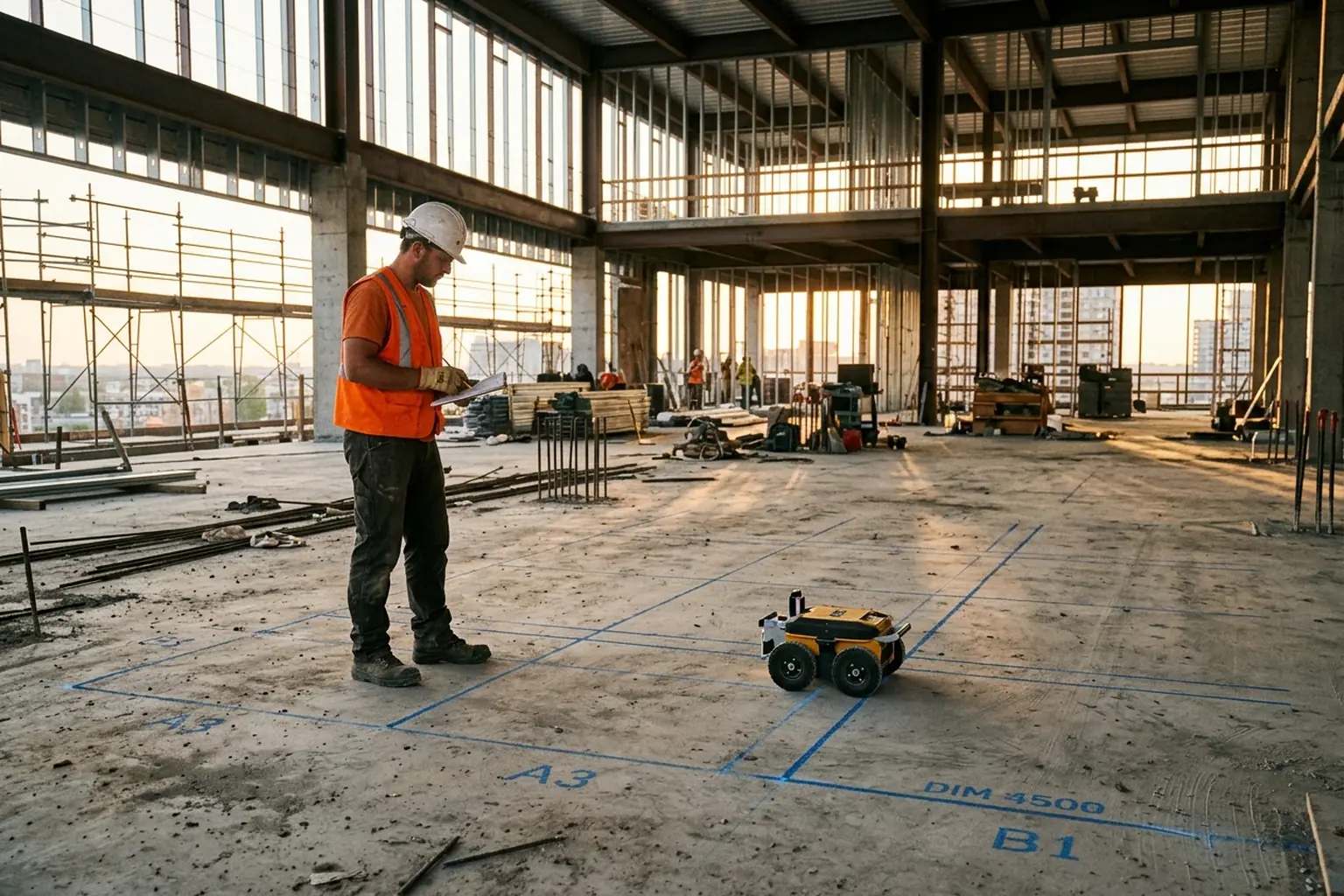
Skilled Trades Outlook
Robots on the Jobsite in 2026: What They Actually Do — and How Trades Workers Come Out Ahead
Layout printers, rebar-tying robots, and weld cobots are on real jobsites now. Verified 2026 field data on what they do, plus a five-move playbook for trades workers.
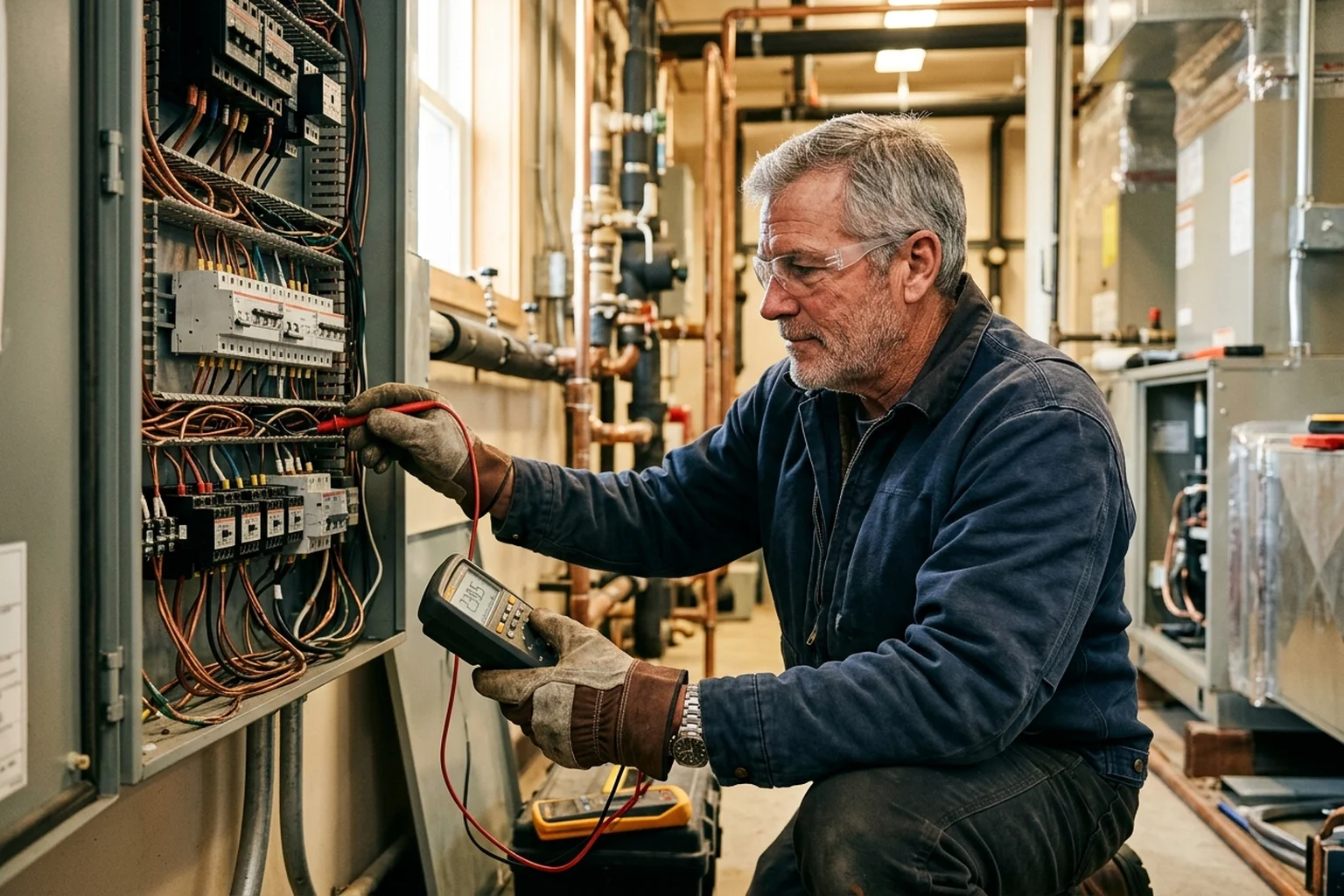
Career Guidance
Trade Careers You Can Start After 50: A Realistic, Data-Driven Guide
A practical guide for adults 50 and older considering a career in the skilled trades — covering which trades suit mature workers, the financial calculus of a shorter career runway, health insurance during training, and how life experience becomes a genuine advantage on the job site.