
A career guide for people who want a tech-forward trade with real demand and no four-year degree required.
TL;DR: Low voltage technicians install and maintain the systems that run modern buildings: security cameras, fire alarms, structured cabling, smart home automation, fiber networks, and hospital communication systems. The work is technical, hands-on, and in short supply. The Bureau of Labor Statistics counts roughly 86,000 security and fire alarm installers alone, with median pay around $59,300 as of May 2024. There’s no four-year degree requirement, but there is a deliberate certification path you’ll want to follow.
Look around any commercial building built in the last decade. The security cameras covering every entrance. The card-access readers on every door. The PA system in the ceiling. The fiber cables feeding the network closet. The nurse-call panel at the hospital nursing station. The fire alarm pull stations and smoke detectors tied to a central monitoring system.
Every one of those systems was designed, installed, terminated, and tested by a low voltage technician, and most people have never heard of the job.
That visibility gap creates an unusual opportunity. Demand is growing steadily, pushed by smart infrastructure buildout, new construction, and the steady expansion of connected technology in commercial and residential buildings. Supply isn’t keeping up. If you want a skilled trade that mixes physical install work with real technical problem-solving, low voltage deserves a serious look.
What Exactly Is a Low Voltage Technician?
“Low voltage” is a definition that varies by jurisdiction. The National Electrical Code generally treats anything under 50 volts as low voltage; California’s C-7 license covers systems under 91 volts. Either way, it sits well below the 120V/240V household current that licensed electricians typically work with. The lower voltage doesn’t mean lower complexity. It means a different set of systems, different code requirements, and a different skill set.
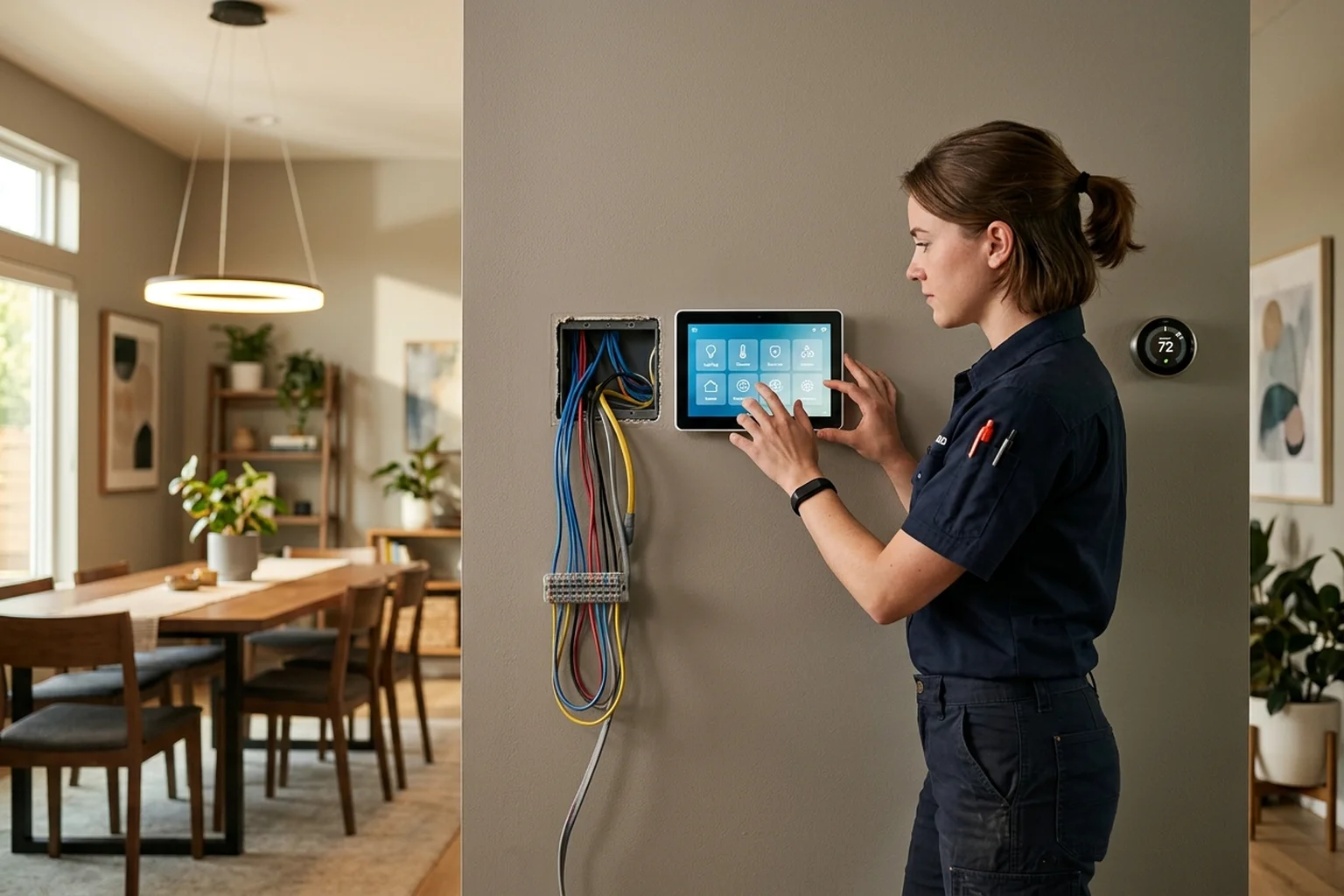
A low voltage technician installs, tests, and maintains systems including:
- Security and access control: cameras (IP and analog), card readers, intercoms, door strikes
- Fire and life safety: fire alarm panels, smoke/heat detectors, pull stations, horn-strobes
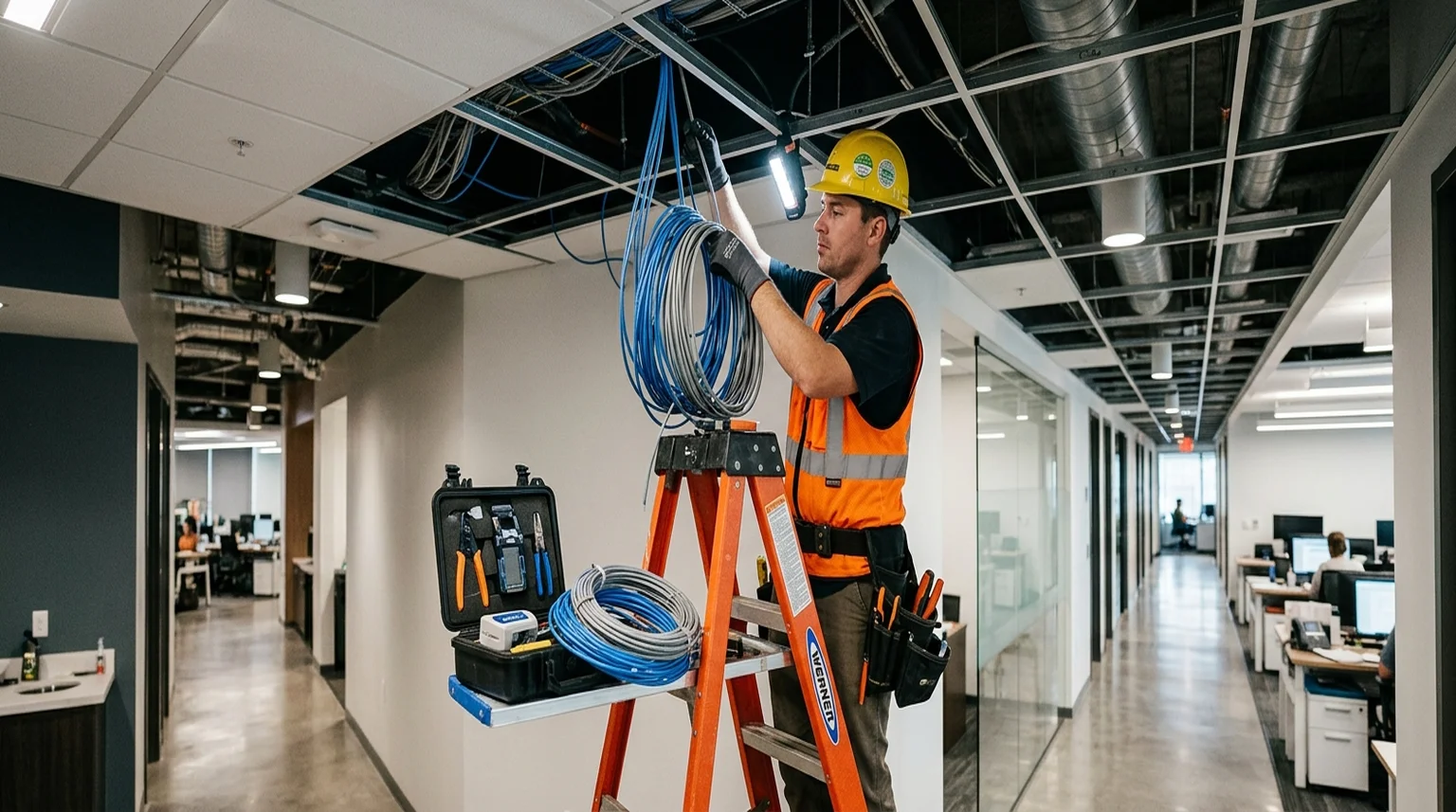
- Structured cabling: Cat6/Cat6A copper cabling, fiber optic runs, patch panels, cable management
- Audio/visual systems: conference room AV, digital signage, overhead paging, home theater
- Smart building automation: smart thermostats, lighting controls, occupancy sensors, building management system wiring
- Telecom and data infrastructure: ISP handoffs, network closets, demarcation points
- Nurse-call and healthcare communication systems: patient stations, staff panels, corridor lights
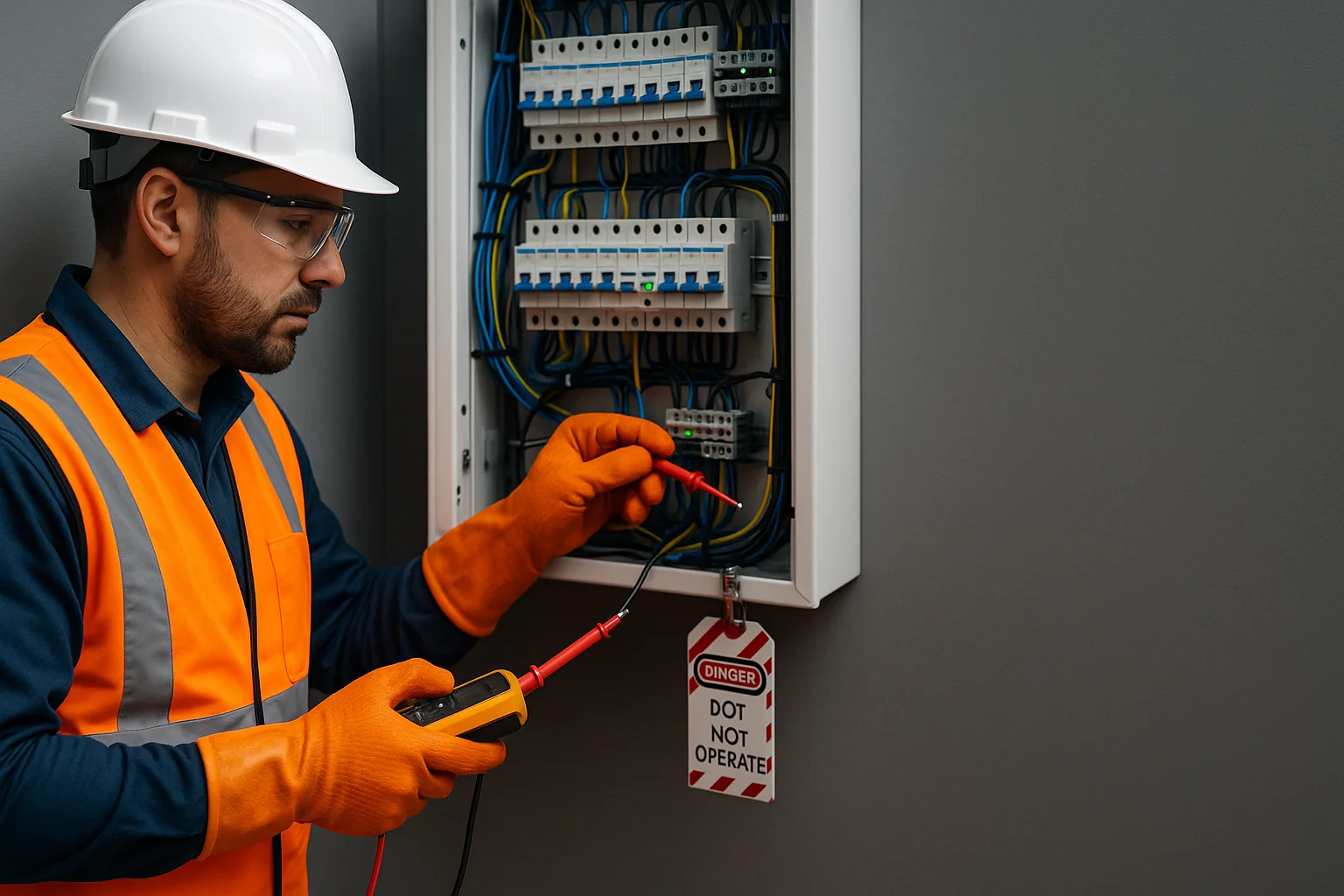
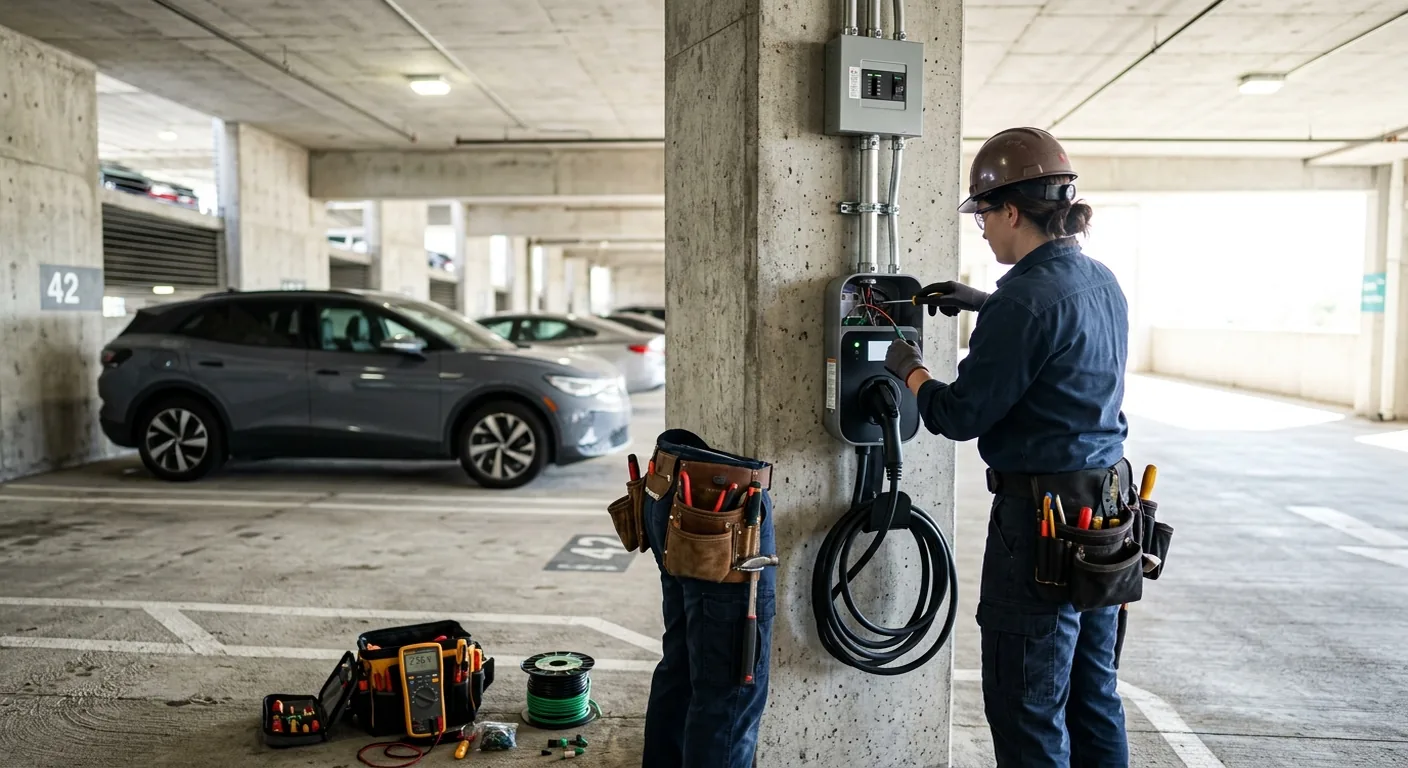
The job is physically hands-on — running cable through walls and ceilings, pulling wire above drop ceilings, terminating connectors, labeling and testing runs — and intellectually technical. A good technician reads blueprints, follows NEC and NFPA 72 codes, troubleshoots intermittent faults in complex systems, and programs access control databases.
Residential vs. commercial is the main dividing line. Residential low voltage technicians focus on smart home systems, home theaters, and security installations in houses and apartments. Commercial technicians work in office buildings, healthcare facilities, schools, data centers, warehouses, and industrial facilities. The commercial side tends to pay more and involves larger, more complex systems.
Why Low Voltage Is Having a Moment
The honest answer is that it’s been quietly growing for years and most people outside the industry haven’t noticed.
The IEEE Spectrum flagged the structural shift as early as 2019: low-voltage engineering sits at the convergence of traditional electrical work and IT networking, and that combination isn’t taught at most universities. The result is a persistent talent gap. Employers can’t find enough qualified people because the training infrastructure for this hybrid skill set is still catching up to demand.
Since then, the demand drivers have only compounded:
Smart building adoption is standard now, not optional. Building owners, corporate tenants, and new construction developers expect intelligent systems — access control, IP cameras, smart lighting, energy management — as baseline features. Every new commercial project has a low voltage scope.
Healthcare is expanding. Hospital and clinic construction has been on a multi-year buildout in the U.S., and every healthcare facility is among the most complex low voltage environments that exists: nurse-call, fire alarm, access control, duress systems, structured cabling for medical devices, and AV in patient rooms all have to work together and meet strict regulatory standards.
Data centers are multiplying. The infrastructure surge tied to cloud computing and AI has triggered a data center construction boom. Data centers run entirely on structured cabling and low voltage systems. Entry-level technicians can build significant experience quickly in this environment.
IoT is wiring buildings differently. The spread of IP-connected devices, from smart locks to environmental sensors, means almost every new install now ties into the building’s data network. That widens the scope of what a low voltage technician needs to know, and pays dividends on the technicians who keep up.
For context on the broader skilled trades demand picture, see our look at fastest-growing trade careers and the electrical career outlook.
What Does a Low Voltage Technician Actually Earn?
The Bureau of Labor Statistics OEWS data for Security and Fire Alarm Systems Installers (SOC 49-2098), the primary BLS category that captures a large segment of low voltage work, shows a median annual wage of $59,300 as of May 2024, with approximately 85,900 workers in this classification nationally. The middle 50% of the field earns between $47,330 and $71,340.
According to ElectricianClasses.com’s 2026 compensation analysis, the average across all low voltage electrician and technician roles comes in at roughly $53,600 per year ($28.60/hr), reflecting the blend of entry-level and experienced workers in the market.
The realistic salary range by experience looks like this:
| Stage | Approximate Annual Salary |
|---|---|
| Entry-level (0–2 years) | $35,000–$45,000 |
| Mid-level (3–5 years) | $48,000–$62,000 |
| Experienced lead tech (6+ years) | $65,000–$80,000+ |
| Project manager / system designer | $75,000–$100,000+ |
Geography moves the needle significantly. California, which requires a C-7 Low Voltage Contractor license through the Contractors State License Board, generally pays above the national median thanks to higher cost of living and tougher licensing requirements. High-demand metros like San Jose, Washington D.C., Seattle, and New York consistently show postings in the $60,000–$80,000 range for experienced technicians.
Certifications are the most direct lever for raising pay. A technician with a BICSI certification, a NICET Fire Alarm Level II, or a fiber optics credential from the Fiber Optic Association (FOA) commands meaningfully more than an uncertified peer at the same experience level.
Specializations Within Low Voltage
The field is broad enough that most technicians eventually develop a specialty. The major tracks are:
Security and Fire Alarm is the largest and most BLS-tracked segment. Demand is tied directly to commercial construction and mandatory fire safety code compliance. Every new building needs a fire alarm system; every corporate campus wants access control and IP cameras. NICET certification is highly valued here.
Structured Cabling and Network Infrastructure covers the copper and fiber backbone of any building’s data network. Fiber optic broadband technicians overlap significantly with this path. BICSI certifications are the industry benchmark for structured cabling work.
Audio/Visual Systems tends toward integration work — conference room builds, digital signage networks, home theaters in high-end residential. AVIXA (formerly InfoComm) is the certification body here.
Smart Home and Residential Automation is the fastest-growing residential segment. Technicians in this space program smart thermostats, set up home automation hubs, wire distributed audio, and integrate security cameras into residential platforms. See our full guide to smart home and building automation careers.
Healthcare Communication Systems is specialized and highly compensated. Nurse-call systems, duress buttons, patient entertainment systems, and code blue integrations all require technicians who understand both the technical requirements and the regulatory environment (NFPA 101, Joint Commission standards).
Data Center Cabling offers entry-level volume and rapid skill development. Technicians learn structured cabling fundamentals at scale in an environment with consistent, well-documented standards.
Many technicians work across two or three of these areas, particularly early in their careers. Eventually, specialization in healthcare, data centers, or AV commands a premium.
How to Become a Low Voltage Technician: The Real Path
There’s no single mandatory education requirement to enter low voltage work — but there is a deliberate path that gets you hired faster and paid more.
Step 1: Get Your OSHA 10-Hour Safety Certification
This is the starting point. The OSHA 10-hour General Industry or Construction safety course costs roughly $100, takes one to two days, and signals to every employer that you take safety seriously. Industry professionals on trueCABLE’s industry Q&A specifically name this as the first move: it increases employability immediately before you have a single field hour on your record.
Step 2: Get Hired Before You Get Certified
This is the counterintuitive reality of the trade. The path to certifications requires field experience hours, and you can’t log field hours without a job. As industry professionals Dave and Don put it in the trueCABLE Q&A: “You must get hired before you can get experience.”
Entry-level positions with low voltage installation companies are the vehicle. You don’t need a BICSI card to pull cable and terminate connectors under a journeyman technician. What you need is the OSHA certification, a clean background check (required for almost all security system work), a valid driver’s license, and a demonstrated work ethic. Find employers through the BICSI employer directory organized by location. These are companies that value certification and will support your development.
Step 3: Pursue Your BICSI INST-1 Certification
BICSI — the Building Industry Consulting Service International — is the industry’s most recognized credentialing body for structured cabling and low voltage work. The BICSI Installer 1 (INST-1) is a generalist certification covering copper cabling, coaxial cable, and fiber optics, renewed on a three-year continuing-education cycle. Industry voices on the trueCABLE Q&A say a BICSI credential is the single biggest hiring signal for serious low voltage employers — once you have it, you’re rarely without work for long.
INST-1 requires documented experience hours and a written exam. Once you have it, it signals to any low voltage employer that you understand installation standards, testing procedures, and safety requirements at a baseline professional level.
Step 4: Specialize
From INST-1, the path branches based on your track:
| Certification | Body | Focus |
|---|---|---|
| BICSI INSTC | BICSI | Copper cabling specialist |
| BICSI INSTF | BICSI | Fiber optic specialist |
| BICSI TECH | BICSI | Comprehensive (copper + fiber + testing) |
| CCTT | Fluke Networks | Certified Cable Test Technician (required for field certification devices) |
| NICET Fire Alarm Level I–IV | NICET | Fire alarm systems |
| Registered Communications Distribution Designer (RCDD) | BICSI | Senior-level system design |
| ETA Fiber Optics Installer | ETA International | Fiber installation |
For a deeper look at how certifications affect career trajectory across trades, see our guide to trade certifications and licenses.
Formal Training Programs
Community colleges and trade schools have begun building dedicated low voltage programs. Miami Dade College offers a Career Technical Certificate in Low Voltage Technology. Palm Beach State College offers a Certificate of Completion Program (CCP) in Low Voltage Technician work. These programs typically run six months to one year, combine theory with hands-on labs, and can accelerate your path to BICSI certification.
For those who learn better in a structured classroom environment or want a credential before job hunting, these programs represent a solid alternative to the direct-hire approach.
State Licensing
Most states require a license to perform low voltage work for compensation, and the requirements vary considerably. California’s C-7 Low Voltage Systems Contractor license from the CSLB is among the most structured: it covers all systems under 91 volts, requires the standard $25,000 contractor’s bond (raised from $15,000 effective January 1, 2023), an application fee in the low hundreds of dollars, and a written examination. Florida and several other states maintain similar comprehensive licensing programs. Texas uses a hybrid of state and local requirements.
The NSCA State Licensing Guide is the most comprehensive resource for looking up requirements in your specific state before you start the process.
How Long Does It Actually Take?
| Milestone | Typical Timeline |
|---|---|
| OSHA 10-hour cert + first job | 1–3 months |
| BICSI INST-1 eligible (field hours) | 12–18 months |
| Mid-level technician (structured cabling or alarm) | 2–4 years |
| Lead technician / foreman | 4–7 years |
| System designer or project manager | 7–10 years |
The path is faster than many other trades with equivalent pay. An electrician apprenticeship, by comparison, typically takes four to five years before journeyman status. Low voltage technicians can reach $55,000–$65,000 in three to four years of consistent work and certification pursuit.
Is Low Voltage Right for You?
Low voltage is a good fit if you’re drawn to work that combines physical installation with technical problem-solving. The job isn’t purely physical labor. You’ll read wiring diagrams, program access control databases, configure IP cameras, and test fiber runs with specialized equipment. But you will spend significant time on ladders, above drop ceilings, and in tight mechanical spaces.
You’ll likely thrive if you:
- Enjoy figuring out why something isn’t working and fixing it
- Are comfortable with technology and genuinely curious about how connected systems work
- Want a trade that doesn’t require a four-year degree but rewards continuous learning
- Are considering a transition from IT or network administration (your background translates directly)
- Have military experience — security clearance is valued in government contract work, and the structured discipline transfers well
The honest trade-offs: State licensing requirements add paperwork and sometimes cost before you can work independently. The certification landscape involves ongoing renewal and continuing education. Some commercial installs, especially in new construction, mean physically demanding work in unfinished building environments. Entry-level pay is real trade-school pay: decent, but not high until certifications and experience accumulate.
The ceiling is genuine, though. A lead BICSI TECH-certified technician running a data center cabling crew, or an RCDD designer specifying systems for a hospital campus, is a skilled professional in a market that can’t find enough qualified people.
Getting Started
The most direct next steps if you’re seriously considering this path:
- Take the OSHA 10-hour course — do it this week; it’s online and costs around $100
- Look up your state’s licensing requirements via the NSCA guide
- Search the BICSI employer directory for companies hiring entry-level installers in your area
- Research community college programs — even a semester of structured cabling and electrical theory will accelerate your first year on the job
- Explore parallel trade paths — computer networking and electrician programs overlap with low voltage in ways that can expand your career options
The work is everywhere. Every new building, every hospital renovation, every corporate office buildout, every data center rack needs a low voltage technician to make it run. The people who know how to do it have more work than they can handle.
Sources
- U.S. Bureau of Labor Statistics — OEWS May 2024, SOC 49-2098 Security and Fire Alarm Systems Installers — bls.gov/oes/current/oes492098.htm
- U.S. Bureau of Labor Statistics — Occupational Outlook Handbook: Electricians — bls.gov/ooh/construction-and-extraction/electricians.htm
- IEEE Spectrum — “IoT for Buildings Creates a Hot Job Market” — January 2019 — spectrum.ieee.org/iot-for-buildings-creates-a-hot-job-market
- trueCABLE — “Q&A: How To Get Into The Low-Voltage Industry” — truecable.com/blogs/cable-academy/qa-how-to-get-into-the-low-voltage-industry
- California Contractors State License Board — C-7 Low Voltage Systems Contractor License — cslb.ca.gov
- ElectricianClasses.com — Low Voltage Electrician Salary & Career Info (2026) — electricianclasses.com/careers/low-voltage-electrician/
- NSCA — Guide to State Licensing for Low Voltage Contractors — nsca.org/resources/guide-to-state-licensing/