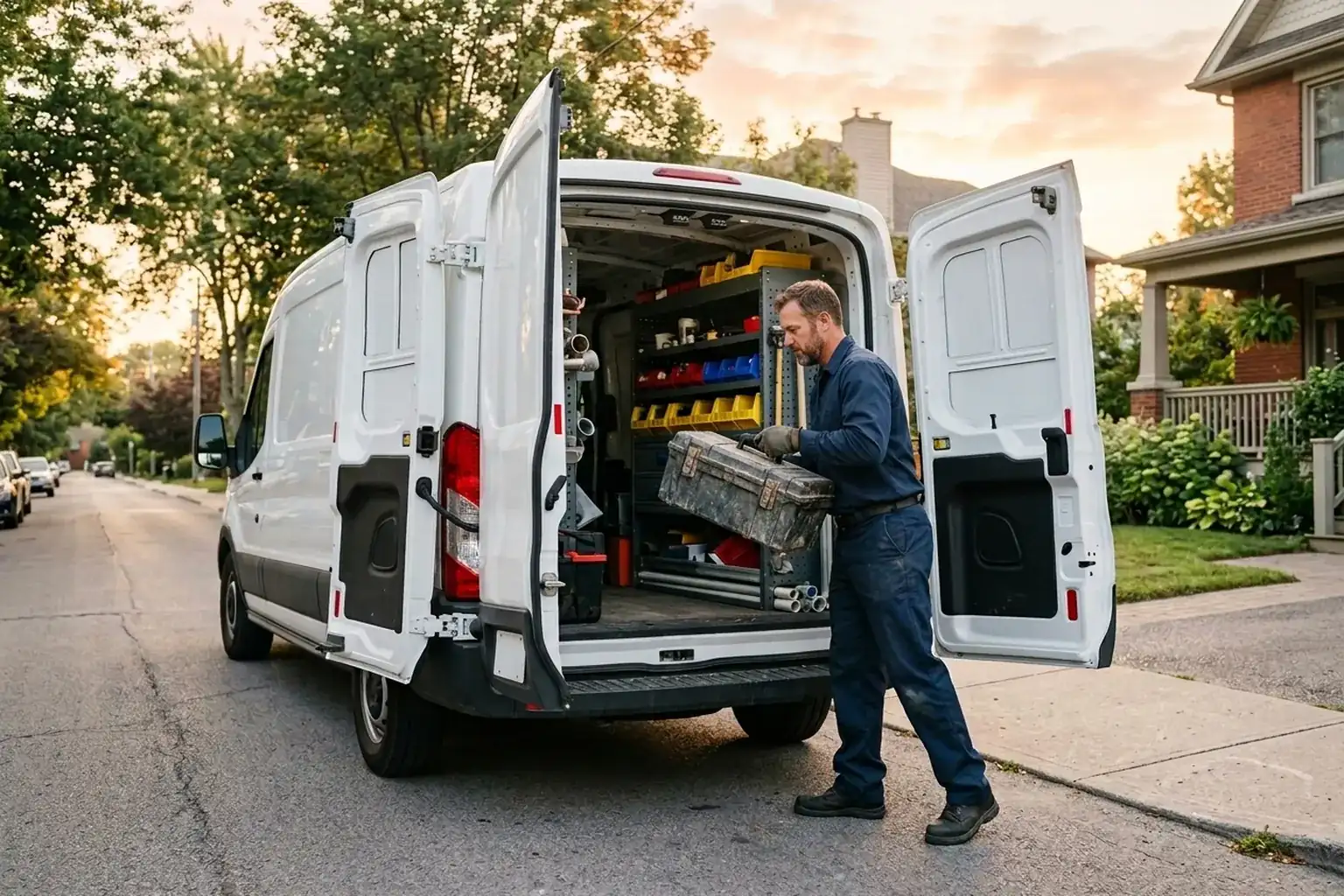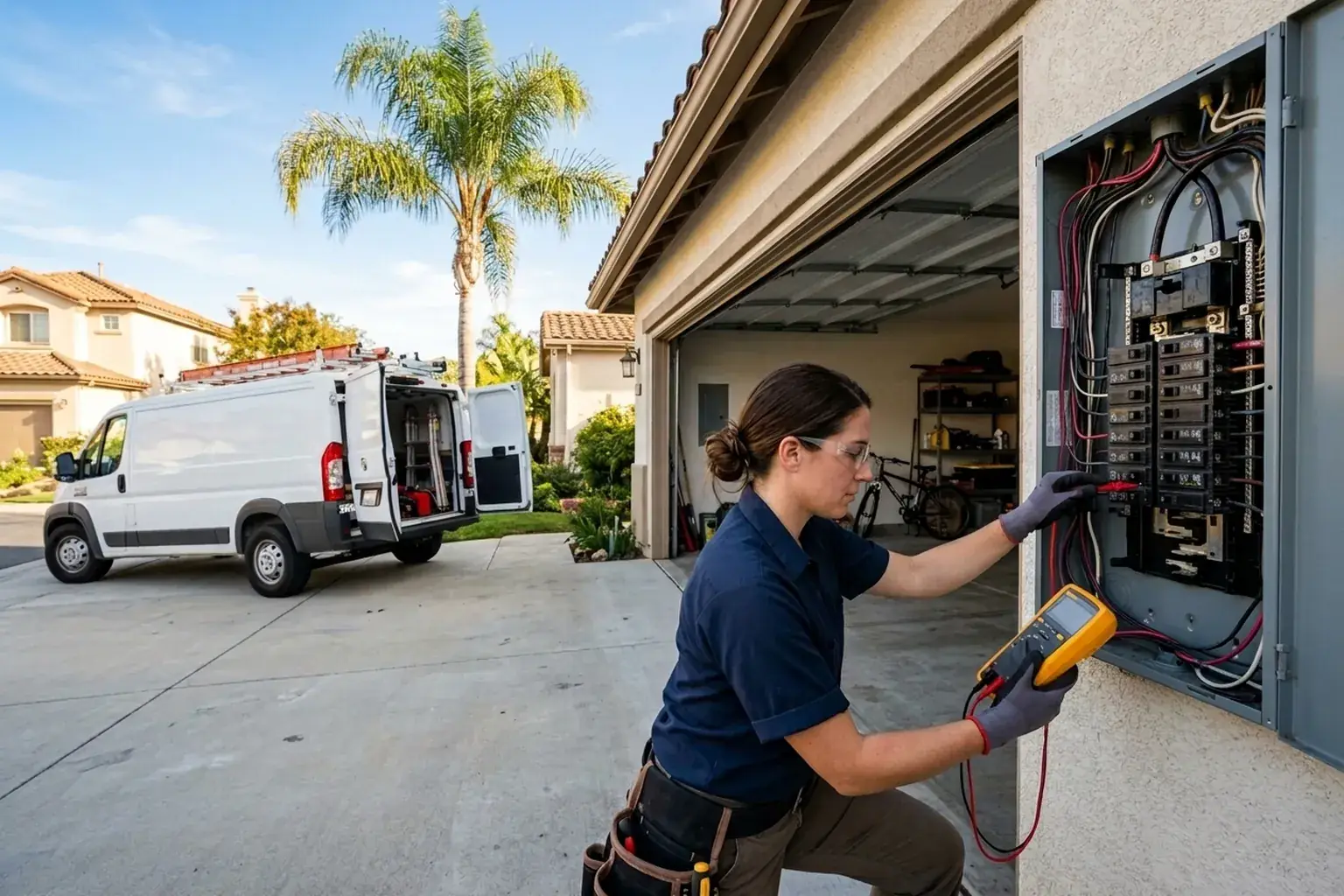

There are 3.66 million small construction businesses in the United States right now, employing nearly 6 million people. Close to 23% of construction workers — over 2.5 million people — are self-employed. And the demand for their services keeps growing: the industry needs roughly 499,000 new workers in 2026, with 92% of construction firms reporting difficulty finding qualified people to hire.
If you are a licensed tradesperson — an electrician, plumber, HVAC technician, welder, or carpenter — and you have been thinking about going out on your own, the market conditions have rarely been better. U.S. construction spending hit $2.15 trillion in 2024, and employment in construction and extraction occupations is projected to grow faster than average through 2034.
But market demand alone does not make a business succeed. Up to 96% of construction companies fail before reaching 10 years, according to data cited from the U.S. Department of Commerce. This guide is designed to help you beat those odds — by walking through the licensing, insurance, financing, pricing, and management decisions that separate the businesses that survive from the ones that don’t.
Is Business Ownership Right for You?
Being an excellent tradesperson and running a profitable trade business require different skill sets. You already know how to do the work. What you may not yet know is how to sell it, price it, collect on it, manage employees doing it, and keep the books balanced while all of that happens simultaneously.
The most common reasons contracting businesses fail have nothing to do with the quality of their craft. Travelers Insurance studied contractor failures and found that unrealistic growth and overextension accounted for 37% of failures, while inadequate internal cost control was a factor in nearly 50%. Cash flow problems — not lack of customers — are consistently cited as the top killer of construction businesses.
Before you file a single form, be honest about whether you are ready for these realities:
- Sales and marketing. Customers don’t appear on their own. You need to generate leads, bid work, close jobs, and maintain a reputation that produces referrals.
- Financial management. You will handle invoicing, payroll, taxes, insurance premiums, and materials purchasing — often while waiting 30, 60, or 90 days for customers to pay.
- People management. Once you hire, you are responsible for training, scheduling, safety, workers’ comp, and employee retention.
- Risk tolerance. The first-year failure rate for construction businesses is 36.8%. Of roughly 59,000 construction businesses that opened in 2018, nearly half shut down within five years. Those are sobering numbers, and anyone who tells you otherwise is not being straight with you.
None of this means you shouldn’t start a business. It means you should go in with your eyes open, a solid plan, and enough financial runway to weather the slow months. If you are still building your trade skills, consider completing an apprenticeship first — the on-the-job experience and industry connections are hard to replicate.
Step 1: Get Licensed and Bonded
Licensing requirements vary widely by state and trade. The majority of states require some form of state-level licensing for general contractors, but some handle it at the municipal level, and rules, fees, and requirements differ significantly from one jurisdiction to the next. Procore maintains a comprehensive state-by-state guide that is a good starting point for understanding what your state requires.
Typical licensing costs run $75 to $400 per year depending on your region and trade, but the process itself often involves passing a trade exam, proving a minimum amount of work experience, and providing proof of insurance and bonding.
Surety bonds are a separate requirement from licensing but often required alongside it. A surety bond is a guarantee to your customers that work will be completed as agreed. The SBA’s Surety Bond Guarantee Program exists specifically to help new businesses that may lack the financial history to obtain bonds independently.
Construction Business Owner magazine outlines a six-step bonding process: check your state’s bonding requirements, determine the bond amount needed, complete the application, go through underwriting, receive a quote, then purchase and file the bond. Underwriters typically evaluate your personal credit history, financial strength, professional references, and relevant experience.
Do not skip this step or try to operate without proper licensing. Unlicensed contracting carries fines, legal liability, and the inability to take on larger commercial and government jobs — which are often the most profitable.
Step 2: Set Up Insurance
Insurance is not optional in the trades. It protects your business, your employees, and your personal assets. Here are the core policies you need:
Workers’ compensation insurance is mandatory in almost every state if you have employees. Construction companies pay an average of $254 per month — about $3,054 annually — for workers’ comp, though rates for residential construction range from $3.51 to $43.42 per $100 of payroll depending on the state and the risk level of the work.
General liability insurance covers property damage and bodily injury claims. Premiums typically run 0.94% to 2.19% of revenue for a contractor doing $500,000 in annual revenue.
Commercial auto insurance covers your work vehicles and averages $215 per month nationally.
These costs add up quickly, which is why they belong in your business plan from the start — not as an afterthought once you have already committed to overhead you cannot support.
Step 3: Write a Business Plan and Secure Financing
A business plan forces you to think through the numbers before you spend them. It also serves as the document your lender will review when you apply for financing. The SBA’s 10 Steps to Start Your Business guide walks through the full formation process, including choosing a business structure, registering your business, obtaining an EIN, and setting up a business bank account.
Startup Costs
How much capital you need depends on your trade and scale. Starting a construction business typically costs $10,000 to $70,000 for a basic operation — think a solo plumber or electrician with a truck, tools, licensing, and insurance. A more comprehensive startup with employees, equipment, and office space averages $53,100 to $245,200. Plumbing-specific startups can often get going for $10,000 to $50,000 in initial outlay.
Financing Options
The SBA 7(a) loan program is the most widely used government-backed loan for small businesses. Key details:
- Maximum loan amount: $5 million (no minimum)
- Construction company loans: up to 25-year maturity
- Average 7(a) loan size in FY2025: $477,571
- Builders CAPLine: a specialized SBA product that provides financing for general contractors to construct or rehabilitate property
In 2024, the SBA supported over 103,000 loans totaling $56 billion across all industries. These loans carry government backing, meaning lenders are more willing to work with newer businesses that might not qualify for conventional financing.
If you are still building the credentials needed to launch a business, our guide to financing trade school covers options for funding your education first — including Pell Grants, apprenticeship wages, and veterans’ benefits.
Step 4: Price Your Work and Manage Cash Flow
This is where most new trade business owners get into trouble. Pricing too low wins bids but erodes your margins. Pricing too high loses work. And even when you price correctly, slow-paying customers can leave you unable to cover payroll and materials.
Know Your Margins
Build-Folio’s 2026 analysis of contractor profit margins by trade provides useful benchmarks:
| Trade | Gross Margin Range |
|---|---|
| Plumbing | 35-55% |
| Electrical | 35-50% |
| Painting | 40-55% |
| Roofing | 35-50% |
| HVAC | 30-45% |
Specialty service trades like plumbing and electrical tend to command the highest margins because of their high skill requirements and emergency demand. A healthy net profit margin for contractors falls in the 15-25% range, though the industry average sits at only about 5-6%.
The gap between a 6% net margin and a 20% net margin is the difference between scraping by and building real wealth. That gap comes down to pricing discipline, cost control, and operational efficiency — not just doing more work.
Cash Flow Is Everything
Cash flow is the number one killer of construction businesses. Long payment cycles — common in commercial work, where net-60 or net-90 terms are standard — mean you are often paying for materials and labor weeks or months before you collect. A business can be profitable on paper and still run out of cash.
Practices that protect your cash flow:
- Require deposits before starting work (25-50% is standard for residential)
- Invoice promptly at project milestones, not just at completion
- Build a cash reserve of at least 3-6 months of operating expenses before scaling
- Be selective about clients — a big job with a slow-paying customer can sink you faster than no job at all
What You Can Earn
The earnings ceiling for a trade business owner is significantly higher than for an employee — but so is the floor.
HVAC business owners earn a national average of $86,197 per year, with most ranging from $70,000 to $150,000. Established companies with strong margins and multiple crews can surpass $200,000. For context, the median wage for all construction and extraction workers is $58,360 — so ownership offers a meaningful step up, though it comes with more risk and responsibility.
Construction also had the strongest hourly earnings growth of any industry at 3.27%, with average hourly earnings of $35.78, reflecting the sustained demand for skilled labor.
At the high end, the opportunity is even more striking. Private equity firms have been actively acquiring home-services businesses — plumbing companies, HVAC operations, electrical contractors — paying seven-figure and eight-figure sums and creating a new class of millionaires among trade business owners. Building a business that is large enough and well-run enough to attract that kind of acquisition is a realistic long-term goal, though it typically requires years of disciplined growth.
If you are interested in the HVAC or electrical paths specifically, our guides to HVAC career opportunities and electrical career opportunities cover the full career trajectory from entry-level to business ownership.
Avoiding the Common Pitfalls
The failure statistics for trade businesses are severe. Of roughly 69,296 private construction firms started in 2001, only 26.6% survived to year 10, and just 17.2% made it to year 20, according to Bureau of Labor Statistics data analyzed by Construction Executive. Over 66,000 construction companies started in 2022, and 20% — roughly 13,886 — closed within one year.
Understanding the leading causes of failure can help you avoid them:
1. Overextension and unrealistic growth (37% of failures). The Hartford’s research on construction business failure found that contractors more often fail from taking on too much work rather than too little. When you are stretched too thin, quality drops, deadlines slip, workplace injuries increase, and your reputation suffers. The key to long-term survival is knowing when to say no.
2. Inadequate cost control (factor in nearly 50% of failures). Travelers Insurance found that nearly half of contractor failures involved poor cost tracking and management. This means not knowing your true cost per job, underestimating materials, failing to account for overhead in your bids, or letting scope creep eat your margins.
3. Cash flow mismanagement. As discussed above, long payment cycles and insufficient cash reserves leave businesses unable to cover operating expenses even when they have plenty of work on the books. Excessive debt compounds the problem — when you are leveraged heavily and a customer pays late, the consequences cascade.
4. Lack of business planning. Footbridge Media’s analysis of first-year failures identified the absence of formal business structure and planning as a recurring factor. Many tradespeople start taking jobs without establishing proper legal structures, accounting systems, or written processes — and the disorganization catches up quickly.
The businesses that survive tend to share common traits: conservative growth, tight financial controls, a cash reserve, diversified client bases, and owners who invest as much in running the business as they do in doing the work.
Free Resources to Help You Succeed
You don’t have to figure this out alone. The federal government and nonprofit organizations offer substantial support for new business owners in the trades.
SCORE — the nation’s largest network of volunteer business mentors — provides free, one-on-one advice on financing, HR, business planning, and operations via email, phone, and video. In 2022, SCORE helped start 30,453 businesses and create 112,570 jobs. Small business owners who receive three or more hours of SCORE mentoring report higher revenues and faster growth.
SBA’s Mentor-Protege Program currently has 1,565 active mentor-protege agreements, pairing experienced business owners with newer ones. For trade business owners, this can mean guidance from someone who has already navigated the exact licensing, bonding, and cash flow challenges you face.
Small Business Development Centers (SBDCs), Women’s Business Centers, and Veterans Business Outreach Centers — all part of the SBA’s network — provide localized support including business plan review, market research, and financial projections.
SBA Surety Bond Guarantee Program — as mentioned earlier, the SBA guarantees bid, performance, and payment surety bonds for small businesses that might not qualify on their own, removing one of the biggest barriers to competing for larger contracts.
The Bottom Line
Starting a trade business is one of the most accessible paths to business ownership in America. The startup costs are manageable, the demand is real, and the earnings potential — especially over time — is substantial. But the failure rates are real too. The tradespeople who build lasting businesses are the ones who treat the business side with the same seriousness they bring to their craft: learning the numbers, planning conservatively, protecting their cash flow, and growing at a pace they can sustain.
The tools and support systems exist. The market is waiting. The question is whether you are willing to prepare as carefully for running a business as you prepared to learn your trade.
Sources
- U.S. Small Business Administration, Office of Advocacy — “2025 Small Business Profile” — June 2025 — https://advocacy.sba.gov/wp-content/uploads/2025/06/United_States_2025-State-Profile.pdf
- Travelers Insurance — “4 Reasons Contractors Fail” — https://www.travelers.com/resources/business-topics/surety-bond/reasons-contractors-fail
- Projul — “8 Reasons Why Construction Companies Fail” — https://projul.com/blog/8-reasons-why-construction-companies-fail/
- Build-Folio — “Contractor Profit Margins by Trade (2026)” — https://build-folio.com/profit-margins/
- HouseCallPro — “HVAC Business Owner Salary (2026)” — https://www.housecallpro.com/resources/hvac-business-owner-salary/
- Construction Dive — “Construction Worker Demand 2026” — https://www.constructiondive.com/news/labor-demand-gap-shrinks-abc-construction-staff/810681/