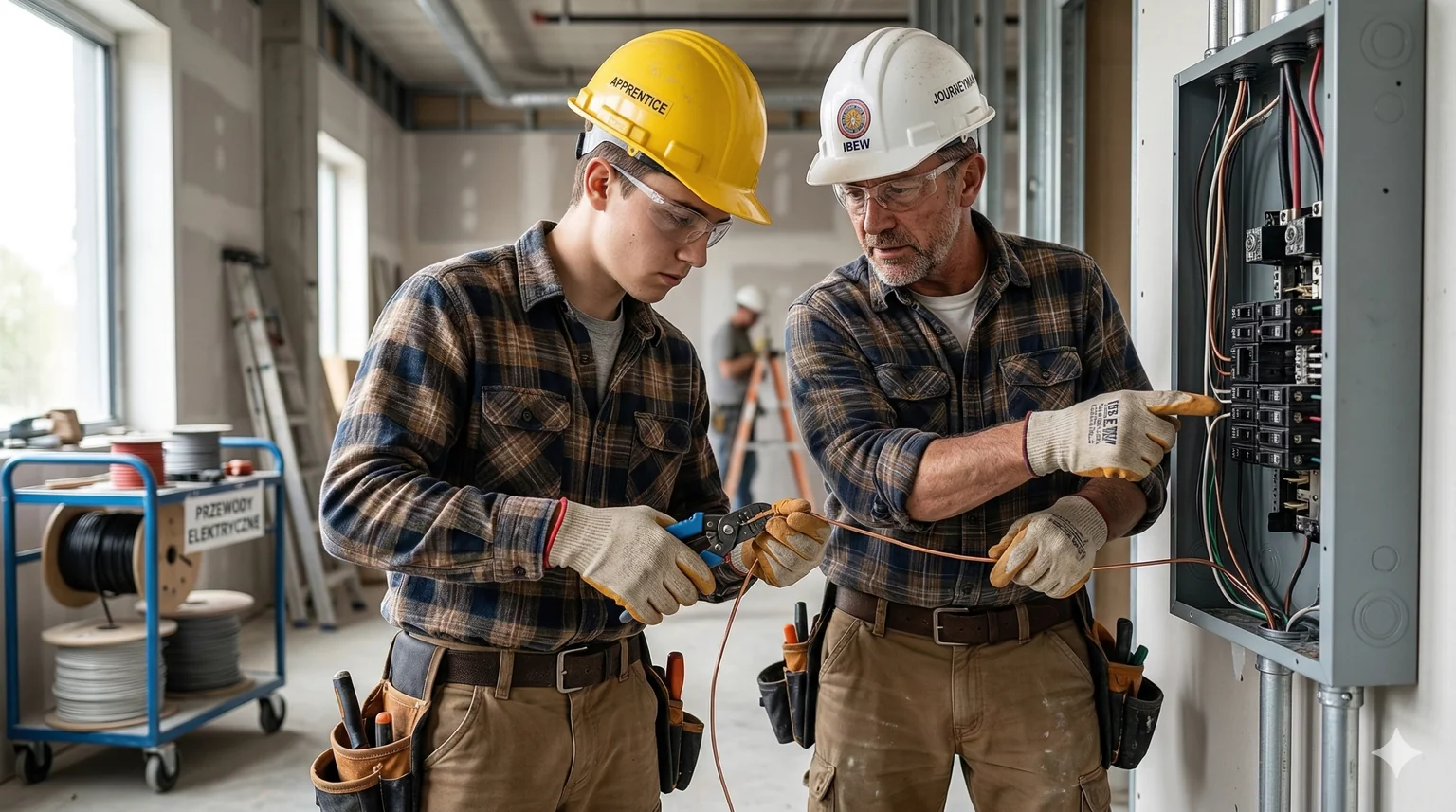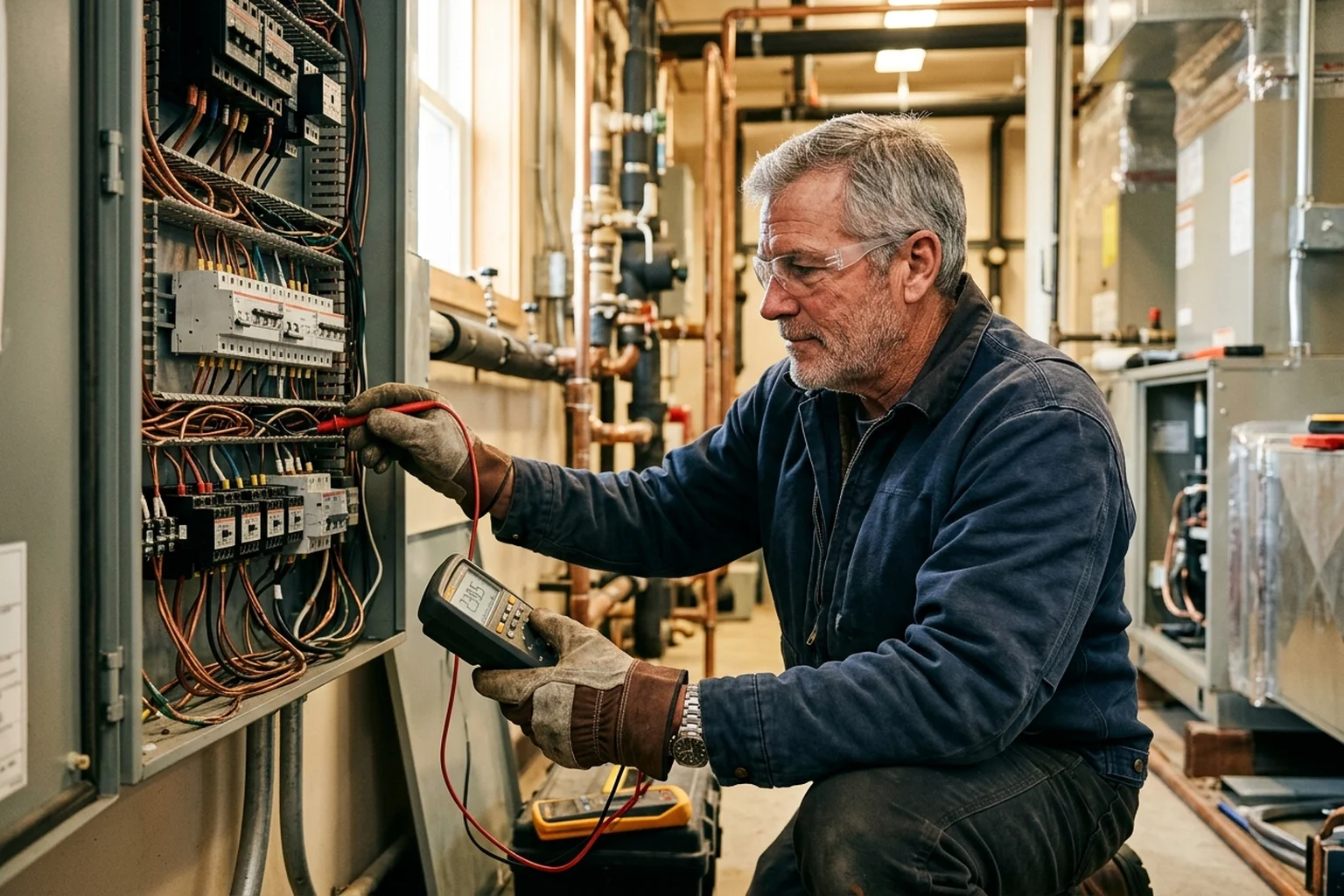

In 2023, a 54-year-old former retail manager in Ohio enrolled in a 10-month electrical technology program at his local community college. His reason was blunt: his store had closed, his industry was shrinking, and he needed a career that couldn’t be offshored or automated. Two years later, he’s a licensed electrician earning more than he ever did in management. He’s not an outlier — he’s part of a trend the data has been tracking for years.
Workers aged 55 and older now make up 24 percent of the U.S. labor force, the fastest-growing age group for more than two decades, according to U.S. Census Bureau data. Nearly a quarter of Americans 50 and older are planning a job change this year, per AARP research. And the skilled trades — where the median construction worker is 42 years old and Baby Boomers still make up 14.2 percent of the construction workforce — have both the openings and the infrastructure to absorb them.
This guide is specifically for adults 50 and older. If you’re in your 30s or 40s, we’ve written a separate guide for mid-career changers that covers different ground. What follows here addresses the distinct realities of starting a trade career with a shorter runway, a body that has opinions about ladders, and the financial considerations — Social Security, Medicare gaps, pension impacts — that don’t apply to younger career changers.
TL;DR: Key Takeaways
- No upper age limit on registered apprenticeships. Federal law prohibits age discrimination against applicants 40 and older.
- Workers 55+ are 24% of the U.S. workforce and the fastest-growing labor force segment. You’re not an anomaly — you’re the demographic.
- Trades with lower physical demands — inspection ($72,120 median), electrical service, HVAC controls, estimating — are well-suited to mature workers.
- Training is short: most trade certificates take 6–18 months. Total cost ranges from $3,800 to $16,000, a fraction of a four-year degree.
- The financial math is different at 50, but it still works: lower training debt, higher starting motivation, and potential to earn $50,000–$72,000+ within 2–3 years.
- Health insurance during training requires planning: COBRA, ACA Marketplace, or spouse coverage can bridge the gap until Medicare at 65.
- Life experience is a documented advantage: employers consistently cite reliability, communication skills, and work ethic as strengths of older apprentices.
The Age Question: What the Law and the Data Actually Say
Let’s get this out of the way: there is no upper age limit on registered apprenticeship programs in the United States. The U.S. Department of Labor is explicit — the minimum age is 16 (18 for hazardous occupations), and there is no maximum. The Age Discrimination in Employment Act (ADEA) protects applicants and apprentices 40 and older from discrimination in hiring, training, and employment.
The DOL notes that roughly 36 percent of individuals aged 55 and older are currently employed, and as companies struggle to find skilled talent, apprenticeship programs are increasingly looking at this demographic as a solution, not a problem.
The workforce data backs this up. According to the Census Bureau, workers 55 and older have been the fastest-growing age group in the labor force for over 20 years and now represent 24 percent of all U.S. workers. According to BLS data, unemployment among workers 55 and older was just 2.9 percent in August 2025 — well below the 4.3 percent national average. Employers want experienced, reliable workers. In many trades, they can’t find enough of them.
Why the Trades Need Older Workers Right Now
The skilled trades are facing a generational turnover that creates genuine opportunity for late-career entrants.
Baby Boomers still comprise 14.2 percent of the construction labor force, down from 20.6 percent in 2019, according to NAHB analysis of BLS data. That’s hundreds of thousands of experienced tradespeople retiring each year — and the pipeline isn’t filling fast enough. The construction industry alone needs an estimated 349,000 new workers in 2026 to meet demand.
This shortage means employers are far more interested in whether you can do the work than in how old you are. The practical reality on job sites is that a motivated 52-year-old who shows up on time, communicates clearly, and learns steadily is a better hire than an unreliable 22-year-old — and most contractors will tell you that directly.
The shortage also means wages are rising. BLS data for May 2024 shows median annual wages of $62,350 for electricians, $59,810 for HVAC technicians, and $72,120 for construction and building inspectors. Electrician employment is projected to grow 9 percent from 2024 to 2034 — much faster than average.
Which Trades Work Best for Workers Over 50
Not every trade makes equal sense when you’re starting at 50. The selection criteria are different than for someone at 30. You’re optimizing for three things: manageable physical demands, shorter training timelines, and strong earning potential within a 10–15 year working window.
Here are the trades that score well on all three.
Construction and Building Inspection
This is arguably the single best trade entry point for workers over 50. Inspectors examine buildings and structures for code compliance — it’s analytical, detail-oriented work that relies heavily on knowledge and judgment rather than physical labor.
- Median pay: $72,120/year (BLS, May 2024)
- Training: Varies by state — typically a combination of coursework and field experience. Many states accept prior construction experience in lieu of formal education.
- Physical demands: Low to moderate. Walking job sites, climbing stairs, occasional ladder use — but no heavy lifting, no crawling through attics daily.
- Why it suits 50+: Life experience and professional judgment matter enormously. Inspectors need to communicate findings to contractors, homeowners, and municipal officials — skills that older workers typically bring from previous careers.
Electrical — Service and Controls Focus
Electrical work covers a wide spectrum. Residential service and troubleshooting, commercial controls and automation, and electrical inspection are substantially less physically demanding than new construction rough-in work. A 50-year-old entering electrical should aim for the service and controls side of the trade.
- Median pay: $62,350/year (BLS, May 2024)
- Training: Certificate programs run 6–12 months; apprenticeships run 4–5 years but pay during training.
- Job growth: 9% projected growth (2024–2034), with approximately 81,000 new positions.
- Why it suits 50+: Diagnostic and service work is problem-solving, not heavy labor. Commercial building automation and controls — programming thermostats, lighting systems, energy management — is increasingly a desk-and-laptop job with site visits.
HVAC — Diagnostics and Controls
Like electrical, HVAC has a physical spectrum. Installation work — hanging ductwork, setting rooftop units — is demanding. But HVAC diagnostics, controls programming, and energy auditing are intellectually intensive trades that reward patience and systematic thinking.
- Median pay: $59,810/year (BLS, May 2024)
- Training: Certificate programs in 6–12 months; associate degrees in 2 years.
- Why it suits 50+: Modern HVAC is increasingly about building automation systems, digital controls, and energy efficiency diagnostics. These are technology-driven roles that don’t require carrying 80-pound compressors up ladders.
Estimating and Project Management
If you have management, finance, or administrative experience from a previous career, construction estimating and project management leverage that background directly. Estimators analyze blueprints, calculate material costs, and prepare bids. Project managers coordinate schedules, subcontractors, and budgets.
- Pay range: Senior estimators average $129,693/year nationally.
- Training: Some trade school coursework plus field experience. Many estimators enter through short certificate programs or transition from field work.
- Why it suits 50+: This is where your decades of professional experience — budgeting, managing people, meeting deadlines, communicating with stakeholders — translate almost directly. Physical demands are minimal.
Plumbing — Service and Inspection
Service plumbing — diagnosing problems, repairing fixtures, maintaining systems — is less physically taxing than new-construction plumbing and involves significant customer interaction. Plumbing inspection is another low-physical-demand pathway.
- Median pay: Plumbers and pipefitters earn a median of $63,420/year (BLS)
- Training: 1–2 years of school plus apprenticeship, or direct apprenticeship entry.
- Why it suits 50+: Residential service plumbing lets you control your schedule (especially if self-employed), work indoors most of the time, and avoid the repetitive heavy labor of commercial pipe fitting.
For a broader look at trades with lower physical demands, see our guide to trade careers without heavy physical labor.
The Financial Calculus at 50: Different Math, Not Bad Math
The financial equation for a 50-year-old entering the trades is genuinely different from that of a 25-year-old. Acknowledge the differences honestly, and the numbers still work.
The Shorter Runway
At 50, you likely have 15–17 years until a traditional retirement age of 65–67. That’s less than the 40-year runway a young entrant has — but it’s still substantial. An electrician earning the median $62,350 over 15 years earns roughly $935,000 in that period, before raises. That’s not a marginal outcome.
More practically: if you’re currently unemployed, underemployed, or stuck in a declining industry, the comparison isn’t “15 years of trade earnings versus 40 years.” It’s “15 years of trade earnings versus 15 years of whatever you’d earn otherwise.” For many people at 50, the trade path pays better than the alternative they’re currently facing.
Training Costs Are Low
Trade school programs typically cost between $3,800 and $16,000 total — a fraction of a four-year degree. Many certificate programs cost under $10,000. If you enter through an apprenticeship, your training is free and you earn wages from day one.
Federal Pell Grants cover up to $7,395 per year for eligible students, with no age limit. Starting July 2026, the Workforce Pell expansion extends eligibility to short-term programs of at least 150 clock hours — covering many trade certificates that previously didn’t qualify.
WIOA (Workforce Innovation and Opportunity Act) funds, administered through your local American Job Center, can cover tuition for adults training for high-demand occupations. These are specifically designed for displaced and career-changing workers. For a detailed breakdown, see our financing trade school guide.
Social Security Considerations
If you’re 50, you’re at least 12 years from the earliest Social Security retirement age (62) and 17 years from full retirement age (67 for those born after 1960). Trade work during those years continues building your Social Security earnings record — and because benefits are calculated based on your highest 35 years of earnings, higher trade wages can actually improve your future benefit if they replace lower-earning years in your record.
If you start collecting Social Security at 62 while still working, the SSA’s earnings limit applies: in 2026, you can earn up to $24,480 per year before benefits are reduced. After full retirement age, there’s no earnings limit. For most people entering trades at 50, this won’t be an issue for over a decade — but it’s worth understanding for long-term planning.
Health Insurance During Training: Plan Before You Quit
This is the issue that catches career changers off guard, and it’s particularly acute between ages 50 and 65 — too young for Medicare, too old for the “I’ll just go without” approach that a 25-year-old might risk.
If you’re leaving an employer with health benefits, you have several options:
- COBRA: Continues your employer plan for up to 18 months. It’s expensive — you pay the full premium plus a 2% administrative fee — but it provides continuity with no coverage gaps. Typical COBRA costs run $600–$700/month for individual coverage.
- ACA Marketplace: Leaving a job triggers a Special Enrollment Period on Healthcare.gov. Subsidies are income-based, so if your training-year income is low, your premium may be significantly reduced. This is often the most cost-effective option during a training period.
- Spouse’s plan: If your spouse has employer-sponsored coverage, adding you as a dependent is typically the simplest and least expensive path.
If you’re entering an apprenticeship, many union apprenticeship programs include health benefits from day one or after a qualifying period. This is one of the underappreciated advantages of the union apprenticeship route for older entrants — you get health coverage while you train.
Bottom line: Don’t quit your current job without a health insurance plan in place. The coverage gap between 50 and Medicare at 65 is a solvable problem, but only if you solve it before it becomes an emergency.
Life Experience as a Genuine Advantage
This isn’t motivational fluff — it’s a documented pattern that employers and training programs consistently report.
Reliability. The trades have a chronic problem with workers who don’t show up. The Associated Builders and Contractors regularly surveys contractors, and absenteeism and turnover consistently rank among the top workforce challenges. Workers over 50 who’ve held jobs for decades typically don’t have attendance problems. That alone makes them valuable.
Communication skills. Trades like HVAC service, electrical service, and plumbing involve direct customer interaction on virtually every call. A technician who can explain a $3,000 repair to a worried homeowner — clearly, calmly, without jargon — generates more business and fewer callbacks than one who can’t. If you’ve spent 20 years communicating with clients, customers, or stakeholders, you already have this skill.
Problem-solving and judgment. Diagnostic work in any trade is fundamentally about systematic problem-solving: gathering information, forming hypotheses, testing them, and narrowing to the root cause. Adults with decades of professional experience typically excel at this kind of thinking. It’s the same cognitive skill set, applied to different problems.
Mentorship potential. Older apprentices frequently move into supervisory and training roles faster than younger ones — not because they have more trade knowledge, but because they have more experience managing people, handling conflicts, and maintaining professionalism under pressure. Contractors notice this. It’s a path to higher-paying roles that doesn’t depend purely on physical capability.
The Physical Reality: An Honest Assessment
At 50, your body is not the same as it was at 25. That’s not disqualifying — but it does mean trade selection matters more, and you need to be realistic about what you can sustain for 10–15 years.
Trades to approach carefully if you have existing joint, back, or knee issues:
- Roofing (repetitive bending, kneeling, heat exposure)
- Concrete and masonry (heavy lifting, sustained physical effort)
- Framing carpentry (overhead work, lifting lumber, climbing)
- Iron work (heights, heavy steel, extreme physical demand)
Trades with manageable physical demands for most 50-year-olds:
- Electrical service and troubleshooting
- HVAC diagnostics and controls
- Building inspection
- Estimating and project management
- Finish carpentry and cabinetry
- Plumbing service and repair (residential)
The distinction isn’t between “physical” and “not physical.” All trades involve some physical activity — standing, walking, occasional lifting, working with your hands. The question is whether the physical demands are sustainable over a decade without causing injury or chronic pain. If you can walk a job site, climb a standard ladder, and carry 30 pounds comfortably, most of the trades in the second list are accessible.
If you have specific health concerns, talk to your doctor before committing to a training program. This isn’t overcaution — it’s a practical step that helps you choose the right trade and avoid wasting time and money on one that doesn’t fit your physical reality.
How to Get Started: A Step-by-Step Plan
Knowing which trades suit older workers is useful. Knowing what to do next is more useful. Here’s a concrete sequence.
Step 1: Assess Your Physical Baseline
Before choosing a trade, get an honest assessment of your physical capabilities. If you haven’t had a physical exam recently, schedule one. Tell your doctor you’re considering trade work and ask specifically about joint health, cardiovascular fitness, and any limitations on repetitive motion, lifting, or ladder work. This conversation takes 15 minutes and can save you from choosing the wrong trade.
Step 2: Choose Your Trade Based on the 50+ Criteria
Narrow your options using the three filters that matter most at this stage of life: physical sustainability, training timeline, and earning potential within a 10–15 year window. Review the trades above. Read the career overviews for each one. If possible, talk to someone who does the work — ideally someone who entered it later in life.
For help evaluating programs, use our guide on how to evaluate a trade school before committing money or time.
Step 3: Secure Health Insurance Coverage
Before you quit a job or reduce your hours, confirm your health insurance plan. Call Healthcare.gov (1-800-318-2596) to understand your ACA Marketplace options and potential subsidies. If your spouse has employer coverage, check the enrollment rules. If you’re considering a union apprenticeship, ask about benefits eligibility during your application process.
Step 4: Explore Funding
File a FAFSA to determine Pell Grant eligibility — there’s no age limit. Contact your local American Job Center (find yours at CareerOneStop.org) and ask about WIOA training funds for high-demand occupations. If you’re a veteran, contact your VA regional office about GI Bill benefits for trade programs.
For a complete funding walkthrough, see our financing trade school guide.
Step 5: Search for Programs
Search Apprenticeship.gov for registered apprenticeship programs in your area. Check local community colleges for trade certificate programs — many offer evening and weekend schedules designed for working adults. Browse our programs directory to compare accredited trade programs by location and specialty.
Step 6: Apply — and Don’t Overthink It
The biggest obstacle for most career changers over 50 isn’t qualification — it’s hesitation. Programs want motivated students. Employers want reliable workers. The skilled trades shortage means there are more openings than candidates in most markets. Your application won’t be the oldest one they’ve received, and your age is protected by federal law.
What About Age Discrimination?
It exists. Acknowledging that is more useful than pretending it doesn’t.
The EEOC reports that age discrimination complaints remain a significant portion of workplace discrimination filings. In the trades specifically, some employers do harbor biases about older workers’ physical capabilities or willingness to learn new skills.
But the practical picture is more nuanced. The skilled trades labor shortage means most employers can’t afford to be picky about age. A contractor who needs four electricians and has two applicants isn’t going to turn away a qualified 53-year-old because of a birth date. The market pressure works in your favor.
To minimize risk:
- Target employers with structured apprenticeship programs — these have formal selection criteria and are subject to federal anti-discrimination oversight.
- Get your certifications and licenses — credentials speak louder than resumes, and they eliminate the “can this person actually do the work?” question.
- Lean into your advantages — reliability, professionalism, communication skills, and a track record of showing up. These are exactly the attributes that trade employers say are hardest to find.
Tools on This Site That Can Help
Compare Schools — Compare trade colleges side by side on tuition, graduation rates, financial aid, and program offerings. Particularly useful if you’re weighing a community college certificate against a private trade school.
College Rankings — Our best for working students ranking highlights schools with flexible scheduling — relevant if you’re training while working part-time or managing other obligations. The best value ranking helps identify programs that deliver strong outcomes relative to cost.
Programs Directory — Search accredited trade programs by specialty and location to find options near you.
Trade Schools by City — Training close to home matters more at 50 than at 20 — nobody wants a relocation on top of a career change. Browse schools in metros with deep trade-school options like San Antonio, Jacksonville, Las Vegas, Louisville, and Kansas City, or find your own city from the state pages.
Sources
- U.S. Census Bureau — U.S. Workforce is Aging, Especially in Some Firms — December 2025
- NAHB Eye on Housing — Median Age of Construction Labor Force Holds at 42 — October 2025
- U.S. Department of Labor — Age, Protected Characteristics — Apprenticeship.gov
- AARP — How to Start a New Career at 50
- Bureau of Labor Statistics — Electricians: Occupational Outlook Handbook — 2024 data
- Bureau of Labor Statistics — HVAC Mechanics and Installers — 2024 data
- Bureau of Labor Statistics — Construction and Building Inspectors — 2024 data
- Bureau of Labor Statistics — 38.3% of Employed Older Americans Worked Part Time in 2024
- Social Security Administration — How Work Affects Your Benefits — 2026 earnings limits
- BestColleges — How Much Does Trade School Cost?
- EEOC — The State of Age Discrimination and Older Workers in the U.S.