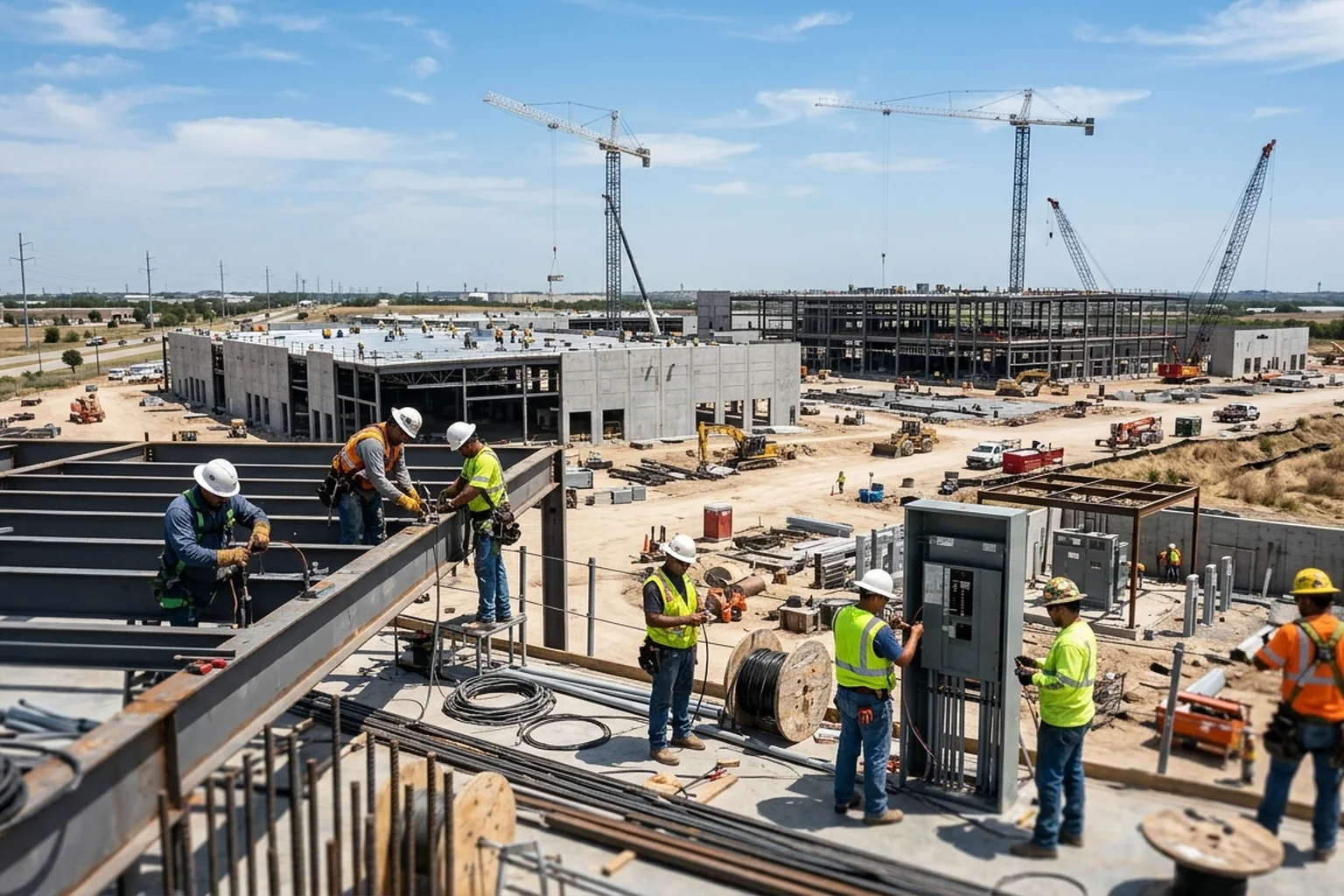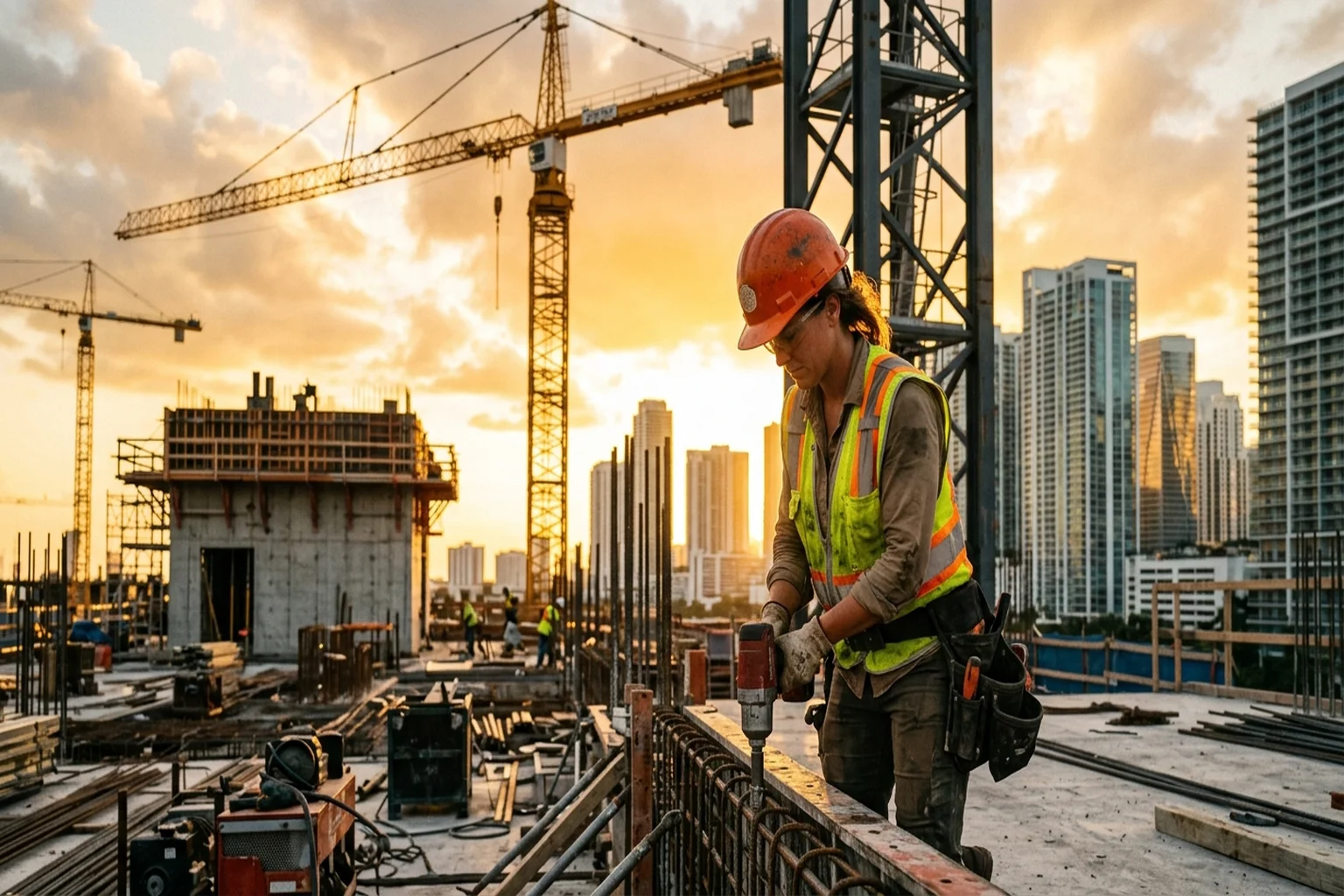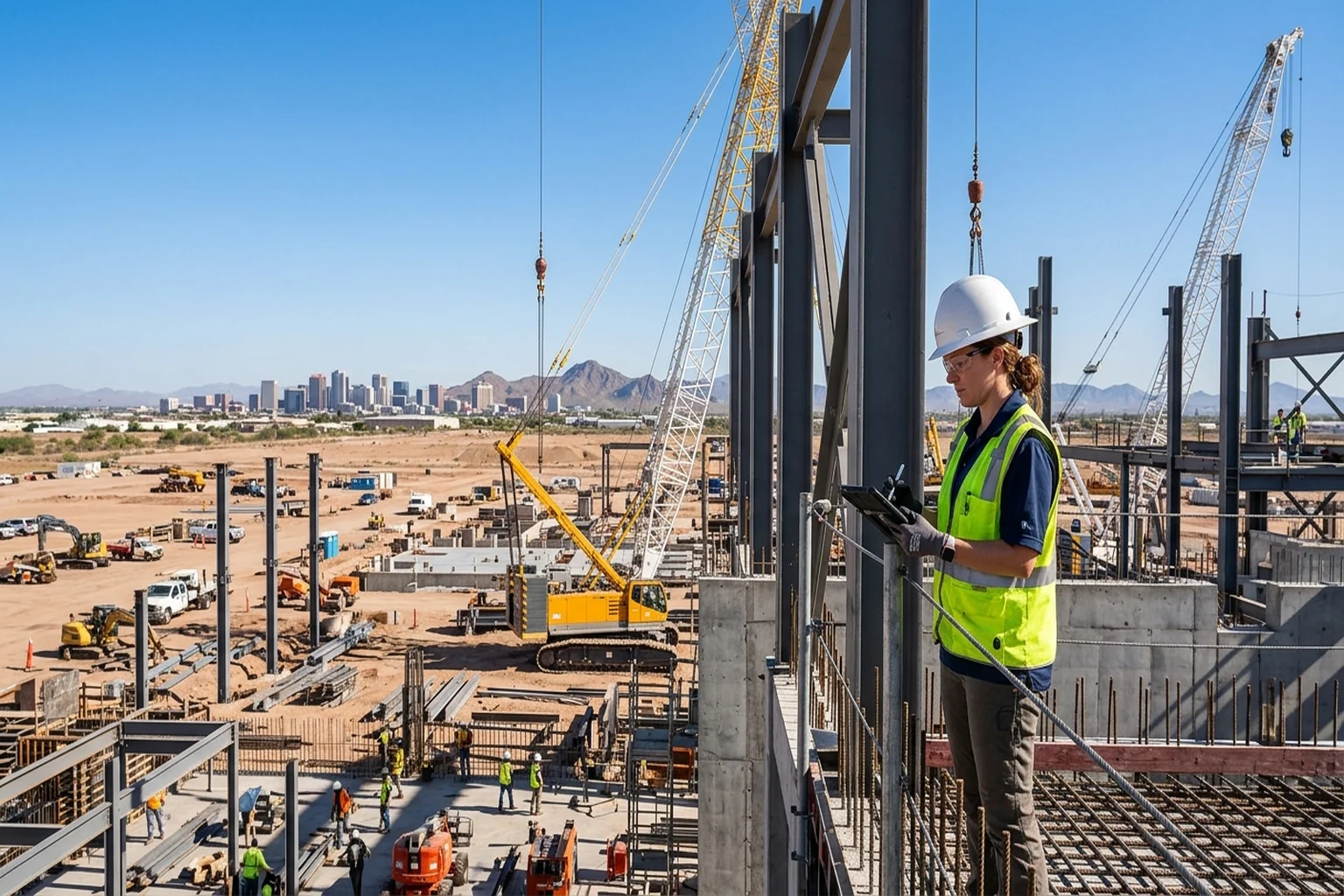

A data-driven guide for anyone considering a trade career in Arizona.
TL;DR: Arizona — and Phoenix in particular — is in the middle of a construction and manufacturing surge unlike anything the state has seen before. TSMC is committing $165 billion to build advanced semiconductor fabs in North Phoenix, creating more than 20,000 construction jobs and thousands of permanent maintenance roles. At the same time, Google, Meta, and Microsoft are building out billions in data center capacity across the East Valley, and Maricopa County continues to be one of the fastest-growing counties in the United States. The result: a severe skilled trades shortage, wages rising faster than inflation, and an apprenticeship pipeline that the state is scrambling to fill. If you are considering a trade career, Arizona may be the best-positioned large market in the country right now.
Why Arizona’s skilled trades are experiencing a once-in-a-generation surge
Three major forces are colliding at the same time in the Phoenix metro, creating a sustained demand for skilled tradespeople that experts expect to last at least through the end of this decade.
Semiconductor manufacturing investment at historic scale. Taiwan Semiconductor Manufacturing Company (TSMC) announced in March 2025 that it is expanding its Arizona investment to $165 billion — the largest foreign direct investment in a greenfield project in United States history, according to TSMC’s official press release. The project involves three advanced chip fabrication plants, two packaging facilities, and a dedicated R&D center, all concentrated in North Phoenix. The first fab entered mass production in early 2025. The construction alone has required more than 10,000 trades workers, and the Greater Phoenix Economic Council projects the project will generate more than 20,000 unique construction jobs in total.
Data center expansion across the East Valley. The semiconductor story gets most of the headlines, but a parallel data center wave is reshaping the Phoenix metro. Google has broken ground on a major campus in Mesa, Meta selected DPR to build a $1 billion, 2.5-million-square-foot facility, and Microsoft operates cloud infrastructure in El Mirage and Goodyear. A developer has also announced a $33 billion data center industrial park in Pinal County. These facilities are among the most trades-intensive buildings in existence — they require massive electrical infrastructure, industrial cooling systems, and structural steel on tight timelines.
Population growth driving relentless housing construction. Maricopa County, which encompasses Phoenix and its surrounding cities, remains one of the fastest-growing counties in the country. In 2024, the county saw 36,011 new homes permitted, with 60% being single-family homes, according to Federal Reserve FRED data. Since 2018, the county has increased its total housing stock by 8%. That volume of residential construction — on top of commercial, industrial, and infrastructure builds — means electricians, plumbers, and HVAC technicians are in continuous demand across the metro and into surrounding counties.
Together, these three forces have created a labor market where Arizona’s own workforce pipeline is not keeping pace with demand.
The TSMC story — what it means for trades workers specifically
The TSMC Phoenix project deserves its own section, because its scale is genuinely difficult to grasp and its implications for skilled tradespeople extend well beyond the construction phase.
TSMC’s original commitment when it broke ground in 2021 was approximately $65 billion for two fabs. The March 2025 expansion to $165 billion added three more fabs, two packaging facilities, and an R&D center — making it the most expensive private construction project in US history by a wide margin. The TSMC press release states the project is expected to support more than 40,000 jobs in the broader ecosystem when direct, construction, and supplier employment are counted together.
For construction trades, the numbers are staggering. TSMC has worked directly with the Arizona Building and Construction Trades Council, with the company’s Arizona president stating that union members have “the critical skills necessary to help us complete our two advanced chipmaking fabs.” A 2024 agreement with the union established joint workforce training programs designed to build a construction pipeline that can support TSMC’s ongoing expansion, according to Manufacturing Dive.
Crucially, the demand does not end when construction wraps. Semiconductor fabs require continuous maintenance by highly skilled trades workers — electricians certified for high-voltage industrial systems, HVAC and refrigeration specialists who maintain precision environmental controls, and pipefitters managing ultra-pure water systems. These permanent operations and maintenance roles tend to pay a significant premium over standard commercial construction work.
For a trade student thinking about a 20-year career, the TSMC campus represents not just a construction boom but a permanent industrial anchor that will require skilled labor for decades.
Top trades in highest demand in Arizona
Electricians — $59,480 median annual wage in Arizona
Electricians are the single most in-demand trade in Arizona’s current market, and the reasons are structural rather than cyclical. Semiconductor fabs, data centers, commercial office buildings, and hundreds of thousands of new homes all require electrical installation and ongoing service.
The BLS Occupational Outlook Handbook reports a national median annual wage of $62,350 for electricians as of May 2024, with the top 10 percent earning more than $106,030. The Arizona state median sits at $59,480 according to BLS OEWS data — slightly below the national figure, though wages in the Phoenix metro itself tend to run above the statewide average given the concentration of high-complexity industrial work. Nationally, electrician employment is projected to grow 9 percent from 2024 to 2034, nearly three times the average for all occupations, with about 81,000 openings projected annually.
In Phoenix, data center and semiconductor fab work commands a notable premium. Electricians working industrial high-voltage systems or serving as journeymen on major fab projects frequently earn 20–30% above standard commercial rates.
If you are interested in electrician training programs, the path typically runs through a 4–5 year registered apprenticeship combining on-the-job hours with classroom instruction. In Arizona that pathway runs through the Arizona Building Trades Council or programs affiliated with the International Brotherhood of Electrical Workers (IBEW).
HVAC Technicians — uniquely essential in Arizona’s climate
HVAC is one of the trades most dramatically shaped by geography, and Arizona’s geography is extreme. With Phoenix recording an average of 107 days above 100°F per year and summer highs regularly exceeding 115°F, air conditioning is not a seasonal luxury — it is life-safety infrastructure. This creates a dynamic that simply does not exist in northern or coastal states: HVAC work in Arizona is genuinely year-round, with summer demand so intense that service technicians often work extended hours for months at a stretch.
The BLS reports a national median annual wage of $59,810 for heating, air conditioning, and refrigeration mechanics and installers as of May 2024. ServiceTitan, citing BLS OEWS data, puts the Arizona mean wage for HVAC mechanics at $58,540, with experienced senior technicians earning $75,000 or more. The combination of intense residential demand, large commercial systems serving data centers and office parks, and the critical nature of cooling in a desert climate means HVAC technicians in Phoenix can nearly always find work.
Beyond residential service, Phoenix’s data center buildout has created a strong commercial HVAC market. Hyperscale data centers require sophisticated cooling infrastructure — precision air handlers, chilled water systems, and evaporative cooling towers — that demands more advanced skills than standard residential HVAC and pays accordingly.
Plumbers and Pipefitters — $62,970 national median
Plumbers and pipefitters are essential at every stage of Arizona’s construction cycle. Residential growth drives constant demand for new construction plumbing. Commercial and industrial builds require more complex systems. And the semiconductor manufacturing sector requires ultra-pure water delivery systems — one of the most technically demanding applications in the trades — that only qualified industrial pipefitters can install and maintain.
The BLS OOH for plumbers, pipefitters, and steamfitters reports a national median annual wage of $62,970 as of May 2024, with the highest 10 percent earning more than $105,150. Job growth is projected at 6 percent through 2034. Arizona’s combination of new housing construction and industrial manufacturing demand means the local market frequently tightens faster than national projections suggest.
For plumbing training programs, Arizona apprenticeships run through the United Association of Plumbers and Pipefitters (UA) and typically combine 2,000+ hours of on-the-job training per year with required classroom instruction.
Ironworkers and Structural Steel — $62,700 national median
Structural ironworkers erect the steel skeletons of large buildings, bridges, and industrial facilities. In Arizona’s current construction environment, ironworkers are in acute demand at semiconductor fab construction sites, data center campuses, and the large mixed-use commercial developments reshaping the Phoenix metro’s outer suburbs.
The BLS reported a national median annual wage of $62,700 for structural iron and steel workers in May 2024, with the top 10 percent earning more than $107,520. The scale of current projects in Arizona — where a single fab complex or data center campus can involve hundreds of thousands of square feet of structural steel — means skilled ironworkers can negotiate strong rates and find continuous work without traveling out of state.
Pay and career trajectory — Arizona vs. national averages
Arizona’s trade wages are competitive with the national median across most occupations, though the state is not yet at the top tier occupied by California, Alaska, and New York. What Arizona offers instead is a combination of lower cost of living than California, no state income tax on wages (Arizona’s individual income tax rate dropped to a flat 2.5% in 2023), and a hot job market that gives tradespeople leverage.
For context, a journeyman electrician in Phoenix with 5–7 years of experience and industrial certifications can realistically expect to earn $75,000–$90,000 or more, particularly on semiconductor or data center projects. A master plumber running a service business in the Phoenix metro can clear six figures. These figures are not outliers — they reflect the premium that a market with genuine labor scarcity puts on skilled workers.
Career trajectory in the trades also follows a clear path: apprentice, journeyman, foreman, superintendent, or business owner. In a market as active as Phoenix’s, ambitious tradespeople can compress that timeline significantly, taking on more complex work and more responsibility faster than they could in a slower market.
Arizona’s apprenticeship programs — how to access them
Arizona has made closing the trades gap a state-level priority. Governor Katie Hobbs launched the BuildItAZ Apprenticeship Initiative, and in April 2025 announced a $3 million infusion to continue expanding the program. Under BuildItAZ, the number of active construction and trades registered apprentices grew from 4,350 to 7,252, with a target of 8,700 by the end of 2026, according to the Arizona Governor’s Office.
The BuildItAZ model includes:
- Paid on-the-job training — at least 2,000 hours per year combined with a minimum of 144 hours of classroom instruction
- Wrap-around services — grants covering tuition, tools, boots, books, childcare, and transportation for qualifying apprentices
- Program length — most apprenticeships run 4–5 years depending on the trade
- Multiple entry points — programs operate through the Arizona Building Trades Council, the Tucson Electrical Apprenticeship program, The Laborers Training School in Phoenix, and the Arizona Department of Economic Security
The Arizona Department of Education also supports registered apprenticeships through CTE (Career and Technical Education) pathways at the high school level, meaning students can begin accumulating hours toward journeyman status before they graduate.
For prospective students researching schools, the best trade colleges rankings can help identify accredited programs in Arizona and compare them on outcomes, affordability, and program availability.
To browse programs and schools available in Arizona specifically, visit the trade colleges in Arizona directory.
Regional breakdown: Phoenix metro vs. Tucson vs. Flagstaff
Phoenix metro (Maricopa + Pinal counties). This is where the overwhelming majority of construction activity is concentrated. The TSMC fabs, the data center campuses, the residential subdivisions, and the major commercial builds are all in this corridor. Phoenix metro accounts for approximately 75% of Arizona’s total construction employment. For anyone entering the trades who wants maximum job choice and the highest wages, the Phoenix metro is the starting point.
Tucson. Arizona’s second-largest metro has its own construction activity driven by University of Arizona expansion, healthcare construction (Banner Health is one of the state’s largest employers), and the semiconductor supply chain extending south from Phoenix. The Davis-Monthan Air Force Base and nearby defense contractors also generate steady mechanical and electrical maintenance work. Wages in Tucson run 5–10% below Phoenix for most trades, but the cost of living is proportionally lower.
Flagstaff and Northern Arizona. Flagstaff serves a smaller market with significant seasonal construction activity tied to tourism infrastructure and Northern Arizona University expansion. Commercial HVAC is somewhat less year-round than in Phoenix because of the higher elevation and cooler winters. That said, Flagstaff-area contractors often pull workers from the Phoenix pipeline when projects ramp up, so Phoenix-trained tradespeople can find work here as well.
How to get started
If you are considering a trade career in Arizona, here is a practical roadmap.
Step 1: Choose a trade. Look at the four trades covered above and consider your interests, physical aptitudes, and the type of environment you want to work in. Electricians work in diverse environments including commercial, industrial, and residential. HVAC techs spend significant time outdoors in extreme heat during the busiest season. Plumbers and pipefitters work in tight spaces and trenches as well as large industrial facilities. Ironworkers work at height on structural steel. Each trade has its own character.
Step 2: Find a pre-apprenticeship or apprenticeship program. Arizona’s BuildItAZ initiative has made it easier to find and enter registered apprenticeships. The Arizona Department of Economic Security apprenticeship page lists active programs by trade and county. The Arizona Building Trades Council also runs pre-apprenticeship programs designed to help people without trade experience qualify for union apprenticeships.
Step 3: Consider a trade school program. Some prospective apprentices benefit from completing a formal trade school program first to develop foundational skills before entering the job market. Formal coursework can help applicants stand out in apprenticeship selection and shorten the time to journeyman status. Browse trade colleges in Arizona to compare accredited programs on outcomes, cost, and placement rates.
Step 4: Get licensed. Arizona requires licensing for electricians, plumbers, and HVAC contractors through the Arizona Registrar of Contractors (ROC). Journeyman and master electricians are licensed through the ROC. Understanding the licensing pathway early — and the exam requirements — helps you structure your apprenticeship hours accordingly.
Step 5: Target the high-value projects. Once you have your journeyman card, be deliberate about the projects you pursue. Industrial and commercial projects (data centers, semiconductor fabs, hospitals) consistently pay more than residential work. Building a reputation on complex projects early in your career compresses the timeline to foreman and superintendent roles.
The convergence of semiconductor investment, data center construction, and population-driven housing demand has created a skilled trades market in Arizona that is genuinely different from the national average. The labor shortage is real — the state’s own governor has committed $3 million to emergency apprenticeship expansion. For anyone willing to put in the training, the timing to enter the trades in Arizona may not get better than it is right now.
Sources
- TSMC — “TSMC Intends to Expand Its Investment in the United States to US$165 Billion” — March 2025 — https://pr.tsmc.com/english/news/3210
- U.S. Bureau of Labor Statistics — “Electricians: Occupational Outlook Handbook” — May 2024 — https://www.bls.gov/ooh/construction-and-extraction/electricians.htm
- U.S. Bureau of Labor Statistics — “Plumbers, Pipefitters, and Steamfitters: Occupational Outlook Handbook” — May 2024 — https://www.bls.gov/ooh/construction-and-extraction/plumbers-pipefitters-and-steamfitters.htm
- Office of the Arizona Governor — “Governor Hobbs Announces Thousands of Apprentices Added and $3 Million to Continue Revitalizing Arizona’s Construction Workforce” — April 2025 — https://azgovernor.gov/office-arizona-governor/news/2025/04/governor-hobbs-announces-thousands-apprentices-added-and-3
- Manufacturing Dive — “TSMC reaches deal with Arizona union on $40B chip factory project” — 2024 — https://www.manufacturingdive.com/news/tsmc-deal-arizona-labor-union-chip-factory/704890/
- Data Center Dynamics — “Google breaks ground on Mesa data center campus in Arizona” — https://www.datacenterdynamics.com/en/news/google-breaks-ground-on-mesa-data-center-campus-in-arizona/
- Federal Reserve Bank of St. Louis (FRED) — “New Private Housing Structures Authorized by Building Permits for Maricopa County, AZ” — https://fred.stlouisfed.org/series/BPPRIV004013