
A realistic, data-driven guide for Michigan trade students and career-changers thinking about the auto industry’s EV pivot.
TL;DR: Michigan has attracted $16.6 billion in EV and battery investment with a stated target of 16,300 good-paying jobs (Michigan.gov, 2023). Ford’s BlueOval Battery Park Marshall starts lithium-iron-phosphate battery production in 2026 — originally targeting 2,500 jobs, now scaled back to around 1,700 as EV demand cooled (Ford BlueOval; Crain’s Detroit). Stellantis is investing $406 million across three existing Michigan plants, with STLA-platform production beginning 2026 (CBT News). The UAW’s 2023 Big Three contracts locked in EV and battery work for union shops (Washington Post). For Michigan trade workers, the opportunity is real — but pacing and realism beat hype.
Where Michigan’s EV story stands, honestly
You are going to read a lot of hype about Michigan’s EV transformation. Before the career math, the honest picture:
- EV demand has cooled since the 2023 peak forecasts. Ford, GM, and Stellantis have all paced down battery and EV capacity announcements. Ford publicly scaled its Marshall plant from 2,500 initial jobs to about 1,700 after 2024 market conditions (Crain’s Detroit).
- Subsidies have outrun jobs so far. Bridge Michigan reported in 2024 that the state had spent roughly $1 billion in subsidies on EV and battery projects that had delivered about 200 active jobs at that point (Bridge Michigan). Jobs scale up once plants open — Ford Marshall opens in 2026 — but the headline gap is real.
- Despite that, Michigan is still the biggest EV labor-market story in the US. The combination of Big Three operations, battery supply chain, and UAW coverage sits nowhere else at the same scale.
Plan a career around this. Don’t plan retirement around any single plant opening on schedule.
The four big 2026 build-outs
1. Ford BlueOval Battery Park Michigan (Marshall)
- Location: Marshall, Calhoun County (between Kalamazoo and Battle Creek)
- Chemistry: Lithium Iron Phosphate (LFP) — lower-cost, longer-life alternative to nickel-heavy batteries
- Capacity: ~20 GWh annual
- Footprint: ~1.8 million sq ft main facility, ~2 million sq ft total with support buildings
- Production start: 2026
- Current hiring: 100+ on board, 1,600 more planned (Ford Careers)
- Roles published: assemblers and fabricators, electricians, first-line production supervisors, maintenance technicians, engineers, operations managers
This is the largest single trade-jobs pipeline in Michigan through 2027. If you’re in southwest Michigan, the job board is live now.
2. LG Energy Solution — Holland
LG Energy Solution’s Holland complex supplies Ford, Stellantis, and Toyota. A second factory building at the site is under construction and was expected to come online in 2025 (Bridge Michigan). Tri-customer exposure (not single-OEM) makes this site less vulnerable to any one automaker’s EV pacing.
3. Stellantis Michigan plants — Sterling Heights, Warren Truck, Dundee
Stellantis announced a $406 million investment across three existing Michigan plants to accelerate EV and hybrid production (CBT News):
- Sterling Heights Assembly Plant — tooling upgrades for next-gen vehicles
- Warren Truck Assembly Plant — capacity upgrades
- Dundee Engine Plant — $73 million to produce battery trays and front/rear beams for the STLA Frame and STLA Large platforms, with production beginning 2026
These are brownfield investments — meaning they preserve union UAW headcount while retooling for EV/hybrid products. For incumbent auto workers with UAW cards, this is job security. For new entrants, it means a traditional-to-EV transition path inside the same plants.
4. GM — Ultium Cells Lansing (update)
GM’s original Ultium Cells Lansing project was slated to begin production in 2024, then slipped to 2025. GM has since exited the joint venture and will not staff the Lansing plant directly, though production from the facility continues. The Lansing area retains significant GM manufacturing (Grand River Assembly, Lansing Delta Township) and remains a strong Michigan EV labor market, even as the specific Ultium Cells trajectory has shifted (Bridge Michigan).
How the EV transition changes five specific trades
The Big Three shifting toward EVs doesn’t eliminate auto-trade careers — it changes them. Five specific trades where the work is materially different:
1. Automotive service technicians
Traditional internal-combustion-engine diagnosis and repair is a mature, high-volume specialty. EV-capable technicians add high-voltage (HV) safety certification, battery-pack diagnosis, regenerative braking and electric drivetrain service, and thermal-management system work. The legacy skills don’t disappear — ICE vehicles will be on the road for decades — but the premium goes to techs certified for both.
See the automotive service technicians and mechanics career profile for national wage and outlook data, and our EV Technician Career Opportunities guide for the specific EV skills roadmap.
2. Industrial electricians (battery-line construction and operations)
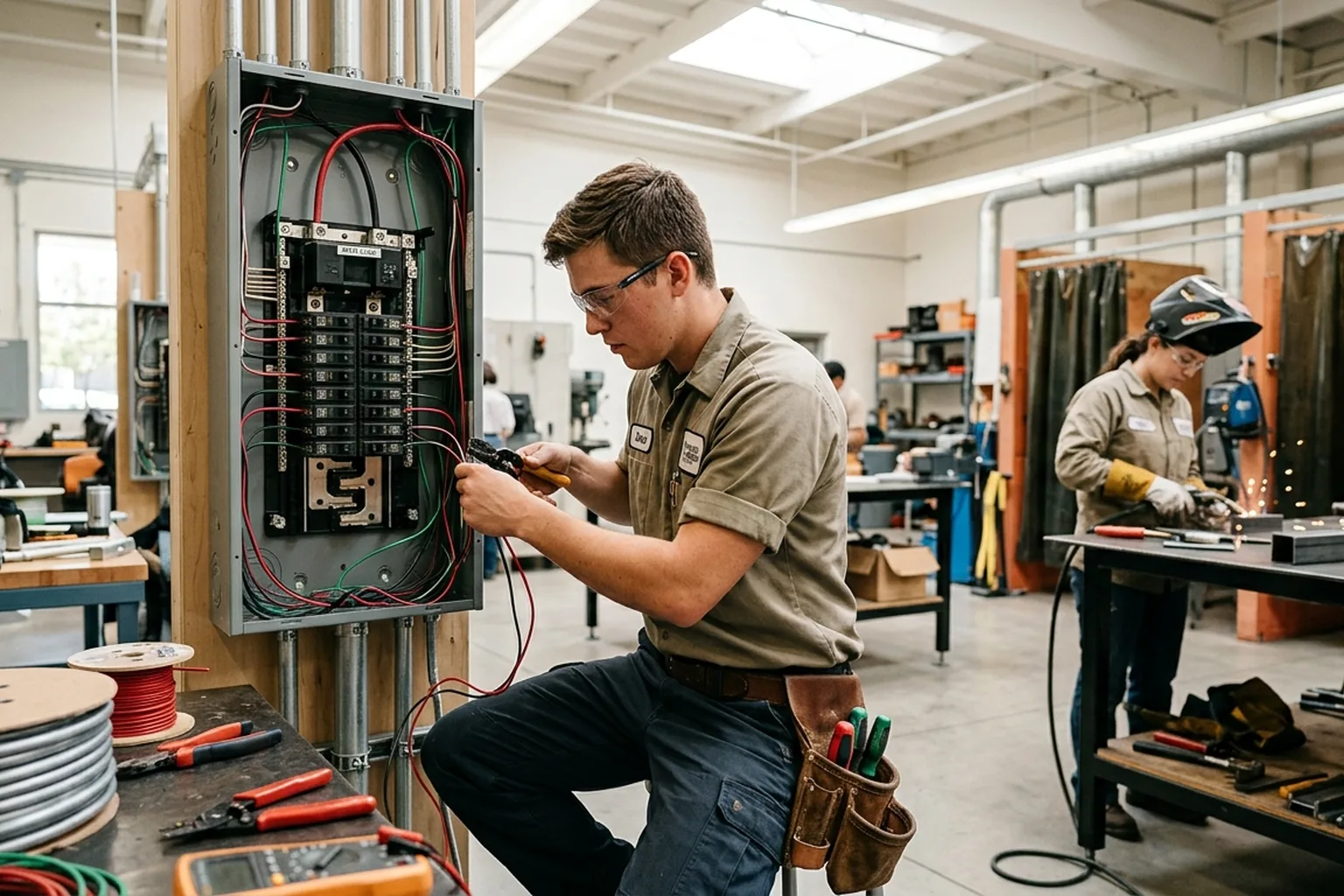
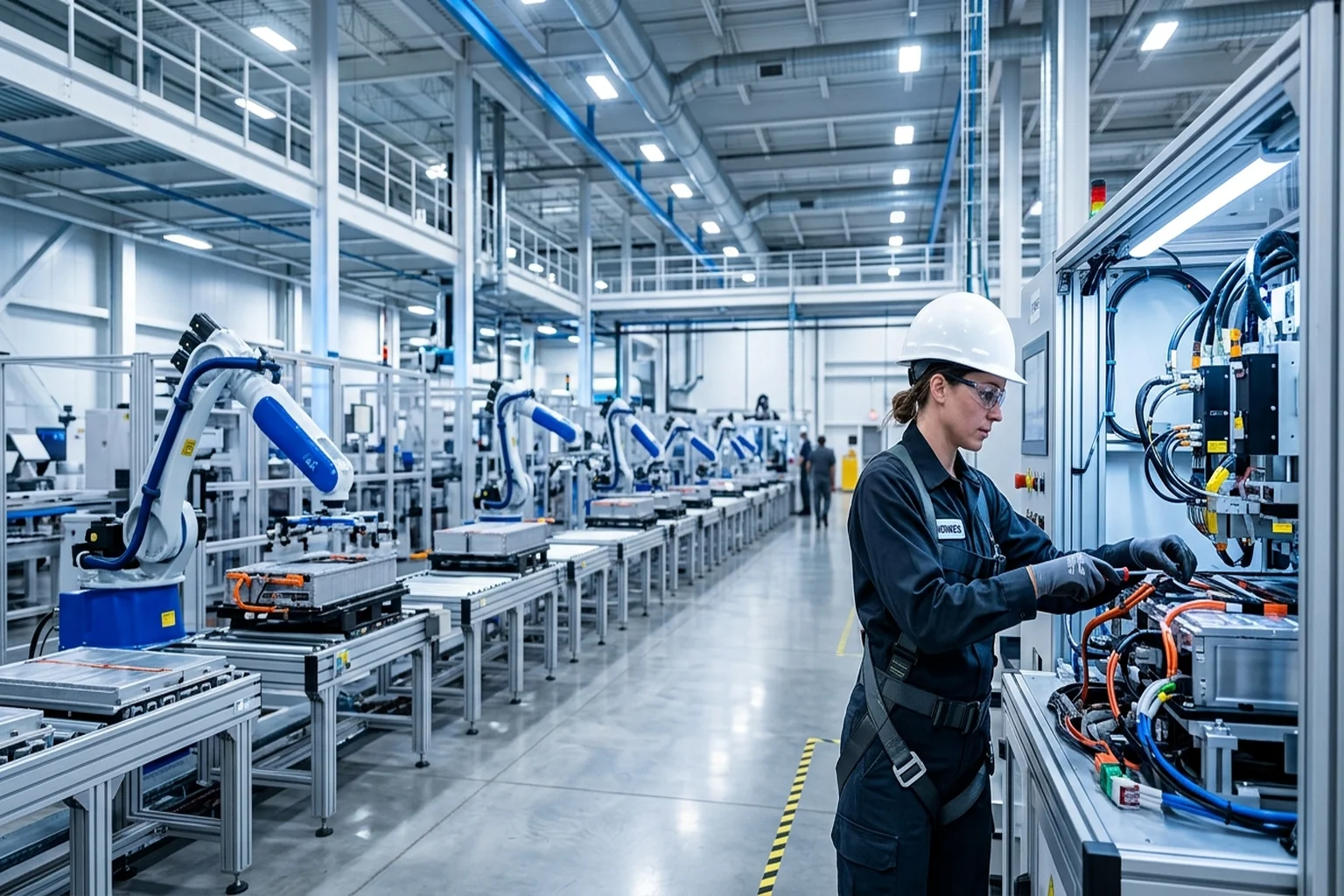
Battery cell and module production lines require heavy industrial electrical work: 480V three-phase service, high-current DC testing equipment, complex controls systems, and clean-room electrical installation. Both the construction phase (tooling installation, controls commissioning) and the ongoing operations (maintenance electricians on 24/7 shifts) generate substantial trade demand.
National median wage for electricians per May 2024 OEWS is $62,350 (BLS), with industrial electricians on battery-plant shifts typically earning a meaningful premium. See the electricians career profile.
3. Welders (battery tray, EV platform, tooling)
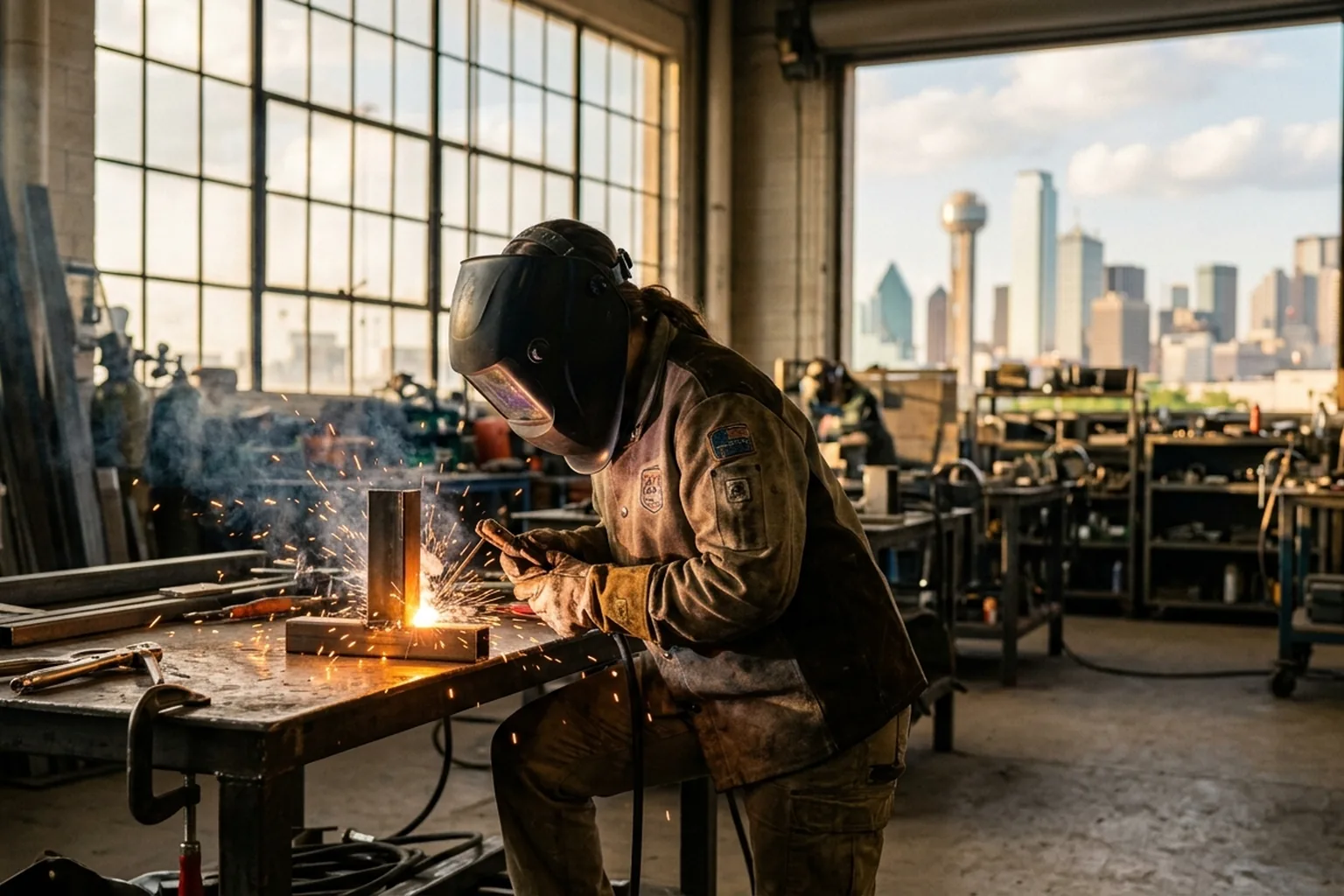
Stellantis’ Dundee investment in battery trays and STLA platform structural components is a direct welding-jobs story. Battery pack enclosures, module frames, and EV-specific structural parts require precision welding — often robotic, but with skilled programmers, fixturers, and quality-verification welders human-in-the-loop. See the welders career profile.
4. CNC machinists and industrial machinery mechanics
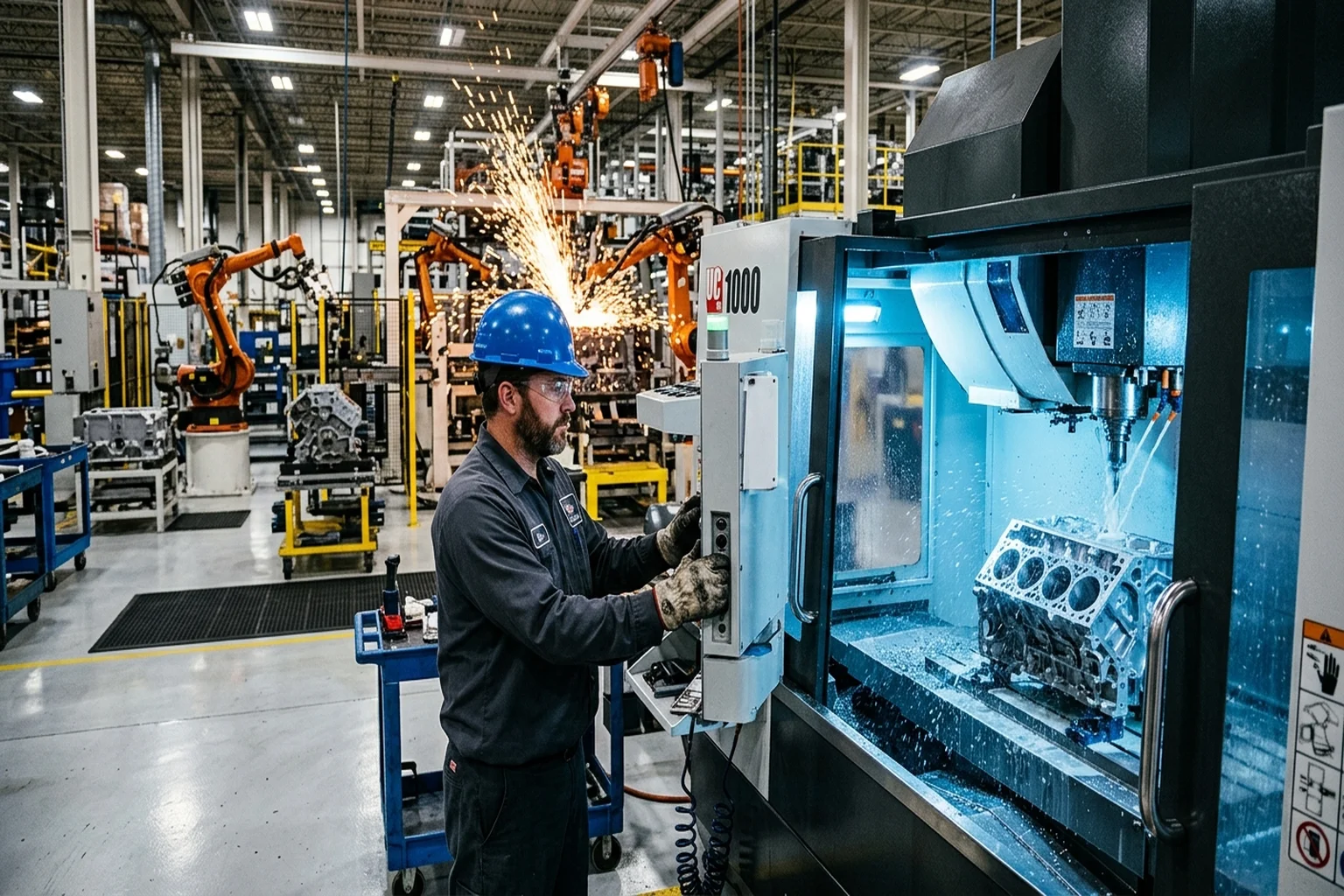
New platforms mean new tooling. CNC machinists running on EV-platform-specific fixtures and industrial-machinery mechanics maintaining the robotics and conveyors that build battery packs both see steady demand across the transition. Our CNC machining career guide has the wage and training picture; the industrial machinery mechanics career profile covers the maintenance-side numbers.
5. HVAC / refrigeration technicians (battery thermal management)
Battery plants run massive HVAC loads — both for worker comfort and for precise environmental control of the manufacturing process. Thermal management of EV packs themselves (liquid cooling systems, heat exchangers) is also a growing specialty inside service networks.
The UAW 2023 contract and what it means for apprenticeships
When UAW members ratified new 4.5-year contracts with Ford, GM, and Stellantis in November 2023, the deal included more than the record wage hikes that made headlines (Washington Post). Two provisions matter for trade workers:
- Battery plant unionization. The GM contract committed future battery plants to the national master agreement with UAW — the first time a major battery maker accepted master-agreement coverage. Other contracts included reduced barriers to unionization at specific facilities (Labor Network for Sustainability).
- EV production guarantees. The contracts committed the Big Three to specific EV production volumes from unionized facilities, meaning EV work cannot be moved to non-union greenfield sites as freely as before the deal.
For trade workers, the practical effect is that the apprenticeship pipelines run by UAW Local 600 (Ford), Local 600/598 (GM), and the Stellantis-UAW joint training programs remain the highest-wage path into the Big Three. Non-union EV work exists (and pays well), but union paths offer better pension, retiree healthcare, and contract protection. Our union vs. non-union trades guide goes deeper on the trade-offs.
Training pipelines in Michigan — where to start
Michigan EV Jobs Academy
The single most-targeted program for new entrants is the Michigan EV Jobs Academy, funded by the Michigan Department of Labor and Economic Opportunity (LEO) and MEDC. Participants can receive up to $5,000 in training and education funding through Registered Apprenticeships and short-cycle credentials (Michigan.gov; MI Automobility). In-demand roles include assemblers and fabricators, electrical engineers and technicians, maintenance and repair workers, information security analysts, and software developers.
The Academy is run through the Southeast Michigan Community Alliance (SEMCA) and Workforce Intelligence Network (WIN) with 100+ employer, industry, and education partners.
Michigan community colleges with EV / auto programs
- Macomb Community College (Warren) — advanced automotive technology, EV concentrations, industrial maintenance
- Washtenaw Community College (Ann Arbor) — advanced manufacturing, mechatronics, automotive technology
- Lansing Community College (Lansing) — automotive service, EV training, welding
- Kellogg Community College (Battle Creek) — directly adjacent to Ford BlueOval Marshall; industrial technologies, welding, electrical
- Henry Ford College (Dearborn) — auto technology, manufacturing programs, close to Ford HQ
- Grand Rapids Community College — manufacturing, welding, electronics
- Oakland Community College — automotive technology, CNC, industrial maintenance; runs an EV Technology Training and Careers program with Oakland County
For the full state directory, see trade schools in Michigan.
Registered apprenticeships via Michigan LEO
Michigan’s LEO Apprenticeship Registry lists all state-registered apprenticeships, union and non-union, across electrical, welding, industrial maintenance, and automotive. Applying to multiple registered apprenticeships in parallel is a standard strategy — most programs intake only once or twice a year and acceptance rates can be tight.
Veterans
Michigan’s GI Bill pipeline is strong for EV and battery-plant training. The EV Jobs Academy and most UAW apprenticeships accept VA benefits. See our veterans GI Bill guide.
What to realistically expect — geography, pay, and pacing
- Geographic concentration. The EV trade-jobs footprint is concentrated in southeast Michigan (Metro Detroit and the Ford / Stellantis plant belt), the Lansing metro (GM-aligned), the Holland / west Michigan corridor (LG Energy Solution), and the Marshall / Battle Creek corridor (Ford BlueOval). Outside these zones, the EV-specific opportunity thins quickly.
- Pay. A Michigan UAW journeyman electrician in a battery plant typically earns top-of-range wages once full scale is reached; pre-apprenticeship and apprenticeship pay steps up over 4-5 years. Non-union industrial electricians at battery-plant construction wages are also high. Exact numbers move year to year — always confirm with the specific employer or local union.
- Pacing. Ford BlueOval Marshall opens 2026. Stellantis STLA platforms start 2026. LG Energy Solution’s Holland expansion came online 2025. If you start training in 2026, your first battery-plant role is realistically 2027-2028 — plan accordingly.
- Traditional ICE skills are not obsolete. The domestic vehicle parc is ~280 million vehicles, overwhelmingly ICE. Dealership service bays, independent garages, diesel, and fleet service will need ICE-capable technicians for decades. The right play is usually ICE + EV, not EV only.
See our fastest-growing trade careers and salary progression in trades guides for cross-state benchmarking.
How to get in — four concrete steps
- Pick a trade lane. Industrial electrician if you want the highest-demand battery-plant role. Automotive technician if you want service-side work and flexibility. Welder or CNC machinist if you prefer precision production work. Our choosing the right trade program guide can help narrow the choice.
- Apply to the Michigan EV Jobs Academy if you qualify — the $5,000 training assistance stacks with federal aid. Start at the EV Jobs Academy site.
- Enroll in a community college program aligned with your target plant. Kellogg CC for Ford Marshall, Macomb for metro Detroit, Lansing CC for mid-Michigan, Grand Rapids CC for west Michigan.
- Apply to multiple Registered Apprenticeships in parallel. UAW local joint-training committees, IBEW (for electrical), and non-union contractors all run registered programs. The Michigan LEO Apprenticeship registry lists everything.
The honest caveats
Three final points worth naming:
- EV adoption pacing is a real variable. If federal EV incentives shift or consumer demand slows further, timelines on individual plants can slip. Your career plan should not depend on any single plant opening on any specific date.
- Tooling is changing under you. AI-driven robotics and digital twins are reshaping what “auto manufacturing” means on the factory floor. The trades that layer in controls, PLC programming, and maintenance of robotic systems will capture more of the wage growth than pure-manual-skill workers.
- The ICE base is massive. Even aggressive EV adoption leaves hundreds of millions of ICE vehicles on US roads through 2040. Service-side auto trades are not a sunset career — the service side is just being supplemented by EV-specific skills on top.
Michigan is still the single most concentrated place in the country to build an auto-trade career. The EV transition has made the career different, not smaller. Plan for the shift, pick a training path, and the opportunity is real.
Sources
- Michigan.gov (Whitmer Press Release) — “Michigan a Top State for Electric Vehicle & Battery Investments” — March 2023 — https://www.michigan.gov/whitmer/news/press-releases/2023/03/14/michigan-a-top-state-for-electric-vehicle-and-battery-investments
- Ford / Choose Marshall — “BlueOval Battery Park Michigan” — https://choosemarshall.com/economic-development/major-campus/blueoval-battery-park-michigan/
- Ford Careers — BlueOval Battery Park Michigan hiring — https://www.careers.ford.com/en/locations/north-america/campaign-blueoval-battery-park-marshall-michigan.html
- Crain’s Detroit Business — “As EV fever cools, what happens to Michigan’s battery plants?” — https://www.crainsdetroit.com/manufacturing/ev-fever-cools-what-happens-michigans-battery-plants
- Bridge Michigan — “Where mega battery, EV projects stand after $1 billion in Michigan subsidies” — https://bridgemi.com/business-watch/where-mega-battery-ev-projects-stand-after-1-billion-michigan-subsidies/
- CBT News — “Stellantis invests $406M in Michigan plants to accelerate EV and hybrid production” — https://www.cbtnews.com/stellantis-invests-406m-in-michigan-plants-to-accelerate-ev-and-hybrid-production/
- Washington Post — “UAW workers ratify contracts with Big Three automakers, securing record wage hikes” — November 2023 — https://www.washingtonpost.com/business/2023/11/20/uaw-contract-ford-general-motors-stellantis/
- Labor Network for Sustainability — “2023 UAW + Big Three Contracts 101” — https://www.labor4sustainability.org/articles/2023-uaw-big-three-contracts-101/
- Michigan LEO — “Gov. Whitmer Announces New EV Jobs Academy Website” — March 2023 — https://www.michigan.gov/leo/news/2023/03/01/gov-whitmer-announces-new-ev-jobs-academy-website-to-connect-michiganders-to-careers-in-ev-industry
- Michigan Automobility / EV Jobs Academy — https://miautomobility.org/education_training/ev_jobs_academy/index.php
- Oakland County — EV Technology Training and Careers — https://www.oakgov.com/business/workforce-development/education-training/ev-technology-training-and-careers
- Michigan LEO — Registered Apprenticeships — https://www.michigan.gov/leo/bureaus-agencies/wd/apprenticeships
- World Resources Institute — “A roadmap for Michigan’s electric vehicle future” — https://publications.wri.org/michigan-ev-future
- U.S. Bureau of Labor Statistics — Electricians Occupational Outlook — https://www.bls.gov/ooh/construction-and-extraction/electricians.htm