
The United States is facing a first responder workforce crisis, and for career seekers, that crisis translates directly into opportunity. The Bureau of Labor Statistics projects 27,100 firefighter openings per year and 19,000 EMT and paramedic openings per year through 2034 — driven by retirements, turnover, and growing demand. Meanwhile, the supply of qualified candidates has been shrinking for years.
If you are considering a career change or deciding what to do after high school, the fire and emergency medical services (EMS) sector deserves serious attention. These are careers you can enter in as little as three to six months, they pay a livable wage from day one, and the hiring environment has rarely been more favorable. This guide breaks down what the work looks like, how to train, what you will earn, and how to take the first step.
What Firefighters and EMTs Actually Do
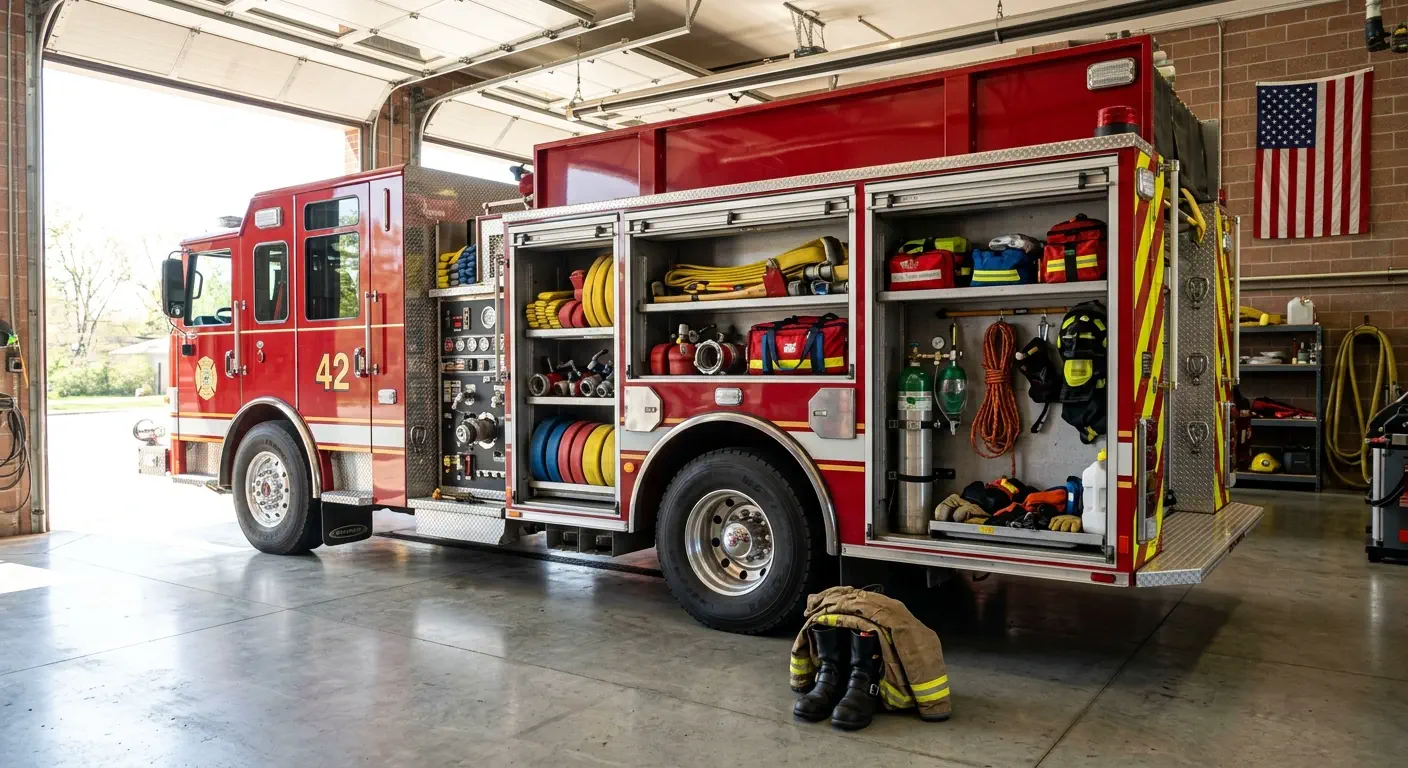
The popular image of firefighting — rushing into burning buildings — captures only a fraction of the job. Modern firefighters spend the majority of their shifts responding to medical emergencies, vehicle accidents, hazardous material incidents, and rescue calls. Structural fires account for a relatively small percentage of total dispatch volume at most departments.
This is why the dual-role firefighter/EMT has become the standard in the profession. According to Firehouse Magazine, most career fire departments now require candidates to hold at least an EMT-Basic certification before they can apply. In many jurisdictions, firefighters ride the ambulance as often as they ride the engine.
EMTs and paramedics, on the other hand, focus exclusively on emergency medical care. EMT-Basics provide initial assessment, CPR, oxygen administration, wound care, and patient transport. Paramedics operate at a higher scope of practice — they can administer IV medications, intubate patients, interpret cardiac rhythms, and perform other advanced interventions in the field.
A typical 24-hour shift at a busy fire station or EMS agency involves:
- Station duties: Equipment checks, truck inspections, training drills, physical fitness
- Emergency responses: Anywhere from 5 to 20+ calls per shift depending on the area
- Medical calls: Cardiac arrests, falls, difficulty breathing, overdoses, car crashes
- Fire responses: Structure fires, vehicle fires, wildland fires, alarm activations
- Community engagement: Fire prevention education, CPR training, station tours
The work is physically demanding, emotionally intense, and unpredictable. Shifts are long — most career departments run 24 hours on, 48 hours off. The trade-off is meaningful work, strong camaraderie, and more days off per month than a standard 9-to-5 job.
The Training Path
One of the strongest advantages of a firefighter or EMT career is how quickly you can get started. Unlike careers that require a four-year degree, you can be working in emergency services within months.
EMT-Basic Certification (3-6 Months)
EMT-Basic is the entry point and the foundation for everything else. Programs typically run 120 to 180 hours of classroom and hands-on instruction, plus clinical rotations in emergency departments and on ambulances. Many EMT and paramedic programs at community colleges and trade schools offer accelerated formats that fit into a single semester.
Coursework covers:
- Patient assessment and vital signs
- Airway management and oxygen therapy
- CPR and automated external defibrillator (AED) use
- Trauma care: bleeding control, splinting, spinal immobilization
- Medical emergencies: diabetic crises, seizures, allergic reactions
- Ambulance operations and patient transport
After completing an accredited program, you must pass the National Registry of Emergency Medical Technicians (NREMT) cognitive and psychomotor exams to earn certification. Most states accept the NREMT certification directly or have their own state-level exam.
Fire Academy (14-16 Weeks)
Fire academies provide intensive training in fire suppression, search and rescue, hazardous materials response, and firefighter survival. Most academies run 14 to 16 weeks full-time, though some departments offer extended-format academies that meet evenings and weekends.
Academy training includes:
- Fire behavior and building construction
- Hose operations and water supply
- Ladder placement and ventilation
- Forcible entry and search techniques
- Self-contained breathing apparatus (SCBA) operations
- Hazardous materials awareness and operations
- Wildland firefighting basics (in applicable regions)
Some community colleges and state fire training agencies offer fire academy programs that are open to the public — you do not need to be hired by a department first. Completing an academy independently can make you a more competitive candidate when you apply.
Paramedic Certification (1-2 Years, Optional)
Paramedic programs build on EMT-Basic training with advanced coursework in pharmacology, cardiology, advanced airway management, and emergency procedures. Programs typically run 1,200 to 1,800 hours and are offered at community colleges, often as part of an associate degree in emergency medical services.
The paramedic certification is not required for entry-level firefighter positions, but it significantly increases your earning potential and advancement opportunities. Many departments offer tuition reimbursement for firefighters who pursue paramedic training while employed.
Associate Degree Options
An increasing number of fire departments prefer or require an associate degree in fire science or emergency medical services. These two-year programs combine technical certifications with academic coursework in fire investigation, public administration, and emergency management. They are also a stepping stone if you later want to move into fire inspection, arson investigation, or department leadership.
Salary and Job Outlook
The financial picture for firefighters and EMS professionals is solid — not extravagant, but stable and improvable over time.
Firefighters
According to the Bureau of Labor Statistics:
- Median annual salary: $59,530
- Total employment: 344,900 jobs nationwide
- Projected growth: 3% from 2024 to 2034
- Annual openings: 27,100
Firefighter salaries vary significantly by region. Metropolitan departments in California, New York, and Washington often pay six figures with overtime, while smaller rural departments may start closer to $35,000-$40,000. Benefits are typically strong across the board — most career firefighters receive health insurance, pension plans, and paid time off.
EMTs and Paramedics
According to the Bureau of Labor Statistics:
- EMT-Basic median annual salary: $41,340
- Paramedic median annual salary: $58,410
- Total employment: 282,900 (181,000 EMTs + 101,900 paramedics)
- Projected growth: 5% from 2024 to 2034
- Annual openings: 19,000
The gap between EMT and paramedic pay reflects the difference in training and scope of practice. Earning your paramedic certification is one of the most direct ways to increase your income in this field.
The Dual-Certification Premium
Here is where the math gets interesting. Firefighters who also hold EMT or paramedic certifications consistently earn more than those without. Firehouse Magazine reports that dual-certified firefighter/EMTs earn 30-50% more than firefighters without medical credentials. In practical terms, that can mean the difference between a $45,000 starting salary and a $60,000-$67,000 starting salary — before overtime.
This dual-cert premium exists because departments that can staff both fire engines and ambulances with the same personnel operate more efficiently. Firefighter/paramedics are especially valued and command the highest salaries.
The Workforce Shortage — Why Now Is the Time
If you have been debating whether to pursue a first responder career, the current workforce data makes a compelling case for acting sooner rather than later.
Volunteer Firefighters at Historic Lows
The National Fire Protection Association reported in February 2026 that the number of volunteer firefighters in the United States has dropped to 676,900 — the lowest figure ever recorded. That is a 25% decline since 1984. Volunteer departments protect the majority of communities in the United States, particularly in suburban and rural areas. As volunteer ranks thin out, many of these departments are converting to career or combination staffing models, creating paid positions that did not exist a decade ago.
EMS Applications Are Declining
The National Association of EMTs’ 2023 survey found that 65% of EMS agencies report decreased applications, with overall applications down 13% compared to pre-pandemic levels. At the same time, 33% of the current EMS workforce plans to retire within five years. That combination of fewer applicants and accelerating retirements is creating a hiring gap that will take years to close.
Turnover Remains High
According to JEMS (Journal of Emergency Medical Services), there are approximately 474,622 nationally certified EMTs and paramedics in the country, and the industry experiences 20-30% annual turnover. The average EMS career lasts only five years. Many agencies are responding to this reality by improving pay, benefits, and working conditions — which means candidates entering now may benefit from better compensation packages than those offered even two or three years ago.
What This Means for You
Workforce shortages shift negotiating power toward candidates. Departments that once received hundreds of applications for a single position are now actively recruiting and offering hiring incentives. Some agencies are covering academy and certification costs for new hires. Others are offering sign-on bonuses, student loan assistance, or accelerated promotion timelines. If you have the certifications and pass the physical and background requirements, there is likely a department looking for you.
How to Get Started
Getting into fire and EMS requires a clear sequence of steps. Here is a practical roadmap.
Step 1: Earn Your EMT-Basic Certification
This is the single most important first step, whether you want to be an EMT, a paramedic, or a firefighter. EMT-Basic is the gateway certification that opens the door to everything else in emergency services. Look for accredited EMT and paramedic programs at community colleges or vocational schools in your area. Many programs cost between $1,000 and $3,000 and can be completed in one semester.
Step 2: Get Your CPR Certification
You will need a current CPR for Healthcare Providers (or BLS — Basic Life Support) certification from the American Heart Association or American Red Cross. Most EMT programs include this, but verify before enrolling.
Step 3: Pass the NREMT Exam
After completing your EMT program, register for and pass the National Registry cognitive and psychomotor exams. This is your nationally recognized credential.
Step 4: Decide Your Path
- EMS career: Start applying to ambulance services, hospitals, and private EMS agencies. Many EMTs work part-time or per diem while pursuing paramedic training.
- Firefighter career: Look into fire academy programs at community colleges or regional training centers. Some departments hire candidates and put them through their own academy.
- Dual-cert path: Complete your EMT certification first, then enroll in a fire academy. This combination makes you eligible for the widest range of departments.
Step 5: Prepare Physically
Most fire departments require candidates to pass the Candidate Physical Ability Test (CPAT), which includes events like stair climbing in full gear, hose dragging, equipment carrying, and forcible entry simulation. Start training well before your test date — CPAT preparation programs are available at many fire academies and community colleges.
Step 6: Complete Additional Certifications
Depending on your target department, you may also need:
- HazMat Awareness and Operations certification
- ICS (Incident Command System) courses: FEMA IS-100, IS-200, IS-700, IS-800
- Driver/Operator certification (for apparatus driving)
- State-specific certifications that vary by jurisdiction
Many of these are available online or through short in-person courses and can be completed while you are job hunting.
Consider Apprenticeships
Some fire departments and EMS agencies offer apprenticeship programs that combine paid on-the-job training with classroom instruction. These are excellent opportunities because you earn a salary while completing your certifications. Check with your state’s Department of Labor or local fire departments to see what is available in your area.
Keep Building
The fire and EMS field rewards continuous learning. After establishing yourself, you can pursue specialized certifications in technical rescue, hazardous materials, fire investigation, or flight paramedicine. Each specialty adds to your value and your earning potential. These are careers that belong firmly on the list of fastest-growing trade careers — and they reward people who keep advancing.
Sources
- Bureau of Labor Statistics — Occupational Outlook Handbook: Firefighters — https://www.bls.gov/ooh/protective-service/firefighters.htm
- Bureau of Labor Statistics — Occupational Outlook Handbook: EMTs and Paramedics — https://www.bls.gov/ooh/healthcare/emts-and-paramedics.htm
- NFPA Journal — Volunteer Fire Service Crisis (February 2026) — https://www.nfpa.org/news-blogs-and-articles/nfpa-journal/2026/02/11/volunteer-fire-service-crisis
- NAEMT — EMS Economic and Operational Models Survey (2023) — https://naemt.org/docs/default-source/ems-data/ems-economic-and-operational-models-survey-02-20-2023-final.pdf
- JEMS — Unveiling the National EMS Workforce Crisis — https://www.jems.com/ems-management/ems-recruitment-retention/unveiling-the-national-ems-workforce-crisis/
- Firehouse Magazine — The Pros and Cons of the Dual-Role Firefighter/EMT — https://www.firehouse.com/ems/article/53097847/the-pros-and-cons-of-the-dual-role-firefighter-emt