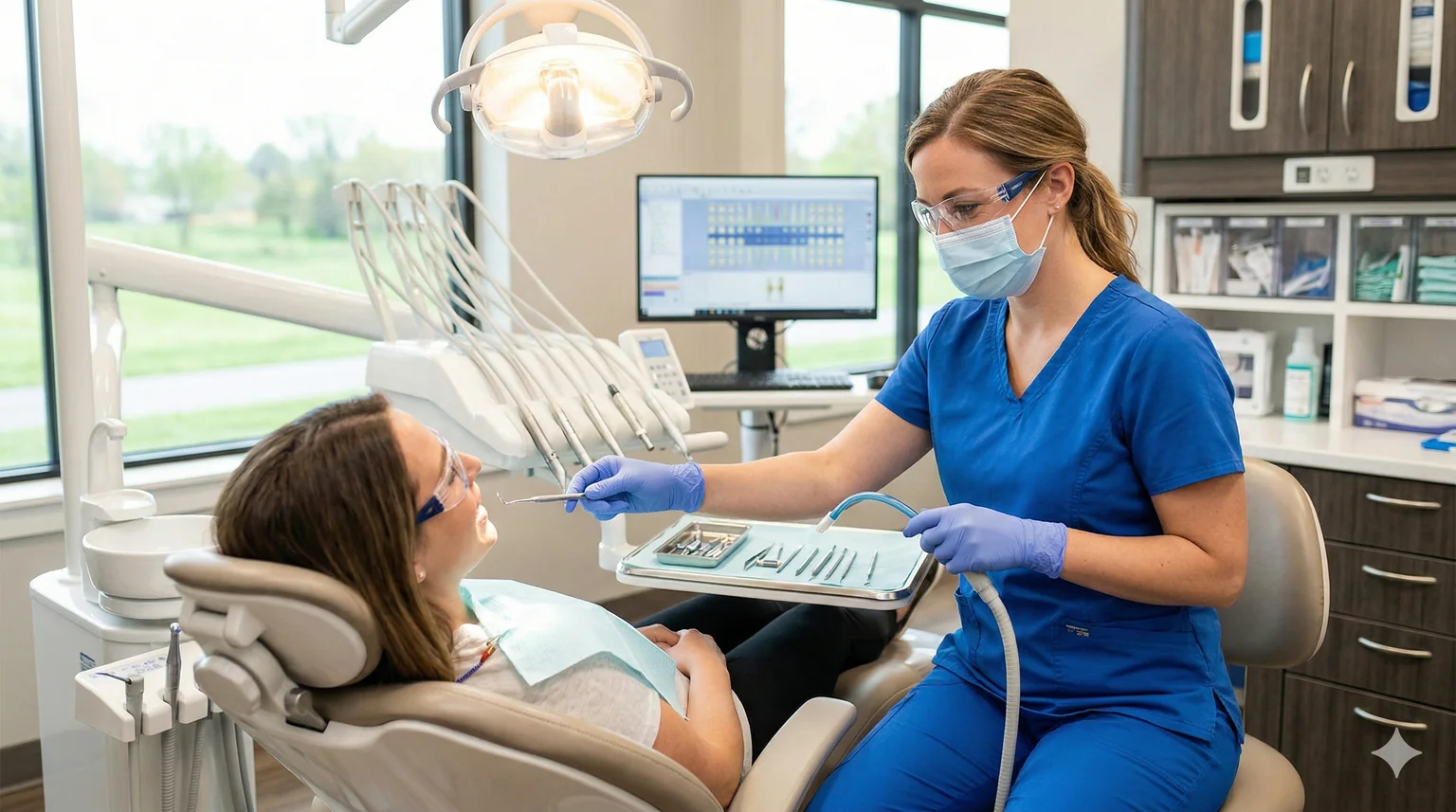

If you are looking for a healthcare career that does not require a four-year degree, pays a livable wage from day one, and has employers practically lining up to hire you, pharmacy technology deserves a serious look. According to the American Society of Health-System Pharmacists (ASHP), 88% of hospitals report shortages of experienced pharmacy technicians, and vacancy rates at some facilities have climbed as high as 40%.
That is not a small gap. It is a systemic shortage affecting every corner of pharmacy practice — retail chains, hospital systems, mail-order operations, and long-term care facilities. For prospective students and career changers, it means the door is wide open, and the conditions for entering this field have rarely been better.
This article breaks down everything you need to know about pharmacy technician careers: what the work looks like, how much it pays, how to get certified, and where the profession is headed. If you want to start comparing training programs right away, our pharmacy technician program directory lists schools across the country.
Why Pharmacy Technicians Are in Demand
A Shortage With No Quick Fix
The pharmacy technician workforce has been under pressure for years, and the data paints a clear picture. An ASHP survey found that 92% of hospitals report shortages of sterile compounding technicians, and 64% cite shortages even at the entry level. Turnover rates exceed 20% in many settings, and replacing a single technician costs an employer between $25,000 and $35,000 when you factor in recruiting, onboarding, and lost productivity.
The broader healthcare labor market makes this worse. A Visante workforce analysis projects a shortfall of 3.2 million lower-wage healthcare workers by 2028, with pharmacy technicians squarely in the affected category. Seventy-four percent of hospitals in the Visante study reported pharmacy tech shortages specifically.
An Aging Population Means More Prescriptions
The demographic math is straightforward. As the U.S. population ages, prescription volume rises. More medications dispensed means more technicians needed to receive, process, count, label, and verify those prescriptions. Hospitals need techs to prepare IV medications. Retail pharmacies need techs to keep the dispensing line moving. Long-term care facilities need techs to manage complex medication regimens for residents on a dozen or more drugs.
High Turnover Creates Constant Openings
Turnover above 20% means that even facilities with fully staffed rosters today will be recruiting again within months. For people entering the field, this churn is an advantage. It means entry-level positions open regularly, experienced techs move into supervisory or specialized roles, and employers are willing to invest in training and retention to keep the people they have.
What Does a Pharmacy Technician Do?
Pharmacy technicians are the operational backbone of every pharmacy. While pharmacists handle clinical judgment calls — verifying drug interactions, counseling patients, making therapeutic recommendations — technicians manage the high-volume, detail-intensive work that keeps medications moving safely from shelf to patient.
Core Daily Responsibilities
- Receiving and processing prescriptions — entering orders into the pharmacy system, verifying patient information, and flagging issues for the pharmacist
- Counting, measuring, and labeling medications — using automated counting machines and manual techniques to fill prescriptions accurately
- Managing inventory — ordering stock, checking expiration dates, handling returns, and maintaining proper storage conditions
- Processing insurance claims — submitting prior authorizations, resolving rejected claims, and navigating formulary requirements
- Customer service — answering phones, handling pickup transactions, and addressing patient questions (within scope)
Work Settings
Pharmacy technicians work in more places than most people realize:
| Setting | Share of Employment | Notes |
|---|---|---|
| Retail pharmacies (chains and independents) | Largest employer | Highest volume, most patient-facing |
| Hospitals and health systems | Second-largest | Sterile compounding, IV preparation, clinical support |
| Mail-order and specialty pharmacies | Growing rapidly | High-volume dispensing, less patient interaction |
| Long-term care and nursing facilities | Steady demand | Medication management for complex patient populations |
| Government (VA, military, federal) | Stable and well-compensated | Often the highest-paying settings |
Expanded Roles
The scope of pharmacy technician practice has been expanding steadily. According to ASHP’s reporting on the PAI 2030 initiative, the profession is moving toward a 20% increase in advanced technician roles over the next several years. Expanded duties now include:
- Tech-check-tech programs — where trained technicians verify the work of other technicians, freeing pharmacists for clinical tasks
- Medication history collection — interviewing patients about their current medications during hospital admissions
- Sterile and hazardous drug compounding — preparing IV medications, chemotherapy drugs, and other sterile products
- Automated dispensing management — loading, troubleshooting, and maintaining robotic dispensing systems
- Immunization support — preparing vaccines and, in some states, administering them under pharmacist supervision
These expanded roles come with higher pay, more responsibility, and better job security. They also require additional training and certification, which we will cover below.
Salary and Job Outlook
What Pharmacy Technicians Earn
The Bureau of Labor Statistics reports a median annual wage of $43,460 for pharmacy technicians as of May 2024. Here is how the pay range breaks down:
| Percentile | Annual Wage |
|---|---|
| Lowest 10% | Less than $35,100 |
| Median (50th percentile) | $43,460 |
| Highest 10% | More than $59,450 |
Several factors push earnings toward the higher end of that range: certification (especially PTCB’s CPhT), hospital or specialty pharmacy settings, sterile compounding skills, and geographic location. Technicians working in government facilities and hospitals tend to earn more than their retail counterparts. Union environments and high cost-of-living metro areas also pay above the national median.
Job Growth and Openings
The BLS projects pharmacy technician employment to grow 6% from 2024 to 2034, which is faster than the average for all occupations. That translates to approximately 49,000 job openings per year over the decade, driven by a combination of new positions, retirements, and workers transitioning to other careers.
As of 2024, there are approximately 490,400 pharmacy technician jobs in the United States. The combination of strong growth, high turnover, and the ongoing shortage means that qualified candidates with certification have excellent hiring prospects in virtually every market.
For context on how pharmacy technology compares to other healthcare trades, our overview of the fastest-growing trade careers breaks down growth rates and earning potential across the major skilled trades.
How to Become a Pharmacy Technician
Education Requirements
The BLS notes that the minimum requirement is a high school diploma or equivalent. From there, most pharmacy technicians follow one of two paths:
Postsecondary education programs. Community colleges, vocational schools, and technical institutes offer pharmacy technician programs ranging from a few months to two years. Programs accredited by ASHP in partnership with the Accreditation Council for Pharmacy Education (ACPE) are considered the gold standard. These programs cover pharmacology, pharmacy law, medication safety, sterile compounding, and typically include an externship in a working pharmacy. ASHP has noted that graduates of accredited programs contribute to a 33% increase in workforce supply and require 50% less onboarding time compared to untrained hires.
On-the-job training. Many retail pharmacies, particularly large chains, hire technicians with no prior pharmacy experience and train them in-house. This path gets you earning sooner, but your advancement ceiling is lower without formal education and certification.
If you are considering a formal program, our guide to how to evaluate a trade school covers what to look for in program accreditation, completion rates, and job placement data.
State Requirements Vary Significantly
One complicating factor: pharmacy technician regulation is a patchwork. According to the PTCB state regulations map, requirements differ substantially from state to state:
- Some states require national certification plus a state license or registration. These states (such as Texas, Washington, and Virginia) have the most structured requirements.
- Some states require registration but not certification. You can register with the state board of pharmacy after completing a training program or accumulating work experience.
- A handful of states have minimal formal requirements. In these states, employers set their own hiring standards.
The practical advice: even if your state does not mandate certification, get certified anyway. It improves your pay, your mobility between states, and your access to advanced roles. If there is any chance you will relocate during your career, national certification eliminates the question of whether your credentials transfer.
Certifications That Set You Apart
PTCB Certified Pharmacy Technician (CPhT)
The Pharmacy Technician Certification Board (PTCB) offers the CPhT credential, which is the most widely recognized national certification in the profession. Since 1995, PTCB has granted more than 876,000 CPhT certifications, and the credential is accredited by the National Commission for Certifying Agencies (NCCA).
Key details:
- Exam cost: $129
- Recertification: Every 2 years, requiring 20 continuing education (CE) hours
- Eligibility pathways: Completion of a PTCB-recognized education program OR 500 hours of supervised work experience in a pharmacy
- Exam format: 90 multiple-choice questions covering pharmacy law, medication safety, pharmacology, sterile and non-sterile compounding, and pharmacy operations
The CPhT is the credential most employers look for and most state boards recognize. If you are going to invest in one certification, this is the one.
ExCPT (NHA Alternative)
The National Healthcareer Association (NHA) offers the Exam for the Certification of Pharmacy Technicians (ExCPT) as an alternative national credential. It requires 1,200 hours of supervised pharmacy work experience (significantly more than PTCB’s 500-hour pathway) or completion of an accredited program. The ExCPT is accepted in many states, but PTCB’s CPhT is more universally recognized and provides better interstate mobility. For most people, the CPhT is the stronger choice.
Career Advancement Paths
One of the strongest arguments for pharmacy technology as a career — rather than just a job — is the depth of the advancement ladder. The profession has been deliberately building upward pathways, and there are now multiple directions you can grow.
Advanced PTCB Certifications
The PTCB offers several advanced credentials beyond the foundational CPhT:
- CPhT-Adv (Advanced Certified Pharmacy Technician): Requires an active CPhT, at least 3 years of experience, and completion of 4 assessment-based certificate programs. This credential signals deep competence and qualifies you for senior technician roles.
- CSPT (Certified Compounded Sterile Preparation Technician): Validates expertise in sterile compounding — one of the highest-demand, highest-responsibility areas of pharmacy tech work, and the area with the most severe shortages (92% of hospitals report sterile compounding tech shortages, per ASHP).
- CPTEd (Certified Pharmacy Technician Educator): For experienced technicians who want to train the next generation, whether in academic programs or employer-based training settings.
Specialized Practice Areas
Beyond formal credentials, technicians can develop deep expertise in specific areas that command premium pay:
- Sterile compounding and IV room operations — preparing parenteral medications, chemotherapy agents, and total parenteral nutrition
- Hazardous drug management — handling cytotoxic and other hazardous medications under strict USP 800 guidelines
- Informatics and automation — managing pharmacy information systems, automated dispensing cabinets, and robotic dispensing technology
- Inventory and procurement — supply chain management for pharmacy operations, particularly in hospital systems
Management and Leadership
Senior technicians commonly move into pharmacy management roles: lead technician, pharmacy operations coordinator, or pharmacy manager in retail settings. These roles involve supervising other technicians, managing workflows, training new hires, and handling administrative functions. They also tend to come with higher pay and more predictable schedules.
Stepping Stone to Other Healthcare Careers
Pharmacy technology can also serve as a launchpad. Technicians who want to go further have clear pathways to:
- Pharmacy school — many PharmD programs value applicants with hands-on pharmacy experience
- Nursing — the healthcare knowledge and medication familiarity transfer directly
- Health information technology — pharmacy informatics experience is increasingly valued
- Pharmaceutical sales or industry roles — product knowledge and clinical vocabulary provide a strong foundation
The Future: Automation and Telepharmacy
Automation Is Changing the Work, Not Eliminating It
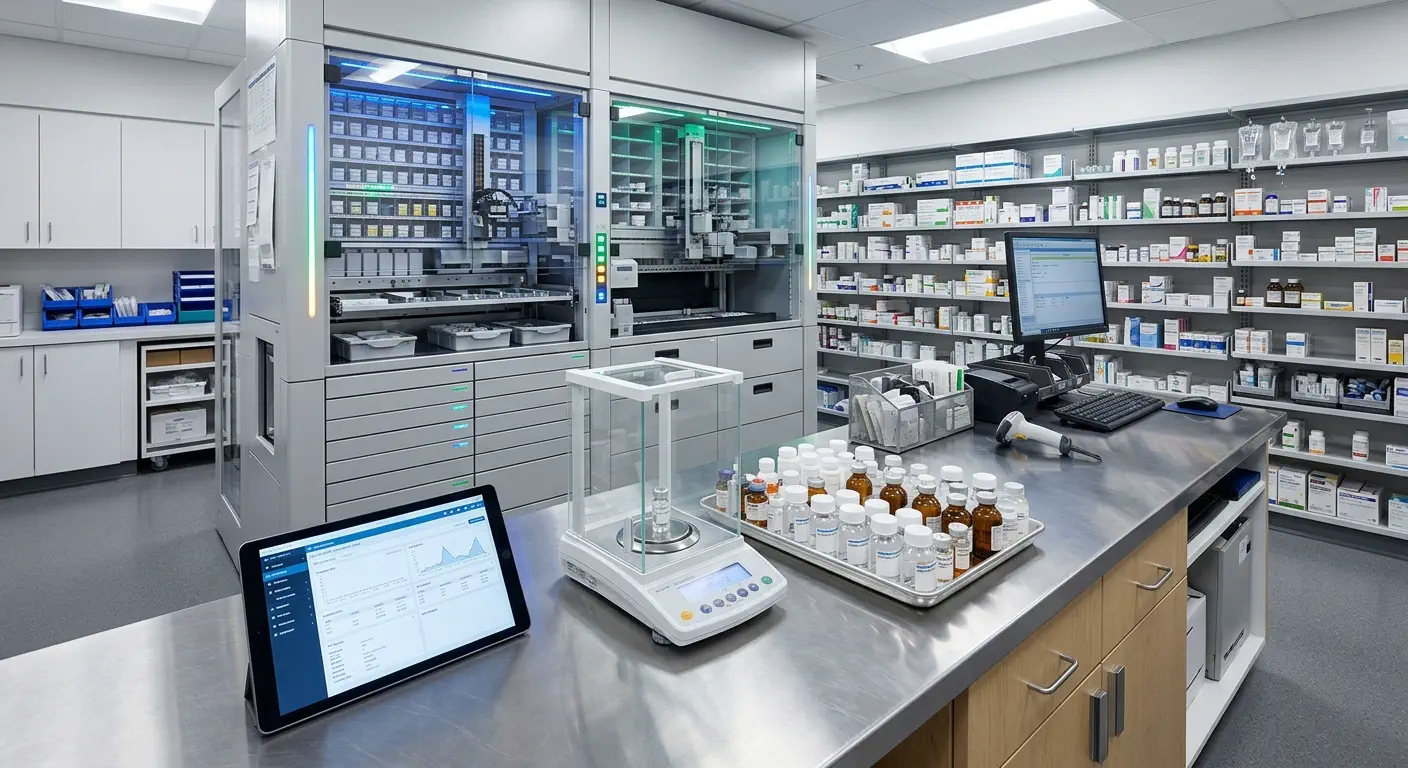
Robotic dispensing systems, automated counting machines, and AI-powered drug interaction checks are transforming pharmacy operations. But rather than replacing technicians, automation is shifting what they do. Routine counting and labeling tasks are increasingly handled by machines, while technicians take on more oversight, troubleshooting, patient-facing, and clinical support roles. The net effect has been to increase demand for technicians who can operate and manage automated systems, not decrease it.
Telepharmacy Is Expanding Access — and Technician Roles
According to the National Association of Boards of Pharmacy (NABP), 28 states now permit telepharmacy operations, and the telepharmacy market is growing at an estimated 20.4% compound annual growth rate through 2031.
In a telepharmacy model, a pharmacist supervises dispensing remotely while a technician handles on-site operations — receiving prescriptions, filling medications, managing inventory, and interacting with patients in person. This model is especially valuable in rural and underserved areas where recruiting a full-time pharmacist is difficult or impossible.
For technicians, telepharmacy means expanded responsibility and, often, a more autonomous work environment. It also means new employment opportunities in communities that previously had no pharmacy services at all. As more states adopt telepharmacy regulations, this segment of the profession is likely to grow significantly.
Getting Started
Pharmacy technology is one of the most accessible entry points into healthcare. The training is short (often under a year), the certification is affordable ($129 for the PTCB exam), and the job market is strongly in your favor. Whether you are coming straight out of high school, changing careers, or looking for a stable role with room to grow, this is a field worth exploring.
Here is what to do next:
-
Check your state’s requirements. Visit the PTCB state regulations map to understand what your state requires for pharmacy technicians — certification, licensure, registration, or some combination.
-
Find a training program. Browse pharmacy technician programs in our directory to compare schools by location, program length, and credentials offered. Look for ASHP/ACPE-accredited programs, which carry the most weight with employers and satisfy PTCB eligibility requirements directly.
-
Look into financial aid. Accredited pharmacy technician programs at community colleges typically qualify for federal financial aid, including Pell Grants. Many states also fund healthcare workforce training through the Workforce Innovation and Opportunity Act (WIOA). Our guide to financing trade school covers the major options.
-
Earn the CPhT credential. Even if your state does not require it, the PTCB CPhT certification is the single most valuable investment you can make in your pharmacy technician career. It improves your pay, your job options, and your ability to advance into specialized and leadership roles.
-
Think long-term. Once you are working, keep an eye on the advanced certifications (CPhT-Adv, CSPT) and the expanding scope of technician practice. The profession is actively building upward pathways, and technicians who invest in continued learning will be the ones who benefit most.
The shortage is real. The demand is growing. And the barrier to entry is lower than almost any other healthcare profession. If pharmacy technology sounds like a fit, now is an excellent time to start.
Sources
- U.S. Bureau of Labor Statistics — Pharmacy Technicians: Occupational Outlook Handbook — May 2024
- Pharmacy Technician Certification Board (PTCB) — Certified Pharmacy Technician (CPhT)
- PTCB — Advanced Certified Pharmacy Technician (CPhT-Adv)
- PTCB — State Regulations and Map
- American Society of Health-System Pharmacists (ASHP) — Hospitals and Health Systems Experiencing Severe Shortage of Pharmacy Technicians
- ASHP — Pills to Progress: Technician Advancement
- National Association of Boards of Pharmacy (NABP) — Transformative Technologies Present Opportunities for Pharmacy Practice and Regulation
- Visante — Future Pharmacy Workforce