It’s 2 a.m. and a homeowner has water pouring through the kitchen ceiling. A hospital needs medical gas lines installed before the new wing opens. A city’s water main — laid in the 1950s — finally gives out under a busy intersection. In every scenario, the call goes to a plumber. It’s work that doesn’t wait, can’t be outsourced, and pays well — and right now, there aren’t nearly enough people doing it.
TL;DR
- Strong median pay: Plumbers, pipefitters, and steamfitters earned a median of $62,970/year in 2024 — among the highest in the construction trades. Source: BLS Occupational Outlook Handbook.
- Tens of thousands of openings: BLS projects about 44,000 openings per year through 2034, with 4% growth. Total employment: roughly 504,500. Source: BLS OOH.
- Massive workforce deficit: An estimated 500,000+ plumber shortfall nationwide costs the U.S. economy over $38 billion annually. Half of employers report difficulty finding skilled applicants. Source: PHCC 2026 Environmental Scan.
- Clear licensing ladder: Apprentice → Journeyman → Master Plumber → Contractor. Each level unlocks more responsibility and higher pay.
- Strong business ownership path: Plumbing is one of the best trades for starting your own company. See our guide on how to start your own trade business.
Why Plumbing Is a Growing Field
Every building that has running water needs plumbing — and that plumbing eventually needs repair, replacement, or upgrading. According to the BLS, about 44,000 plumbing positions open up each year through 2034, with 4% projected growth — about as fast as the national average. Total employment stands at roughly 504,500.
Several forces keep demand strong:
- Aging infrastructure — Much of the U.S. water and sewer infrastructure is 50-80 years old and approaching or past its expected lifespan. Replacement work alone generates billions in annual demand.
- New construction — Population growth, especially in Sun Belt states, continues driving residential and commercial building.
- Building codes are expanding — Fire suppression sprinkler systems are now required in all states for new construction, and the BLS specifically notes this as a demand driver for pipefitters and sprinklerfitters.
- Water conservation regulations — New efficiency standards for fixtures, water heaters, and reclamation systems require trained professionals to install and maintain.
- This work doesn’t outsource — The pipe leaks where it leaks. A plumber has to be there in person.
One honest note: plumbing demand tracks with construction activity, which is cyclical. During recessions, new construction slows. But service and repair work — the bread and butter for most plumbers — stays steady regardless of economic conditions. People don’t stop flushing toilets during a downturn.
The Plumber Shortage
The numbers behind the shortage are stark. The PHCC (Plumbing-Heating-Cooling Contractors) 2026 Environmental Scan reports that roughly half of P-H-C employers have difficulty finding skilled applicants for open positions. The pipeline of new workers simply isn’t keeping up with retirements.
A study by John Dunham & Associates, cited in industry reporting, puts the scale in perspective: an estimated 500,000+ plumber deficit nationwide, costing the U.S. economy over $38 billion annually in delayed projects, emergency repairs, and inefficient workarounds.
What does this mean if you’re considering the field? Leverage. Employers are competing for qualified plumbers, which means:
- Wages are rising faster than inflation
- Sign-on bonuses and relocation packages are increasingly common
- Apprenticeship programs are actively recruiting, not gatekeeping
- Licensed plumbers have their pick of employers and geographic markets
For someone weighing whether to enter a trade, plumbing’s supply-demand imbalance is one of the most favorable in construction. The deficit isn’t shrinking — it’s growing as retirements accelerate.
Salary and Career Paths
What the BLS Reports
| Metric | Value |
|---|---|
| Median Annual Pay (May 2024) | $62,970 |
| Total Employment | ~504,500 |
| Projected Growth (2024–2034) | 4% |
| Annual Openings | ~44,000 |
That $62,970 median puts plumbing near the top of the construction trades for pay. And it’s a median — half earn more. Experience, licensing level, specialization, and geography all push compensation higher.
Career Progression
Plumbing follows a structured licensing ladder, with pay rising at each step:
Apprentice (Years 1–4) — Learning on the job under supervision while attending classroom instruction. Apprentices typically start around $30,000–$40,000 and see raises as they advance through each year of the program. Most apprenticeship programs run 4-5 years and include 8,000-10,000 hours of on-the-job training.
Journeyman Plumber — After completing an apprenticeship and passing the licensing exam, journeyman plumbers can work independently. This is where compensation jumps significantly — the $50,000–$72,000 range is typical, with service plumbers who handle emergency calls often earning more through after-hours premiums.
Master Plumber — The highest individual license. Master plumbers can pull permits, supervise journeymen and apprentices, and design plumbing systems. Compensation runs $65,000–$95,000+, and the credential opens the door to inspection, estimating, and management roles.
Contractor / Business Owner — Many plumbers eventually start their own companies. Plumbing is one of the best trades for business ownership because residential service work generates recurring revenue and emergency calls command premium pricing. Successful plumbing contractors earn $75,000–$150,000+, with established operations going well beyond that.
What Affects Your Pay
- License level — Each step from apprentice to master brings a measurable raise
- Specialization — Medical gas, fire suppression, and industrial pipefitting command premiums
- Union vs. non-union — Union plumbers (United Association) typically earn higher hourly rates with stronger benefits packages
- Geographic location — Metro areas and high-cost-of-living regions pay more; states with strict licensing also tend to have higher wages
- Service vs. new construction — Service plumbers who handle emergency calls earn overtime and after-hours premiums that can add $10,000–$30,000+ annually
- Overtime — Abundant in most plumbing settings, especially during construction booms
Most full-time positions include benefits: health insurance, retirement plans (pension or 401k), paid time off, and often a company vehicle for service plumbers.
Specialization Opportunities
By Service Type
Residential Service and Repair — The most common entry point and the backbone of the industry. Diagnosing leaks, unclogging drains, replacing water heaters, remodeling kitchens and bathrooms. Strong customer service skills matter here because you’re working in people’s homes.
Commercial Plumbing — Offices, restaurants, hospitals, schools, and multi-family housing. Larger-scale systems, more complex code requirements, and typically higher pay. Projects run longer and involve coordination with other trades.
Industrial Pipefitting — Process piping in manufacturing plants, refineries, food processing facilities, and chemical plants. Requires understanding of specialized materials, pressure ratings, and industrial codes. Often the highest-paying plumbing specialization.
Steamfitting — High-pressure steam systems in power plants, hospitals, and industrial facilities. A distinct skill set with dedicated licensing in many states.
Specialized Fields
Fire Suppression / Sprinklerfitting — Designing and installing sprinkler systems. The BLS specifically calls out growing demand here as building codes now require fire suppression in all new construction. NICET certification is the industry credential.
Medical Gas Installation — Hospital oxygen, medical air, vacuum, and anesthetic gas systems. Requires ASSE 6010/6020 certification. Premium pay due to the life-safety stakes.
Green Plumbing / Water Reclamation — Rainwater harvesting, graywater recycling, solar water heating, and water-efficient system design. A growing niche as water conservation regulations expand.
Backflow Prevention — Testing and maintaining devices that protect drinking water from contamination. Requires specific certification and generates steady recurring revenue from annual testing requirements.
Education and Training
Training Pathways
There’s no single right path into plumbing, but all roads lead through licensing:
- Apprenticeship programs (4–5 years) — The most traditional path. Earn while you learn, typically through a union (United Association) or contractor association. Includes classroom instruction and thousands of hours of supervised on-the-job training. Browse plumbing programs near you.
- Trade school / community college (6 months to 2 years) — Accelerated classroom and lab training. Can shorten the apprenticeship timeline in some states. Good for getting a head start on theory before entering the field.
- Direct employment — Start as a plumber’s helper with a contractor and learn on the job. Some employers sponsor apprenticeship hours and classroom training.
- Military training — Military plumbing and pipefitting programs provide transferable skills and GI Bill benefits for post-service education.
When choosing a training program, look for: code training (IPC and UPC), hands-on lab work with modern materials, experienced licensed instructors, both residential and commercial coverage, and job placement support.
Licensing
Plumbing is one of the most heavily licensed trades — for good reason, since improper plumbing is a public health hazard. Requirements vary by state, but the general ladder is:
- Apprentice License — Supervised work while in training
- Journeyman License — Independent work; requires passing a comprehensive exam covering codes, installation methods, and safety
- Master Plumber License — Can pull permits, design systems, and supervise others; requires additional experience beyond journeyman level
- Contractor License — Required to operate a plumbing business; typically requires master plumber status plus proof of insurance and bonding
Certifications Worth Pursuing
- Backflow Prevention Assembly Tester — Generates recurring revenue from annual testing
- Medical Gas Installer (ASSE 6010/6020) — Opens the door to healthcare facility work
- OSHA 10/30 Safety Training — Expected by most commercial contractors
- NICET Fire Protection — For sprinklerfitter specialization
- Green Plumber Certification — For water conservation and sustainable systems work
- Welding certifications — Useful for industrial pipefitting and steamfitting
Technology and Future Trends
Plumbing is evolving beyond copper and cast iron. Technicians who stay current with new methods and materials will be the most valuable:
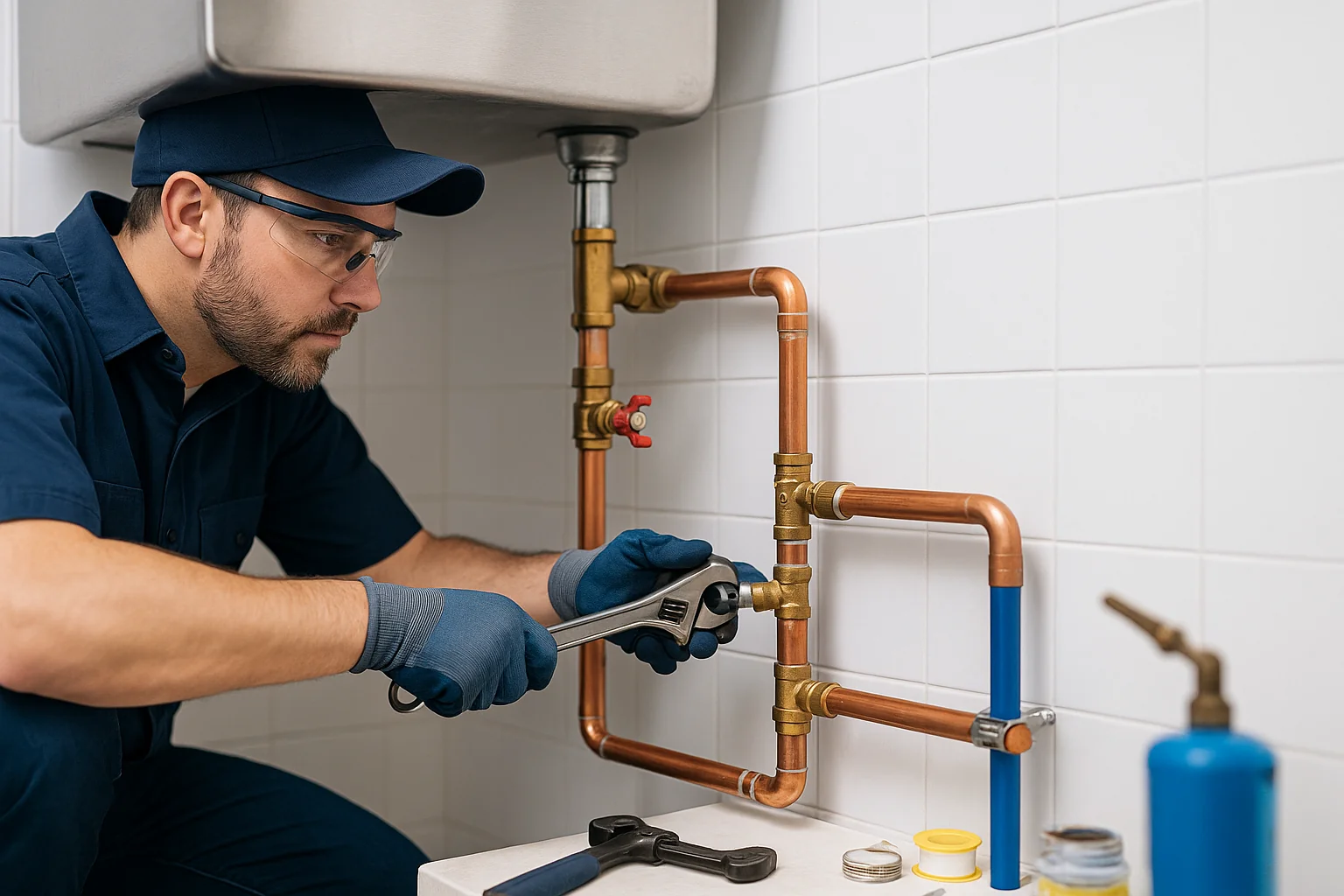
- PEX and press-fit systems — PEX tubing and tools like ProPress have dramatically changed installation speed for both residential and commercial work. These systems require less soldering skill but more product knowledge.
- Trenchless technology — Pipe lining and pipe bursting allow sewer and water line replacement without excavation. The equipment is expensive, but the revenue per job is high.
- Leak detection technology — Acoustic sensors, thermal imaging, and electronic locators let plumbers find problems without tearing out walls. A growing service niche.
- Smart plumbing systems — Water monitoring sensors, automatic shut-off valves, and tankless water heater controls are creating new installation and service opportunities.
- Water conservation engineering — As drought conditions expand and water costs rise, system design for efficiency is becoming a distinct skill.
The core of plumbing — understanding water flow, pressure, drainage, and codes — doesn’t change. But the tools and materials evolve, and the plumbers who adopt new technology build more profitable practices.
What Makes a Successful Plumber
Technical Skills
The foundation is understanding how water and waste systems work: pressure, flow rates, drainage slope, venting, and the codes that govern all of it. Blueprint reading is essential for new construction. Diagnostic skills — figuring out where a leak is, why a drain backs up, what’s making that noise — are what separate good plumbers from parts-swappers.
Physical and Professional Qualities
Plumbing is physical work. You’ll crawl under houses, squeeze into mechanical rooms, lift heavy fixtures, and spend hours on your knees. Strength, flexibility, and stamina matter. So does comfort with tight spaces and occasionally unpleasant conditions — sewage doesn’t care about your preferences.
On the professional side, problem-solving ability is the single most important trait. Every plumbing job is a puzzle: what’s the symptom, what’s the cause, what’s the most efficient fix given the building’s existing systems and the applicable code? Strong customer communication skills also matter, especially for residential service plumbers who need to explain problems and costs to homeowners. And reliability isn’t optional — when someone’s basement is flooding, showing up on time and doing the job right is what builds a reputation.
Read our essential plumbing tools guide for what you’ll need in your toolkit starting out.
Getting Started
- Check your state’s licensing requirements — Every state is different. Know the apprenticeship hours, exam requirements, and timeline before you start.
- Explore training options — Browse plumbing technology programs to compare trade schools and community colleges. Look for programs with both residential and commercial coverage.
- Apply to apprenticeship programs — Both union (United Association) and non-union (PHCC, independent contractors) paths work. Learn about the differences in our apprenticeships guide.
- Get hands-on experience early — Even before formal training, a part-time job as a plumber’s helper teaches you the work environment and confirms the career is right for you.
- Plan your licensing trajectory — Apprentice → Journeyman → Master → Contractor. Each step takes years, so start with the end in mind. If business ownership is your goal, read our guide on starting your own trade business.
The deficit of 500,000+ plumbers isn’t closing anytime soon. Wages are climbing, employers are actively recruiting, and every building in the country needs what plumbers do. If you can handle the physical work and like solving problems, this is one of the strongest trade careers you can enter.
Sources
- Bureau of Labor Statistics — Plumbers, Pipefitters, and Steamfitters: Occupational Outlook Handbook — Accessed March 2026
- PHCC-National Association — Environmental Scan: 2026 Outlook for the P-H-C Industry — 2025
- John Dunham & Associates — Plumber shortage economic impact study (cited in PHCC and industry reporting) — 2025