Walk onto any plumbing job site and you’ll notice something immediately: the experienced hands work fast and without hesitation. That ease comes partly from skill built up over years, and partly from having exactly the right tools within reach. A plumber digging through a cluttered bag looking for the right wrench is a plumber losing time — and in a trade where you’re often working on someone’s burst pipe or backed-up sewer, time matters.
If you’re heading into a plumbing apprenticeship or starting a trade school program, you don’t need a truck full of specialty equipment on day one. But you do need to show up with the right basics. Your foreman or instructor will expect it, and arriving prepared signals that you’re serious about the trade.
This guide lays out what you need at each stage, what to look for when you’re shopping, how much to budget, and how to keep your tools in good shape so they last through a long career.
Day-One Essentials
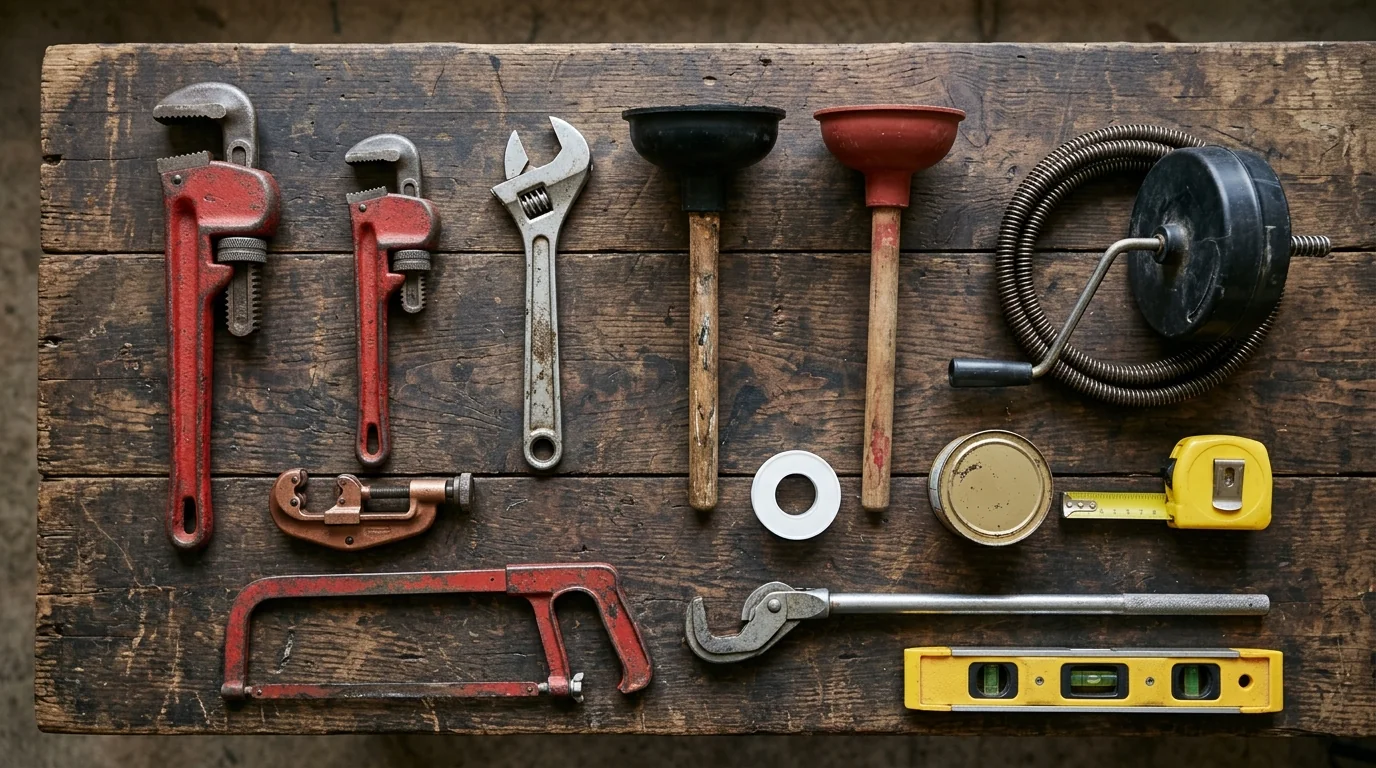
These are the tools that belong in your bag before your first day in the field. Your apprenticeship program or trade school may have its own required list — always follow that first — but the items below appear on nearly every apprentice plumber’s starter kit.
Pipe Wrenches
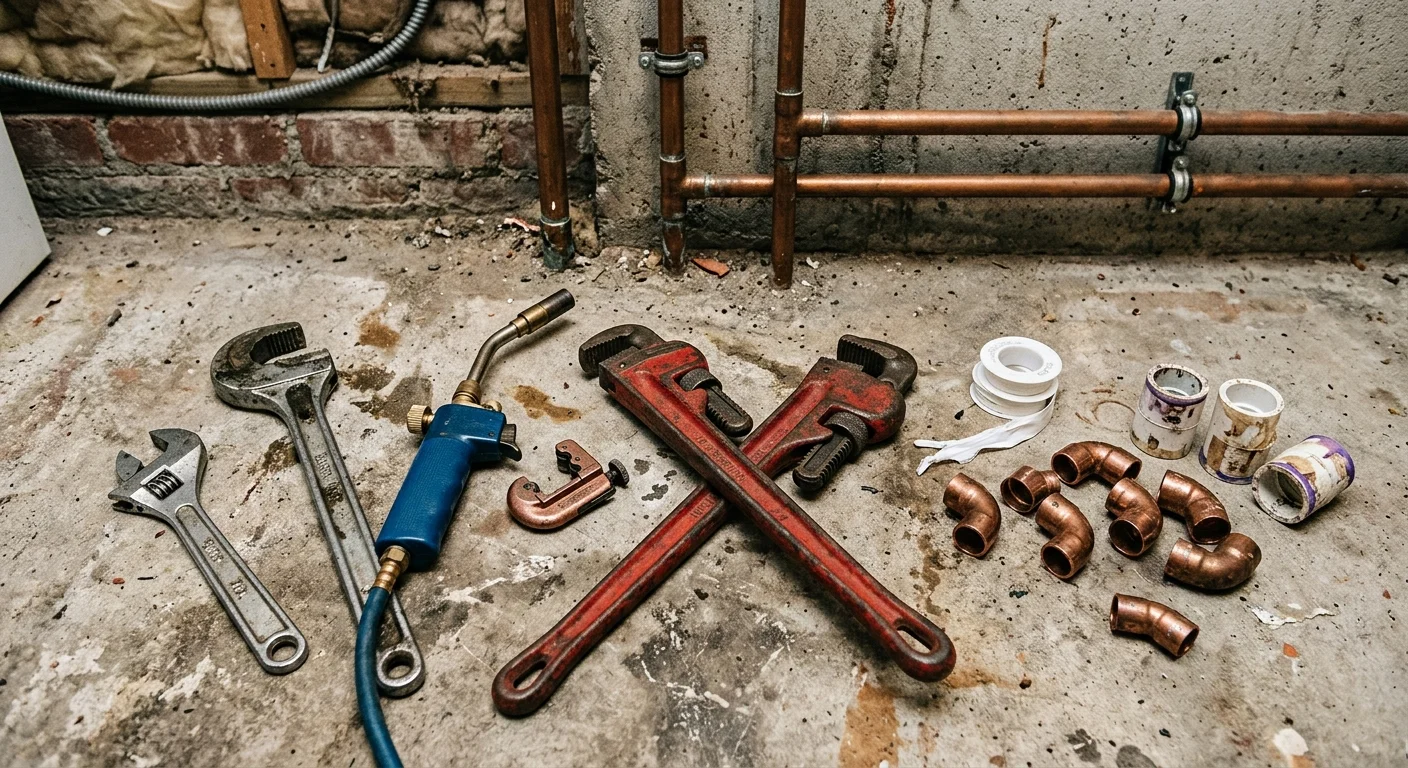
No tool is more synonymous with plumbing than the pipe wrench. You’ll use it to grip, tighten, and loosen threaded pipe and fittings — the serrated jaws dig in harder as you apply torque, which makes them ideal for pipes that would otherwise spin free. Most working plumbers carry two: a larger wrench (typically 14” or 18”) for main work and a smaller one (10” or 12”) as a backup or for working in tighter spots. Having two lets you hold one fitting in place while you tighten or loosen another.
Adjustable Wrench
Where the pipe wrench handles threaded pipe, the adjustable wrench handles hex nuts and bolts — supply line connections, fixture hardware, compression fittings. A 10” adjustable wrench covers most tasks. Having a second, smaller 6” in your bag saves trips back to your truck.
Plunger (Two Types)
A good plunger is still one of the fastest, lowest-cost ways to clear a clog. You need two distinct types: a cup plunger for sinks and tubs (flat bottom, creates a seal over a flat drain) and a flange plunger for toilets (the extended rubber flap fits the curved drain opening). Using the wrong type for the job dramatically reduces effectiveness — and it’s an easy mistake that experienced plumbers never make.
Hand Auger (Drain Snake)
A hand auger — also called a drain snake — is a coiled metal cable you feed into a drain, rotate, and use to break apart or pull out clogs that a plunger can’t budge. The manual version handles most sink and tub clogs. A 25-foot cable covers the majority of residential blockages. Look for one with a crank handle rather than a loop, which gives you more control and less fatigue.
Pipe Cutters
Pipe cutters make clean, square cuts on copper, brass, and aluminum tubing with far less effort than a hacksaw — and cleaner cuts mean better joints. You rotate the cutter around the pipe and tighten slightly with each pass until the pipe separates. A compact mini pipe cutter is handy for tight spaces. Keep a separate plastic pipe cutter in your bag for PVC and CPVC work; scoring a blade on plastic wears it down faster.
Hacksaw
For cutting threaded rod, metal straps, and situations where a pipe cutter won’t fit, the hacksaw fills the gap. Use a blade rated for metal (18–24 TPI for most pipe work). Blades are consumable — replace them when cutting slows or the saw starts to wander.
Basin Wrench
If you’ve never tried to reach the mounting nuts under a sink with a standard wrench, you haven’t experienced one of plumbing’s more frustrating tasks. The basin wrench is purpose-built for exactly that: a long shaft with a pivoting, spring-loaded jaw at the end that reaches into the narrow space between the sink basin and the cabinet, where no other tool fits comfortably. It’s a specialty tool with a narrow purpose, but when you need it, nothing else comes close.
Teflon Tape (PTFE Thread Seal Tape)
Also called plumber’s tape, Teflon tape is a thin white tape that wraps around threaded pipe fittings before they’re assembled. It fills microscopic gaps in the threads and lubricates the joint so you can get a tighter connection without over-torquing. Buy it in bulk — you’ll go through a lot of it. Keep both standard tape for water lines and yellow-jacketed tape for gas lines.
Plumber’s Putty
A soft, pliable sealing compound used around drains, faucet bases, and fixture flanges where you need a watertight seal that will remain workable over time (unlike silicone, which cures hard). Know where not to use it too: plumber’s putty can stain porous stone and isn’t suitable for plastic-threaded connections.
Tape Measure
A 25-foot tape covers pipe runs, rough-in dimensions, and distance measurements for fixture placement. A magnetic tip is useful for measuring to metal pipe or framing without a second set of hands.
Torpedo Level
Making sure supply lines, drains, and drain slopes are correct requires a level. Even a modest half-inch-per-foot slope for a drain line has to be consistent, and eyeballing it leads to slow drains and callbacks. A magnetic torpedo level (8–9 inches) sticks to pipe while you adjust, which frees your hands.
Tool Bag or Tool Belt
How you carry your tools affects your speed on the job. A well-organized bag or belt means the tool you need is out and back in under ten seconds. Most apprentice programs specify either a bag or a pouch-and-belt combination — start with whatever the program or foreman recommends, and adjust as you develop your own workflow.
Power Tools & Specialty Equipment
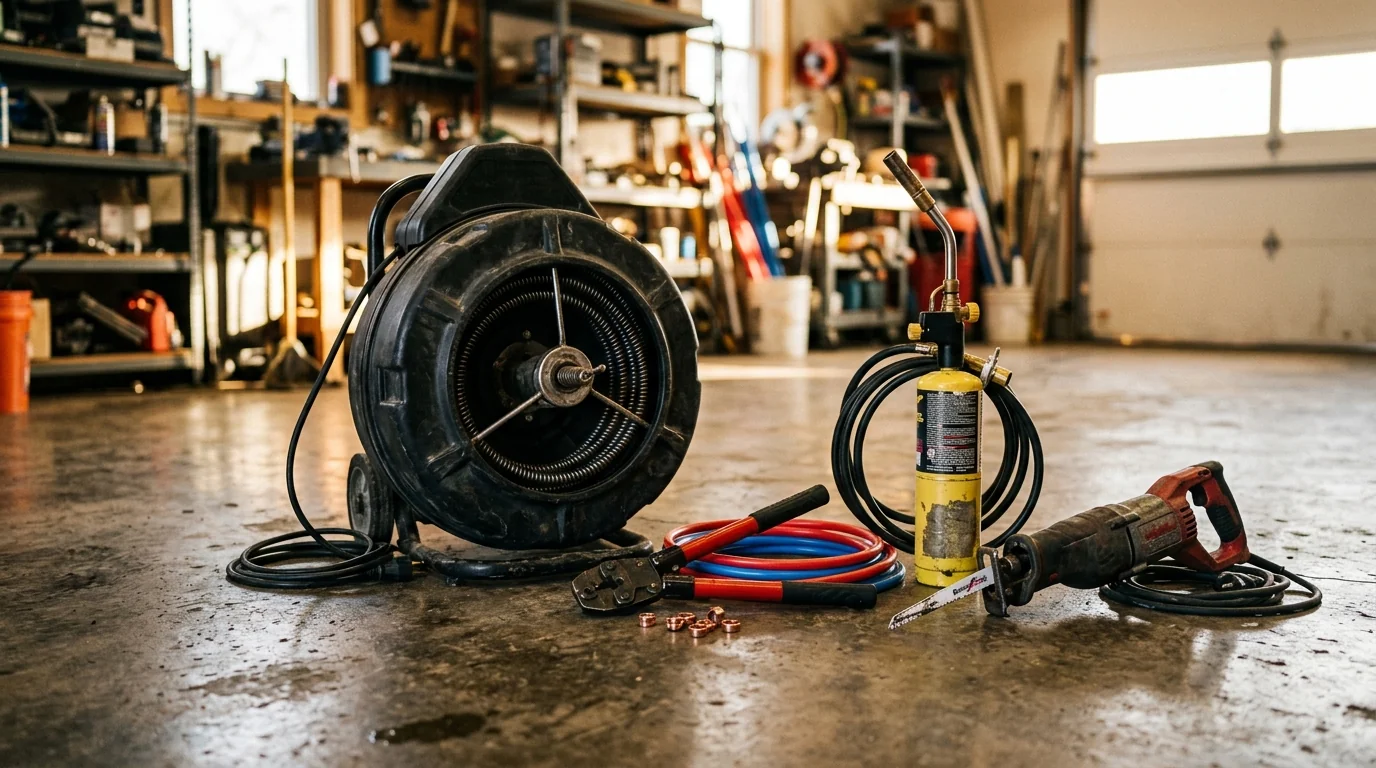
Once you’re into your apprenticeship and working on varied jobs, you’ll add more specialized tools. These handle tasks that hand tools can’t manage efficiently.
Power Drain Machine (Electric Snake)
The hand auger handles most small residential clogs. A power drain machine is what you reach for when you’re dealing with a main line stoppage, a long cable run, or a blockage that manual snaking couldn’t clear. These can be rented early in your career, but most working plumbers eventually own one. Machines with a 50–75 foot cable handle the majority of sewer line work.
PEX Tools
PEX tubing has largely replaced copper in new residential construction for hot and cold water lines — it’s faster to install, more flexible, and more resistant to freezing. To work with it, you need a PEX crimping or clamping tool that attaches the rings securing PEX fittings into the tubing. Crimpers come in single-size versions (for one specific tubing diameter) and combo versions (typically handling 1/2” and 3/4” in a single tool). Also useful: a PEX tubing cutter for making straight, clean cuts.
Soldering Torch
Copper pipe and fittings are still standard in many installations, and joining them requires soldering. A propane or MAPP torch heats the joint until the solder flows and wicks into the gap by capillary action. MAPP gas burns hotter than propane, which speeds up work in tight or cold environments. Keep a proper fire shield cloth or heat-resistant pad behind any pipe you’re soldering near wood or insulation.
Reciprocating Saw
When you need to cut through drywall to access pipe, cut out a corroded section of drain line, or remove old steel or cast iron pipe, a reciprocating saw is the right tool. Use bi-metal blades for cutting metal pipe; demolition-style blades for mixed materials. It’s not a day-one purchase, but once you’re doing full bathroom remodels or rough-in work, you’ll reach for it constantly.
Inspection Camera
Camera systems have changed how plumbers diagnose drain problems. Rather than guessing where a blockage or break is located, you run a camera through the line and watch the monitor. Entry-level cameras with a small LCD screen and 25–30 feet of cable cost significantly less than professional-grade push cameras, and some can even be connected to a smartphone. As you advance, you’ll likely work with cameras more frequently — either your own or your employer’s.
Safety Gear & PPE
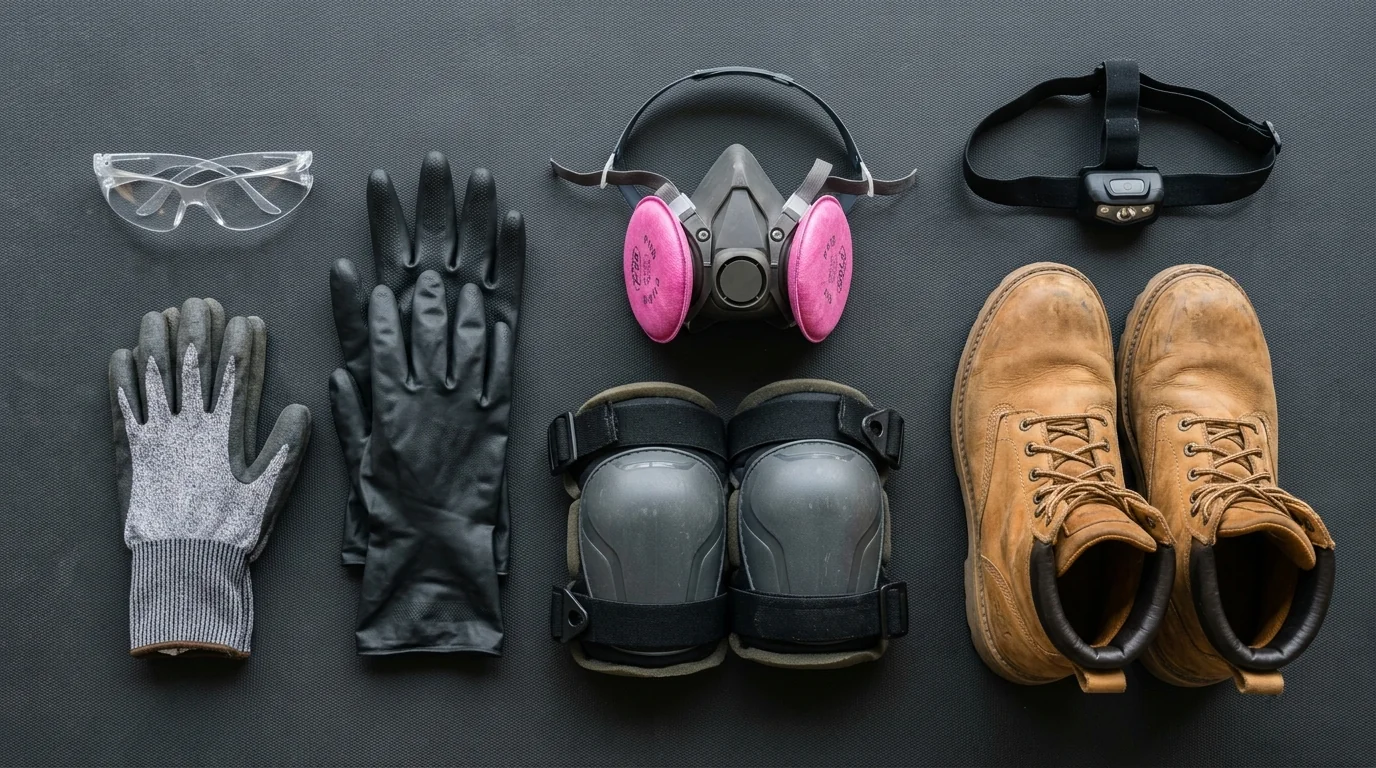
Plumbing isn’t the most hazard-heavy trade, but it has its own specific risks: exposure to sewage and wastewater, chemical drain cleaners, sharp pipe edges, tight crawlspaces, and extended time on hard floors. Your PPE is not optional.
Safety Glasses
Any time you’re cutting pipe, working in a crawlspace, or working with chemical cleaners, safety glasses go on first. Look for ANSI Z87.1-rated lenses — that’s the minimum standard for impact-resistant eye protection. Wrap-around frames offer better coverage. OSHA’s construction PPE guidelines specifically note eye protection as a routine requirement for plumbers and pipefitters.
Work Gloves
Pipe edges, thread cutting, and drain work all create cut and abrasion hazards. You’ll use different gloves for different tasks: cut-resistant gloves for handling cut pipe and sharp fittings, chemical-resistant nitrile gloves for working with cleaners or sewage. Keep both types in your bag.
Knee Pads
Plumbing puts you on your knees constantly — in crawlspaces, under sinks, on concrete floors setting floor drains, and during rough-in work. Hard knee pads are worth the cost. Foam pads compress and degrade quickly; look for caps with a hard outer shell and a cushioned inner layer. Your knees will remind you of every time you skipped them.
Respirator
When you’re working in areas with sewage gases, mold, or chemical fumes, a basic N95 dust mask isn’t sufficient. A half-face respirator with organic vapor cartridges handles sewage odor and chemical exposure. It’s not a tool you’ll use every day, but you want it before the situation demands it.
Steel-Toed or Composite-Toed Boots
Heavy pipe, cast iron fittings, and power tools create a real foot-crush hazard. ASTM-rated safety-toe boots (look for ASTM F2413 on the label) protect your feet without requiring you to change how you work. Waterproof is a significant plus — plumbing jobs frequently involve wet floors and unexpected surprises.
Headlamp
Crawlspaces, under-sink cabinets, and access panels are consistently dim. A headlamp mounted directly on your hard hat or forehead keeps your hands free and the light aimed where you’re looking. Rechargeable models with 200+ lumens and a focused beam work well for the confined spaces plumbers frequently encounter.
What to Look For When Buying
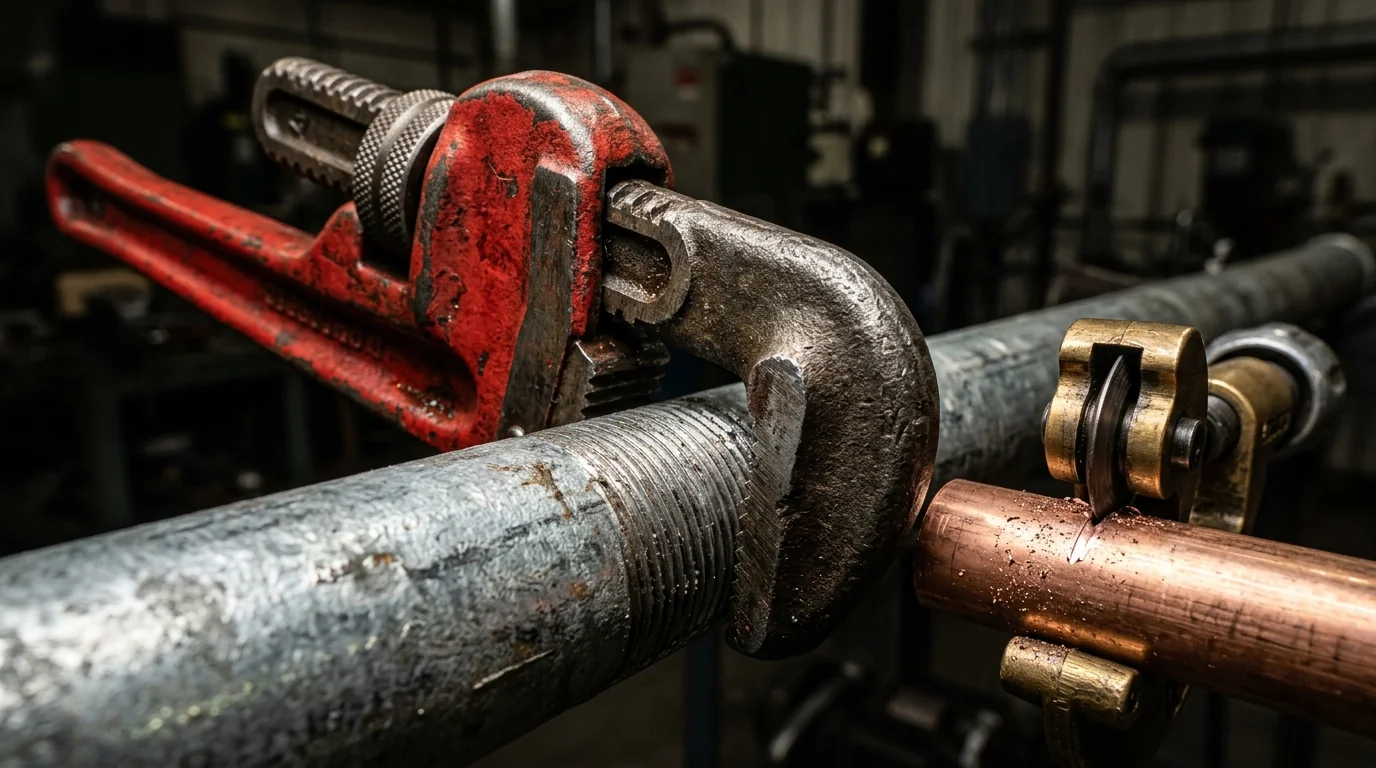
This section focuses on how to evaluate tools rather than pointing to specific brands. What’s on sale and what your program recommends will change — these evaluation criteria won’t.
Pipe Wrenches
What they do: Grip and turn threaded pipe and fittings using a self-tightening jaw mechanism.
Key features to compare: Construction (drop-forged vs. cast) — drop-forged is stronger and more durable; jaw opening and maximum pipe diameter the wrench handles; handle length (longer handle = more torque, but less practical in tight spaces); weight (lighter aluminum bodies are easier to carry but less durable than steel for heavy work).
Price range: $20–$60 each. Buy two different sizes rather than two identical ones.
Drain Augers / Hand Snakes
What they do: Clear blockages in drains by mechanically breaking up or retrieving debris.
Key features to compare: Cable length (25 feet handles most sinks and tubs; 50 feet for main lines); cable diameter (thicker cables push through grease better, but are stiffer in tight turns); handle design (T-handle or pistol grip vs. loop — the former gives more control); storage drum with auto-rewind makes cleanup faster.
Price range: $30–$80 for a quality manual auger. Power machines range from $150 (entry rental-grade) to $600+ for professional units.
Pipe Cutters
What they do: Cut copper, brass, and soft metal tubing cleanly and squarely.
Key features to compare: Size range (the cutter’s capacity needs to match the pipe sizes you’re working with — most plumbers carry a standard cutter and a mini cutter); cutter wheel material (hardened steel wheels stay sharp longer); built-in deburring tool on the body (removes the burr from the cut end, which you’d otherwise need a separate tool for).
Price range: $10–$30 for a standard copper cutter; $8–$20 for a mini cutter.
Basin Wrench
What it does: Reaches up behind sink basins to tighten or loosen mounting nuts in spaces where no other tool fits.
Key features to compare: Shaft length (longer is better for deep undermount sinks); pivoting head with a spring mechanism (some are fixed-pivot and need manual flipping between tighten/loosen — a spring-loaded head is faster); shaft material (telescoping shafts let you adjust for different sink depths).
Price range: $15–$45.
PEX Crimping Tool
What it does: Compresses copper crimp rings onto PEX tubing to create a watertight connection.
Key features to compare: Single-size vs. combo tool (a 1/2” and 3/4” combo handles the majority of residential work with one tool); jaw size compatibility with the crimp rings you’re using; whether the kit includes a go/no-go gauge (used to verify the crimp diameter is within spec — important for leak-free connections); handle length and leverage (more leverage means less hand fatigue when crimping repeatedly).
Price range: $50–$120 for a quality combo crimper with gauge. Expansion-style PEX tools cost more ($200–$400) but are faster for high-volume work.
Soldering Torch
What it does: Heats copper pipe and fittings to the temperature needed for solder to flow.
Key features to compare: Fuel type (propane is more available; MAPP burns hotter and faster); ignition (push-button self-ignition vs. striker — self-ignition is faster and safer); flame adjustment (a swirl or turbo flame tip distributes heat evenly around the joint); hose vs. hand-held canister (a separate hose-fed setup offers more maneuverability in tight spaces, but a torch that mounts directly on the canister is adequate for most residential work).
Price range: $30–$80 for a hand-held torch setup. Professional kits with hose and multiple tips run $80–$200.
Safety Glasses
Key features to compare: ANSI Z87.1 rating (non-negotiable); anti-fog coating (valuable in crawlspaces and basements where temperature shifts create condensation); side coverage (wrap-around frames protect from lateral debris); comfortable fit for all-day wear.
Price range: $5–$25. Buy several pairs and keep one in each bag.
Knee Pads
Key features to compare: Cap material (hard plastic shell over foam is worth the extra cost over foam-only pads); strap system (wide straps distribute pressure and don’t restrict circulation; velcro closures that stay put through movement); overall profile (bulky pads slow you down in crawlspaces — a lower-profile cap works better in tight areas).
Price range: $20–$60.
Budget Guide
What you spend getting started depends on your program’s requirements, whether you’re entering a union or non-union apprenticeship, and what your employer provides. Use these ranges as planning targets.
Apprentice Starter Kit: $250–$600
This covers the day-one hand tools: two pipe wrenches, adjustable wrench, plunger set, hand auger, pipe cutter, hacksaw, basin wrench, Teflon tape, tape measure, torpedo level, and a tool bag or belt. At this budget, you’re buying functional mid-grade tools from established manufacturers — not the cheapest option, but not professional-tier either. That’s exactly right when you’re still developing preferences.
Safety gear (glasses, gloves, knee pads, headlamp, boots) adds $100–$200 if you’re buying new.
Adding Specialty Tools: $300–$600 additional
Once you’re past the basics, PEX tools, a soldering torch kit, and a better auger round out your kit for most apprenticeship work. If your employer provides certain tools on site, you can defer those purchases.
Professional Setup: $1,500–$3,500+
A fully equipped working plumber carries a broader and higher-quality set: professional-grade wrenches and cutters, a power drain machine, a camera system, a full PEX tool set (both crimp and expansion), proper respirator, and a range of specialty tools for gas line work, drain testing, and remodeling. You build to this level gradually — most plumbers add to their kit over years as they encounter new types of work, not all at once.
The good news is that plumbing tools are durable when maintained properly. A quality pipe wrench bought early in your career can still be in your bag fifteen years later.
Tool Care & Maintenance Tips
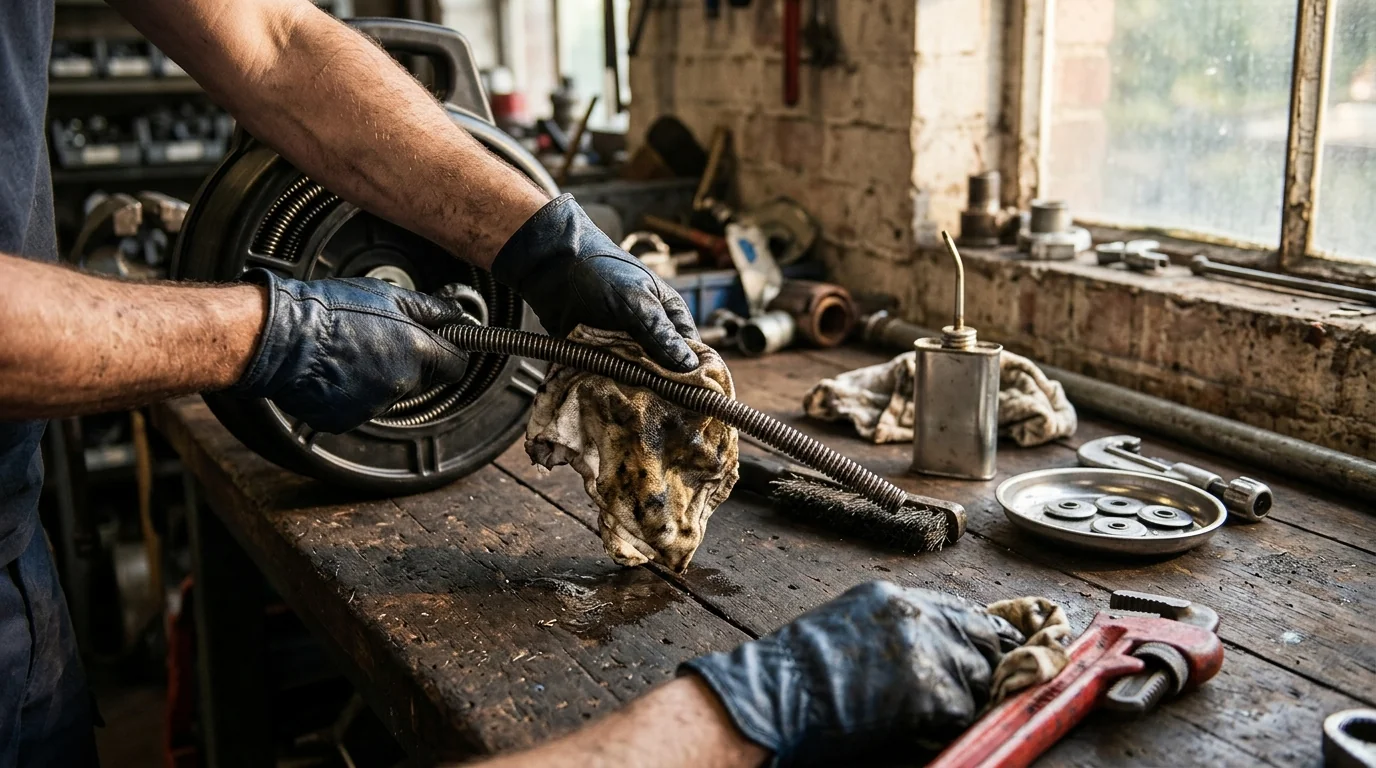
Good tools last a long time when they’re looked after. Here’s how experienced plumbers keep their gear in working order:
Keep pipe wrench jaws clean. Pipe scale, corrosion, and grease build up in the serrated jaws and reduce grip over time. Brush them out periodically with a stiff wire brush. The adjustment nut mechanism should move smoothly — a seized nut usually means it needs cleaning and a drop of oil at the pivot.
Replace pipe wrench jaws when worn. The jaw and heel piece are replaceable on most quality pipe wrenches. Worn-down serrations mean less grip under torque, which leads to slipping and rounded fittings. Replacement jaws are inexpensive and widely available.
Dry tools before storage. Plumbing tools spend a lot of time in and around water. Steel tools left wet develop surface rust that eventually pits and degrades cutting edges and threads. Wipe tools down after use and apply a thin coat of oil to exposed metal surfaces.
Inspect the pipe cutter wheel regularly. A dull cutter wheel causes you to apply more force, which can deform thin-wall copper or make the cut run off-square. Replace the wheel when it stops making clean progress. Cutter wheels are cheap.
Clean and dry the drain auger cable. Auger cables pick up grease, waste, and debris on every run. Wipe the cable down as you retract it — many plumbers run it through a rag. A dirty, wet cable stored in its drum corrodes and weakens over time. Light oil applied before storage extends cable life significantly.
Check soldering equipment before use. Inspect torch connections and hoses for cracks. Test the igniter. Make sure your solder and flux haven’t hardened or separated — old flux that’s dried out doesn’t work effectively, which leads to cold joints and leaks.
Store knee pads flat. Storing knee pads compressed under heavy gear degrades the foam layer. Keep them somewhere with room so they hold their shape.
Start Your Plumbing Career
Knowing your tools is a solid foundation, but it’s just the beginning. If you’re thinking through whether plumbing is the right fit — what the day-to-day work actually looks like, what earning potential exists, how licensing and advancement work — read our full guide on plumbing career opportunities.
If you’re deciding between a union apprenticeship and a trade school program, our apprenticeships explained article walks through how each path works and what to expect. And if you’re wondering which licenses and certifications matter at each stage of a plumbing career, trade certifications and licenses breaks that down in detail.
Plumbing rewards people who take the craft seriously — and part of taking it seriously is understanding your tools before your first week on the job.
Sources
- ServiceTitan — “32 Best Plumbing Tools: A List of Essentials in 2026” — https://www.servicetitan.com/blog/best-plumbing-tools
- Getjobber — “29+ Best Professional Plumbing Tools for All Jobs” — https://www.getjobber.com/academy/plumbing/best-plumbing-tools/
- UpperInc — “Professional Plumbing Tools List: Essentials in 2025” — https://www.upperinc.com/blog/best-tools-for-plumbers/
- PeopleReady / Skilled — “Apprentice Plumber: MUST-HAVE TOOL LIST” — 2025 — https://skilled.peopleready.com/wp-content/uploads/sites/2/2025/03/TradespeopleToolkit_ApprenticePlumber.pdf
- OSHA — “Personal Protective Equipment — Overview” — https://www.osha.gov/personal-protective-equipment