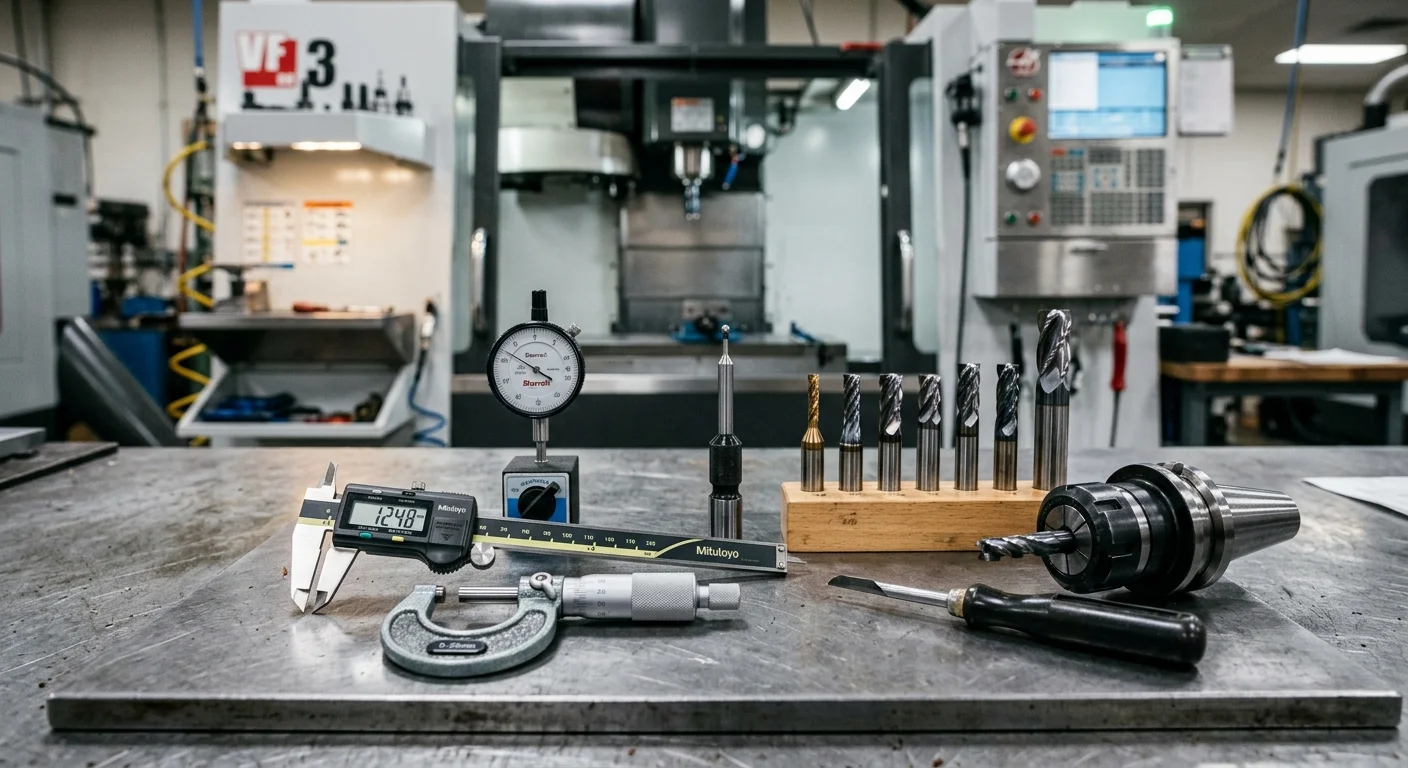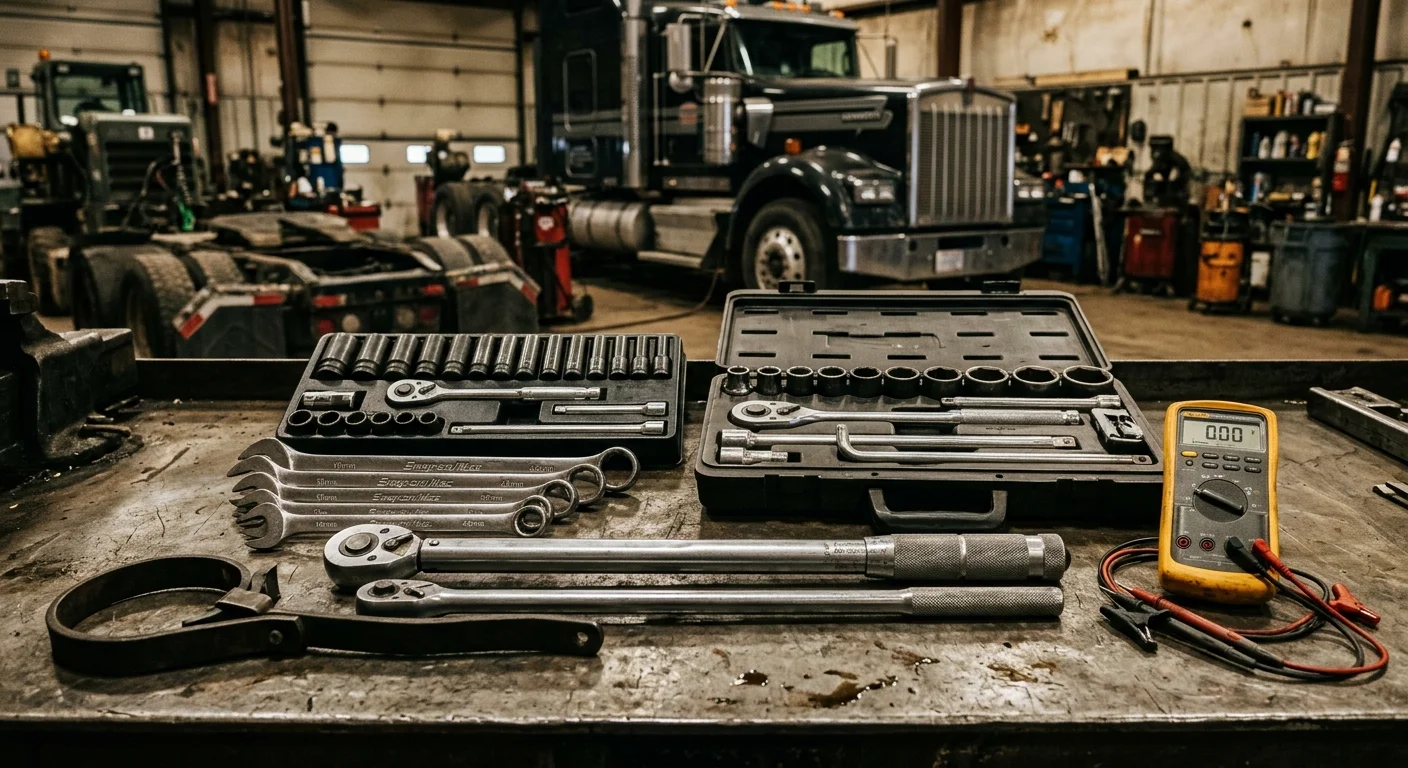
Walk into any auto shop and you’ll notice something: every technician’s toolbox tells a story. The veteran who’s been turning wrenches for twenty years has drawers organized by system — engine here, brakes there, electrical in the corner. The tech fresh out of school has a solid starter set and a growing wish list. What they share is a core collection of hand tools, measuring instruments, and safety gear that gets used every single day.
If you’re entering an automotive technology program or heading into your first shop job, you don’t need to replicate an experienced tech’s full setup. You need to show up with the right basics, build from there, and understand what each piece of equipment actually does before you spend money on it. Your program will likely have a required tool list — follow that as your primary guide — and this article will help you understand the reasoning behind it.
Automotive work spans an enormous range of systems: engines, transmissions, brakes, suspension, electrical, HVAC, and increasingly, software and advanced driver-assistance systems. According to the Bureau of Labor Statistics, the median annual wage for automotive service technicians and mechanics was $49,670 in May 2024, with the top 10 percent earning more than $80,850. The right tools — and knowing how to use them — are what separate the technicians commanding those higher wages from those still finding their footing.
Day-One Essentials
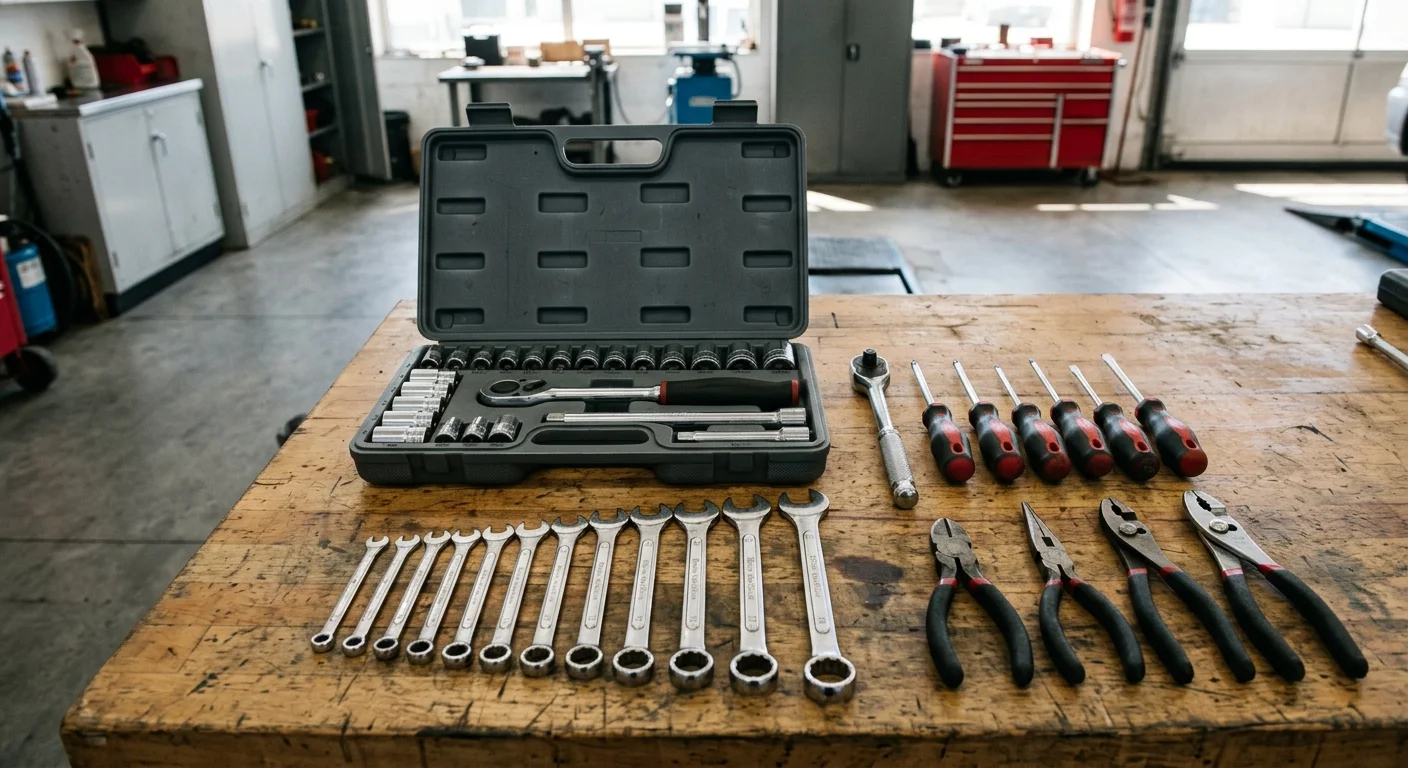
These are the hand tools you’ll reach for constantly from your first day of training. They handle fasteners, adjustments, and the mechanical work that underpins every other repair.
Socket Sets — Metric and SAE
You need both. American-made vehicles typically use SAE (Society of Automotive Engineers) measurements — fractional inch sizes. Most imported vehicles use metric. Many modern vehicles mix both depending on the system. A set covering 1/4-inch, 3/8-inch, and 1/2-inch drives in both metric and SAE gives you the range to handle fasteners from tiny sensor bolts to large drivetrain components.
Extension bars and universal joints (wobbly extensions) are equally important — without them, you can’t reach fasteners tucked into tight spots, which describes most of the fasteners in a modern engine bay.
Ratchets
A ratchet is only as useful as it is comfortable to use in tight quarters. Look for a set that includes at minimum a 1/4-inch drive, 3/8-inch drive, and 1/2-inch drive ratchet. A flex-head ratchet — where the head pivots — is worth adding early. Many techs end up preferring flex-head ratchets for general use because the angled position reduces knuckle-busting in cramped spaces.
Combination Wrenches
Open-end on one side, box-end on the other. You’ll use these constantly for fasteners you can’t reach with a socket, and for holding one side of a bolt-and-nut combination while you torque the other. A basic metric and SAE set is non-negotiable. Buy quality here — cheap wrenches round off fasteners, which creates expensive problems.
Torque Wrench
Fasteners on modern vehicles have specific torque values specified by the manufacturer. Too loose and parts come apart. Too tight and you strip threads or warp components. A torque wrench lets you tighten to a precise specification. A 3/8-inch drive click-type torque wrench in a 10–100 ft-lb range covers most common work; adding a 1/4-inch drive for small fasteners and a 1/2-inch for larger jobs fills in the gaps.
Screwdrivers
A set of Phillips and flathead screwdrivers in multiple sizes, plus Torx and hex drivers, covers the fastener types you’ll encounter. Stubby screwdrivers are useful in tight spaces. Insulated screwdrivers matter when working near electrical components. Don’t use screwdrivers as pry bars — it damages the tip and the fastener.
Pliers
You’ll use several types. Slip-joint pliers for general gripping. Needle-nose for small connectors, hose clamps, and wire work. Locking pliers (vise-grips) for holding parts in position. Snap ring pliers for internal and external retaining rings on shafts, bearings, and other components. A decent set covers four or five types; you’ll add more specialized pliers as you encounter specific systems.
OBD-II Scanner
Every passenger vehicle sold in the United States since 1996 is required to support the OBD-II (On-Board Diagnostics) standard. When a vehicle’s check-engine light comes on, the engine control module stores diagnostic trouble codes (DTCs) that a scanner can read. An entry-level scanner reads and clears standard powertrain codes and displays live sensor data. That alone is useful for basic diagnosis. As you move into more advanced work, you’ll want access to a more capable scan tool that reads ABS, airbag, transmission, and manufacturer-specific codes — those are typically shop-provided, but having your own basic scanner builds your diagnostic instincts from day one.
Multimeter
Electrical diagnosis is a growing part of automotive work, especially as vehicles add more electronic systems. A digital multimeter measures voltage, amperage, and resistance — the three measurements that tell you whether an electrical circuit is functioning correctly. You’ll use it to test batteries, alternators, sensors, fuses, and wiring. Look for a model with a fused amp lead (for safety when measuring current) and a duty cycle function.
Power Tools & Specialty Equipment
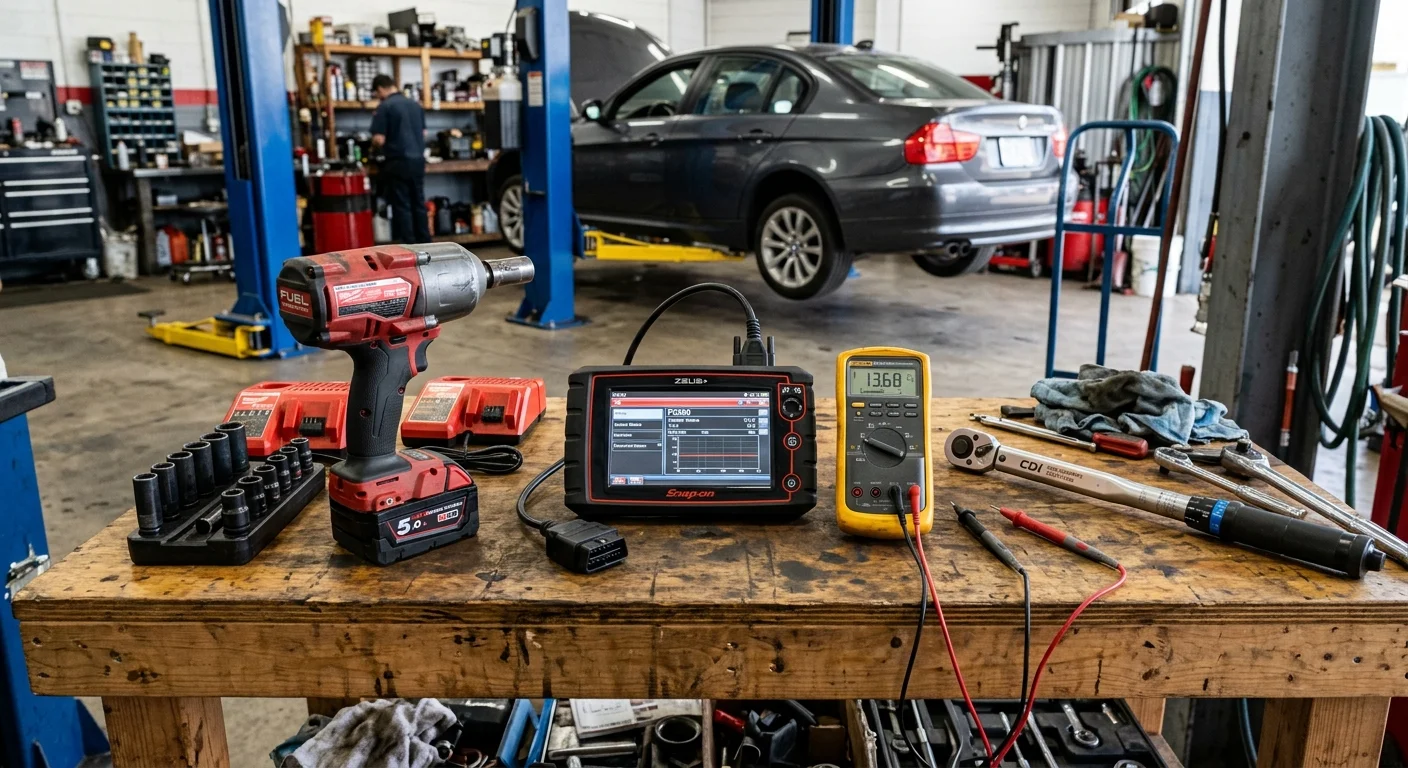
Once you’re working in a shop or further along in your program, certain power tools and specialty items become standard additions.
Impact Wrench
An impact wrench is a game-changer for removing lug nuts, suspension bolts, and other large fasteners that would take significant effort with a hand tool alone. Most shops have air-powered impact wrenches, but cordless electric models have improved dramatically and are widely used by technicians who want a self-contained tool that doesn’t require an air hose. A 1/2-inch drive is the common size for wheel and suspension work; 3/8-inch drive impacts are useful for smaller fasteners.
Floor Jack and Jack Stands
Getting a vehicle safely off the ground is a prerequisite for suspension, brake, exhaust, and undercarriage work. A floor jack lifts the vehicle; jack stands support it. Never work under a vehicle supported only by a floor jack — jacks can fail. Jack stands are always used in pairs and rated by weight capacity. A 3-ton floor jack and a set of 3-ton jack stands cover most passenger vehicles and light trucks. A mechanic’s creeper lets you slide under vehicles without lying directly on the floor.
Oil Filter Wrench
Oil filters are often installed in awkward spots and can be tightened by heat cycles to the point where hand removal is impossible. A cap-style oil filter wrench fits over the end of the filter and attaches to a 3/8-inch drive ratchet; a band-style wrench clamps around the outside. Having both types means you’re covered regardless of filter location or space constraints.
Brake Tools
Brake work requires a few specialty items. A brake caliper piston tool compresses or retracts the piston when installing new brake pads — different vehicles use different piston designs (some rotate, some press straight in, some require both). A brake bleeder kit removes air from brake lines after any hydraulic work. These are low-cost tools with no substitutes for the specific jobs they do.
Safety Gear & PPE
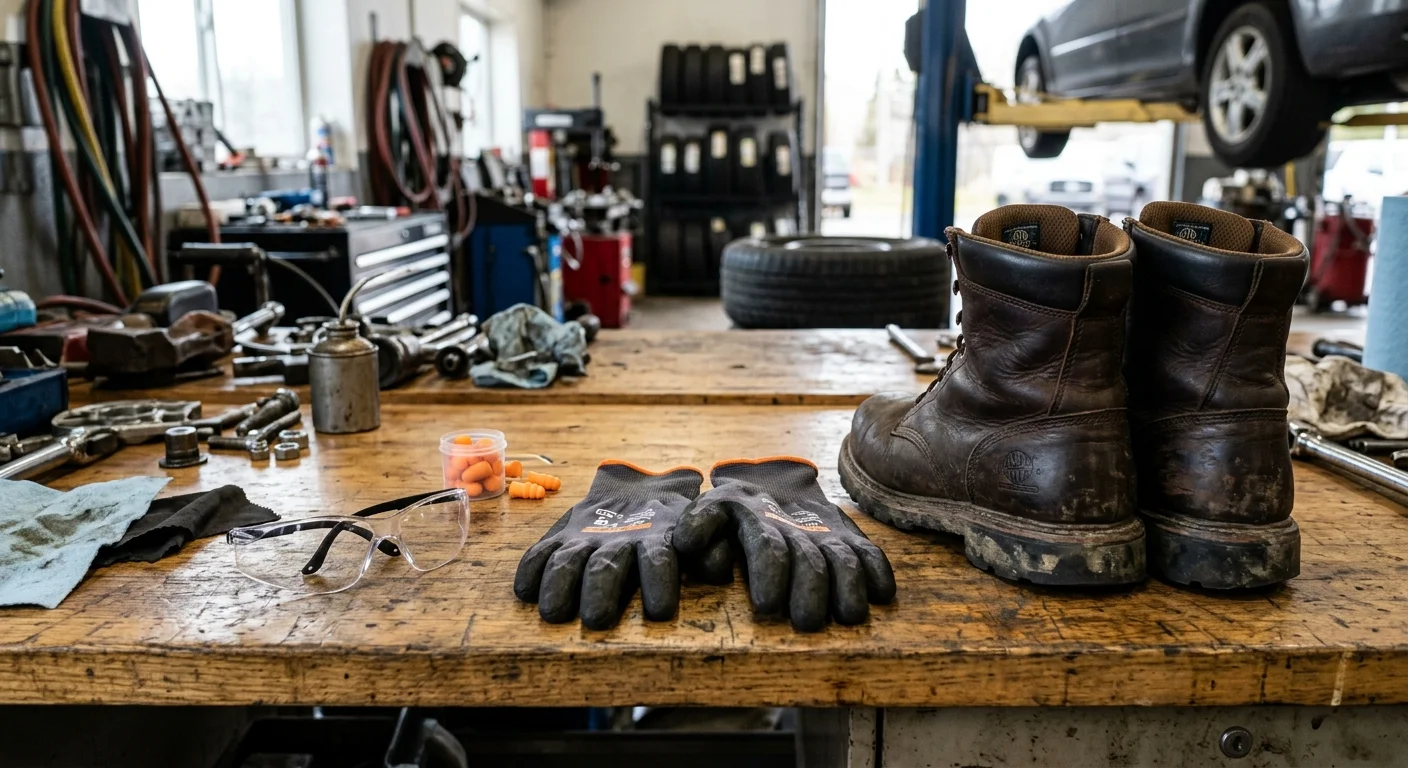
OSHA regulations require automotive shops to provide appropriate personal protective equipment and train employees in its use. In practice, most technicians own their own basic PPE because they use it constantly and need it to fit properly.
Safety Glasses
Impact-rated safety glasses with side shields are non-negotiable in any shop environment. Grinding, drilling, cutting, and working under vehicles all create flying debris. Prescription safety glasses are available if you wear corrective lenses. Keep a spare pair — they get scratched and lost.
Mechanic’s Gloves
Cut-resistant, mechanics-style gloves protect against lacerations from sheet metal edges, sharp fasteners, and rough surfaces while still allowing the dexterity to handle small parts. They’re not chemical-resistant — for work with brake fluid, solvents, or coolant, switch to nitrile disposable gloves, which resist chemical absorption. Per OSHA standard 29 CFR 1910.138, hand protection must match the hazard — so know which glove to reach for.
Steel-Toe Boots
Falling tools, rolling equipment, and heavy components are a constant presence in a shop. Steel-toe or composite-toe work boots rated to ASTM standards protect your feet from impact and compression. Oil-resistant soles matter too — shop floors get slippery. A comfortable, well-fitted pair of boots makes a significant difference after ten hours on a concrete floor.
Additional PPE
Hearing protection becomes important with extended impact wrench use or air tool operation. A shop apron or mechanic’s coveralls protect your clothing and your skin from grease, oil, and chemicals. When working with chemical cleaners, penetrating oils, or refrigerants, a respirator appropriate to the chemical type is required by OSHA regulations.
What to Look For When Buying
Buying tools is not about chasing specific brand names. It’s about understanding what differentiates quality from junk within each category.
Socket Sets
What it does: Drives fasteners of various sizes using interchangeable sockets attached to a ratchet or breaker bar.
Key features to compare: Chrome vanadium steel construction; 6-point vs. 12-point sockets (6-point grips the flat of the fastener and is less likely to round it, especially on worn hardware); lifetime warranty from the manufacturer; whether the set includes both shallow and deep sockets.
Price range: A useful metric and SAE socket set with a ratchet starts around $50–$100 for entry-level sets. A quality set covering all three drives in both measurement systems runs $150–$350.
Torque Wrench
What it does: Applies a measured amount of rotational force to a fastener, confirmed by an audible or tactile “click” when the target torque is reached.
Key features to compare: Calibration accuracy (look for ±4% or better); the torque range and whether it matches the work you’ll be doing; dual-direction capability if you’ll torque both right-hand and left-hand threaded fasteners; a locking collar to prevent accidental adjustment.
Price range: A reliable click-type torque wrench in the 3/8-inch drive range runs $40–$120. Beam-type wrenches cost less but require reading a scale rather than feeling the click.
OBD-II Scanner
What it does: Reads diagnostic trouble codes, clears check-engine lights, and displays live sensor data from the vehicle’s engine control module and other systems.
Key features to compare: Coverage beyond basic powertrain codes (ABS, SRS, transmission); live data streaming with graphing; freeze frame capture; whether the software receives regular updates; Bluetooth or wired connection.
Price range: Basic code readers start at $25–$80. Mid-range scanners with expanded system coverage run $150–$400. Professional shop-grade bi-directional tools cost $1,000 and up — those are typically employer-provided.
Multimeter
What it does: Measures voltage (volts), current (amps), and resistance (ohms) in electrical circuits.
Key features to compare: Auto-ranging vs. manual-ranging (auto-ranging is more convenient for beginners); fused amp leads for safety; CAT III or CAT IV voltage rating; duty cycle measurement capability; min/max hold function.
Price range: A capable digital multimeter runs $40–$120. Avoid the cheapest options — poor-quality multimeters give inaccurate readings and can be dangerous near high-voltage systems.
Floor Jack and Jack Stands
What it does: Lifts a vehicle for undercarriage access; stands support the vehicle’s weight safely while you work underneath.
Key features to compare: Rated weight capacity (minimum 2 tons for passenger vehicles, 3 tons recommended for trucks and SUVs); lift height range, especially the maximum height; safety valve to prevent overloading; jack stand saddle design for secure placement on vehicle frame points.
Price range: A quality 3-ton floor jack runs $80–$200. A set of 3-ton jack stands costs $40–$80. Don’t cut costs here — rated capacity is a safety specification, not a suggestion.
Budget Guide
Student Starter Kit: $500–$1,000
A student entering an automotive technology program needs to arrive with functional hand tools. This means a metric and SAE socket set (both 1/4-inch and 3/8-inch drive), a torque wrench, combination wrenches in both measurement systems, a full set of screwdrivers including Torx and hex, pliers (four to five types), a basic OBD-II scanner, a digital multimeter, safety glasses, mechanic’s gloves, and steel-toe boots.
Buying mid-range quality in this range — not premium, not the cheapest available — puts a complete starter kit in the $500–$1,000 range. Schools and industry associations sometimes offer student discounts; your program may also have arrangements with tool suppliers, so ask before you buy.
According to Universal Technical Institute, employers typically provide the larger diagnostic equipment and specialty tools, but technicians are expected to arrive with the common hand tools they’ll use on every vehicle. Starting your collection during training rather than after graduation means you arrive at your first job ready.
Professional Setup: $3,000–$8,000+
A working professional’s toolbox is a much larger investment, built over time. On top of the starter kit, this includes a full 1/2-inch drive socket set, a cordless impact wrench, a floor jack and jack stands, a creeper, a brake caliper tool set, an oil filter wrench set, a more capable mid-range OBD-II scanner, a tool chest to organize and transport everything, and a growing collection of specialty tools accumulated job by job.
A full professional hand-tool collection, including toolbox, typically runs $3,000–$8,000 depending on the quality level. High-end professional tools and a quality chest can push well beyond that. The key is building the collection strategically — add specialty tools when a specific job calls for them, not before. Many techs report that their tool collection is worth $7,500–$10,000 after several years in the trade, with specialists investing considerably more.
Tool Care & Maintenance Tips
Tools that are cared for properly last a career. Those that aren’t get replaced repeatedly, which costs real money over time.
Keep sockets and ratchets clean and dry. Wipe them down after use. Grit and metal shavings that accumulate in the ratchet mechanism wear it out prematurely. Occasionally, disassemble the ratchet head and clean and re-lubricate the pawl mechanism.
Store your torque wrench at its lowest setting. Leaving a click-type torque wrench set to a specific torque value puts constant tension on the internal spring. Backing it down to the lowest setting before storage extends its calibration life. Have it recalibrated periodically — most manufacturers recommend annual calibration or after any significant drop or overload.
Inspect cutting and prying tools before use. Screwdrivers with chipped or rounded tips won’t seat properly in fastener heads and will damage both the fastener and the tool. Replace damaged tips — don’t try to salvage a tool that has become a hazard.
Organize by system or by size — pick one and stick to it. A well-organized toolbox means you’re not searching for a 10mm socket when a customer’s vehicle is on the lift. Whether you organize by metric vs. SAE, by drive size, or by vehicle system, consistency is what matters. Label your drawers.
Protect against rust. Shop environments are humid. Wipe metal tools with a light coat of tool oil periodically, especially if you’re in a coastal or high-humidity area. Socket trays and foam inserts that keep tools separated also prevent the contact wear that accelerates surface rust.
Don’t lend what you can’t replace. A common piece of advice in any trade: lending tools is how you lose them. If you do lend, mark your tools clearly with your name or initials using an engraver.
Start Your Automotive Career
The tools you carry into a shop reflect the technician you’re becoming. Starting with solid fundamentals — quality hand tools, a basic scanner, proper PPE — and building deliberately from there is the approach that experienced techs consistently recommend. Premium tools matter less than knowing how to use what you have.
If you’re still deciding whether an automotive technology career is the right path, or you’re ready to find a program that fits your goals, our guide to automotive technology career opportunities covers what the job looks like day-to-day, what training programs involve, and what the long-term career outlook looks like.
You can also explore how to evaluate a trade school to make sure you’re choosing a program with the facilities, instructor experience, and industry connections that give you the best start.
Sources:
- Bureau of Labor Statistics — Occupational Outlook Handbook — “Automotive Service Technicians and Mechanics” — 2025 — https://www.bls.gov/ooh/installation-maintenance-and-repair/automotive-service-technicians-and-mechanics.htm
- OSHA — “1910.138 Hand Protection” — https://www.osha.gov/laws-regs/regulations/standardnumber/1910/1910.138
- Universal Technical Institute — “Top Mechanic Tools | Essential Equipment for Automotive Repairs” — https://www.uti.edu/blog/automotive/automotive-technician-tool-list
- Massachusetts Office of Labor and Workforce Development — “Understanding OSHA Requirements for Auto Shops” — https://www.mass.gov/info-details/understanding-osha-requirements-for-auto-shops