Walk into any diesel shop and one thing stands out right away: the scale of everything. The engines are bigger, the bolts are bigger, the torque specs are higher, and the tools have to match. Diesel mechanics don’t just need a bigger version of what automotive technicians use — they need a different category of tools in many cases, because the equipment they work on operates under far more stress.
If you’re entering a diesel technology program or apprenticeship, the tool requirements can feel overwhelming at first glance. A Bureau of Labor Statistics report on diesel service technicians notes that employers increasingly prefer technicians who have completed postsecondary training programs — and nearly all of those programs require students to arrive with their own hand tool sets. Your program will have a specific required list, and you should always follow that first. But understanding why each tool is on the list, what to look for when buying, and how to expand your kit over time is what separates mechanics who are prepared from ones who are just guessing.
This guide walks through the full picture: what you need from day one, what to add as you progress, how to evaluate tools before you buy, and how to budget at different stages of your career.
Day-One Essentials
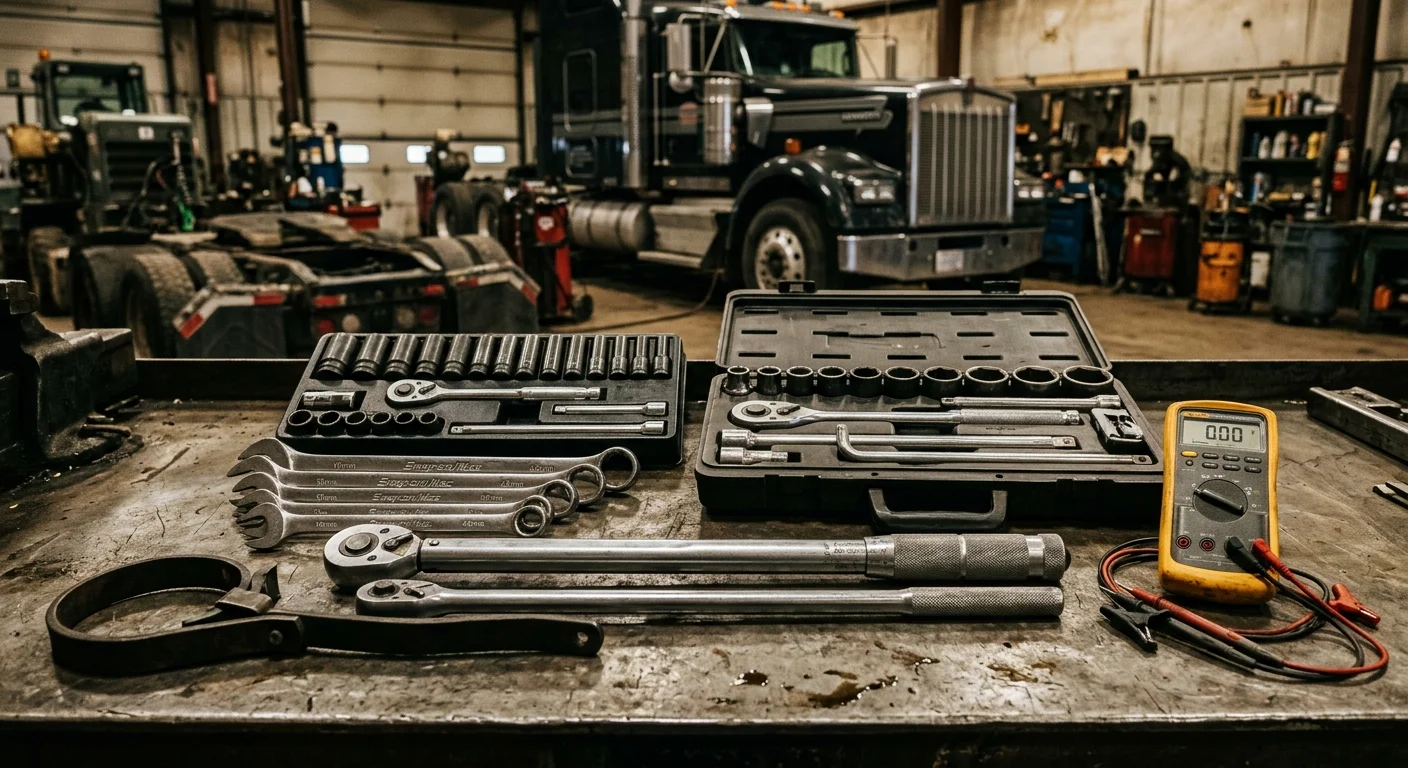
These are the hand tools that show up on nearly every diesel technology program’s required list. They handle the most common fasteners on trucks, heavy equipment, and buses — the work you’ll be doing from your first week.
Socket Sets (Large Drive Sizes)
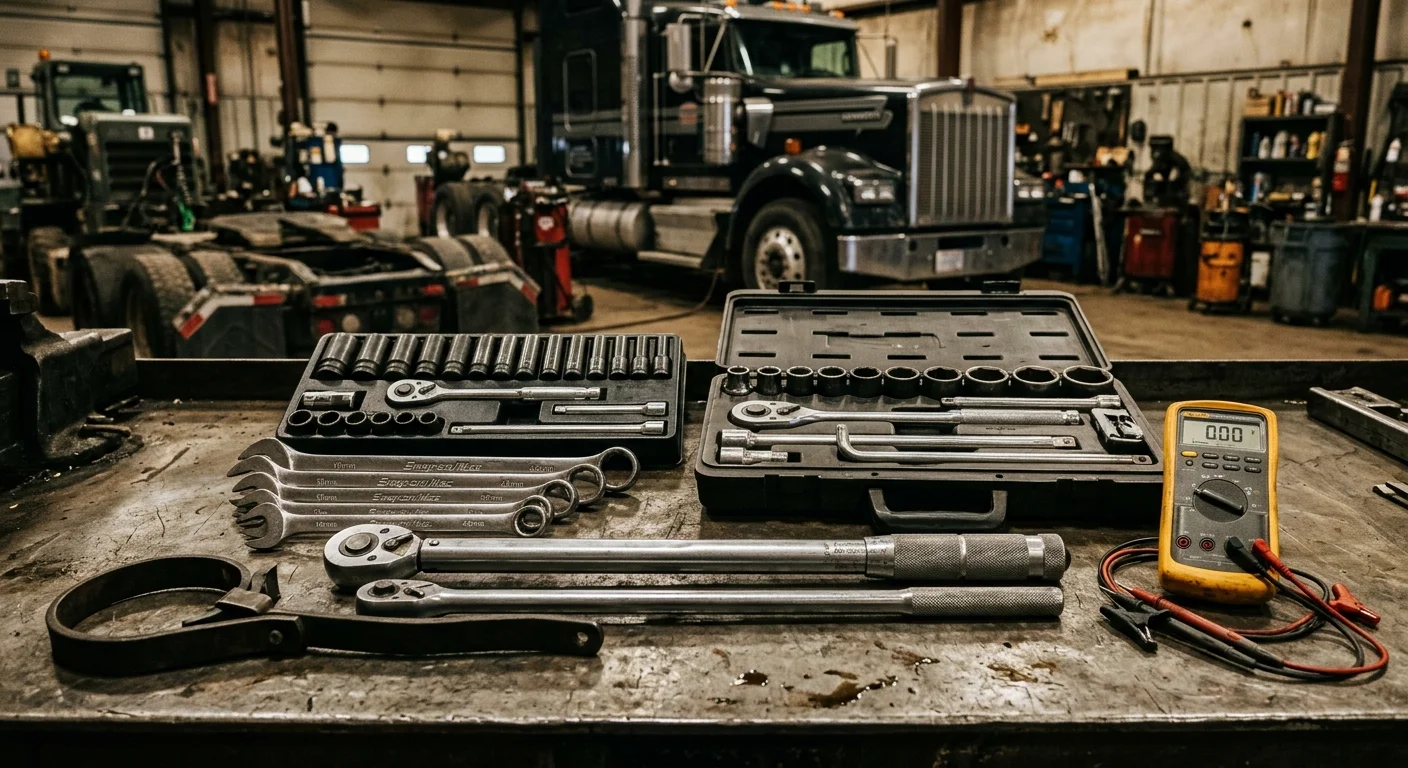
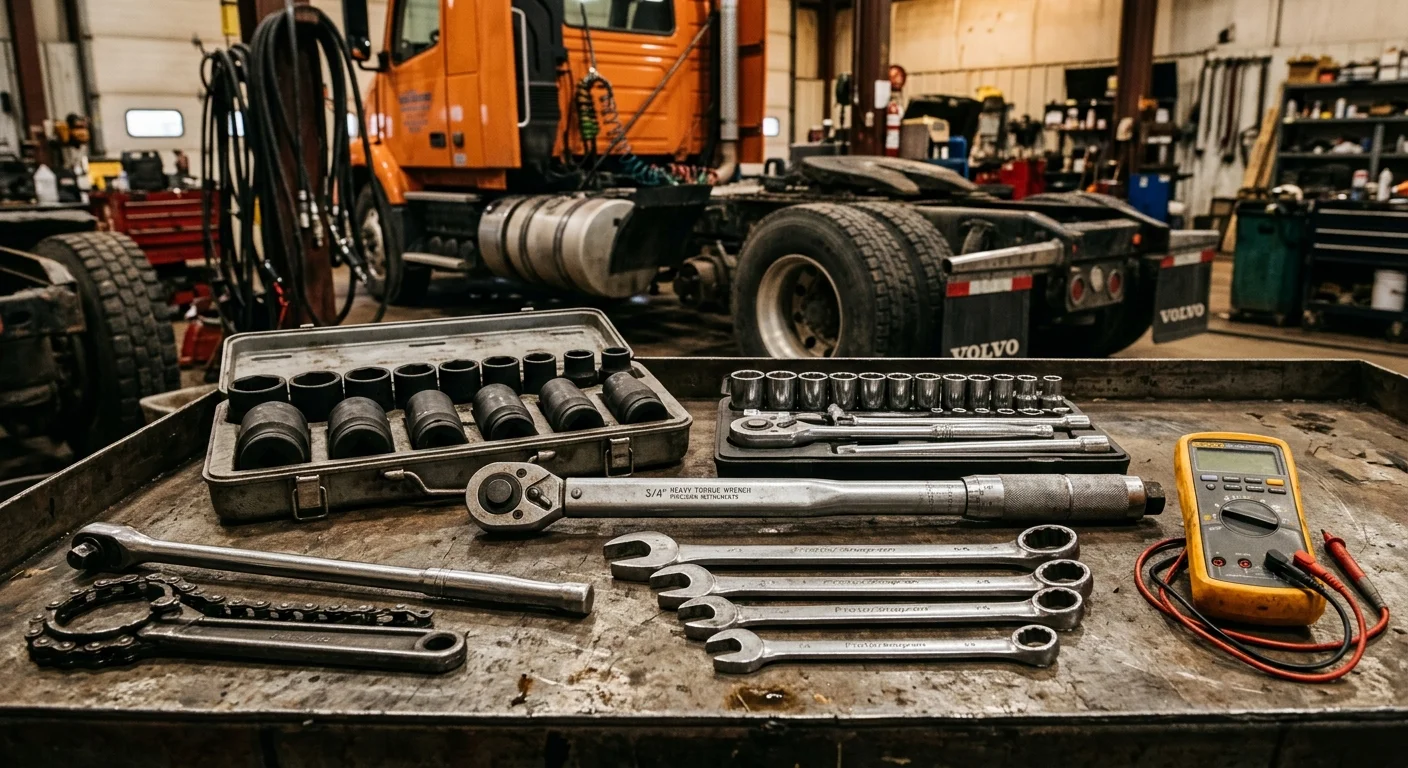
Diesel work puts automotive socket sets to shame. You’ll need sockets in both 1/2” and 3/4” drive — the larger drive sizes that can handle the torque loads on heavy diesel hardware. Standard 3/8” drive sockets aren’t rated for the force involved in loosening large bolts on diesel engines and drivetrain components. You’ll want both metric and SAE (standard) coverage, because diesel equipment comes from manufacturers around the world and uses both systems.
Deep sockets are not optional — they’re a frequent requirement. Diesel engines have studs, exhaust bolts, and injector hardware where a standard-depth socket simply won’t reach. Build a set that includes deep versions of your most-used sizes.
Combination Wrenches
Box-end and open-end combination wrenches in both metric and SAE, covering a wider size range than automotive work typically demands. Large fasteners on diesel engines can run up to 36mm or larger. Make sure your set goes high enough.
Torque Wrenches
Torque specs on diesel engines are precise and critical. Over-torquing cylinder head bolts or connecting rod hardware causes failures. Under-torquing causes leaks and loosening. You’ll want at minimum a 3/4” drive torque wrench capable of reaching 250–600 ft-lbs for heavy fasteners, and a 1/2” drive model for moderate-torque work. A smaller 3/8” drive click-type for lower-torque hardware like fuel system fittings rounds out the set.
Breaker Bars
Some fasteners on diesel engines have been torqued to spec and have years of heat cycles on them. A ratchet alone won’t break them loose — and you don’t want to strip your ratchet trying. Breaker bars in 1/2” and 3/4” drive are how you get leverage without destroying your other tools.
Pry Bars
A set of pry bars — both a heavy duty straight bar and a smaller curved version — earns its keep on diesel work constantly: seating gaskets, nudging components into alignment, removing stuck parts. These are simple tools, but you’ll reach for them often.
Screwdrivers
A solid set of Phillips and flathead in multiple sizes, plus a set of Torx drivers. Modern diesel fuel systems and electronic components use Torx fasteners heavily.
Pliers
A set that includes slip-joint pliers, needle-nose, diagonal cutters, and at least one pair of heavy-duty locking pliers. The locking pliers see a lot of use holding things in position while you work.
Hammer
A ball-peen hammer is a workhorse in diesel work. Get a quality one with a solid steel or fiberglass handle.
Oil Filter Wrenches
Diesel engines take large filters, and they’re often torqued on by the previous oil change or by heat. An adjustable oil filter wrench — or better, a cap-style wrench sized for the filters on the engines you’ll be working on most — is something you’ll use at every oil service.
Multimeter
Even if you’re not a pure electrical specialist, diesel mechanics deal with electrical systems constantly. Sensors, solenoids, glow plugs, charging systems — a digital multimeter lets you test circuits, check resistance, and verify voltage without guessing. Get one rated CAT III or higher for work near vehicle electrical systems.
Tool Storage
A rolling tool chest and separate portable bag or box for the tools you carry to the vehicle. Diesel shops often have large floor space, and you need a home base for your gear as well as a way to bring what you need to wherever the work is.
Power Tools & Specialty Equipment
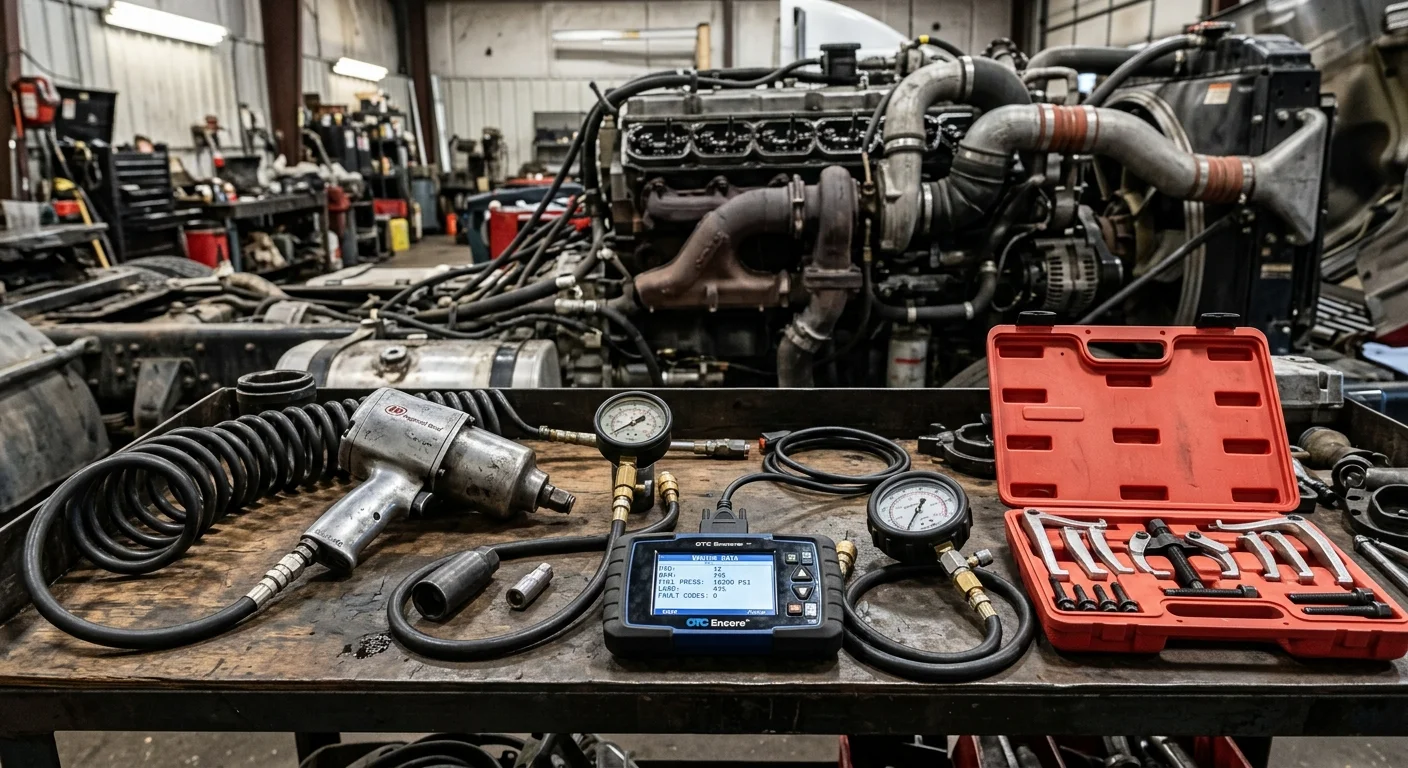
These are the tools you’ll add once you’re into full-time work or advanced program coursework. Some programs provide access to them; others expect you to supply your own over time.
Heavy-Duty Impact Wrench
A pneumatic or cordless impact wrench rated for heavy torque output is one of the most-used power tools in diesel work. Removing wheel lugs, axle hardware, and drivetrain components by hand would be impractical. Look for a 3/4” or 1” drive impact for the heaviest applications, and a 1/2” drive for more moderate tasks.
Diesel Compression Tester
Compression testing is a fundamental diagnostic step for diesel engines. Unlike gasoline engines, diesel engines have much higher compression ratios (often 16:1 to 22:1), so the gauge needs to handle pressures exceeding 600 PSI. A diesel-specific compression tester is not interchangeable with an automotive model — the threads and pressure ranges are different. This tool tells you quickly whether cylinders are holding compression and helps localize engine wear or ring problems.
Fuel Pressure Gauge (Diesel-Specific)
Diesel fuel systems operate at dramatically higher pressures than gasoline systems — common rail diesel injection systems can run at 20,000–30,000 PSI at the injectors. A fuel pressure test kit for diesel work includes high-pressure fittings, adapters for different injection system types, and hoses rated to handle those pressures without blowing out. Using an automotive fuel pressure gauge on a diesel common rail system is dangerous and won’t give meaningful readings.
Diesel Scan Tool (OBD-II and Proprietary Protocols)
Modern diesel engines are heavily computer-controlled. Fault codes, live data streams, resets, and calibrations all go through the scan tool. A generic OBD-II scanner handles some of this, but serious diesel diagnostic work requires scan tools with diesel-specific protocols — J1939 (used on commercial trucks), along with manufacturer-specific communication for brands like Cummins, Detroit Diesel, and Caterpillar. Better scan tools allow live data graphing, which is invaluable when chasing intermittent faults.
Bearing Pullers
Diesel drivetrain work involves removing and installing bearings and races regularly. A three-jaw puller and a slide hammer kit with the right adapters handle most of what you’ll encounter. Trying to improvise bearing removal without the right puller is a good way to damage components and put that cost on your tab.
Heavy-Duty Floor Jack and Jack Stands
A floor jack rated for the weight you’ll be lifting — which on commercial trucks can be several tons — combined with jack stands that match that rating. Never use stands rated for light automotive work under a diesel truck or heavy equipment component. This is not a corner to cut.
Diesel Engine Timing Tools (Engine-Specific)
Timing tools are engine-family-specific. As you specialize in certain platforms, you’ll acquire the lock pins, alignment tools, and timing fixtures that go with them. These are precision tools that don’t have generic substitutes.
Safety Gear & PPE
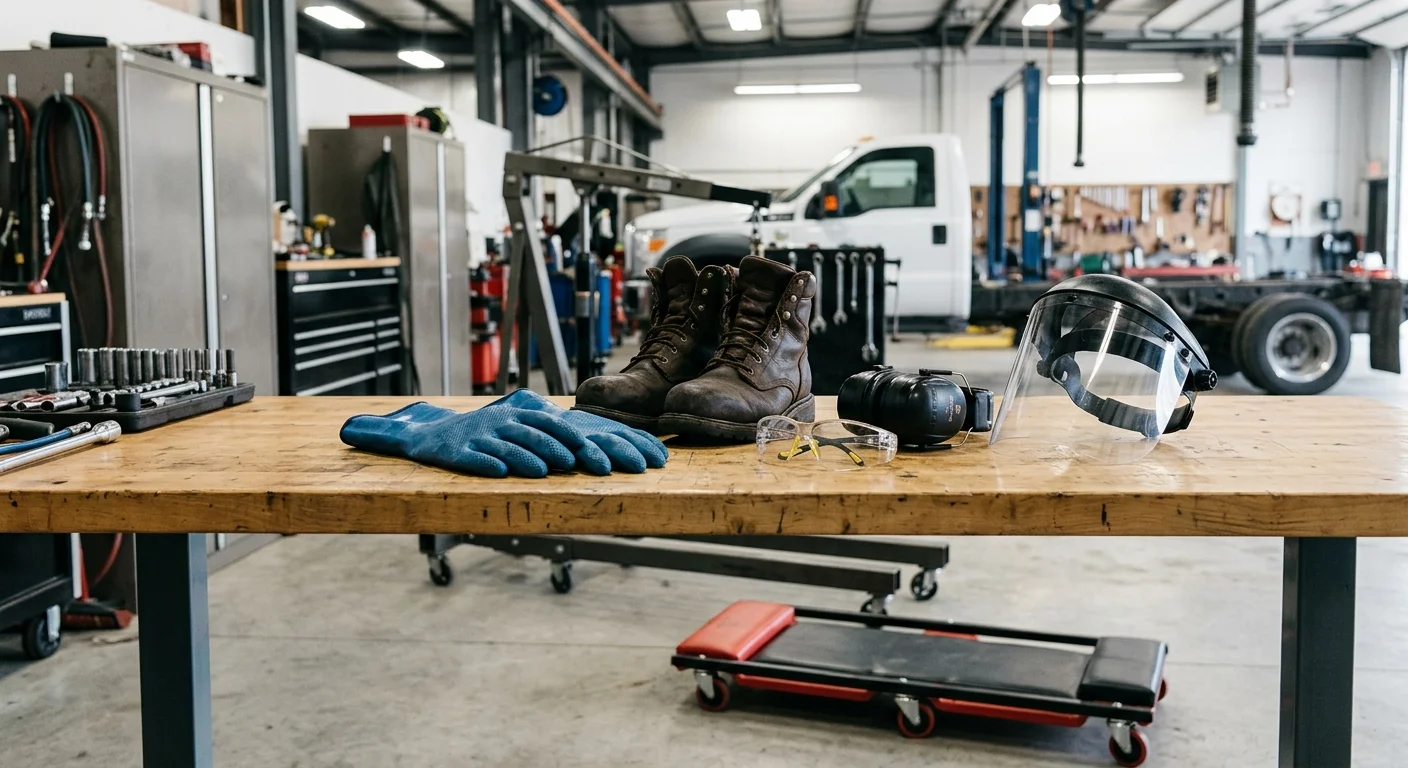
Diesel work has its own set of hazards — and some of them are different from what you encounter in automotive or other trades.
Safety Glasses
ANSI Z87.1-rated safety glasses go on before anything else and come off when you leave the shop. Diesel work generates metal chips, cleaning solvent spray, fuel mist, and debris. Side shields add protection when working underneath equipment.
Heavy-Duty Work Gloves
Diesel mechanics need gloves that hold up to abrasion, sharp edges, and chemical exposure from fuel, coolant, and DEF (diesel exhaust fluid). DEF is corrosive to metal and mildly irritating to skin — gloves during any DEF system service are non-optional. For electrical diagnostic work, switch to gloves with appropriate insulation ratings.
Steel-Toe Boots
The things that fall in a diesel shop are heavy. Cylinder heads, brake drums, and axle shafts can cause serious injury without proper foot protection. Look for ASTM F2413-rated boots with steel or composite toe caps, slip-resistant soles for shop floors, and ankle support for extended standing on concrete.
Hearing Protection
Running diesel engines for diagnostics, operating air compressors, and impact wrench use generate significant noise. OSHA’s hearing conservation standards require protection at noise levels of 85 dB or above as a time-weighted average — a running diesel engine easily clears that threshold. Earplugs or earmuffs are part of daily gear, not occasional extras.
Mechanic’s Creeper
Spending extended time on concrete working under vehicles leads to back and shoulder strain faster than most new technicians expect. A quality padded creeper with locking wheels keeps you mobile and protects your body over long shifts.
Chemical-Resistant Gloves
For work involving diesel exhaust fluid, refrigerants, solvents, or coolant flush procedures, disposable nitrile gloves provide skin protection that fabric work gloves don’t. Keep a box in your toolbox.
Face Shield
When working on fuel systems or pressure-testing cooling systems, a face shield provides protection beyond what glasses alone offer. It’s also the right call when using a parts washer or handling strong degreasers.
What to Look For When Buying
This section is deliberately brand-agnostic. Tool brands come and go in favor, and what a veteran diesel tech swears by may not be what’s right for your budget or your program. Focus on what the tool does, what specifications matter, and what price range gets you quality without overspending on features you won’t use as a student.
Socket Sets
What they do: Remove and install fasteners across the engine, drivetrain, suspension, and body.
Key features to compare: Drive size compatibility (1/4”, 3/8”, 1/2”, 3/4” — buy for the drive sizes you actually use), wall thickness (thicker walls handle more torque but may not fit in tight spaces), point count (6-point sockets grip fasteners better and are less likely to round them; 12-point allows easier socket placement but lower grip), material hardness (chrome vanadium for hand sockets, impact-rated chrome molybdenum for impact use), metric vs. SAE coverage.
Price range: A complete SAE + metric set in 1/2” drive runs $80–$250 depending on the number of pieces and material quality. Don’t use hand sockets on an impact wrench — buy impact-rated sockets separately.
Torque Wrenches
What they do: Apply a specific, measured amount of torque to fasteners to hit manufacturer specifications.
Key features to compare: Type (click-type is most common and practical; digital provides more accuracy), drive size and torque range (match the range to your most frequent applications — don’t torque a 10 ft-lb fitting with a 600 ft-lb wrench, you’ll be in the lower 10% of its range where accuracy suffers), calibration (torque wrenches drift with use; quality models come with a calibration certificate and can be recalibrated).
Price range: A reliable 1/2” drive click-type runs $50–$120. A 3/4” drive for heavy diesel fasteners runs $150–$400. Avoid very cheap torque wrenches — an inaccurate torque wrench is worse than not using one, because it gives you false confidence.
Breaker Bars
What they do: Provide high leverage for breaking loose stubborn fasteners without risking a ratchet mechanism.
Key features to compare: Drive size (match to your socket set), handle length (longer = more leverage, but mind the clearance in the space you’re working), swivel head (useful for tight angles), material and finish.
Price range: $20–$60. These are simple tools — spend more on length and material quality than on features.
Diesel Compression Tester
What it does: Measures cylinder pressure to assess engine health and identify worn rings, valves, or head gasket issues.
Key features to compare: Pressure rating (must handle diesel compression — look for gauges rated to at least 1,000 PSI), adapter thread compatibility with the engines you’ll service, hose quality (pressure hoses should be reinforced and rated for the application), case and storage (you’ll be transporting this and want the adapters to stay organized).
Price range: $80–$250 for a quality diesel-rated kit with multiple adapters.
Multimeter
What it does: Measures voltage, current, resistance, and continuity in electrical systems.
Key features to compare: True RMS measurement (essential for diesel electrical diagnostics on modern engines with non-sinusoidal signals), CAT III or CAT IV safety rating, input protection (vehicle electrical systems can spike), auto-ranging (saves time vs. manual ranging), display readability in a shop environment.
Price range: $30–$60 for a solid entry-level true RMS model. $100–$200 for professional models with data logging and graphing.
Impact Wrench
What it does: Removes and installs fasteners at high speed using rotational impact force.
Key features to compare: Drive size (3/4” or 1” for heavy diesel work, 1/2” for lighter tasks), torque output in ft-lbs (match to the fastener sizes you’re working on), air vs. cordless (pneumatic impact wrenches deliver more consistent torque; cordless offer mobility but require battery management), anvil length (compact anvils fit in tighter spaces).
Price range: $150–$400 for a quality 3/4” drive pneumatic model. Cordless equivalents run $250–$600 for models with adequate torque.
Safety Glasses
Key features to compare: ANSI Z87.1 rating (required), side shield coverage, anti-fog coating (shop temperature changes make this more valuable than it sounds), wraparound design, compatibility with prescription glasses if needed.
Price range: $8–$30 per pair. Buy several and keep them accessible throughout the shop.
Steel-Toe Boots
Key features to compare: ASTM F2413 rating, toe cap material (steel is heavier but proven; composite is lighter and non-conductive — relevant if electrical work is part of your duties), oil-resistant and slip-resistant outsole, ankle support height, comfort for extended standing on concrete (insole quality matters more than most new techs expect).
Price range: $80–$180 for quality boots that last. This is gear you wear every day — don’t shortchange yourself on fit and durability.
Budget Guide
Your costs as a student starting out and as a working professional are quite different. The good news is that you build the expensive kit gradually, over time, as your income supports it.
Student Starter Kit: $600–$1,200
This covers your day-one program requirements: socket sets in 1/2” drive (SAE and metric, including deep sockets), a set of combination wrenches, a 1/2” drive torque wrench, a breaker bar, screwdrivers and Torx drivers, a set of pliers, a basic multimeter, oil filter wrenches, and a tool bag or small rolling chest. At this level you’re buying functional mid-grade tools — not the cheapest, but not the top-tier professional lines either. That’s appropriate when you’re still learning your preferences.
Safety gear adds to this: safety glasses, work gloves, steel-toe boots, and hearing protection. Budget $150–$300 for PPE if you don’t already have it.
Many programs offer access to student discount tool programs through major tool vendors, which can reduce costs by 20–40%. Ask your program coordinator before you buy at retail.
Mid-Career Professional Setup: $2,500–$5,000
Once you’re a few years into working, your kit expands considerably. A heavy-duty impact wrench (3/4” drive), a diesel compression tester, a basic diesel scan tool with J1939 support, a slide hammer and bearing puller set, upgraded torque wrenches in multiple drive sizes, and a full-size rolling tool chest start bringing your total investment into this range.
Full Professional Setup: $6,000–$15,000+
An experienced diesel technician with a complete personal tool set — heavy-duty impact wrenches in multiple drive sizes, professional diesel scan tools with multi-platform support, full sets of specialty tools for the engine families they service regularly, a large rolling chest with organized storage, and complete PPE — can easily have $6,000–$15,000 or more invested. Some experienced techs report totals well above that. According to industry sources tracking diesel technician tool costs, a professional set can run $4,000–$15,000 or more depending on specialization.
This doesn’t all happen on day one. The path from student kit to professional setup typically spans several years of incremental purchases aligned with the work you’re actually doing.
Tool Care & Maintenance Tips
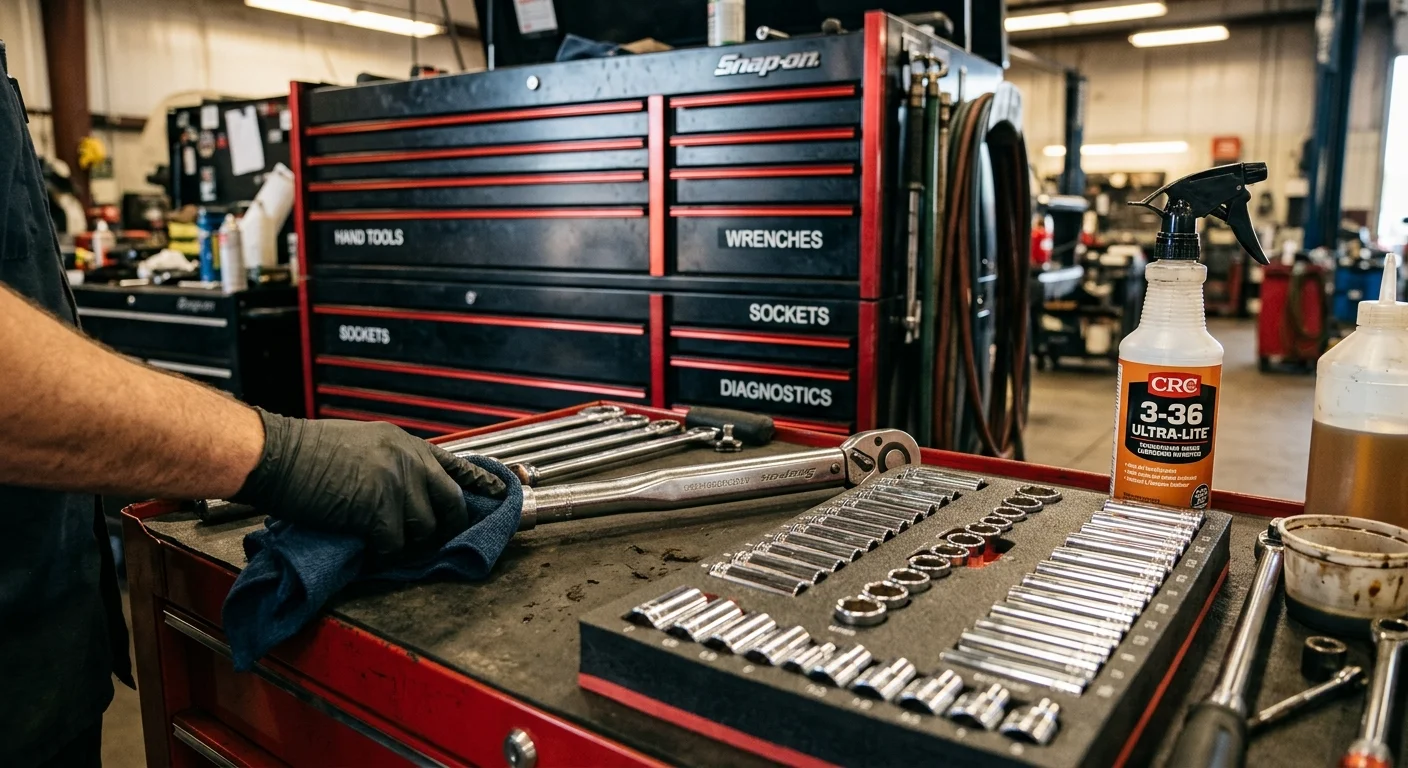
A diesel shop is harder on tools than most environments. Heat cycles, heavy use, chemical exposure, and physical abuse are part of the job. The mechanics who have the nicest tools after 20 years are the ones who took care of them from the start.
Keep tools clean. Wipe metal tools down after use to remove grease, oil, and coolant. These aren’t just cosmetic issues — grease buildup on ratchets and socket drives causes slipping and accelerates wear. A parts cleaning brush and shop rags cost almost nothing and extend tool life significantly.
Dry tools after washing. If you clean tools with a parts washer or solvent, dry them before storage. Trapped moisture accelerates rust, especially in drive tool internals where you can’t see it developing.
Store sockets and wrenches organized. Loose sockets rolling around a drawer get mixed up and damaged. Socket rails, drawer organizers, and wrench holders cost little and save a lot of time looking for the right size. Time spent hunting for tools is wasted billable time.
Inspect torque wrenches regularly. A torque wrench that’s been dropped, overloaded past its rated range, or stored under tension (left clicked at a torque setting rather than backed off to minimum) will give inaccurate readings. Get torque wrenches calibrated at least annually, or whenever they’ve taken significant abuse.
Service air tools. Pneumatic impact wrenches need a few drops of pneumatic tool oil before each use or at least daily. Neglected air tools seize up from lack of internal lubrication — it’s a preventable failure that voids warranties and destroys expensive equipment.
Inspect safety glasses and PPE. Scratched safety glasses reduce visibility and may compromise their impact rating. Replace them when they’re no longer clear. Check boot soles for wear — a slick boot sole on a wet shop floor is a hazard. Replace PPE on a schedule, not just when it’s obviously failed.
Keep a tool inventory. This sounds formal, but it’s practical. Knowing what you own, where it is, and when you last saw it prevents lost tools and helps with insurance claims if something gets stolen. A simple photo inventory by drawer is more than most mechanics do, and it’s enough.
Start Your Diesel Mechanic Career
Tools are the foundation, but they’re not the whole picture. If you’re still evaluating whether diesel mechanics is the right trade for you — what the day-to-day work actually looks like, what the pay trajectory is, how the job market is holding up, and what training paths lead there — read our complete guide on diesel mechanics career opportunities.
If you’re weighing a formal diesel technology program against an apprenticeship or on-the-job training, our apprenticeships explained article breaks down how each path works and what you’ll come out of each with. And if certifications are on your radar — ASE certifications matter in diesel work — trade certifications and licenses walks through what credentials actually move the needle.
Diesel mechanics keeps the freight moving, the construction sites running, and the buses on schedule. It’s skilled work with real demand and solid pay — and it starts with showing up equipped.
Sources
- U.S. Bureau of Labor Statistics — Occupational Outlook Handbook — “Diesel Service Technicians and Mechanics” — https://www.bls.gov/ooh/installation-maintenance-and-repair/diesel-service-technicians-and-mechanics.htm
- RDO Equipment Co. — “Diesel Mechanic Tools: A List of Tools You Need as a Technician” — https://www.rdoequipment.com/resources/careers/diesel-mechanic-tools-you-need-as-technician
- Fullbay — “Essential Heavy-Duty Equipment Tools For Your Shop” — https://www.fullbay.com/blog/heavy-duty-tools/
- OSHA — “Personal Protective Equipment” — https://www.osha.gov/personal-protective-equipment
- Heavy Duty Journal — “Essential Mobile Diesel Mechanic Tools: Complete Equipment Checklist” — https://heavydutyjournal.com/essential-mobile-diesel-mechanic-tools-complete-equipment-checklist/