Install or repair cables or wires used in electrical power or distribution systems. May erect poles and light or heavy duty transmission towers.
Electrical Power-Line Installers and Repairers
SOC: 49-9051 O*NET: 49-9051.00
Median Salary
$95,320
per year
Job Growth
🚀 10.3%
Much Faster (2024-2034)
Annual Openings
10.9
projected jobs/year
Education Level
High school diploma or equivalent
Job Zone 2
Install or repair cables or wires used in electrical power or distribution systems. May erect poles and light or heavy duty transmission towers.
What does a Electrical Power-Line Installers and Repairers do?
How much can you earn?
Entry Level
$51,470
10th percentile
Early Career
$67,270
25th percentile
Median
$95,320
50th percentile
Experienced
$109,740
75th percentile
Top Earners
$128,690
90th percentile
National Salary Distribution
10th
$51,470
25th
$67,270
Middle 50%
MEDIAN
$95,320
Mean: $91,970
75th
$109,740
90th
$128,690
Middle 50% of earners
Median salary
Mean (average)
Key Insights
- •Salary range spans $77,220 from entry level to top earners
- •Middle 50% earn between $67,270 and $109,740
- •Salary spread is 44.6% around the median, showing high variation
- •Total national employment: 131,070 professionals
What's the job outlook?
Job Market Intelligence
High Demand
Market demand
Medium Risk
Automation risk
Current Employment
National Employment:131,900
Top Industries
Utilities49.8%
Utilities49.8%
Electric Power Generation, Transmission and Distribution47.7%
10-Year Outlook
Growth Rate:+10.3%
Annual Openings:10,900
Employment Projections
2025 (Current)131,900
Current
2035 (Projected)145,500
+10.3%
+13,600
Employment Change
+10.3%
Growth Rate
10
Year Projection
Growth Category: Faster than average
Geographic Salary & Employment Data
Explore where Electrical Power-Line Installers and Repairers professionals work across the United States
Showing 15 of 50 locations
Texas
17,280 jobs$78,9401.46x
California
8,930 jobs$129,0400.58x
Florida
6,420 jobs$86,8700.77x
New York
5,840 jobs$121,2800.72x
North Carolina
5,650 jobs$77,2701.36x
Georgia
4,960 jobs$80,0801.20x
Ohio
4,260 jobs$93,1500.91x
Pennsylvania
4,150 jobs$106,2300.81x
Tennessee
3,900 jobs$83,6601.41x
Missouri
3,440 jobs$96,3601.39x
Oklahoma
3,290 jobs$76,0102.29x
Illinois
3,090 jobs$108,1200.60x
Kentucky
2,930 jobs$77,0201.74x
Virginia
2,920 jobs$76,5900.84x
Michigan
2,800 jobs$106,8900.75x
Understanding the Data
Location Quotient (LQ):
- • LQ > 1.0: More jobs than national average
- • LQ = 1.0: Same as national average
- • LQ < 1.0: Fewer jobs than national average
Data Source:
Bureau of Labor Statistics Occupational Employment and Wage Statistics (OEWS), May 2025
Key Growth Factors
- •Faster than average growth expected
- •High current market demand
What skills do you need?
Top 10 Most Important Skills
#1
Active Listening
100%
#2
Building and Construction
100%
#3
Near Vision
100%
#4
Troubleshooting
94%
#5
Multilimb Coordination
92%
#6
English Language
90%
#7
Monitoring
86%
#8
Arm-Hand Steadiness
82%
#9
Operations Monitoring
80%
#10
Education and Training
80%
Skills Overview
Active Listening
advanced5.0
100%
Building and Construction
advanced5.0
100%
Near Vision
advanced5.0
100%
Troubleshooting
advanced4.7
94%
Multilimb Coordination
advanced4.6
92%
English Language
advanced4.5
90%
Monitoring
intermediate4.3
86%
Arm-Hand Steadiness
intermediate4.1
82%
Skills are rated on a scale of 0-5, with 5 being the most important. The complexity level indicates how advanced the skill typically needs to be.
Filter:
Sort by:
Active Listening
advancedImportance100%
skills
5.0/5.0
Building and Construction
advancedImportance100%
knowledge
5.0/5.0
Near Vision
advancedImportance100%
abilities
5.0/5.0
Troubleshooting
advancedImportance94%
skills
4.7/5.0
Multilimb Coordination
advancedImportance92%
abilities
4.6/5.0
English Language
advancedImportance90%
knowledge
4.5/5.0
Monitoring
intermediateImportance86%
skills
4.3/5.0
Arm-Hand Steadiness
intermediateImportance82%
abilities
4.1/5.0
Operations Monitoring
intermediateImportance80%
skills
4.0/5.0
Education and Training
intermediateImportance80%
knowledge
4.0/5.0
Operation and Control
intermediateImportance74%
abilities
3.7/5.0
Problem Sensitivity
intermediateImportance74%
abilities
3.7/5.0
Highly Transferable Skills
These skills are valuable across multiple career paths, making career transitions easier:
Multiple Machine Tool Setters, Operators, and Tenders, Metal and Plastic82%
5 shared skills
Adhesive Bonding Machine Operators and Tenders67%
5 shared skills
Automotive Service Technicians and Mechanics67%
5 shared skills
Computer Numerically Controlled Tool Operators67%
5 shared skills
Cooling and Freezing Equipment Operators and Tenders67%
5 shared skills
Derrick Operators, Oil and Gas67%
5 shared skills
Skills by Career Stage
Entry Level
Must Have:
- ✓Active Listening
- ✓Monitoring
- ✓Building and Construction
- ✓English Language
- ✓Education and Training
Learn on the Job:
- →Quality Control Analysis
- →Transportation
- →Mechanical
Mid Career
Expected:
- ✓Troubleshooting
- ✓Operations Monitoring
- ✓Active Listening
- ✓Monitoring
- ✓Building and Construction
Senior Level
Mastery Required:
- ★Troubleshooting
- ★Active Listening
- ★Building and Construction
- ★English Language
- ★Education and Training
Skill Development Tips
- •Focus on developing the top 5 skills first - they have the highest impact on career success
- •Transferable skills open doors to related careers and provide flexibility
- •Balance technical skills with soft skills for well-rounded professional development
- •Entry-level positions prioritize foundational skills that can be built upon over time
What technology will you use?
Technology & Digital Skills
Essential technology proficiencies for Electrical Power-Line Installers and Repairers
Technology Intensity
High
Digital Literacy Requirements
This career requires advanced digital literacy
1
Basic
2
Intermediate
3
Advanced
4
Expert
Key Digital Competencies:
Proficiency with specialized softwareTechnical documentationData analysis toolsSystem integration
🔥
Hot Technologies in Demand
These technologies are currently trending and highly sought after in this field
Bentley MicroStation
🔥 Hot TechMicrosoft Outlook
🔥 Hot TechMicrosoft Office software
🔥 Hot TechMicrosoft Excel
🔥 Hot TechZoom
🔥 Hot TechMicrosoft Word
🔥 Hot TechTechnology Stack
Technology Stack Overview
Key technologies used in this career
Bentley MicroStation
Microsoft Outlook
Microsoft Office software
Microsoft Excel
Zoom
Microsoft Word
📚 Technology Learning Resources
Recommended Certifications
- •Vendor-specific software certifications
- •Industry-recognized technology credentials
- •Professional development courses
Online Learning Platforms
- •LinkedIn Learning - Comprehensive technology courses
- •Coursera - University-level programs
- •Udemy - Practical skills training
💡 Technology Skill Development Tips
- •Focus on mastering hot technologies first - they're currently most in-demand
- •Build a portfolio demonstrating your proficiency with key tools and software
- •Stay current through continuous learning - technology evolves rapidly
- •Consider vendor certifications to validate your skills to employers
What's the work environment like?
🏢
Location
MOSTLY INDOOR
💪
Physical Demand
HIGH
👥
Team Orientation
CONSTANT TEAM
🤝
Customer Interaction
FREQUENT
💡Is This Work Environment Right for You?
Consider these factors when evaluating if you'll thrive in this work environment:
- •Are you comfortable working in mostly indoor environments?
- •Can you meet high physical demands?
- •Do you enjoy constant team team environments?
- •Are you comfortable working with safety protocols and protective equipment?
What are the key tasks?
Tasks & Responsibilities
21
Core Tasks
8
Daily Tasks
20
Work Activities
0
Emerging Tasks
Filter:
Sort by:
General Responsibilities (18)Documentation & Record-Keeping (1)Communication & Coordination (1)Planning & Development (1)
1
Adhere to safety practices and procedures, such as checking equipment regularly and erecting barriers around work areas.
🔴Daily
Importance:
General Responsibilities100% perform100%
2
Open switches or attach grounding devices to remove electrical hazards from disturbed or fallen lines or to facilitate repairs.
🔴Daily
Importance:
General Responsibilities97% perform98%
3
Climb poles or use truck-mounted buckets to access equipment.
🔴Daily
Importance:
General Responsibilities94% perform96%
4
Place insulating or fireproofing materials over conductors and joints.
🔴Daily
Importance:
General Responsibilities91% perform94%
5
Install, maintain, and repair electrical distribution and transmission systems, including conduits, cables, wires, and related equipment, such as transformers, circuit breakers, and switches.
🔴Daily
Importance:
Documentation & Record-Keeping88% perform92%
6
Identify defective sectionalizing devices, circuit breakers, fuses, voltage regulators, transformers, switches, relays, or wiring, using wiring diagrams and electrical-testing instruments.
🔴Daily
Importance:
General Responsibilities85% perform90%
7
Drive vehicles equipped with tools and materials to job sites.
🔴Daily
Importance:
General Responsibilities82% perform88%
8
Coordinate work assignment preparation and completion with other workers.
🔴Daily
Importance:
Communication & Coordination79% perform86%
9
Inspect and test power lines and auxiliary equipment to locate and identify problems, using reading and testing instruments.
🟡Weekly
Importance:
General Responsibilities76% perform84%
10
String wire conductors and cables between poles, towers, trenches, pylons, and buildings, setting lines in place and using winches to adjust tension.
🟡Weekly
Importance:
General Responsibilities73% perform82%
💡 Key Takeaways
- •Daily tasks focus primarily on general responsibilities activities
- •33% of tasks are performed by most workers in this occupation
- •Career advancement brings increased leadership and strategic responsibilities
What career paths are available?
Career Pathways
0
Advancement Opportunities
0
Lateral Move Options
0%
Avg. Salary Increase
Advancement Opportunities
Typical career progression paths from Electrical Power-Line Installers and Repairers
💡 Career Planning Tips
- •Most successful advancement happens after 3-5 years of experience
- •Lateral moves can provide valuable cross-functional experience for future leadership roles
- •Focus on developing skills that are transferable across multiple career paths
- •Consider industry trends when planning long-term career moves
Is this career right for you?
Personality & Values Fit
Is This Career Right for You?
Electrical Power-Line Installers and Repairers professionals typically have a RCI Holland code and highly value support
RRealistic
CConventional
IInvestigative
Important Personality Traits
Work styles that contribute to success as a Electrical Power-Line Installers and Repairers
Attention to Detail
Very ImportantAttention to Detail
Importance Level4.48
Integrity
Very ImportantIntegrity
Importance Level4.27
Dependability
Very ImportantDependability
Importance Level4.25
Self-Control
Very ImportantSelf-Control
Importance Level4.24
Cooperation
Very ImportantCooperation
Importance Level4.19
Persistence
Very ImportantPersistence
Importance Level4.13
Complete Work Styles Profile
Attention to Detail
4.5
Integrity
4.3
Dependability
4.3
Self-Control
4.2
Cooperation
4.2
Persistence
4.1
Stress Tolerance
4.1
Initiative
4.0
Achievement/Effort
4.0
Adaptability/Flexibility
3.9
💡 Tips for Career Fit Success
- •While personality fit is important, skills can be developed with practice and training
- •Consider informational interviews to better understand the day-to-day personality requirements
- •Work environments vary by employer - research specific companies for cultural fit
- •Your interests and values may evolve - reassess periodically throughout your career
What education is required?
Education Level
High school diploma or equivalent
Typical duration: High school diploma or GED
Preparation Level
Job Zone 2
Some Preparation Needed
Experience Needed
Some previous work-related skill, knowledge, or experience may be helpful
📚 Education Requirement
Required Level:High school diploma or equivalent
These occupations usually require a high school diploma and may require some vocational training or job-related course work.
Training:
Training of a few months to a year
💼 Experience Requirement
Some previous work-related skill, knowledge, or experience may be helpful
Common pathways to gain experience:
- • Some previous work-related skill, knowledge, or experience
- • Vocational school programs (6 months to 2 years)
- • Industry certifications helpful
2
Job Zone Two: Some Preparation Needed
These occupations usually require a high school diploma and may require some vocational training or job-related course work.
Some previous work-related skill, knowledge, or experienceVocational school programs (6 months to 2 years)Industry certifications helpful
Ready to Start Your Journey?
Explore educational programs that can help you become a Electrical Power-Line Installers and Repairers.
Browse Training Programs →The Apprenticeship Route: Earn While You Learn
You don't necessarily need to pay for school to enter this field. There are 659 registered apprenticeship sponsors for this occupation in the U.S. DOL system — including 230 union/joint labor-management programs. Apprentices earn a wage from day one, typically starting at 40–50% of the journeyman rate, and finish with no tuition debt.
Most sponsors: IN (67) , TX (56) , KS (45) , CO (43) , OK (29)
How apprenticeships work →Source: U.S. Department of Labor, Registered Apprenticeship sponsors (apprenticeship.gov)
Trade Colleges That Train for Electrical Power-Line Installers and Repairers
Top trade colleges by completions in fields that prepare students for this career.
Sonoran Desert Institute
Tempe, AZ
3.3k program completions/year
Ivy Tech Community College
Indianapolis, IN
2.9k program completions/year
South Florida Institute of Technology
Miami, FL
2.4k program completions/year
Central Georgia Technical College
Warner Robins, GA
1.9k program completions/year
Texas State Technical College
Waco, TX
1.3k program completions/year
Jefferson Community and Technical College
Louisville, KY
1.2k program completions/year
Chattahoochee Technical College
Marietta, GA
1.2k program completions/year
Universal Technical Institute of Texas Inc.
Houston, TX
1.1k program completions/year
St Philip's College
San Antonio, TX
1.1k program completions/year
River Parishes Community College
Gonzales, LA
1.1k program completions/year
WyoTech
Laramie, WY
1.1k program completions/year
Universal Technical Institute of Arizona Inc
Avondale, AZ
1.0k program completions/year
From the Blog
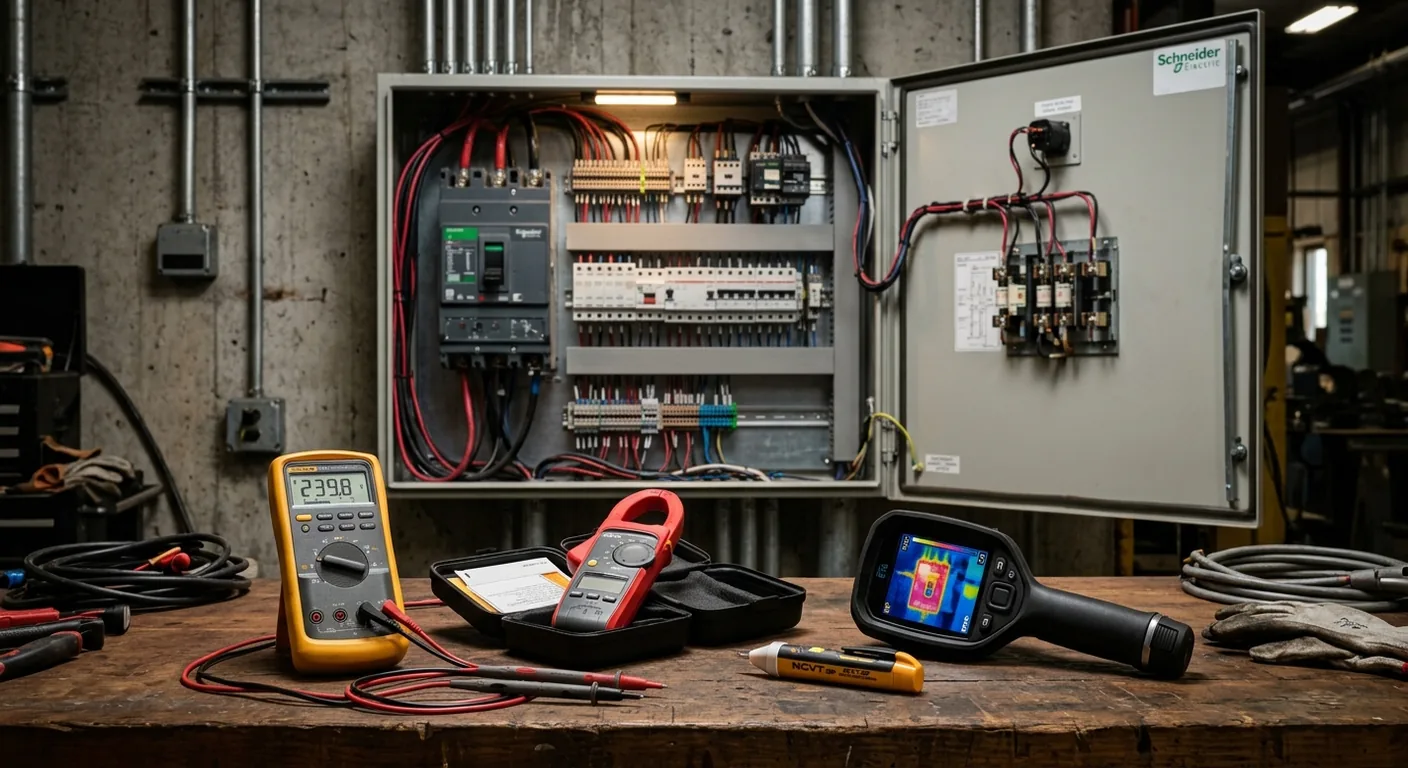
Tools & Equipment
Electrical Testing & Diagnostic Equipment: A Field Guide
A practical guide to the testing and diagnostic tools every electrician needs — from multimeters and clamp meters to thermal imagers and power quality analyzers.
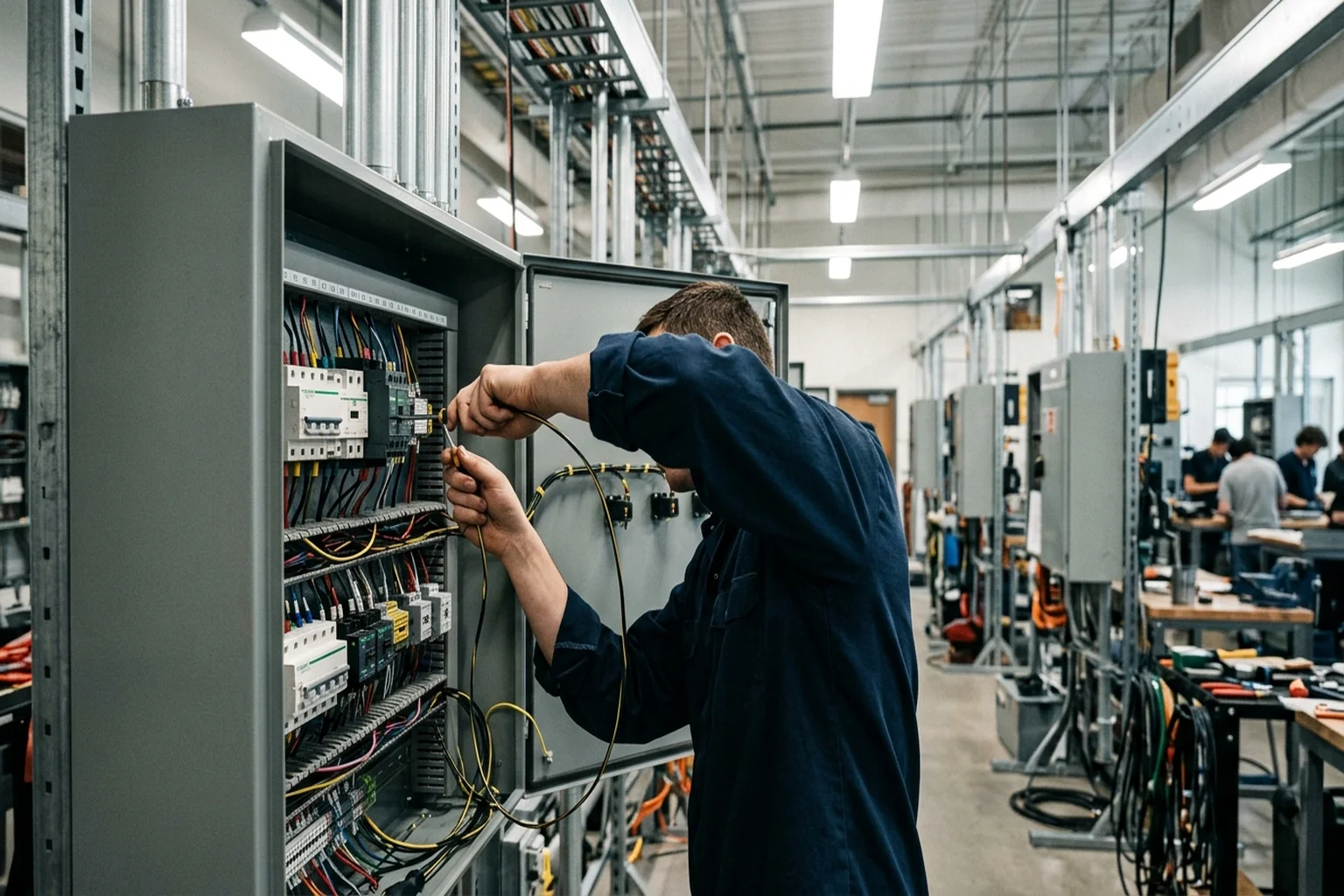
Trade Programs
Best Electrician Schools and IBEW/NECA Apprenticeships: How to Pick the Right Training Path
Trade school, IBEW/NECA union apprenticeship, or non-union ABC/IEC route — the three real paths to electrician licensure compared on cost, timeline, pay progression, and long-term earnings.
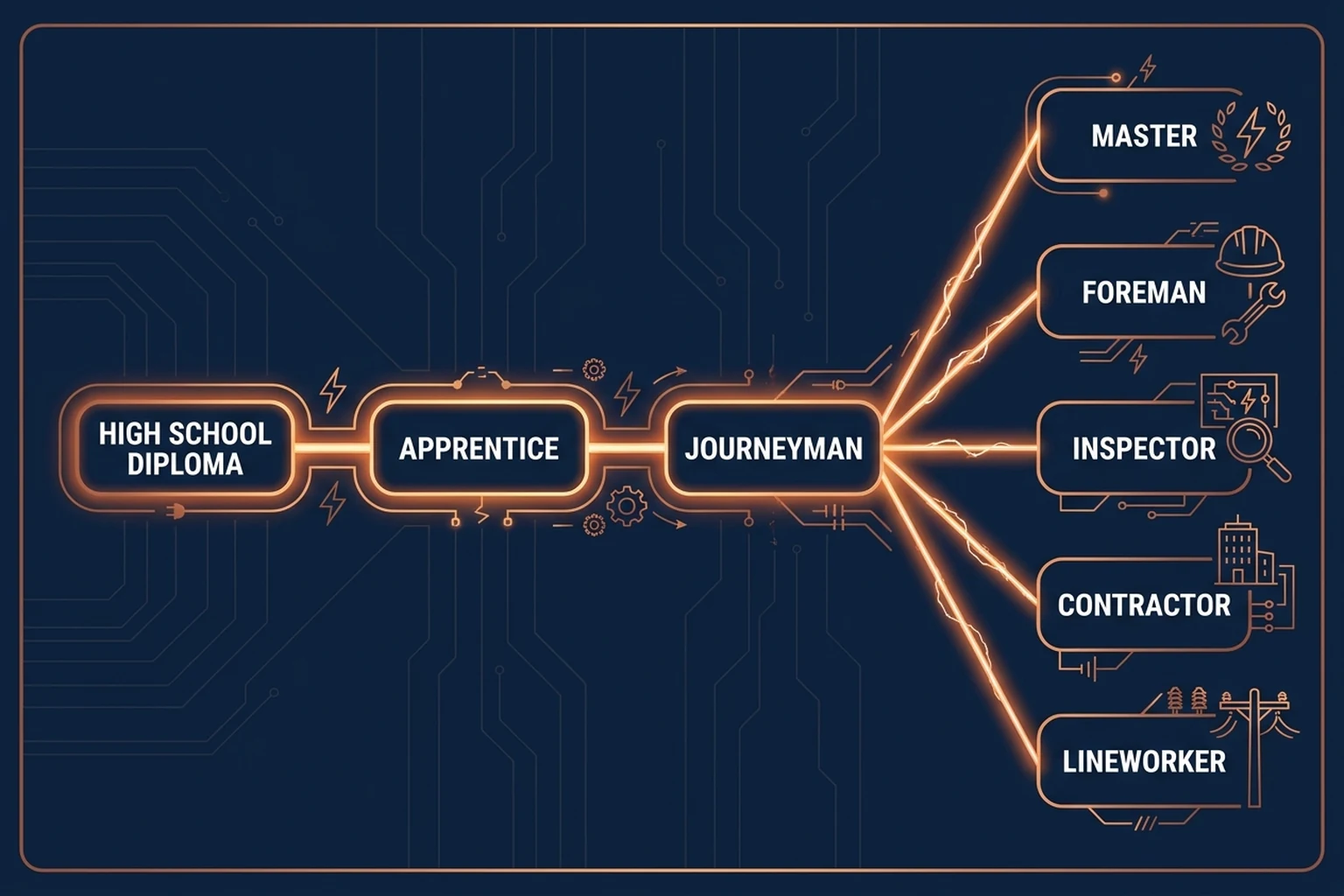
Career Guidance
Electrician Career Paths: From Apprentice to Master, Inspector, or Contractor
The full electrician career map: entry requirements, the apprenticeship, and the five branches after journeyman — what each pays and which are actually growing.