
A 28-year-old diesel mechanic in Tennessee, diagnosed with ADHD at 24 after two failed attempts at office jobs, recently described his workday this way: “Every truck is a different problem. I’m walking, listening, climbing, thinking. I get a half-dozen small wins before lunch. I have never once watched the clock.” That experience is not universal — ADHD is a wide-ranging neurotype, not a job-fit prescription — but it lines up with what the workplace literature has been documenting for years.
A 2024 systematic review in Neurodiversity found that workers with ADHD report thriving in environments featuring challenge, novelty, multitasking, fast-paced activities, physical labor, and active learning. That description fits a substantial slice of the skilled trades better than it fits most desk careers. The match isn’t accidental. Many trades are built around the same conditions — variable problems, embodied work, real-time feedback, urgency — that the ADHD literature flags as motivational fuel.
This guide is for adults whose ADHD traits or strong kinesthetic learning preferences make conventional sit-still work feel like swimming upstream. We’ll cover which trades commonly align with novelty-seeking, movement, and urgency; which demand the kind of sustained detail-focus that can be harder to deliver consistently; and how to figure out the difference for yourself. Career guidance, not medical advice — and we cite our ADHD-aware sources by name so you can read the originals.
TL;DR: Key Takeaways
- ADHD-aware organizations are explicit that there’s no single “ADHD job.” ADDA and CHADD both emphasize individual fit. The traits clustered under ADHD — novelty-seeking, urgency-driven focus, physical restlessness — align with many trades, not all of them.
- A 2024 Neurodiversity systematic review identifies novelty, multitasking, fast-paced activity, physical labor, and active learning as workplace conditions where ADHD workers commonly do their best work.
- High-variety, high-urgency trades — emergency electrical service, mobile HVAC, diesel and auto mechanics, EMT, and welding fabrication — pay BLS medians from $39,410 to $74,420 per year.
- Trades requiring sustained micro-focus — electronics repair, some inspection work, surveying — can still be a good fit if the role is interest-driven, but they’re not a default match for high-distractibility profiles.
- Kinesthetic learners — people who learn fastest by doing rather than reading or listening — tend to thrive in apprenticeship-based training, where 80%+ of learning happens on the job.
- Self-employment appeals to many adults with ADHD because it converts variety, urgency, and autonomy into the structure of the work itself. Service trades (plumbing, electrical, HVAC, locksmithing) all support solo or small-shop models.
- Trade selection is the lever, not “trying harder.” If your previous jobs failed you, that’s often a person-environment fit problem rather than a personal one.
What the ADHD Research Actually Says About Career Fit
ADDA, the Attention Deficit Disorder Association, is explicit that ADHD as a diagnosis tells you about a shared set of traits — not about which career you should pick. Their guidance centers on personal exploration: which tasks energize you, which drain you, whether you want movement, what kind of supervision helps you finish things. Trades are not “the ADHD career.” They are a category where common ADHD traits frequently translate into job-fit advantages.
What the research consistently identifies as ADHD workplace strengths: the 2024 systematic review by Hotte-Meunier and colleagues synthesizes studies pointing to determination, resilience, multitasking under pressure, creativity, and hyperfocus on intrinsically motivating tasks. Workers with ADHD reported their best performance in environments with challenge, novelty, fast pace, and physical labor — with hyperfocus emerging “especially when the work-related task was interesting, when deadlines were pressing or in crises/emergency situations.” CHADD reinforces this, noting that those with hyperactivity often “do better in jobs that allow a great deal of movement” and that adults with ADHD are commonly motivated by intensity and urgency.
Three traits emerge repeatedly across the ADHD-aware career literature:
- Novelty-seeking — engagement that depends on the problem being new, not routine.
- Urgency-driven focus — performance that climbs when stakes and deadlines are real.
- Physical/kinesthetic engagement — sustained attention that comes more easily when the body is involved.
These three traits map cleanly onto a specific subset of the trades. They map poorly onto cubicle work, long-form writing, repetitive data entry, and any role whose primary measure of success is sitting still for eight hours.
Trades Where Common ADHD Traits Often Align
This isn’t a ranking — it’s a matching exercise. For each trade below, we identify the ADHD-relevant trait that most often makes it a fit. None of these are universal. A diesel mechanic with severe paperwork-related challenges can still struggle with shop billing; a welder who finds welding boring is going to be unhappy regardless of neurotype. Self-knowledge is the prerequisite.
Comparison: Trade Fit by ADHD-Relevant Trait
| Trade | Variety of tasks | Hands-on % | Median pay (BLS, 2024) | Best-fit ADHD trait |
|---|---|---|---|---|
| Electrician (service & troubleshooting) | High | ~90% | $62,350 | Novelty (new fault every call) |
| HVAC technician (mobile service) | High | ~85% | $59,810 | Variety + movement |
| Diesel / heavy-vehicle mechanic | High | ~95% | $60,970 | Body movement + variety |
| Automotive service technician | Moderate–High | ~90% | $49,670 | Body movement |
| EMT / paramedic | Very high | ~80% | $41,720 / $59,200 | Urgency + novelty |
| Welder (fabrication, varied projects) | Moderate | ~95% | $50,490 | Hyperfocus + tactile |
| Plumber (service & repair) | High | ~85% | $63,420 | Variety (every call different) |
| Wind turbine technician | High | ~90% | $62,580 | Novelty + movement |
| Line installer / electrical lineworker | High | ~95% | $92,560 | Urgency (outages) + movement |
| Industrial machinery mechanic | High | ~90% | $64,920 | Variety + problem-solving |
Sources: BLS Occupational Outlook Handbook, May 2024 data. Hands-on % is an editorial estimate of working hours spent in physical/diagnostic work versus paperwork.
The “Best-fit ADHD trait” column is descriptive, not prescriptive — it identifies the trait most likely to be activated in that trade. If novelty isn’t a strong driver for you, the trades flagged for novelty may not stand out. Variety of tasks isn’t the same as variety of work environments either: a diesel mechanic sees high task variety inside a stable shop, while an EMT sees both. If “same building every day” is a problem for you, weight environmental variety more heavily.
Why Service and Repair, Specifically
The table leans heavily on service and repair roles rather than new construction installation. That’s deliberate. New construction involves long cycle times — framing for weeks, rough-in electrical for weeks, the same task until the building moves to the next phase. Service work is the opposite: every call is a new building, a new fault to diagnose, the cognitive shape of the day closer to a series of small puzzles than a single long task. For adults whose attention is interest-driven, that structural difference matters more than the trade itself.
Trades That Demand Sustained Micro-Focus
Not every trade lines up with high-distractibility profiles. These can still be excellent fits — particularly when the work captures genuine interest and triggers hyperfocus — but they’re not where someone who struggles with sustained quiet attention should default.
- Electronics and small-instrument repair. Long sessions of fine-detail work at a static workbench. Hyperfocus-prone profiles sometimes love it; restlessness-prone profiles often don’t.
- Surveying and some inspection roles. Methodical documentation, sustained attention to detail, significant paperwork. Building inspection has site variety, but the core demand is careful checking against code.
- CNC machining and precision manufacturing. Setting up the machine is varied and tactile; running the machine is monitoring and waiting. Depends on the shop and your tolerance for the monitoring phase.
- Quality control / lab technician roles. Repetitive sample handling and documentation. Often a poor fit for high-distractibility profiles even though the work is “hands-on” in a narrow sense.
The pattern: hands-on alone doesn’t guarantee fit. Varied hands-on work with real-time feedback usually does.
Kinesthetic Learning and Why Apprenticeships Work
Many adults who struggled in classroom-heavy education learn quickly when they can do the thing rather than read about it. Education researchers call this kinesthetic learning, and studies of kinesthetic-leaning students with ADHD consistently find improved engagement and retention when learning involves movement and active doing — see Lawrence (2022) on parental perceptions of kinesthetic learning for one synthesis. The implication for career planning is concrete: training format matters as much as the trade you pick.
Most skilled trades offer two training paths. One is school-first — a six-month to two-year certificate or associate program with classroom and lab work, then employment afterward. The other is apprenticeship-first — paid employment from day one, with classroom hours layered in (often 144 per year) alongside roughly 2,000 hours per year of supervised on-the-job training. For a four-year electrical apprenticeship, that’s about 8,000 hours of hands-on work and roughly 576 hours of classroom time — a work-to-classroom ratio near 14 to 1.
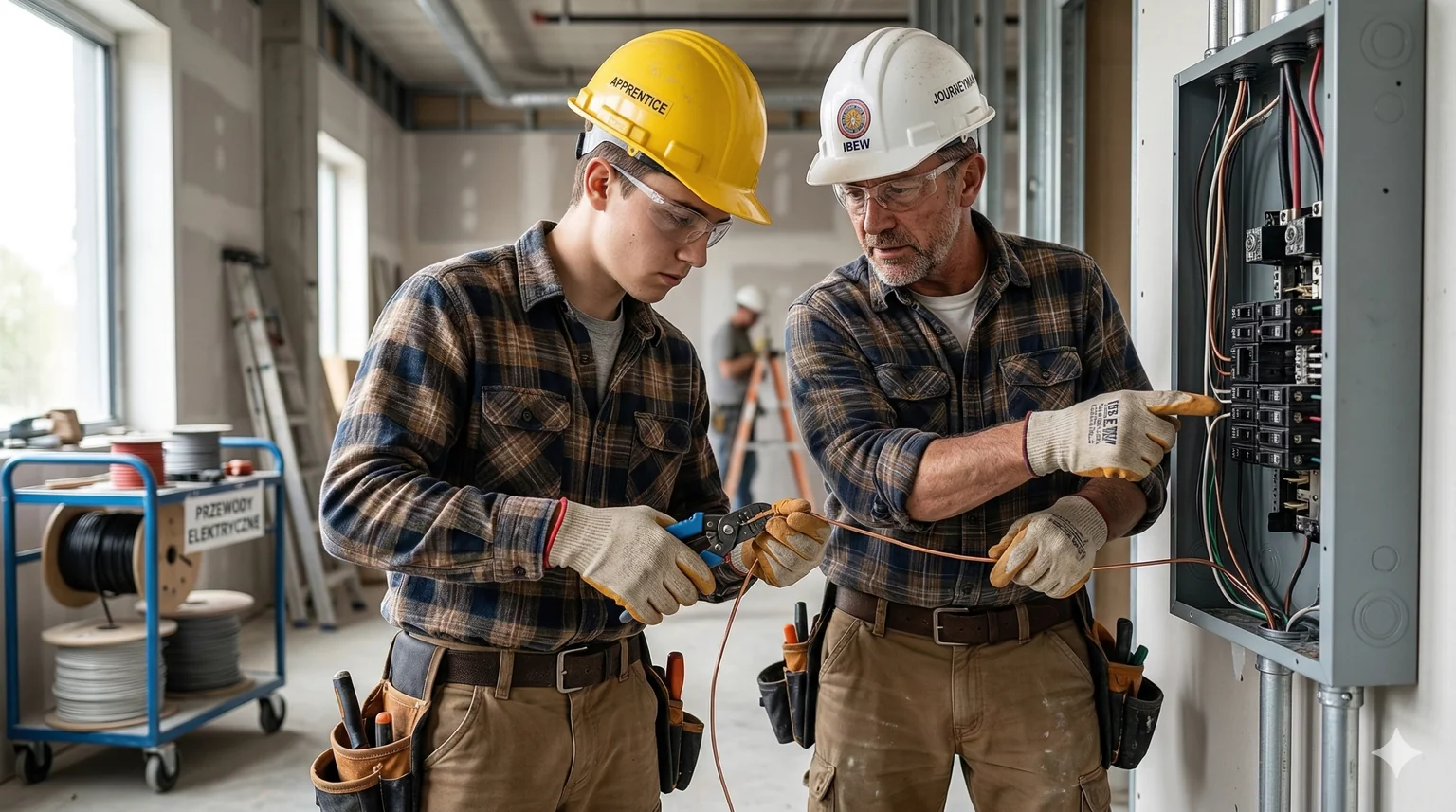
For kinesthetic learners, that ratio is the point. You’re learning by doing the actual work, with an experienced journey worker beside you, while getting paid. The classroom reinforces what you already touched that week. Our apprenticeships explained guide walks through how to find registered apprenticeships in your area, and the choosing the right trade program guide covers how to evaluate any program against your own learning style. If you’ve experienced traditional school as something to survive rather than learn from, weight apprenticeship paths heavily.
Trade-Specific Notes
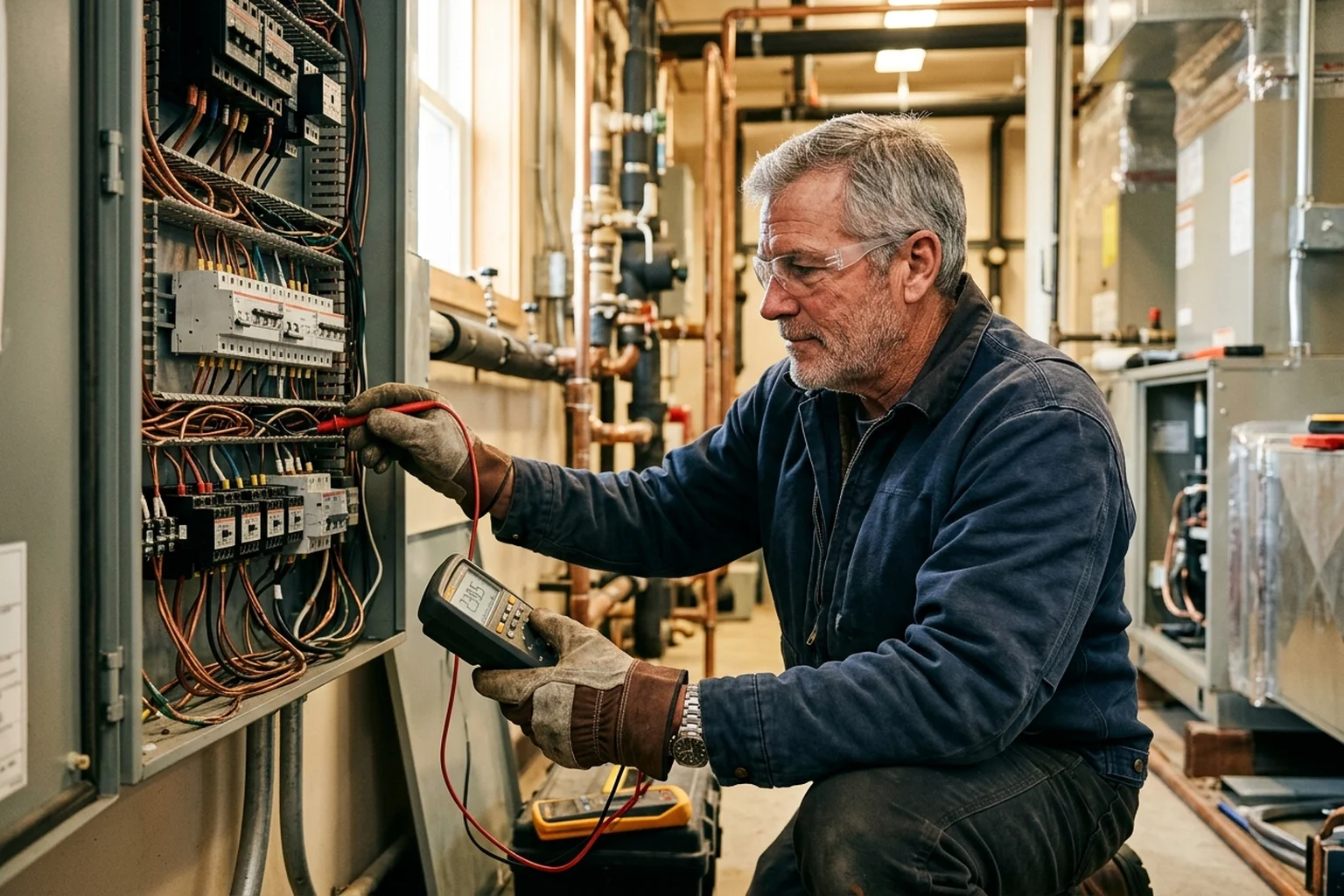
Emergency electrical service and lineworker. Service electricians troubleshoot faults — each call a small forensic investigation. Lineworkers restoring power after storms face the same cognitive shape at higher stakes: time-pressured, weather-affected, physically demanding. Line installer median pay is $92,560 (BLS). Trade-offs: shift work, on-call rotation, and physical demands that don’t ease with age.
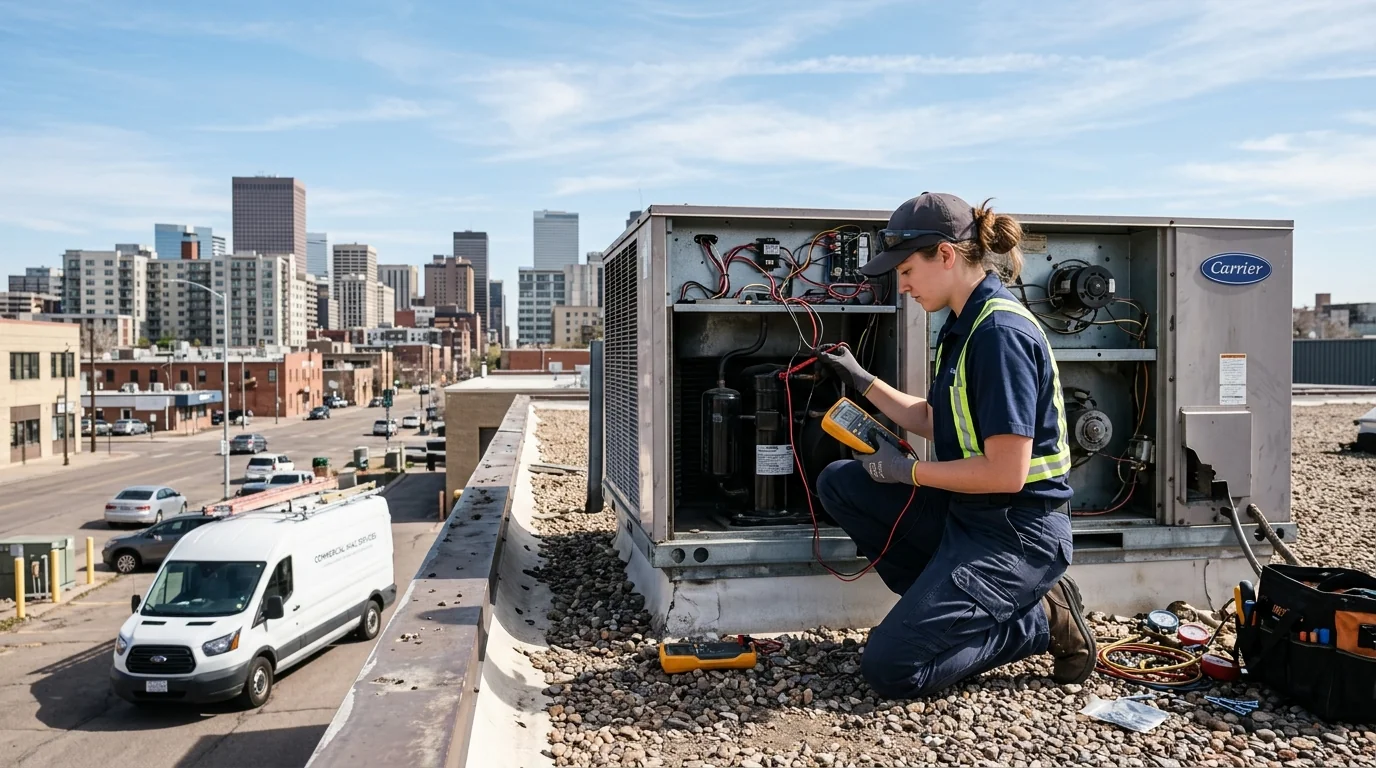
Mobile HVAC service. HVAC technicians driving site-to-site may be the closest match to the “fast-paced, novel, physical, autonomous” profile in the ADHD workplace literature. Different equipment, different buildings, different faults — diagnose, fix, drive on. Median pay $59,810, 9% projected growth through 2034 (BLS).
Diesel and heavy-vehicle mechanics. Different truck, different fault, half a dozen wins before lunch. Variety and physical engagement built into the structure. Median pay $60,970 (BLS). Employer matters: a busy dealership shop and an independent garage offer completely different daily rhythms. Visit before you commit.
EMT and paramedic. The urgency dimension is unusually strong. Adults whose attention sharpens in emergencies often find paramedic work fits the cognitive shape of their brain in ways that surprise them. EMT median $41,720; paramedic $59,200 (BLS). Genuinely stressful work — the mental health implications are worth thinking through, and our mental health and work-life balance in the trades guide covers the trade-offs.
Welding (fabrication). Welding itself is intensely focused, tactile, visually engaging — a setting where hyperfocus is commonly reported. Fabrication adds variety: different drawings, geometries, materials. Median $50,490 (BLS), with specialty welding paying substantially more. Production welding (same part 200 times) is a different cognitive shape and not what we’re describing.
Honest Caveats
Several things this guide is not claiming, because the ADHD-aware sources we’re citing don’t claim them either:
ADHD does not “give” anyone trade skills. Novelty-seeking and urgency-driven focus may make certain trade environments feel motivating rather than draining, but the actual skills — diagnosing electrical faults, brazing copper, reading prints — still take years of practice. Training matters.
Not every adult with ADHD will thrive in a trade. Plenty of adults with ADHD are happy and successful software engineers, attorneys, teachers, surgeons, writers. Career fit is a personal calculation, and ADDA’s guidance to do that calculation with a trained counselor if the stakes are high is sensible.
Some trades carry real physical demand. If you have joint, back, or knee concerns, the high-mobility trades that match well on the cognitive side may not match on the physical side. Our trade careers without heavy physical labor guide covers lower-impact pathways like inspection, estimating, and HVAC controls.
Paperwork is part of every trade. Every service electrician fills out invoices. Every mechanic writes up work orders. Every welder reads weld procedure specifications. If detail-heavy documentation is a major struggle for you, ask shops you’re considering about how they handle billing and reporting — some have administrative support, others put it on the technician.
This is career guidance, not medical guidance. If ADHD or attention-related challenges are affecting your daily functioning, that’s a conversation for a clinician, not a career article. The ADHD-aware sources we cite — ADDA, CHADD, peer-reviewed research — are good starting points for understanding the neurotype itself.
How to Decide if a Trade Fits You
A short, practical sequence.
- Map your own traits, not “ADHD” generally. Are you novelty-driven, urgency-driven, movement-driven, or all three? Are there specific environments where you’ve felt most engaged in your life so far? What got drained the fastest?
- Shadow before committing. Most service electricians, HVAC techs, mechanics, and welders will let a curious adult ride along or hang out in the shop for a day. Watch the actual cognitive shape of the work. Notice how you feel three hours in.
- Pick the training format that fits how you learn. If classroom-heavy learning has consistently been hard for you, weight apprenticeship paths heavily over certificate programs. Use the apprenticeships explained guide to find registered programs.
- Talk to one or two adults with ADHD already doing the trade. Online communities (Reddit’s r/ADHD, ADDA forums) can connect you quickly. Their lived experience of the trade will tell you more than any guide.
- Plan for the paperwork problem. Whatever trade you choose, the administrative side is the most common stumbling block reported in the workplace literature. Have a plan — apps, dictation tools, end-of-day routines, a partner who handles billing — before it becomes a crisis.
Tools on This Site That Can Help
Find Your Trade Quiz — A 2-minute matching quiz that surfaces trades aligned with how you describe your strengths and interests. Not ADHD-specific, but useful for narrowing the field.
Programs Directory — Search accredited trade programs by specialty and location, with details on program length and credentials.
Compare Schools — Side-by-side comparison of trade schools on tuition, graduation rates, and outcomes.
Sources
- ADDA — Attention Deficit Disorder Association — With ADHD, Choosing the Right Career Makes a Difference
- ADDA — Attention Deficit Disorder Association — Finding the Right Job for You
- CHADD — Children and Adults with Attention-Deficit/Hyperactivity Disorder — Workplace Issues
- Hotte-Meunier, A., Sarraf, L., Bougeard, A., et al. — Strengths and challenges to embrace attention-deficit/hyperactivity disorder in employment — A systematic review — Neurodiversity, 2024
- Nadeau, K. G. — Career choices and workplace challenges for individuals with ADHD — Journal of Clinical Psychology, Vol. 61, Issue 5, 2005
- Lawrence, A. — Parents’ Perceptions of Kinesthetic Learning and Academic Performance Among Students With Attention Deficit Hyperactivity Disorder — Walden University Dissertations, 2022
- Bureau of Labor Statistics — Electricians: Occupational Outlook Handbook — May 2024 data
- Bureau of Labor Statistics — HVAC Mechanics and Installers — May 2024 data
- Bureau of Labor Statistics — Diesel Service Technicians and Mechanics — May 2024 data
- Bureau of Labor Statistics — EMTs and Paramedics — May 2024 data
- Bureau of Labor Statistics — Welders, Cutters, Solderers, and Brazers — May 2024 data
- Bureau of Labor Statistics — Line Installers and Repairers — May 2024 data