
In the past three years, one credential has gone from “nice to have” to “expected on the résumé” for a fast-growing slice of the electrical trade: EVITP — the Electric Vehicle Infrastructure Training Program. It is not a license. It is not a state-issued credential. It is an industry program that takes about 20 hours and costs $275, and it has become a near-requirement on the federally-funded EV charger projects rolling out across the U.S.
That last part is why this matters. The federal government has committed roughly $7.5 billion to EV charging infrastructure through the NEVI and CFI programs, and that money largely flows to projects whose installers carry EVITP. If you’re an electrician — or working toward becoming one — the question is whether to add EVITP, and if so, when.
This guide walks the certification end-to-end: what it is, who can sit for it, what it costs, what federal funding has done to demand, the realistic pay delta versus generalist electrical work, and the IBEW pipeline that is the most direct route into NEVI projects. (For the broader market context — port counts, growth projections, and the federal funding overview — see our companion post on EV charging infrastructure installer careers.)
What EVITP Actually Is
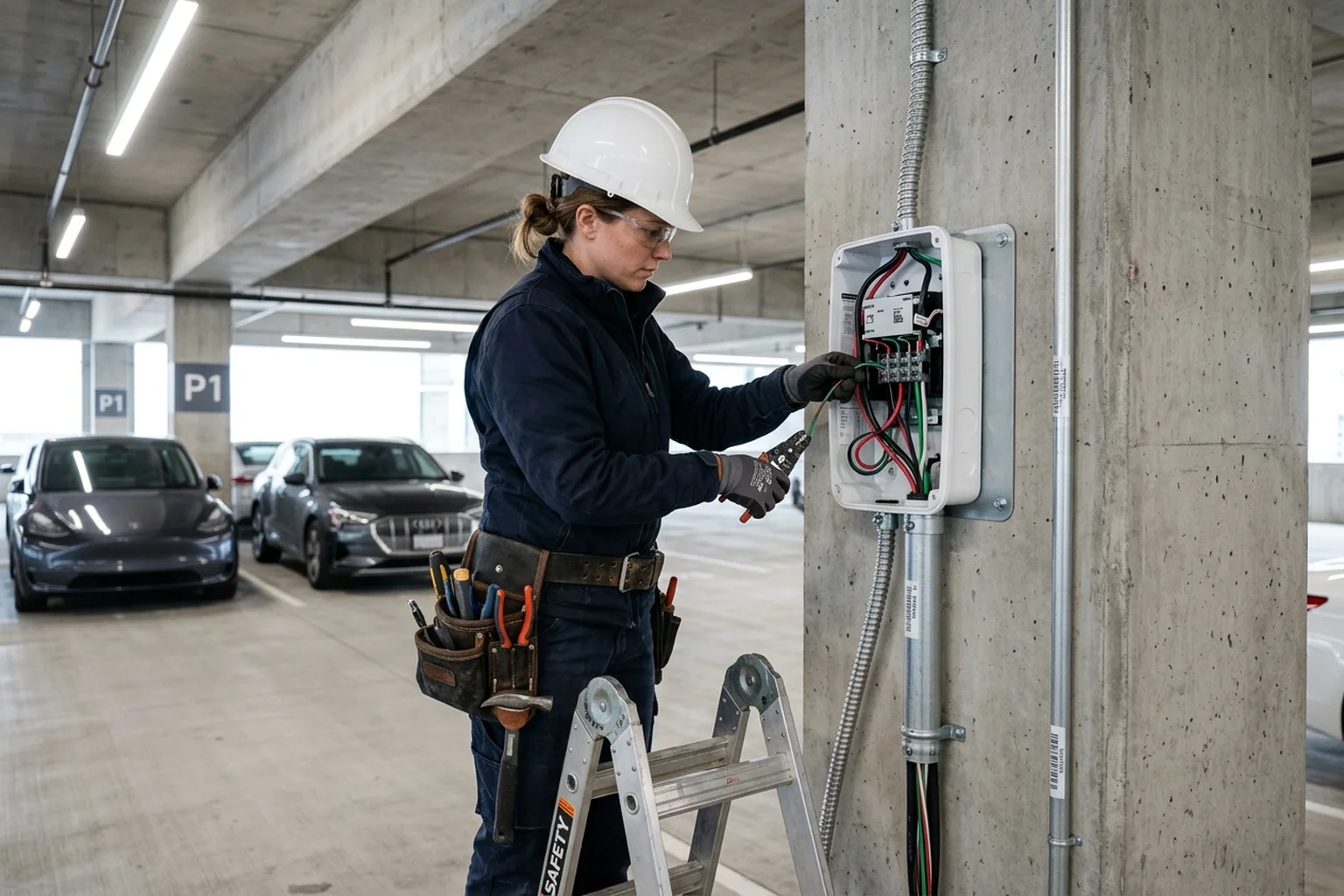
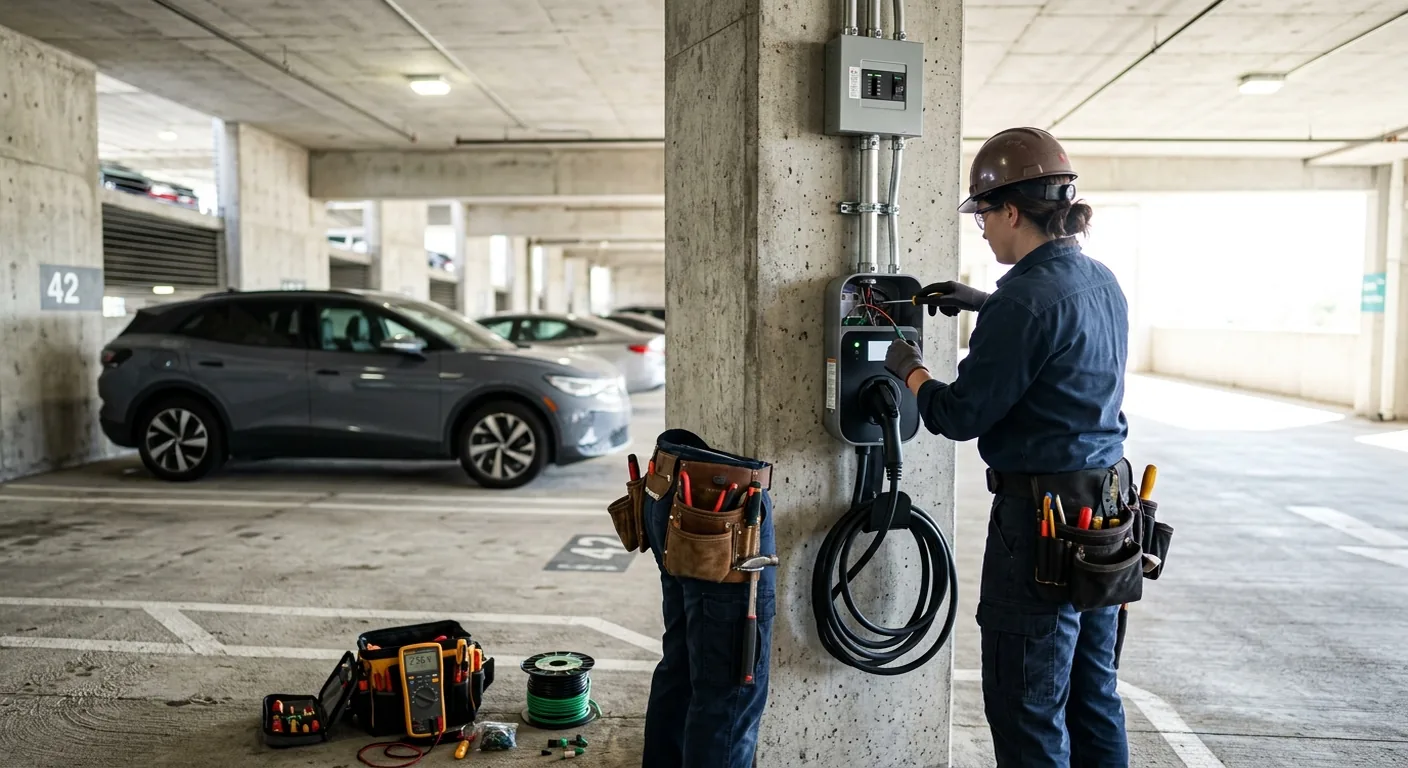
EVITP — administered by the Electric Vehicle Infrastructure Training Program — is a 20-hour online course followed by a proctored examination, designed specifically to certify electricians on EV charging-station installation. The curriculum covers charging station fundamentals, the relevant National Electrical Code requirements (especially NEC Article 625 on EV charging system equipment), jobsite safety, and installation/maintenance best practices for both Level 2 and DC fast-charging hardware.
The program mechanics in plain numbers:
- Cost: $275
- Duration: roughly 20 hours of self-paced online training
- Exam: proctored online; 70% passing score
- Validity: 3 years (then renewal training is required)
- Format: entirely online; no in-person residency
What you get at the end is a certification card that goes on your résumé and on bid documents. You do not get any change in your state license or your union/non-union classification — those continue to be governed by your home state and your employment.
Why Federal Funding Made EVITP a Near-Requirement
EVITP existed before the federal infrastructure push, but it became a near-requirement because of two pieces of legislation and the funding programs that flow from them.
NEVI — the National Electric Vehicle Infrastructure Formula Program — provides $5 billion in formula grants to state DOTs to deploy EV fast chargers along designated alternative-fuel corridors. CFI — the Charging and Fueling Infrastructure discretionary grant program — adds $2.5 billion in competitive grants for community and corridor charging. Together they total $7.5 billion, all administered by the Federal Highway Administration, and most of it carries an EVITP requirement either by direct rule or by state implementation guidance.
The Congressional Research Service summary of federal EV charging policy lays out the policy structure cleanly: federal funding programs, state implementation rules, and the workforce credentialing layer (EVITP) are designed to work together. State workforce agencies — NYSERDA’s EV Charging Station Installer career page is a representative example — explicitly direct prospective installers toward EVITP.
The practical upshot for an electrician: any contractor bidding NEVI- or CFI-funded charger work needs EVITP-certified installers on the crew. Contractors hire to that requirement. EVITP is now an entry condition for a large and rapidly expanding pool of work.
Who Is Eligible to Sit for EVITP
EVITP is targeted at credentialed electricians, not entry-level workers. Per the EVITP FAQ, eligibility requires one of:
- A state-issued electrician license or certification (in states that license electricians), or
- Documented 8,000 hours of hands-on electrical construction experience in states that do not license electricians.
8,000 hours is roughly four years of full-time electrical work — the same order of magnitude as a typical state journeyman experience requirement. Apprentices generally cannot sit for EVITP until they reach journeyman or its documented equivalent. There are exceptions for specific apprenticeship pathways, but the rule of thumb is: get to journeyman first, then add EVITP.
Two practical implications:
- If you’re early in an apprenticeship, EVITP isn’t the next thing you do — focus on completing your apprenticeship hours and journeyman exam first.
- If you’re already a journeyman and EV-charger work is showing up in your local market, EVITP is the cheapest, fastest credential you can add to bid for that work.
The Path: From Apprentice to EVITP-Certified, Sequenced
For a worker entering electrical work today and aiming at EVITP-eligible status as quickly as possible, the sequence is:
- Enter an electrical apprenticeship — IBEW/NECA (the union pipeline) or a state-approved non-union apprenticeship. Typical duration: 4–5 years of paid on-the-job training plus classroom instruction. (For program structure, see apprenticeships explained.)
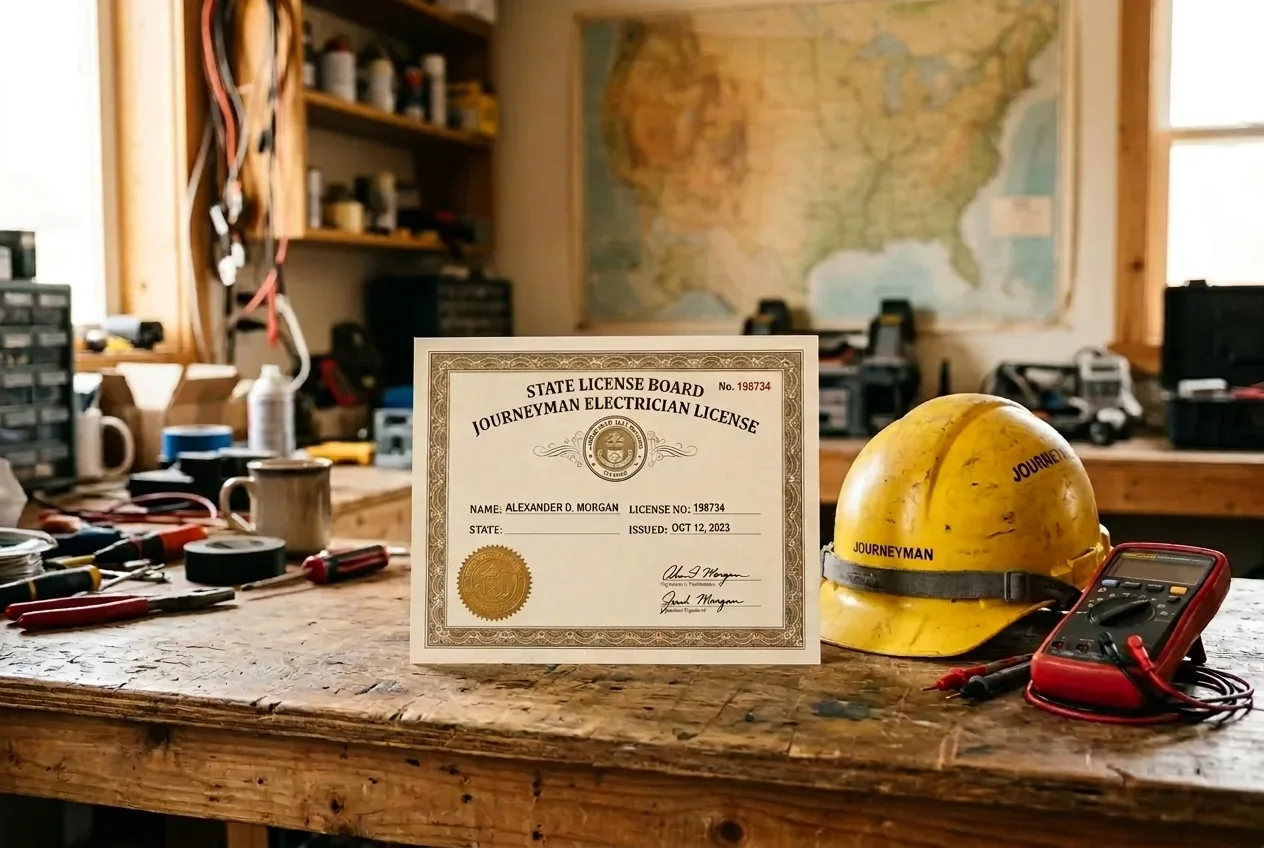
- Pass the journeyman exam in your state — this gives you the state-issued credential that qualifies you to sit for EVITP.
- Take EVITP — 20 hours online, $275, proctored exam. Most journeymen complete it within a month of starting.
- Apply to EV-related contractor positions or specialize within your current contractor’s EV team — many electrical contractors now run dedicated EV divisions because of the NEVI workflow.
For someone already at journeyman level when this article publishes, steps 3–4 are the entire path. The whole credential takes a few weekends.
Pay Delta: What EVITP Actually Adds
This is the section where honesty matters most, because the pay implication is real but easy to overstate.
The BLS Occupational Outlook Handbook for Electricians reports the May 2024 wage band:
- Median wage: $62,350/yr
- Bottom 10%: under $39,430
- Top 10%: over $106,030
- Annual openings: ~81,000
- Projected growth (2024–34): 9% (much faster than average)
EVITP does not directly set a wage. What it does is qualify you for a class of contracts and a class of contractor positions where the per-hour rates tend to land in the upper bands of that distribution — particularly for DC fast-charger (DCFC) field work, NEVI corridor projects, and fleet-depot installations.
Industry pay tracking puts the EV-specialty premium at roughly 8–15% above an equivalent generalist electrician for similar experience levels, with DCFC field technicians frequently clearing the upper third of the BLS distribution. The premium isn’t from EVITP itself — it’s from the demand-supply imbalance in the work that EVITP gates. If federal funding holds and the buildout continues, the premium is likely to persist for several years.
The honest framing: EVITP is a door-opener to higher-paying work, not a guaranteed raise at your current employer. If you stay on the same residential service crew, EVITP probably doesn’t change your check next week. If you use it to move into a contractor’s EV division or onto NEVI corridor projects, the pay change is often material.
Where the Work Actually Is
NEVI funding is reshaping where charger projects happen, with three concentrations:
- Highway-corridor DC fast chargers. NEVI rules require fast chargers spaced no more than 50 miles apart along designated alternative-fuel corridors. This is producing steady project flow along interstates, U.S. highways, and major state routes. The work tends to be larger-format (multiple 150kW+ DCFC units per site) and frequently union-staffed.
- Fleet depots and commercial Level 2. Delivery fleets, transit agencies, school districts, and corporate campuses are deploying clusters of Level 2 chargers (and increasingly DCFC) for vehicle fleets. Often funded through CFI grants or utility programs.
- Multifamily and workplace Level 2. Apartment complexes, condo associations, and workplaces are the slower-growing but higher-volume segment. Smaller-format work, often residential-licensed contractors.
All three benefit from EVITP, but the fastest pay growth has been in DCFC field tech / installer roles tied to federal corridor projects.
The IBEW + NECA Pipeline
The most direct route into NEVI-funded EV-charger work is through the IBEW (International Brotherhood of Electrical Workers) / NECA (National Electrical Contractors Association) apprenticeship system. Several reasons:
- IBEW/NECA-affiliated contractors win a disproportionate share of NEVI corridor work because the projects favor experienced, certified, code-compliant installers.
- IBEW locals and joint apprenticeship training committees (JATCs) in most regions integrate EV-charger training into the journeyman continuing-education curriculum, often subsidizing the EVITP fee for qualifying members.
- Contractors bidding federally-funded work need a documented compliance posture (Davis-Bacon prevailing wages, certified payrolls, OSHA compliance) that union shops are already structured to provide.
Non-union electricians can absolutely take EVITP and work on EV-charger projects — many do. The path is just less centralized: you find a contractor doing the work, qualify, take the certification yourself ($275 out of pocket unless your employer reimburses), and apply for installer positions. (For a broader look at the union vs non-union choice, see electrical career opportunities and our overview of trade certifications and licenses.)
What EVITP Does NOT Do
A short list of common misconceptions, because they keep showing up in forum threads:
- EVITP is not a state license. It does not allow you to install electrical work in a state where you are not licensed or properly supervised.
- EVITP does not replace NEC knowledge. The course covers NEC Article 625 specifically, but you still need full code knowledge for the rest of the install (service panel, conduit, grounding, branch circuit calculations).
- EVITP does not turn a non-electrician into an EV installer. The eligibility floor (state license or 8,000 hours) exists for a reason — high-amperage AC and DC work is dangerous and requires real foundational training.
- EVITP does not last forever. The 3-year validity means you renew, including any updates to the standard. Plan on the recurring training cost as part of carrying the credential.
If you find a posting that says “EVITP-certified electricians wanted, no license required, no experience required,” it’s either misadvertised or you’re being recruited as a helper who will work under a certified electrician’s supervision.
Bottom Line
EVITP is the cheapest, fastest credential a journeyman electrician can add right now to qualify for the largest single source of federally-driven electrical work in the U.S. — NEVI- and CFI-funded EV charger installation. It costs $275, takes about 20 hours, and is valid for three years. Eligibility starts at state-licensed electrician or 8,000 documented hours, which means it’s a journeyman-and-up credential, not an entry-level one.
The realistic pay delta runs 8–15% above generalist electrician work for the kinds of jobs the credential gates, with DCFC field-tech roles regularly landing in the upper third of the BLS electrician wage distribution. If you’re already a journeyman, take it now. If you’re an apprentice, finish your hours first — EVITP will be there when you’re ready, and the buildout will still be running.
For the longer market backdrop on where the buildout is headed, see EV charging infrastructure installer careers; for the underlying career path, how to become an electrician.
Sources
- U.S. Bureau of Labor Statistics — Electricians, Occupational Outlook Handbook (May 2024 wage data) — https://www.bls.gov/ooh/construction-and-extraction/electricians.htm
- EVITP — Electric Vehicle Infrastructure Training Program (program homepage) — https://evitp.org/
- EVITP — Frequently Asked Questions (eligibility, exam, validity) — https://evitp.org/frequently-asked-questions/
- U.S. Department of Transportation — Federal EV Infrastructure Funding Programs (NEVI + CFI) — https://www.transportation.gov/rural/ev/toolkit/ev-infrastructure-funding-and-financing/federal-funding-programs
- Congressional Research Service — Federal Policies to Expand Electric Vehicle Charging Infrastructure — https://www.congress.gov/crs-product/R47675
- NYSERDA — EV Charging Station Installer Career Page — https://www.nyserda.ny.gov/All-Programs/Clean-Energy-Workforce-Development-and-Training/Energize-Your-Future/Careers-in-Electric-Vehicles-and-Charging/EV-Charging-Station-Installer