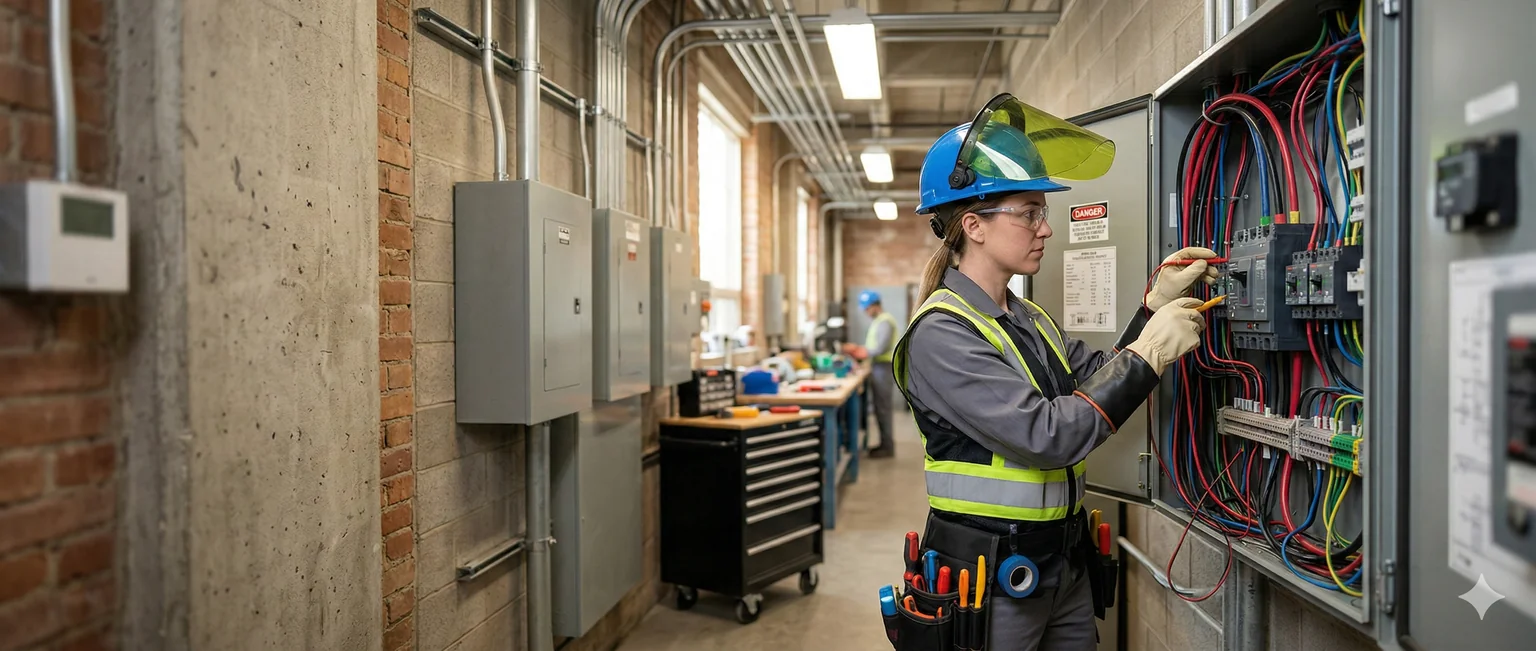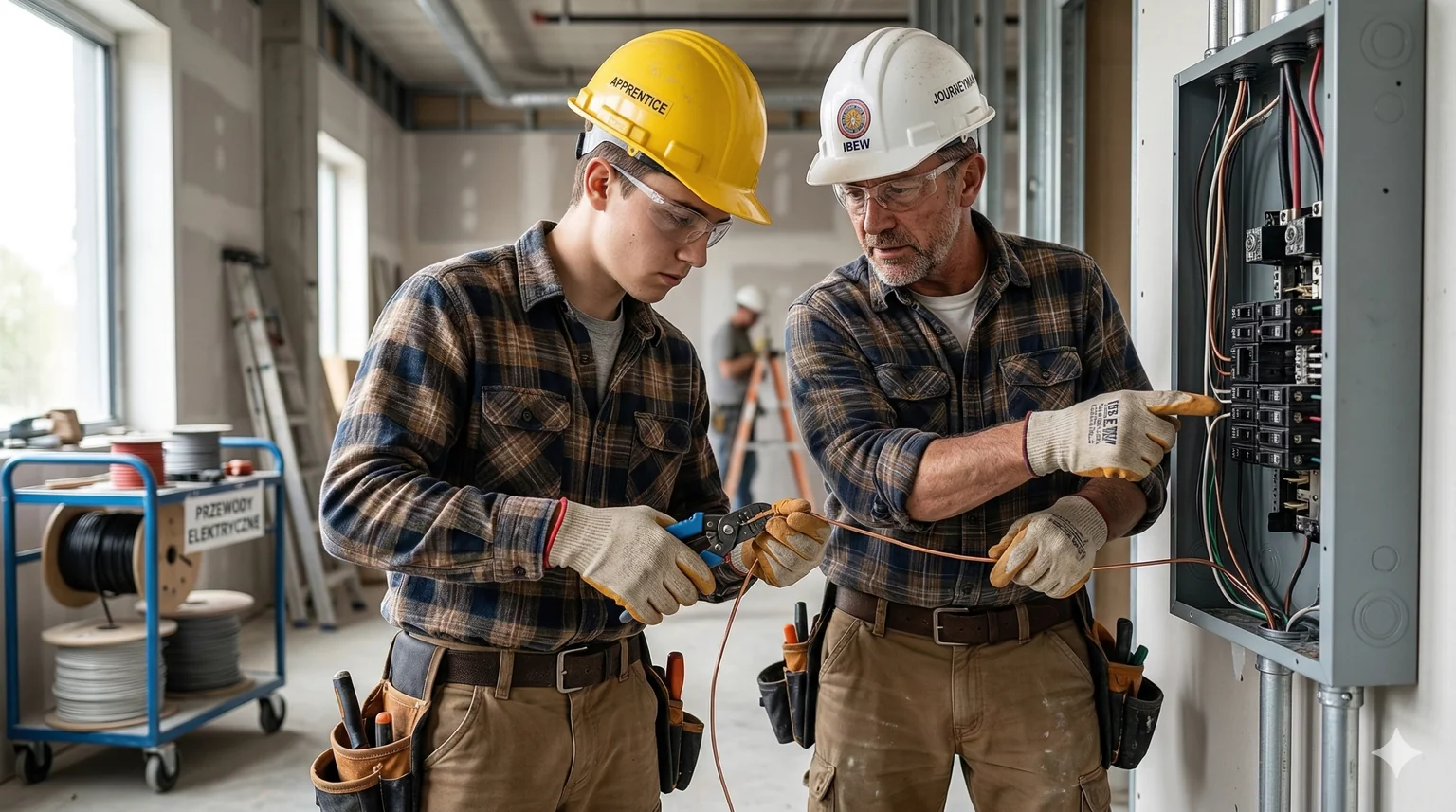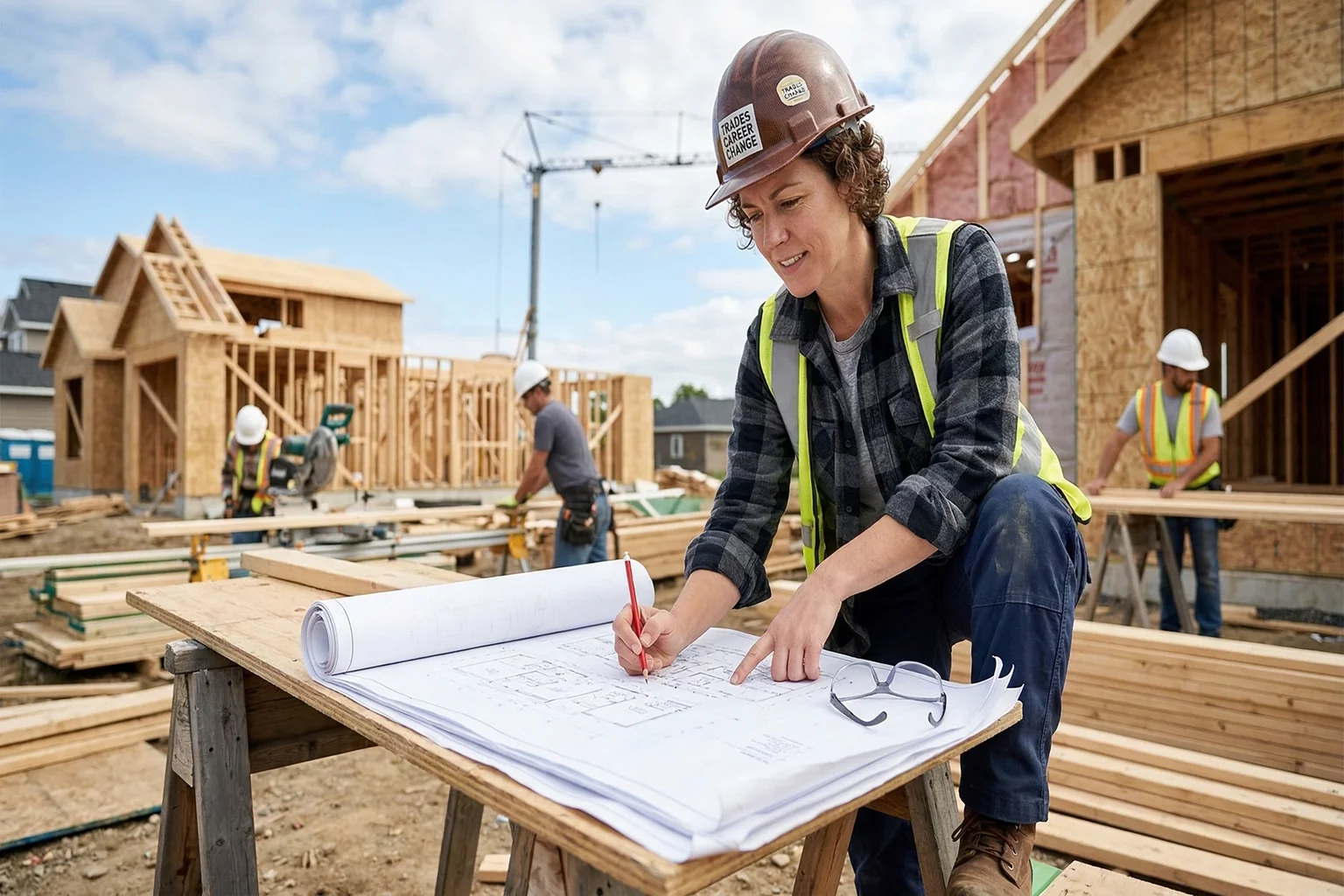

In 2024, a 29-year-old former dental receptionist in Oakland walked into a Tradeswomen Inc. pre-apprenticeship program with no construction experience and a hard cap on what she could earn in her current job. Eighteen months later, she was a first-year electrical apprentice on a commercial job site, earning a starting wage that already exceeded her old salary — with a guaranteed raise schedule, employer-paid health benefits, and a clear path to a six-figure journey-level wage. Her story is unusual only in how typical it is becoming.
Women still make up only about 4.3 percent of construction trades workers, according to 2025 analysis from the Institute for Women’s Policy Research using BLS data. That number is frustratingly small. But it disguises what is actually happening in the apprenticeship pipeline: women’s share of registered apprenticeships has nearly doubled over the past decade, federal funding for women-in-trades programs hit $5 million in 2025 alone, and the construction trades remain one of the few sectors where women earn close to wage parity with men — a fact that should not be a footnote.
This guide is the practical decision framework, written for women weighing whether the trades make sense for them, which trade to pick, how to fund the training, and how to find programs and chapters that have a track record of supporting women through the first three years — when most attrition happens. For a broader overview of where women stand in the industry today, see our companion piece on women in the trades.
TL;DR: Key Takeaways
- Women in construction trades earn about 97 cents to a man’s dollar, far better than the 84-cent national wage gap across all occupations (IWPR, March 2024).
- Union apprenticeship programs deliver $203 more per week for women than non-union work — a 21.9% premium (IWPR).
- WANTO grants put $5 million into women-in-trades programs in 2025, funding pre-apprenticeship and retention services nationwide (U.S. Department of Labor, July 2025).
- NAWIC has 120+ chapters offering mentorship and scholarships starting at $1,000 (NAWIC).
- Best-paying women-friendly trades: electricians ($62,350), plumbers ($63,420), dental hygienists ($94,260), construction inspectors ($72,120) — all BLS May 2024 medians.
- Pre-apprenticeship programs (Tradeswomen Inc., Chicago Women in Trades, Oregon Tradeswomen) are the single most reliable on-ramp — they teach tools, terminology, and physical conditioning before you commit to a full apprenticeship.
- Real challenges exist — 41% of women in construction report gender harassment within a one-year period (PMC qualitative study). Choosing employers and unions with documented retention records is not optional.
The Pay Parity Argument — and Why It Matters
The most underreported fact about the skilled trades is that they are one of the few sectors in the U.S. economy where women approach wage parity with men. According to the Institute for Women’s Policy Research, women in the construction trades earn approximately 97 cents for every dollar earned by men — compared to the roughly 84-cent average across all U.S. occupations.
The reason is structural, not cultural. Union construction wages are set by collective bargaining agreements that pay a fixed rate for a fixed job classification, regardless of who holds it. A first-year journeyman electrician in IBEW Local 11 earns the same hourly rate whether she is a 27-year-old woman or a 47-year-old man. That mechanical fairness — encoded in the contract, not left to a salary negotiation — is exactly what closes the wage gap.
The same IWPR analysis shows union representation amplifies the effect. Women covered by a union contract earn $203 more per week than non-union women, a 21.9 percent premium. That premium does not exist in most other industries where women are concentrated.
This is why “the trades” deserves serious consideration even from women who never imagined themselves on a job site. The wage math is genuinely better than in many white-collar paths, especially when you factor in that most trade training takes 1–4 years and costs a small fraction of a four-year degree.
The Honest Picture: Real Challenges Worth Acknowledging
This guide would be useless if it pretended the trades were a frictionless choice. They are not. Three challenges are worth naming directly.
Harassment and hostile culture. A 2022 qualitative study published in the International Journal of Environmental Research and Public Health, drawing on prior NIOSH-supported research, reported that 41 percent of women in construction experience gender harassment in a typical year. Earlier studies have put sexual harassment rates substantially higher in specific subsets. This is not universal — many crews, contractors, and union locals have built strong cultures of professional conduct — but it is common enough that you should screen for it deliberately when choosing where to apply.
Inadequate PPE and facilities. Most construction PPE is sized for men. Boots, harnesses, and high-visibility vests that do not fit correctly are both an injury risk and a daily friction point. Sanitary, women-accessible restroom facilities on job sites remain inconsistent. Asking specific questions about PPE fit and site facilities during interviews is reasonable and signals to employers that you take the issue seriously.
Childcare and pregnancy accommodations. Research cited by hh2.com analysis of industry retention data found that 69.3 percent of women seriously considering leaving construction cited childcare difficulties, and 63.4 percent cited a lack of pregnancy accommodations. If either applies to your life, ask the union or employer directly about parental leave, schedule flexibility, and pregnancy reassignment policies before you commit.
None of these challenges are reasons not to enter the trades. They are reasons to be selective about which trade, which employer, and which apprenticeship program you choose. The next section addresses exactly that.
Best-Paying Trades for Women: A Comparison
The “best” trade for any individual depends on her physical preferences, interests, and local labor market. But on the data, several trades stand out for women on the dimensions that matter most: pay parity, training accessibility, manageable physical demands, and existence of women-focused recruitment infrastructure.
| Trade | Training Time | Median Salary (BLS, May 2024) | Key Advantage for Women |
|---|---|---|---|
| Electrician | 4–5 yr apprenticeship (paid) | $62,350 | Strongest union infrastructure; 9% job growth; clear path to six-figure journey wage |
| Plumber/Pipefitter | 4–5 yr apprenticeship (paid) | $63,420 | Service plumbing is customer-facing — communication skills are an asset |
| Construction/Building Inspector | 6–24 months + field hours | $72,120 | Low physical demands; judgment-driven; women are 10.5% of construction managers, above trade average |
| Dental Hygienist | 2–3 yr associate degree | $94,260 | Healthcare trade; female-majority; 7% growth; flexible schedules |
| Welder | 6–18 months certificate | $51,000 | Skill-based — certified welders compete on output, not headcount; manufacturing has higher female representation than field construction |
| HVAC Technician | 6–24 months + apprenticeship | $59,810 | Diagnostics and controls work is increasingly desk-and-laptop oriented |
| Cosmetologist | 9–15 months | Varies widely; tip-driven | Female-majority; flexible self-employment path |
The first four trades — electrician, plumber, building inspector, and dental hygienist — deserve particular attention. Electrician and plumber are union-heavy, which is where the wage parity premium is strongest. Building inspector and dental hygienist offer the lowest physical demands of any trades on this list and are accessible from short training programs.
If physical demand is a primary concern, we have a longer guide on trade careers without heavy physical labor covering inspection, estimating, controls, and diagnostic-focused trades.
How to Pay for Trade School: Women-Specific Funding
The funding landscape for women entering trades is significantly better than most prospective students realize. There are at least four overlapping sources of support.
WANTO Grants — Federal Funding for Women-in-Trades Programs
The Women in Apprenticeship and Nontraditional Occupations (WANTO) grant program, administered by the U.S. Department of Labor’s Women’s Bureau, funds community-based organizations that provide pre-apprenticeship training, mentorship, and retention services specifically for women. In July 2025, the Department of Labor announced $5 million in WANTO grants distributed to seven organizations across the country.
You do not apply for WANTO funding directly — it goes to organizations like Chicago Women in Trades, Oregon Tradeswomen, and similar regional nonprofits, which in turn deliver free or low-cost services to individual women. Finding a WANTO-funded program in your region is one of the highest-leverage moves you can make, because it routes you into a recruitment pipeline that employers already know and trust.
NAWIC Scholarships and Chapter Support
The National Association of Women in Construction (NAWIC) administers the NAWIC Founders’ Scholarship Foundation, with awards starting at $1,000 for women enrolled in construction-related degree programs (NAWIC NFSF). NAWIC has over 6,000 members across 120+ local chapters, and chapters host networking events, hard-hat tours, mentorship programs, and continuing education that newer entrants consistently cite as the most valuable part of their first year.
Finding your local NAWIC chapter and attending one meeting before you commit to a program is a small investment that pays large dividends.
Federal Pell Grants and Workforce Pell Expansion
Pell Grants cover up to $7,395 per year for eligible students. Starting July 2026, the Workforce Pell expansion extends eligibility to short-term programs of at least 150 clock hours — meaning many trade certificates that previously did not qualify for Pell funding now do. There is no age limit. File a FAFSA regardless of whether you think you qualify; the threshold is more generous than most people assume.
WIOA Funds — Workforce Innovation and Opportunity Act
WIOA training funds, administered through local American Job Centers, can cover tuition for adults training in high-demand occupations. The trades qualify in nearly every region. These funds are specifically designed for displaced and career-changing workers, and the application process runs through your county or regional workforce development board — not the school directly.
For a complete walkthrough of funding sources including state-specific scholarships and apprenticeship-paid training, see our financing trade school guide.
Pre-Apprenticeship Programs: The Single Best On-Ramp
If you take one tactical recommendation from this guide, it is this: enter the trades through a pre-apprenticeship program designed for women, not through a cold-call apprenticeship application.
Pre-apprenticeship programs run 8–16 weeks, teach you the basics of tools, terminology, blueprint reading, and physical conditioning, and — critically — deliver you to apprenticeship programs as a known quantity. Apprenticeship coordinators trust graduates of established pre-apprenticeship programs because the programs have done the screening, training, and culture-setting that an apprenticeship intake interview cannot.
For women, several established programs have decades of track record:
- Tradeswomen Inc. — Founded in 1979, based in the San Francisco Bay Area. Recruits women into pre-apprenticeship and partners with programs like Rising Sun Energy Center for all-women cohorts.
- Chicago Women in Trades — Operates the Technical Opportunities Program and is a long-running WANTO grant recipient.
- Oregon Tradeswomen — Portland-based; runs the Trades and Apprenticeship Career Class.
- Nontraditional Employment for Women (NEW) — New York City-based, places hundreds of women annually into building trades apprenticeships.
- Helmets to Hardhats — National program with women-specific outreach for veterans transitioning into building trades.
If you are not in one of these metros, search for “[your state] tradeswomen” or “[your city] pre-apprenticeship” and look for organizations explicitly affiliated with the Women’s Bureau or a state apprenticeship office. CalMatters’ 2024 reporting on the California pre-apprenticeship pipeline describes how the model works in practice.
For background on how apprenticeships themselves are structured, see our apprenticeships explained guide.
How to Get Started: A Step-by-Step Plan
Step 1: Identify Your Local Tradeswomen Organization
Before you do anything else, identify the women-focused trades organization closest to you. If you live near a major metro, one of the established programs above likely serves your area. If not, your state apprenticeship office or local NAWIC chapter can point you toward smaller WANTO-funded programs in your region. This single step puts you inside a network that handles 80 percent of the friction of entering the trades.
Step 2: Attend One NAWIC Meeting or Open House
NAWIC chapters and pre-apprenticeship open houses are designed for exactly the conversation you need to have: women already in the trade explaining what it is actually like, which employers and locals treat women well, and what to expect in year one. One meeting will save you months of guessing.
Step 3: Choose Your Trade Based on Pay, Demand, and Fit
Use the comparison table above as a starting point. Narrow to two or three trades, then read the BLS Occupational Outlook Handbook entry for each. If you can shadow someone in the trade for a day — most pre-apprenticeship programs arrange this — do it. The reality of an electrician’s day differs substantially from the reality of a welder’s day, and reading about it is not the same as standing in it.
Step 4: Apply to a Pre-Apprenticeship Program
Pre-apprenticeship is the route. Apply even if you already have a college degree, even if you already have construction-adjacent experience, and even if you think you could enter an apprenticeship directly. The program graduates faster than direct applicants, and the supportive cohort matters during the first physically demanding weeks.
Step 5: Secure Funding Before You Quit Anything
File a FAFSA. Contact your local American Job Center about WIOA funds. Ask your pre-apprenticeship program about WANTO-funded fee waivers. If a NAWIC scholarship deadline is approaching, apply. Do not assume you cannot afford training — assume you can, then confirm by stacking the available funding sources.
Step 6: Screen Employers and Locals for Retention Track Record
Before accepting an apprenticeship offer, ask the program coordinator three questions:
- How many women have you placed in the last five years, and how many are still in the trade?
- What is your harassment reporting process and who handles it?
- Do contractors you place apprentices with have women on staff at the foreman or journey level?
A program with strong answers will give you specifics. A program with weak answers will speak in generalities. The difference predicts your year-one experience accurately.
What About Career Changers and Older Entrants?
The framework above works at any age. If you are considering a trade career as a second or third career — particularly if you are over 30 or over 50 — the funding picture is identical, the pre-apprenticeship route is the same, and life experience is a genuine advantage on the job site. Our guide to changing careers to the trades after 30 covers the specific financial and timeline considerations for mid-career entrants.
Tools on This Site That Can Help
Compare Schools — Compare trade colleges side by side on tuition, graduation rates, financial aid, and program offerings. Particularly useful if you are weighing a community college certificate against a private trade school or a union apprenticeship.
College Rankings — The best value ranking helps identify programs that deliver strong outcomes relative to cost. The best for working students ranking highlights schools with the flexible scheduling that matters if you are balancing training with caregiving.
Programs Directory — Search accredited trade programs by specialty and location to find options near you.
Sources
- Institute for Women’s Policy Research — Ariane Hegewisch — “Gender, Race, and the Wage Gap in Apprenticeship” — March 2024 — https://iwpr.org/wp-content/uploads/2024/03/IWPR-Apprenticeship-Report-March-2024.pdf
- Institute for Women’s Policy Research — “Women in Construction Quick Figure (Q120)” — August 2025 — https://iwpr.org/wp-content/uploads/2025/08/Women-in-Construction-QF_2025.pdf
- U.S. Department of Labor, Women’s Bureau — “Secretary Chavez-DeRemer Announces $5M in WANTO Grants” — July 9, 2025 — https://www.dol.gov/newsroom/releases/wb/wb20250709
- National Association of Women in Construction — “NFSF Scholarships” — https://nawic.org/nfsf-scholarships/
- Tradeswomen, Inc. — “Programs” — https://tradeswomen.org/programs/
- CalMatters — Levi Sumagaysay — “Nonprofits seek to get more women into construction trades” — September 2024 — https://calmatters.org/economy/2024/09/whats-working-tradeswomen/
- Curtis et al. — International Journal of Environmental Research and Public Health (PMC) — “Working Safely in the Trades as Women: A Qualitative Exploration” — 2022 — https://pmc.ncbi.nlm.nih.gov/articles/PMC8833840/
- Bureau of Labor Statistics — “Electricians: Occupational Outlook Handbook” — May 2024 — https://www.bls.gov/ooh/construction-and-extraction/electricians.htm
- Bureau of Labor Statistics — “Plumbers, Pipefitters, and Steamfitters” — May 2024 — https://www.bls.gov/ooh/construction-and-extraction/plumbers-pipefitters-and-steamfitters.htm
- Bureau of Labor Statistics — “Construction and Building Inspectors” — May 2024 — https://www.bls.gov/ooh/construction-and-extraction/construction-and-building-inspectors.htm
- Bureau of Labor Statistics — “Dental Hygienists” — May 2024 — https://www.bls.gov/ooh/healthcare/dental-hygienists.htm
- Bureau of Labor Statistics — “Welders, Cutters, Solderers, and Brazers” — May 2024 — https://www.bls.gov/ooh/production/welders-cutters-solderers-and-brazers.htm
- Bureau of Labor Statistics — “HVAC Mechanics and Installers” — May 2024 — https://www.bls.gov/ooh/installation-maintenance-and-repair/heating-air-conditioning-and-refrigeration-mechanics-and-installers.htm