
The aviation industry has a math problem it cannot ignore. Boeing projects that 710,000 new maintenance technicians will be needed globally by 2044, with 123,000 of those positions in North America alone. Meanwhile, CNN reports the industry is already 17,000 technicians short in North America right now, and the gap is widening every year as experienced mechanics retire faster than new ones enter the field.
The median age of an aircraft mechanic in the United States hovers around the mid-fifties. According to Oliver Wyman, 27% of the current workforce is over age 64. That means tens of thousands of seasoned professionals will leave the industry in the next decade, taking decades of institutional knowledge with them.
For anyone considering a skilled trade, this is not just a talking point — it is a genuine, data-backed opportunity. Aircraft mechanics earn well above the national median wage, the work is intellectually demanding and varied, and the hiring environment has shifted decisively in favor of workers. Here is what you need to know to decide whether this career is right for you.
What Aircraft Mechanics Do
Aircraft mechanics — formally known as aviation maintenance technicians, or AMTs — inspect, repair, troubleshoot, and maintain the mechanical and electrical systems that keep aircraft safe and airworthy. That scope is broad by design. A single commercial aircraft contains millions of individual parts, and every one of them falls under a strict maintenance schedule dictated by the manufacturer and enforced by the Federal Aviation Administration.
Day-to-day work spans airframe structures, turbine and piston engines, hydraulic and pneumatic systems, electrical wiring, landing gear, flight control surfaces, and environmental control systems. Some mechanics specialize further in avionics — the electronic navigation, communication, and flight management systems that modern aircraft depend on.
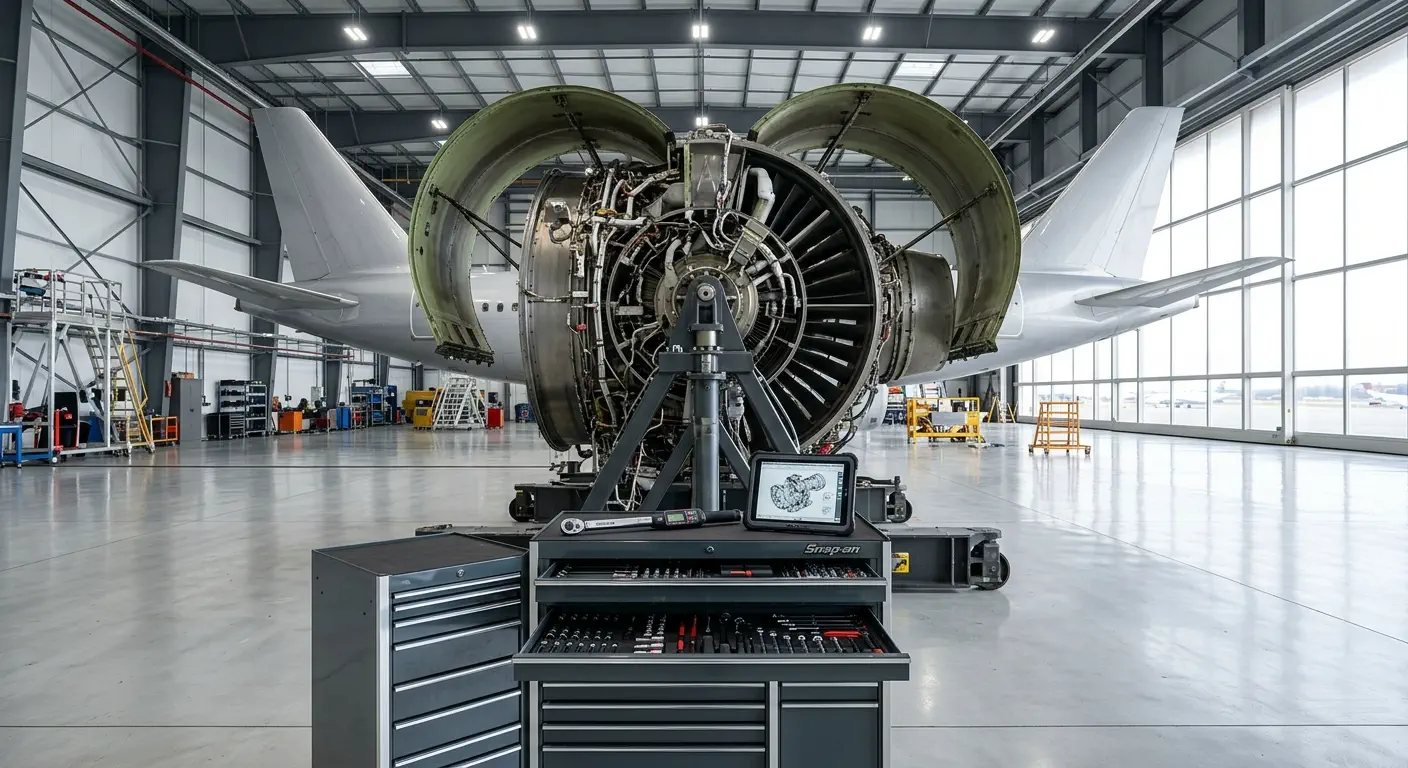
Work settings vary widely. You might find yourself in a cavernous MRO (maintenance, repair, and overhaul) hangar performing heavy checks on wide-body jets, on an airline ramp turning aircraft between flights, in a general aviation shop maintaining single-engine Cessnas, or at a defense contractor’s facility working on military platforms. The Bureau of Labor Statistics Occupational Outlook Handbook provides a thorough breakdown of these environments.
What makes aviation maintenance distinct from most other trades is the regulatory framework. Every task you perform, every part you install, and every inspection you sign off is governed by Federal Aviation Regulations. That level of accountability is exactly what keeps flying as safe as it is — and it is also what makes the work intellectually engaging in a way that few other hands-on careers can match.
Job Outlook and Salary
Growth Projections
The Bureau of Labor Statistics projects 5% employment growth for aircraft mechanics from 2024 to 2034, which is about as fast as the average for all occupations. But that headline number understates the true demand. The BLS projection captures net growth — new positions created — but does not fully account for the wave of retirements that will generate tens of thousands of replacement openings every year.
Boeing’s Pilot & Technician Outlook paints a more complete picture. Their model accounts for fleet growth, retirements, and attrition, projecting that North America will need 123,000 new maintenance technicians over the next two decades. Globally, the figure is 710,000. These are not speculative numbers; they are grounded in airline fleet orders that have already been placed and demographic data that is not going to change.
Salary Data
Aircraft mechanics are among the best-compensated workers in the skilled trades. According to the BLS Occupational Employment and Wage Statistics, the median annual wage for aircraft mechanics and service technicians is $78,680. But that median masks significant variation by employer type:
- Scheduled air transportation (airlines): approximately $89,540
- Aerospace product and parts manufacturing: approximately $88,770
- Support activities for air transportation (MRO shops): approximately $66,960
- Top 10% of earners: $120,080 and above
Entry-level mechanics typically start in the $45,000 to $55,000 range, depending on location and employer. Experienced mechanics at major airlines routinely earn $90,000 to $120,000 or more, with top-of-scale hourly rates reaching $50 to $59 per hour at several carriers. Add in overtime — which is plentiful given the current shortage — and total compensation climbs higher still.
If you have been exploring the fastest-growing trade careers, aviation maintenance consistently ranks among the highest-paying options available without a four-year degree.
The Shortage Crisis
The numbers behind the technician shortage deserve close attention, because they represent real leverage for anyone entering the field in the next few years.
CNN’s reporting puts the current North American shortfall at 17,000 technicians, with roughly 45,000 expected to retire in the next decade. Their analysis projects the deficit peaking around 2028 at approximately 30,000 unfilled positions.
Oliver Wyman’s independent research largely corroborates those figures, estimating the median mechanic age at 51 and projecting a deficit of 40,000 to 48,000 technicians by 2027-2028. Their model accounts for training pipeline capacity and historical certification rates.
On the supply side, the Aviation Technician Education Council (ATEC) reports that 9,013 new mechanic certificates were issued in 2024 — an improvement over prior years, but still not enough to close the gap. Perhaps more telling: one-third of available training seats at FAA-certificated schools went unfilled. The pipeline has capacity that is not being used.
For employers, this shortage carries a steep price tag. Aviation Week estimates the true cost of technician turnover at $50,000 to $75,000 per mechanic when you factor in recruiting, training, lost productivity, and overtime for remaining staff. That cost pressure is exactly what is driving wages up and making employers more willing to invest in training and retention programs.
How to Become an Aircraft Mechanic
FAA A&P Certification
The Airframe and Powerplant (A&P) certificate is the foundational credential for aircraft mechanics in the United States. Issued by the FAA, it authorizes you to perform maintenance, preventive maintenance, and alterations on aircraft. The certificate has two ratings — Airframe (A) and Powerplant (P) — and most employers expect you to hold both.
The FAA’s mechanic certification page lays out the requirements clearly: you must be at least 18 years old, able to read, write, speak, and understand English, and demonstrate your knowledge and skills through a series of exams. There are two paths to qualifying for those exams.
Education Path
The most common route is attending an FAA-certificated Aviation Maintenance Technician School (AMTS). These programs typically run 18 to 24 months and cover the full curriculum required for both Airframe and Powerplant ratings. The FAA currently certifies approximately 170 AMTS programs across the country.
AMTS programs combine classroom instruction with extensive hands-on shop work. You will learn to read technical manuals, use precision measuring instruments, perform non-destructive testing, troubleshoot electrical systems, overhaul engine components, and much more. The curriculum is standardized by FAA regulations, so the core knowledge you gain is consistent regardless of which school you attend — though program quality, facilities, and industry connections vary significantly. If you are weighing your options, our guide on how to evaluate a trade school offers practical criteria for comparing programs.
You can search for aircraft maintenance technology programs and avionics maintenance programs on our site to find accredited schools near you.
Experience Path
If formal schooling is not feasible, the FAA also allows you to qualify for the A&P exams through documented practical work experience. The requirements are:
- Single rating (Airframe or Powerplant): 18 months of hands-on maintenance experience
- Both ratings (A&P): 30 months of hands-on maintenance experience
This experience must be verified and documented. Military aviation maintenance experience is one of the most common paths here — if you spent your service working on aircraft, that time can count directly toward your eligibility. Civilian experience at repair stations, airlines, or under the supervision of a certificated mechanic also qualifies.
The Exams
Once you meet the eligibility requirements through either path, you face three types of exams for each rating:
- Written exam: Multiple-choice knowledge test covering general subjects, airframe topics, or powerplant topics. You must pass the General written test before taking the Airframe or Powerplant written tests.
- Oral exam: A Designated Mechanic Examiner (DME) asks you questions to assess your understanding of maintenance procedures, regulations, and technical concepts.
- Practical exam: The same DME observes you performing actual maintenance tasks — measuring, inspecting, troubleshooting, and repairing aircraft components.
The pass rate for first-time test takers varies, but solid preparation at a reputable AMTS program gives you a strong foundation. Most schools build exam preparation directly into their curriculum.
Career Paths and Specializations
Aircraft maintenance is not a single career — it is an entire career ecosystem with multiple branches and advancement paths.
Entry-level positions typically involve line maintenance (routine inspections and quick-turn repairs between flights) or component shop work under the supervision of more experienced mechanics. Expect to spend your first few years building breadth of experience across different aircraft types and systems.
Avionics technician is a distinct specialization focused on the electronic systems that aircraft depend on — navigation, communication, radar, autopilot, and flight management computers. The BLS reports a median salary of $81,390 for avionics technicians, reflecting the advanced electronics knowledge required. The complexity of modern avionics systems — and the rapid pace of technological change in this area — makes it one of the faster-growing specializations within the field.
Inspector Authorization (IA) is a significant career milestone. After holding your A&P certificate for at least three years and meeting additional experience requirements, you can apply for IA privileges. An IA-rated mechanic can perform annual inspections and approve aircraft for return to service — responsibilities that carry considerable authority and corresponding compensation.
Management and leadership roles include lead mechanic, shop foreman, quality assurance inspector, and maintenance director. These positions combine technical expertise with supervisory responsibility and typically carry salaries well into six figures at airlines and large MRO operations.
Specialized technical roles offer another path for mechanics who prefer depth over breadth. Composite repair technicians are in high demand as modern aircraft use increasing amounts of carbon fiber and other composite materials. Engine overhaul specialists work on the most complex and expensive components in aviation. Non-destructive testing (NDT) technicians use ultrasound, radiography, and other methods to detect hidden defects without disassembling components.
Military to Aviation Maintenance
For veterans with aviation maintenance experience, the transition to civilian aircraft mechanic careers is one of the smoothest paths available — and multiple programs exist to make it even smoother.
Embry-Riddle Aeronautical University’s Aviation Maintenance Transition Program is one of the most successful examples. Operating through the Department of Defense SkillBridge program, it offers a 9-week accelerated pathway for transitioning service members. Since launching in 2019, more than 831 students have completed the program, with a placement rate exceeding 90%. Industry partners include Boeing, Lockheed Martin, AAR Corp, and other major employers who actively recruit from the program.
FAA workforce development grants are expanding the training pipeline with $20 million per year in funding through fiscal year 2028. These grants support AMTS programs, scholarship funds, and outreach efforts aimed at building a larger and more diverse technician workforce.
Military experience credit is built into the FAA’s certification framework. Time spent maintaining military aircraft can count directly toward the experience requirements for A&P certification, potentially allowing veterans to sit for the exams without attending a civilian AMTS program. The specifics depend on your military occupational specialty and the documentation you can provide.
Diversity in the field remains a significant challenge and an active area of focus. Women currently represent only 2.6% of aircraft mechanics, and multiple industry organizations and airlines have launched initiatives to recruit from underrepresented groups. For women and minorities considering the field, those programs represent genuine opportunity — employers are actively working to broaden their talent pipelines.
If you are a veteran exploring your options, our guide to using the GI Bill at trade schools covers the financial benefits and program structures available to you.
Why Now Is the Time to Get In
The convergence of factors shaping the aviation maintenance job market right now is unusual, and it favors new entrants in ways the industry has not seen in decades.
The retirement wave is accelerating. With 27% of the current workforce over age 64 and a median age in the low-to-mid fifties, the next ten years will see the largest sustained wave of retirements in the profession’s history. Those retirements create openings at every level — not just entry-level positions, but mid-career and senior roles that will be filled through internal promotions, creating cascading opportunities throughout the career ladder.
Employers are competing for talent. When airlines and MRO facilities cannot find enough mechanics, they raise wages, improve benefits, offer sign-on bonuses, and invest more in training. This is already happening. Hourly rates at major airlines have climbed steadily, and several carriers have renegotiated mechanic contracts with significant pay increases in recent years.
Federal investment is expanding the pipeline. The FAA’s $20 million annual grant program is funding new AMTS programs, expanding existing ones, and creating scholarship opportunities for students. That investment signals a long-term federal commitment to growing the maintenance workforce.
Training seats are available. Perhaps the most striking data point from ATEC is that one-third of training seats at certificated schools went unfilled in 2024. Unlike some competitive programs where getting admitted is a major hurdle, aviation maintenance schools have capacity and are actively recruiting students. The barrier to entry is not competition — it is awareness.
There are real challenges to acknowledge. The work is physically demanding: you will spend time on your feet, in confined spaces, working overhead, and sometimes in extreme temperatures on the flight line. Shift work is common, especially early in your career — aircraft fly around the clock, and maintenance schedules follow accordingly. The regulatory environment demands precision and documentation that some people find tedious. And the 18 to 24 months of training requires a genuine commitment of time and money.
But for people who enjoy solving mechanical problems, who take satisfaction in work that has tangible safety consequences, and who want a career with strong wages and long-term security, aviation maintenance is one of the best trades available right now. The data is unambiguous: demand is high, supply is short, and the gap is projected to grow for years to come.
The question is not whether opportunities exist. The question is whether you are ready to pursue one. Search for aircraft maintenance programs near you to take the first step.
Sources
- Bureau of Labor Statistics — Aircraft and Avionics Equipment Mechanics and Technicians
- BLS Occupational Employment and Wage Statistics — Aircraft Mechanics
- Boeing Pilot & Technician Outlook
- CNN — Aviation Mechanic Shortage
- Oliver Wyman — Not Enough Aviation Mechanics
- ATEC — New Mechanic Certificates Jumped in 2024
- FAA — Become a Mechanic
- Embry-Riddle Aviation Maintenance Transition Program