
If you have ever watched a surgical team in action, the surgeon gets the spotlight — but the person handing instruments with split-second precision, maintaining the sterile field, and keeping the entire procedure on track is the surgical technologist. Often called scrub techs, these professionals are quite literally the hands inside the operating room.
Right now, that role comes with serious opportunity. The Bureau of Labor Statistics reports a median annual salary of $62,830, projected job growth of 5% through 2034, and roughly 8,700 openings every year. But the numbers only tell part of the story. Hospitals across the country are struggling to fill surgical tech positions, with some health system executives comparing the shortage to the well-publicized nursing crisis. Kevin Mahoney, CEO of Penn Medicine, has said the surgical technologist shortage is on par with the nursing shortage — and his system launched a trainee pipeline program that drew more than 500 internal applicants for just 12 spots.
For anyone considering a healthcare career that does not require a four-year degree, surgical technology deserves a close look. The training is measured in months rather than years, the work is meaningful, and the demand is not going away.
What Surgical Technologists Do
Surgical technologists work alongside surgeons, anesthesiologists, and registered nurses before, during, and after surgical procedures. Their responsibilities span the full arc of an operation:
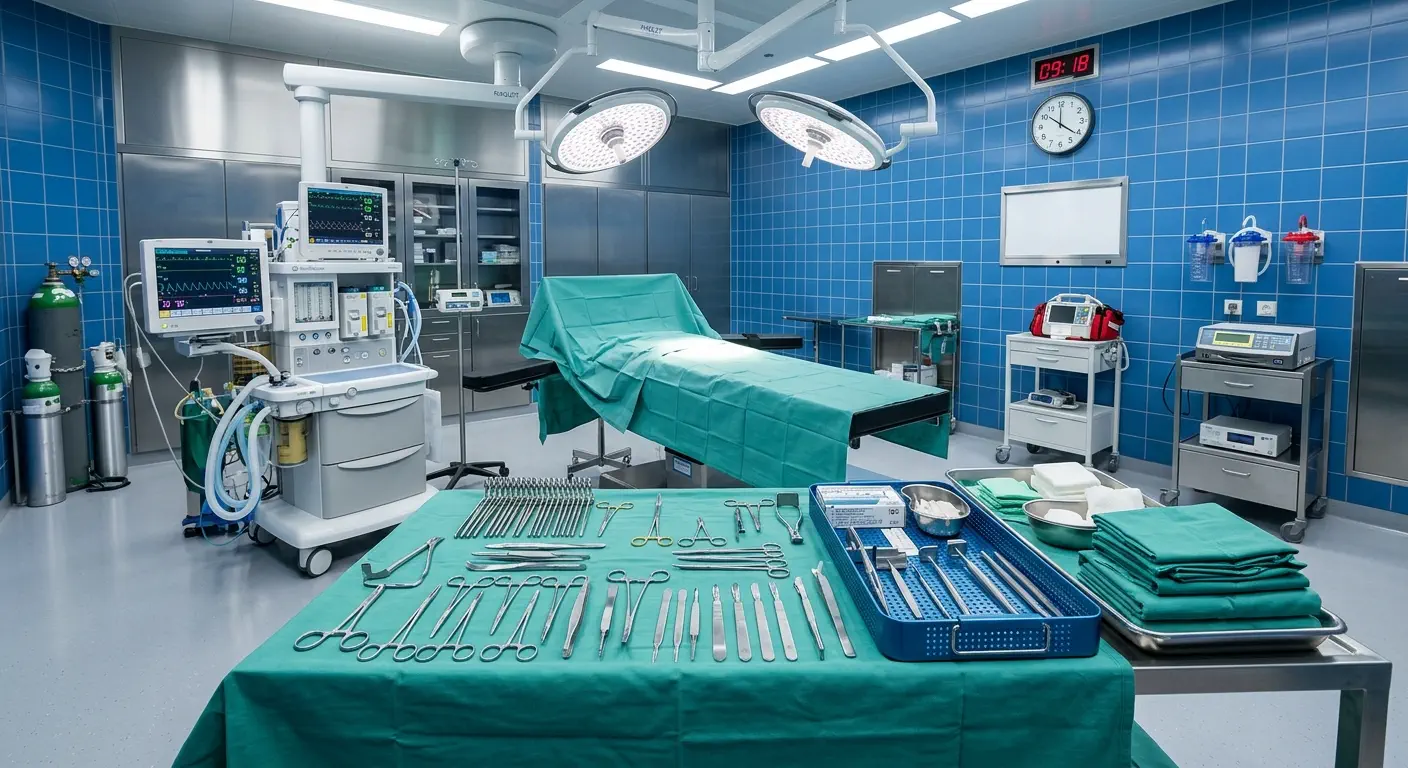
- Before surgery: Prepare the operating room by setting up sterile tables with instruments, supplies, and equipment. Verify that all instruments are functioning and properly sterilized. Help position the patient on the operating table and apply sterile drapes.
- During surgery: Pass instruments and supplies to the surgeon and surgical assistant. Hold retractors, cut sutures, and help count sponges, needles, and instruments to ensure nothing is left inside the patient. Monitor and maintain the sterile field throughout the procedure — if a boundary is broken, the scrub tech is often the first to catch it.
- After surgery: Apply wound dressings, help transfer the patient to recovery, and prepare the operating room for the next case. Restock and sterilize instruments and ensure all equipment is accounted for.
The majority of surgical technologists — over 70% — work in hospitals, according to the Bureau of Labor Statistics. The remainder work in outpatient surgery centers (ambulatory surgical centers), physician offices, and dental offices. Outpatient centers are a growing segment of the field as more procedures shift away from inpatient hospital settings, and they often offer more predictable schedules with fewer overnight or weekend shifts.
A typical workday involves standing for extended periods, working in a temperature-controlled OR environment, and maintaining intense focus during procedures that can last anywhere from 30 minutes to several hours. The pace varies — some days involve multiple short procedures back to back, while others center on a single lengthy operation.
Job Outlook and Salary
Growth Projections
The Bureau of Labor Statistics projects 5% employment growth for surgical technologists from 2024 to 2034, which is about as fast as the average for all occupations. That growth translates to approximately 8,700 job openings each year when accounting for both new positions and replacements for workers who retire, transfer to other occupations, or leave the workforce.
Several factors drive sustained demand. The U.S. population is aging, and older adults require more surgical procedures — from joint replacements to cardiac operations. Advances in surgical techniques, including minimally invasive and robotic-assisted procedures, have expanded the range of conditions that can be treated surgically. And as outpatient surgery centers continue to grow, they create additional positions outside the traditional hospital setting.
Salary Data
According to the BLS Occupational Employment and Wage Statistics, surgical technologists earn a median annual salary of $62,830. Here is how the pay range breaks down:
| Percentile | Annual Salary |
|---|---|
| 10th (entry-level) | $43,290 |
| 25th | $50,560 |
| 50th (median) | $62,830 |
| 75th | $74,430 |
| 90th (experienced) | $90,700 |
Pay varies significantly by geography and work setting. Outpatient care centers and specialty hospitals often pay above the median, partly because they compete with large hospital systems for a limited talent pool. States with higher costs of living — California, Washington, Nevada, and Alaska — tend to offer the highest wages, though local demand-and-supply dynamics matter more than state-level averages.
For context, many surgical technologists complete their training in under two years. Compared to careers requiring a bachelor’s degree or higher, that is a strong return on a relatively short educational investment.
The Shortage Factor
The salary and growth numbers look solid on their own, but the real story is the shortage. Hospitals and surgical centers are finding it increasingly difficult to hire and retain qualified surgical technologists.
According to a Becker’s Hospital Review report, Penn Medicine CEO Kevin Mahoney identified the surgical tech shortage as rivaling the nursing shortage in severity. Penn Medicine responded by creating an internal training pipeline — and the demand was immediate: more than 500 employees from across the health system applied for just 12 training spots. That ratio speaks to both the appeal of the role and the urgency hospitals feel about building their own talent supply.
The shortage is not limited to one system. A survey by HCT Healthcare found that 83% of healthcare executives report significant technologist staffing shortfalls. Meanwhile, the American Hospital Association’s workforce analysis notes that labor costs now represent 56% of total hospital expenses, with allied health shortages — including surgical technologists — cited as a major pressure point.
What does this mean for job seekers? Leverage. Employers are offering signing bonuses, tuition reimbursement, accelerated career ladders, and retention incentives to attract surgical techs. New graduates entering the field today step into a market where employers are actively competing for their skills.
How to Become a Surgical Technologist
Education
The standard path into surgical technology is a certificate or associate’s degree program from an accredited institution. Certificate programs typically run 9 to 12 months, while associate’s degree programs take about 24 months and include general education coursework alongside the technical curriculum.
Both pathways cover core competencies: anatomy and physiology, microbiology, surgical pharmacology, sterilization techniques, patient care, and hands-on clinical rotations in the operating room. Clinical rotations are a critical component — they give students supervised experience across multiple surgical specialties before they enter the workforce.
Accreditation matters. Programs accredited by the Commission on Accreditation of Allied Health Education Programs (CAAHEP) or the Accrediting Bureau of Health Education Schools (ABHES) meet nationally recognized standards and qualify graduates to sit for the CST certification exam. There are currently around 430 CAAHEP-accredited surgical technology programs nationwide, down from over 500 a few years ago — a decline the Association of Surgical Technologists (AST) has tracked with concern, as it contributes to the supply bottleneck feeding the broader shortage.
When evaluating programs, look for strong clinical placement partnerships, high certification exam pass rates, and job placement statistics. Our guide on how to evaluate a trade school covers the key questions to ask before enrolling. You can also browse surgical technology programs on our site to compare options by location and credential type.
CST Certification
The Certified Surgical Technologist (CST) credential, administered by the National Board of Surgical Technology and Surgical Assisting (NBSTSA), is the gold standard in this field. While not universally required by law, most employers strongly prefer or require CST certification, and an increasing number of states mandate it.
The CST exam covers:
- Perioperative patient care — pre-operative, intraoperative, and post-operative procedures
- Surgical pharmacology and anesthesia — medications commonly used in the OR
- Sterile technique and infection control — maintaining and monitoring the sterile field
- Surgical procedures — knowledge across general, orthopedic, cardiovascular, neurological, and other surgical specialties
To maintain the CST credential, technologists must complete 30 continuing education (CE) credits every two years. Many employers support CE costs as part of their benefits package.
Holding the CST not only opens more doors — it also correlates with higher pay. Certified surgical technologists consistently earn more than their non-certified peers, and the credential signals to employers that a candidate meets a verified professional standard.
State Requirements
State-level regulation of surgical technologists varies significantly. Some states require certification, registration, or both. Others have no specific requirements beyond employer preferences. The AST maintains a legislative overview tracking which states have enacted surgical technologist practice acts, pending legislation, and regulatory updates.
The general trend is toward more regulation, not less. States that previously had no requirements are increasingly considering certification mandates, partly in response to patient safety concerns and partly to professionalize the field. If you are considering this career, earning the CST proactively is a smart move regardless of your state’s current requirements — it future-proofs your credentials and makes you competitive across state lines.
Career Advancement
Surgical technology is not a dead-end role. It offers a clear ladder with several directions for advancement:
Surgical First Assistant. With additional training and certification (the CSFA credential from NBSTSA), experienced surgical techs can advance to the surgical first assistant role. First assistants take on a more active role during procedures — retracting tissue, providing hemostasis, suturing, and closing wounds under the surgeon’s direction. This role commands higher pay and greater autonomy.
Specialization. Many surgical technologists develop deep expertise in a specific surgical specialty: orthopedics, cardiac, neurosurgery, ophthalmology, or robotic surgery. Specialization often comes with premium pay and makes technologists especially valuable in facilities with high volumes of specific procedure types. Robotic surgery, in particular, is a fast-growing area where experienced techs who learn the technology early gain a significant competitive advantage.
Surgical Services Management. With experience and sometimes additional education, surgical technologists can move into management roles overseeing OR operations, scheduling, staffing, and quality improvement. These positions combine clinical knowledge with administrative responsibilities.
Transition to Other Healthcare Roles. The clinical knowledge and OR experience that surgical technologists accumulate translates well to other healthcare careers. Some techs use their experience as a foundation to pursue nursing (RN or BSN), physician assistant programs, or other allied health roles. The anatomy knowledge, comfort in clinical settings, and understanding of surgical procedures give career changers a meaningful head start.
For those exploring adjacent healthcare careers, our guides on dental assistant careers, medical assistant careers, and pharmacy technician careers cover comparable options with similar training timelines.
Is This Career Right for You?
The Case For
- Strong and stable demand. The surgical tech shortage is structural, not cyclical. An aging population, expanding surgical capabilities, and limited training program capacity mean demand will outpace supply for years.
- Meaningful work. You are part of a team that directly impacts patient outcomes. Many surgical technologists describe a deep sense of purpose in their daily work.
- Short training timeline. Compared to careers with comparable salaries, the 9- to 24-month training period means less time and money spent on education before earning a full-time income. If financing your education is a concern, our guide on financing trade school covers financial aid options, employer-sponsored programs, and scholarship strategies.
- Clear career ladder. From entry-level scrub tech to surgical first assistant to management, the progression is well-defined and achievable.
- Competitive compensation. A median salary above $62,000 with a path to $90,000 or more — without a four-year degree — is a strong value proposition.
The Trade-Offs
- Physical demands. You will spend long hours on your feet, often in the same position, while maintaining intense focus. Back and leg fatigue are common complaints among experienced techs.
- OR environment exposure. Operating rooms involve blood, bodily fluids, sharp instruments, and high-stress situations. This is not an abstract concern — you need to be genuinely comfortable in that environment.
- Irregular hours. Hospital-based surgical techs often work rotating shifts, weekends, holidays, and on-call hours for emergency surgeries. Outpatient center positions tend to have more regular schedules, but entry-level positions are more commonly found in hospitals.
- Burnout risk. The combination of physical demands, high-stakes pressure, and staffing shortages can contribute to burnout. Facilities with chronic understaffing may lean heavily on existing staff, increasing workload. It is worth asking about staffing ratios and overtime expectations during job interviews.
Who Thrives in This Role
Surgical technology rewards a specific set of traits. If you recognize yourself in these descriptions, the career may be a strong fit:
- Detail-oriented. Counting instruments, verifying sterilization, monitoring the sterile field — the margin for error is essentially zero.
- Calm under pressure. Surgeries do not always go according to plan. Unexpected bleeding, equipment malfunctions, and emergency cases require composure and quick thinking.
- Team-oriented. The OR is a tightly coordinated team environment. Egos have no place at the sterile field. The best scrub techs anticipate what the surgeon needs before being asked.
- Physically resilient. Standing, bending, and maintaining focus over multi-hour procedures requires endurance. Good physical fitness is an underappreciated asset in this career.
Getting Started
If surgical technology sounds like the right path, here is a practical sequence to move forward:
- Research accredited programs in your area. Look for CAAHEP or ABHES accreditation, strong clinical partnerships, and published certification pass rates. Browse surgical technology programs to see what is available near you.
- Visit a program or shadow a surgical technologist. Many hospitals and training programs offer observation opportunities. Seeing the OR firsthand — before committing to a program — is the single best way to confirm your interest.
- Apply and enroll. Certificate programs can be completed in under a year; associate’s degree programs in about two years.
- Earn your CST certification immediately after graduating. The credential is your strongest asset in the job market.
- Target your first position strategically. Hospital positions offer the broadest exposure to surgical specialties and build your skills fastest, even if outpatient centers eventually offer better hours.
The operating room needs more qualified hands. For those willing to learn the discipline, the career rewards are tangible, the work is consequential, and the demand is not slowing down.
Sources
- Bureau of Labor Statistics — Surgical Technologists Occupational Outlook Handbook
- Bureau of Labor Statistics — Occupational Employment and Wage Statistics: Surgical Technologists
- Becker’s Hospital Review — Hospitals Confront Surgical Tech Shortage
- HCT Healthcare — The Surgical Tech Shortage
- American Hospital Association — Health Care Workforce Under Pressure
- NBSTSA — CST Certification
- CAAHEP — Surgical Technology Accreditation
- AST — State Legislative Overview