
The most consequential statistic in reentry research is one that almost never makes the headlines: people released from prison who maintain steady employment for one year have a 16 percent recidivism rate over three years, compared with 52 percent for those who don’t. A job is not a soft outcome — it is, by a wide margin, the single strongest protective factor against returning to incarceration.
The skilled trades sit at the intersection of that evidence and a labor market that needs workers. They pay middle-class wages, train through apprenticeship rather than four-year degrees, and — in many cases — have organized programs specifically designed to recruit people with records. They are also not uniform. Some trades have actively welcoming pathways. Others have licensing rules that disqualify entire categories of conviction. This guide is meant to be honest about both — which doors are open, which are conditional, and which are realistically closed.
TL;DR: Key Takeaways
- Employment cuts recidivism dramatically: maintained employment for one year drops the 3-year recidivism rate from 52% to 16%, per Prison To Employment Connection data summarizing federal research.
- 37 states plus D.C. now have statewide Ban-the-Box laws, per the National Employment Law Project. Texas joined in September 2025. These laws delay criminal-history questions until later in hiring.
- Named federal programs exist: DOL’s Pathway Home 6 (about $25M, 9 grants starting July 2025) and the new RESTART initiative (~$81M) fund reentry training in skilled trades and registered apprenticeships.
- Union programs target this audience directly: IBEW’s 2nd Call program, the LA Reentry Workforce Collaborative, and NABTU-affiliated pre-apprenticeships run formal pipelines from prison or jail into building-trades apprenticeships.
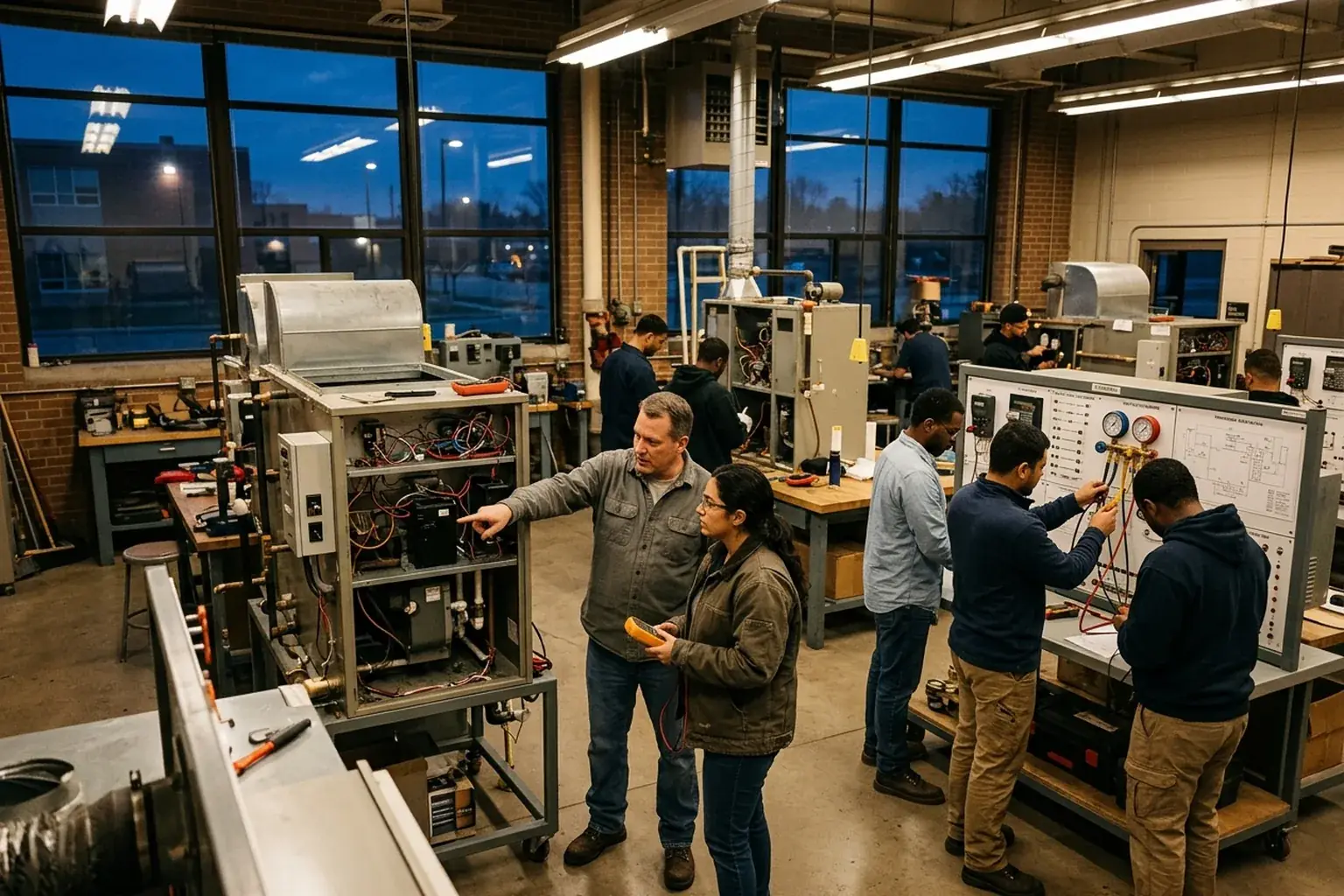
- Construction trades are the most open: electrical, plumbing, HVAC, welding, ironwork, and operating engineers routinely train people with records, especially through registered apprenticeships.
- Licensing rules vary sharply by trade: security guard, locksmith, and many healthcare-adjacent occupations have stricter background-check rules — and 22 states exempt health-related licenses from main fair-chance protections.
- Apprenticeship pays from day one: you earn wages while you train, which solves the cash-flow problem most reentry plans fail on.
Why the Data on Employment Matters Before You Pick a Trade
A 2011 study summarized by Prison To Employment Connection found employment to be the single most important factor in decreasing recidivism. Statewide recidivism rates range from 31 to 71 percent, but the rate for formerly incarcerated people who find work shortly after release is under 9 percent. The contrast holds in federal data too: of more than 50,000 people released from federal prisons in 2010, 33 percent found no employment at all over the four years following release, per Prison Policy Initiative analysis.
The trades matter here because they are one of the few high-paying career paths that don’t require a four-year degree, often pay wages during training (registered apprenticeship), have organized employer pipelines explicitly opened to reentry candidates, and operate in a labor market currently short hundreds of thousands of workers. Contractors who can’t find welders and electricians have economic reason to consider candidates they might once have screened out. The Federal Interagency Reentry Council, in its Reentry Week fact sheet, notes that DOL provides both Work Opportunity Tax Credits and federal bonding protection for employers who hire people with criminal records.
Which Trades Have Welcoming Pathways, and Which Don’t
Not all trades treat a criminal record the same way. The table below gives an honest summary. Background-check requirements come from state licensing boards and federal regulations summarized by NCSL’s Barriers to Work report and the National Employment Law Project’s licensing review. Salary data is BLS Occupational Outlook Handbook, May 2024.
| Trade | Licensing background-check rules | Typical apprenticeship route | Median annual pay (BLS) | Key barrier (if any) |
|---|---|---|---|---|
| Electrician | State license required; most states allow discretionary review of convictions rather than blanket bars. IBEW 2nd Call pipeline. | 4–5 year registered apprenticeship (IBEW or open-shop / IEC) | $62,350 | Felony involving theft or fraud may delay; many states now require an “individualized assessment.” |
| Plumber / Pipefitter | State license required; UA (United Association) and open-shop apprenticeships actively recruit reentry candidates. | 4–5 year registered apprenticeship | $63,420 | Some states bar applicants with recent violent felonies; waiting periods common. |
| HVAC Technician | State or local license in most states; rules vary widely. EPA 608 certification has no criminal-record bar. | 3–5 year registered apprenticeship or 6–12 month certificate | $59,810 | Customer-home access can trigger employer-level background screens. |
| Welder | No state license required in most jurisdictions. AWS certifications are skill-based. | 6–18 month certificate or 3–4 year apprenticeship | $48,940 | Defense-contract or nuclear sites require security clearance; commercial/structural work generally does not. |
| Ironworker | No state license. Building Trades unions actively recruit through pre-apprenticeship reentry partnerships. | 3–4 year registered apprenticeship (Iron Workers International) | $60,040 | Heights/physical screening, not background-driven. |
| Carpenter | No license in most states. UBC (Carpenters Union) and open-shop training. | 3–4 year registered apprenticeship | $58,360 | Few — among the most accessible building trades for reentry. |
| Truck Driver (Class A CDL) | Federal disqualifications apply for specific offenses (drug trafficking using a vehicle, fleeing, certain DUIs). | 4–8 week CDL training; some 1-year apprenticeships. | $54,320 | Hazmat endorsement requires TSA threat assessment; some loads restricted. |
| Security Guard (unarmed) | State license required; many states bar specific felony categories outright. Armed work has stricter federal firearm rules. | Short certification (8–40 hours typical). | $37,070 | Hard barrier in many states. NCSL cites a Texas worker who lost an unarmed guard job at 8 months when the licensing board denied her based on conviction. |
| Locksmith | State license in roughly 15 states; some require over 1,000 days of training and bar most felony convictions. | Apprenticeship or certificate. | $48,800 (locksmith subcategory) | Hard barrier: NJ requires 1,176 days of training; many states deny licenses for theft/burglary convictions specifically. |
| Healthcare-adjacent (CNA, EMT, medical assistant) | State license/certification required. 22 states exempt health-related licenses from main fair-chance protections. | Short certificate (4–12 weeks for CNA/EMT). | Varies; CNA ~$38,000, EMT ~$39,000 | Hard barrier in many states for any felony; categorical bars common for abuse, drug, or violence offenses. |
The takeaway is direct: construction trades and core mechanical trades are the most accessible pathway for reentry. Security, locksmithing, and many healthcare-adjacent fields are not realistic options for most candidates with serious records, and you’ll save time and money by knowing that going in rather than discovering it after you complete training.
If you’re trying to choose between trades generally, our guide on how apprenticeships work walks through the structure of registered apprenticeship and how to find programs in your state.
Named Programs That Exist Specifically for Reentry Trade Careers
Generic advice (“look into the trades”) fails reentry candidates because it doesn’t name the doors. These are the actual programs.
DOL Pathway Home (currently in Round 6)
The Pathway Home grant program, administered by DOL’s Employment and Training Administration, funds state and local organizations to deliver workforce services to incarcerated adults before release and continue them after release. Pathway Home 6 (FY2025) made approximately $25 million available across roughly 9 grants, ceiling of $4 million per applicant, with a 42-month performance period. The design feature that matters: participants keep the same case manager from pre-release through post-release, and post-release services must include registered apprenticeship or other occupational training in in-demand industries. Find your local grantee through your state corrections department or local American Job Center.
DOL RESTART Initiative
In 2025 the DOL announced approximately $81 million in RESTART funding — Reentry Employment in Skilled Trades, Advanced Manufacturing, Registered Apprenticeships, and Training. Like Pathway Home, RESTART explicitly targets formerly incarcerated individuals, channeling them into skilled-trade and manufacturing apprenticeships.
IBEW 2nd Call and the Building Trades Pipeline
The IBEW’s 2nd Call program, profiled by NABTU, partners with reentry organizations to move formerly incarcerated people into electrical apprenticeships. In Los Angeles, the Reentry Workforce Collaborative runs a 12-week pre-apprenticeship that starts with life skills and moves into construction-based instruction, with placements into IBEW and other building-trades apprenticeships on completion. The Building Trades broadly — through NABTU pre-apprenticeship programs like Multi-Craft Core Curriculum (MC3) — have made reentry recruitment an organized priority.
Apprenticeship.gov “Career Seekers with Barriers” Portal
The federal apprenticeship system maintains a dedicated portal at Apprenticeship.gov for career seekers with employment barriers, including people with criminal records. It links to sponsor lists, pre-apprenticeship programs, and supportive-services partners.
How to Approach the Application: The Honest Mechanics
A few practical points that come up consistently in reentry-trade case data.
Ban-the-Box laws delay the question, they don’t erase it. The National Employment Law Project reports that 37 states plus D.C. have statewide Ban-the-Box laws as of 2025, with Texas adding a state law effective September 2025 for employers with 15+ employees. These laws remove the conviction question from initial applications. The background check still happens later — but the chance to be evaluated on qualifications first is meaningful. Know your state’s specific rules and don’t volunteer information before you’re asked.
Federal Bonding and Work Opportunity Tax Credits are tools you can hand to a hesitant employer. The federal bonding program offers no-cost fidelity insurance to employers who hire individuals at risk of being denied employment, including those with criminal records. WOTC offers tax credits of up to $2,400 per qualified hire. Both programs are summarized in the Federal Interagency Reentry Council Reentry Week fact sheet. When you apply, mentioning these proactively can shift the conversation.
Document, document, document. Bring certificates, completion records from any in-custody training, letters of recommendation from caseworkers or program supervisors, and proof of any apprenticeship-readiness coursework (MC3, OSHA 10/30, NCCER core). Our guide on building a trade career portfolio covers what to assemble and how to present it.
Prepare for the aptitude test if you’re applying to a union apprenticeship. IBEW, UA, and other building-trades unions use written aptitude tests as a first screen. The test is on math and reading, not background. Walking in prepared signals seriousness and is one of the highest-leverage things you can do. See our apprenticeship aptitude test prep guide for the specifics.
Funding Training: Pell, WIOA, and Reentry-Specific Sources
Trade training is comparatively cheap, and reentry candidates have several funding paths.
Federal Pell Grants are available to anyone who completes the FAFSA and meets income eligibility — there is no criminal-record bar for most current applicants (federal drug-conviction restrictions were repealed by the FAFSA Simplification Act). Pell now covers up to $7,395 per year. Starting July 2026, Workforce Pell expansion makes Pell available for short-term programs of at least 150 clock hours, which covers many trade certificates that previously didn’t qualify.
WIOA (Workforce Innovation and Opportunity Act) funds, administered through local American Job Centers, can cover tuition for training in high-demand occupations. Reentry candidates often qualify under WIOA’s “individual with a barrier to employment” category.
Pathway Home and RESTART grantees typically cover training costs directly for participants — meaning you may not need to think about Pell or WIOA at all if you’re enrolled in a funded program.
Registered apprenticeships pay you to train. This is the structural advantage of the apprenticeship route. You start at roughly 40–60 percent of journey-level scale and step up as you complete on-the-job hours, with no tuition. For a full breakdown of how to finance trade training including reentry-specific funds, see our financing trade school guide.
What to Expect Realistically in the First Year
The first 6–12 months in a registered apprenticeship typically involve probationary status, the lowest pay tier, and the most physical work. Attendance and reliability matter more than skill — employers cite them as the two attributes that most distinguish apprentices who finish from those who don’t. The Federal Interagency Reentry Council found that supportive services like transportation, child care, and stable housing are the practical determinants of whether a placement holds. If you’re working with a Pathway Home or RESTART caseworker, lean on them for those supports — that’s what the program funds.
Wage progression is real. An IBEW first-year apprentice at 40 percent of journey scale in a $40/hour market starts at about $16/hour with benefits — modest, but on-the-books, with health insurance and pension accrual, and it roughly doubles within 4–5 years.
The license question gets revisited at journey-level. Most state electrical and plumbing licensing boards apply an “individualized assessment” rather than a categorical bar. Convictions related to the work (theft, fraud, violence in a customer-home trade) get more scrutiny; unrelated convictions older than the statutory lookback window often do not bar licensure. NCSL’s Barriers to Work notes 40+ states have reformed licensing-criminal-record interactions since 2015 toward individualized review.
What Doesn’t Work: A Few Honest Warnings
Paying for training before confirming the license door. If you have a felony involving theft, do not enroll in a locksmith program in a state that categorically bars such applicants. Call the licensing board first — most will tell you whether a specific conviction is disqualifying.
Going for armed security without checking federal firearm rules. Federal law (18 U.S.C. § 922(g)) prohibits firearm possession for anyone convicted of a felony or a misdemeanor crime of domestic violence. That includes any work requiring you to carry.
Hiding the record until late in the process. Background checks happen. Ban-the-Box delays the question, it does not prevent the screen. If you’re asked directly, the better strategy — supported by reentry case data — is a brief, factual acknowledgment paired with what you’ve done since. Pathway Home caseworkers coach exactly this script.
Tools on This Site That Can Help
Compare Schools — Compare trade colleges on tuition, financial aid, graduation rates, and program offerings. Useful for narrowing community college vs. private trade school options once you’ve picked a trade.
Programs Directory — Search accredited trade programs by specialty and location. Many community college trade programs partner directly with state corrections departments and local Pathway Home grantees.
Find Your Trade Quiz — A short questionnaire that matches your strengths to trade fields, useful if you’re still deciding which direction to pursue.
The Bottom Line
The case for the trades as a reentry path is built on evidence, not optimism. Employment cuts the 3-year recidivism rate by roughly two-thirds. The trades are one of the few sectors where a registered apprenticeship pays you to train, has formal anti-discrimination protections through DOL, and runs named pipelines — Pathway Home, RESTART, IBEW 2nd Call, NABTU pre-apprenticeships — designed for people with records.
Not every trade is realistic for every record. Be honest with yourself about what licensing boards will accept in your state. But for someone with a record who is willing to commit to a multi-year apprenticeship, the construction trades and core mechanical trades remain one of the most reliable paths to a middle-class wage in the country — and the data behind that claim is decades old and consistent.
Sources
- Federal Interagency Reentry Council / U.S. Department of Justice — FACT SHEET: During National Reentry Week, Reducing Barriers to Reentry and Employment for Formerly Incarcerated Individuals
- U.S. Department of Labor Employment and Training Administration — Pathway Home 6 Funding Opportunity Announcement (FOA-ETA-25-29) — 2025
- North America’s Building Trades Unions (NABTU) — IBEW 2nd Call Program Provides Transition from Prison to Building Trades
- On the Labor Front — “$81 Million Federal Bet on Second Chances: DOL Launches RESTART Grants for Formerly Incarcerated Workers” — 2025
- National Conference of State Legislatures — Barriers to Work: Improving Employment in Licensed Occupations for Individuals with Criminal Records
- National Employment Law Project — Ban the Box: U.S. Cities, Counties, and States Adopt Fair Hiring Policies
- National Employment Law Project — Unlicensed & Untapped: Removing Barriers to State Occupational Licenses for People with Records
- Prison To Employment Connection — Facts: Employment and Recidivism
- Prison Policy Initiative — New data on formerly incarcerated people’s employment reveal labor market injustices — February 2022
- Apprenticeship.gov — Career Seekers with Barriers to Employment
- IUOE — Helmets to Hardhats
- Bureau of Labor Statistics — Occupational Outlook Handbook (Electricians, Plumbers, HVAC, Welders, Ironworkers, Carpenters, Diesel Mechanics, Truck Drivers, Security Guards, Operating Engineers) — May 2024 data