
Five years ago, heat pump installation was a regional specialty — concentrated in the Pacific Northwest, the South, and a handful of high-electric-rate utility territories. Today it is the single fastest-growing equipment segment in HVAC, and the technicians who specialize in it are commanding the top of the pay band in many markets. Federal and state policy is the reason.
Two pieces of federal policy converged: the Inflation Reduction Act’s Home Electrification and Appliance Rebates (HEAR) program, which puts up to $8,000 of rebate money into the hands of qualifying homeowners for heat pump installation, and the 25C Energy Efficient Home Improvement Credit, which offered up to $2,000 in tax credits for qualifying installations through 2025. The credit has now expired for installations completed in 2026 and later, but the rebate program is still rolling out state by state — and the demand it created has reshaped the equipment shipment data, the training landscape, and the wage ladder.
This post is for HVAC techs and prospective trainees thinking about where to specialize. It walks the actual policy structure, current shipment data, the DOE’s training-recognition program, the NATE Heat Pump specialty, the cold-climate dimension, and how to position for the work.
The Demand Signal: AHRI Shipment Data
Heat pump volume is the most direct measurement of installer demand, and the Air-Conditioning, Heating, and Refrigeration Institute (AHRI) publishes monthly shipment data covering more than 90% of the residential and commercial HVAC/R market.
Through May 2025, AHRI reported year-to-date heat pump shipments of 1,713,388 units — up 9.5% over the same period in 2024, with May 2025 alone at 387,610 air-source heat pumps shipped. The annual rolling total exceeded 4.2 million units in May.
Full-year 2025 closed weaker. ACHR News reported overall A/C and heat pump shipments down ~20% for 2025, pulled down by the R-410A → R-32 / R-454B refrigerant transition, mild May weather, high interest rates, dealer inventory destocking, and economic uncertainty. Even with the decline, heat pumps outshipped gas warm-air furnaces in 2025 by 11% (3.64 million heat pumps vs 3.25 million furnaces) — a structural milestone that did not exist five years ago.
Net effect for installers: the 2025 cooldown is a cyclical correction inside a long-term up-trend. Heat pumps now outsell furnaces. That is the work.
What the IRA Actually Offers
Federal policy on heat pumps has two distinct mechanisms — and confusing them is the most common mistake homeowners (and some installers) make. Here is the structure cleanly.
HEAR — Home Electrification and Appliance Rebates
The Inflation Reduction Act’s HEAR program is a $4.5 billion rebate program administered by state energy offices rather than directly by the federal government. The structure:
- Up to $8,000 for a heat pump space conditioning system (low-income households)
- Up to $1,750 for a heat pump water heater
- Up to $2,500 for electrical wiring upgrades
- Up to $4,000 for an electrical service-panel upgrade
- Per-household total cap: $14,000
Income gating:
- Low-income (<80% area median income) — rebate covers up to 100% of project cost (subject to per-equipment caps)
- Moderate-income (80–150% AMI) — rebate covers up to 50% of project cost
- Above 150% AMI — not eligible for HEAR (but may still qualify for 25C, see below)
25C Energy Efficient Home Improvement Credit (now expired)
The 25C tax credit was a federal income-tax credit covering 30% of installed cost up to $2,000 per year for qualifying heat pumps meeting CEE Tier requirements. It expired on December 31, 2025, and installations completed in 2026 or later are not eligible for this federal tax credit.
For consumers and installers, the practical implication: the federal 30% tax credit is gone. The HEAR rebate program is still rolling out and is not affected by the 25C expiration.
State-by-State HEAR Status
HEAR rolls out one state at a time. Per the California Energy Commission’s IRA program page and the NYSERDA Inflation Reduction Act homeowner page, states activate their rebate programs on independent timelines.
As of early 2025, electrification rebates were available in Arizona, California, Colorado, Georgia, Maine, Michigan, New Mexico, New York, North Carolina, Rhode Island, Washington D.C., and Wisconsin, with additional states activating since. Some states paused or delayed their programs amid federal-funding uncertainty.
The practical takeaway for an installer evaluating where to work: states with active HEAR programs have the strongest near-term tailwind for low-income heat pump installations. Local utility programs in cold-climate states (Massachusetts Mass Save, NYSERDA, New Hampshire NH Saves) frequently stack on top of HEAR for additional rebate value.
What “Heat Pump Installer” Actually Means
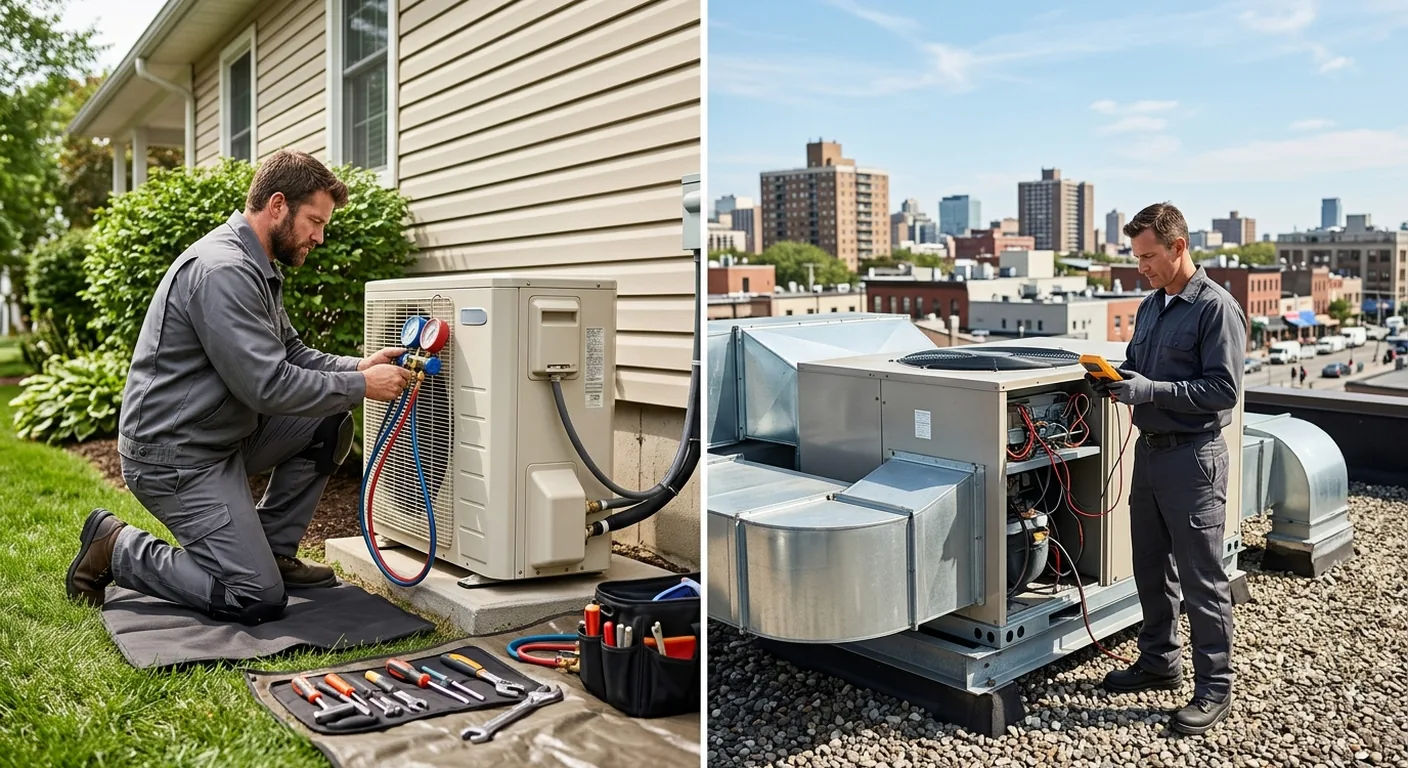
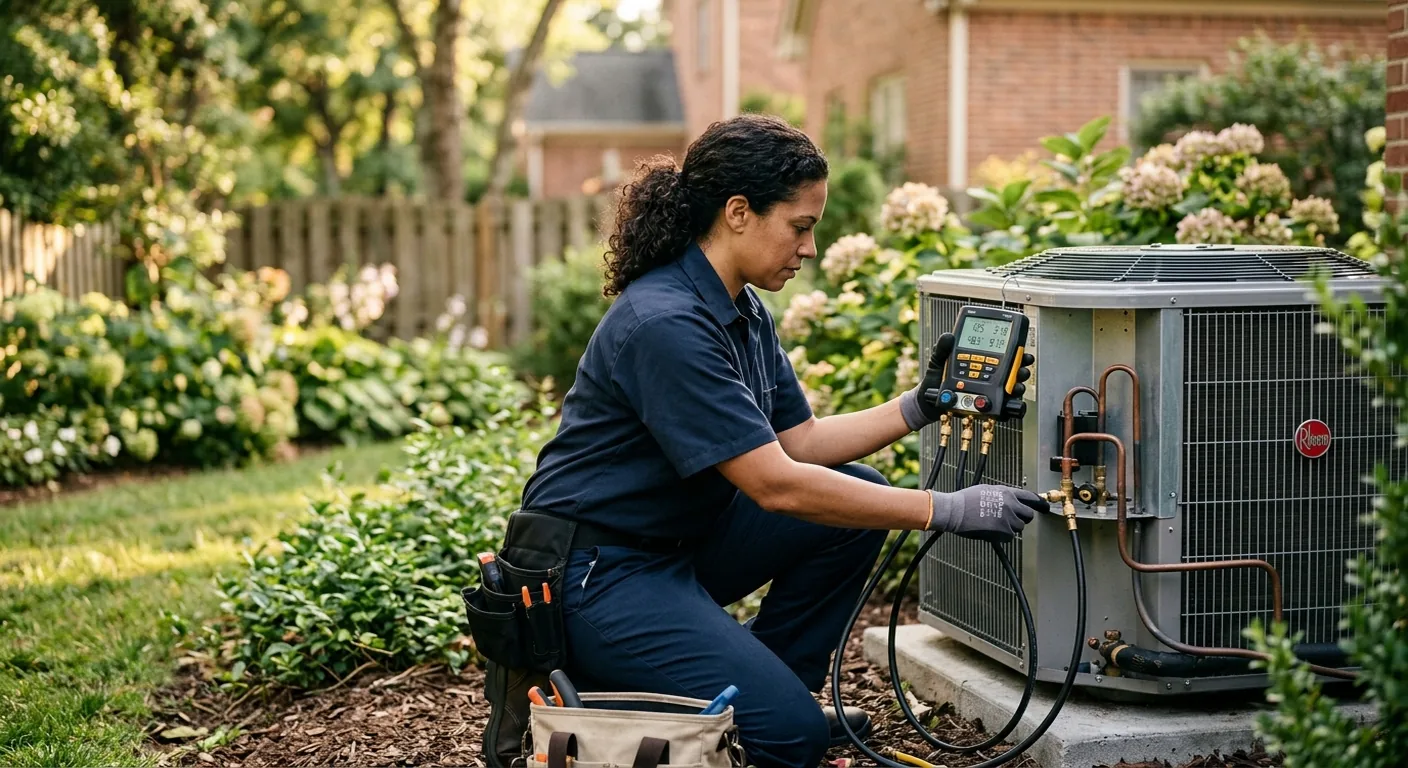
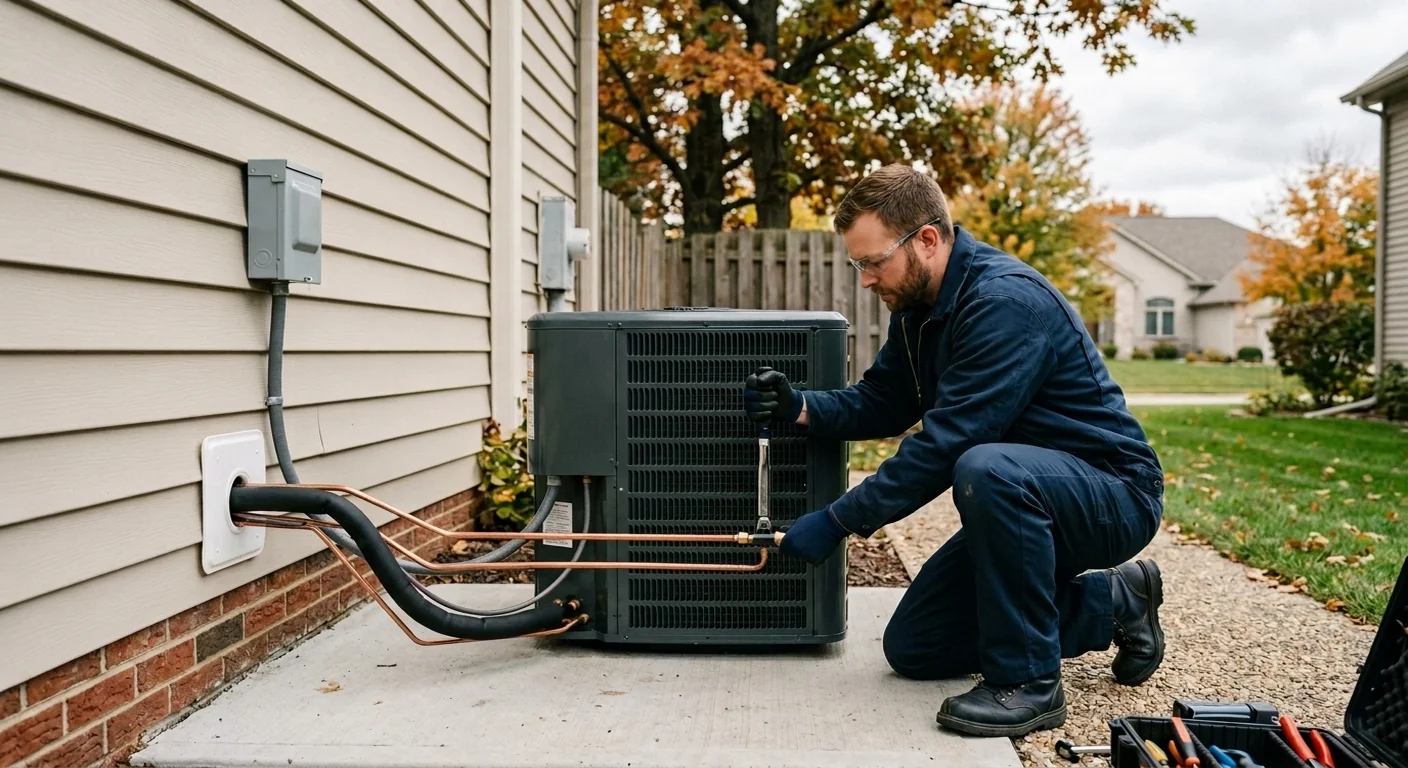
Heat pumps are not just air conditioners that run backwards. They share core refrigeration mechanics with conventional split systems but require a different skill stack at every level:
- Inverter-driven variable-speed compressors are now standard on cold-climate heat pumps. Diagnosing them requires comfort with manufacturer-specific service software and the ability to read inverter fault codes — a meaningful step beyond conventional compressor troubleshooting.
- Reversing valves and defrost cycles are heat-pump-specific and the most common point of nuisance failure. Service techs who can quickly read defrost board outputs and confirm reversing-valve operation are in demand.
- Sizing and Manual J/D load calculations matter more for heat pumps than for furnaces. Oversized heat pumps short-cycle in shoulder seasons and lose efficiency; undersized cold-climate heat pumps fail to maintain set point at low outdoor temperatures.
- Refrigerant transition — the move from R-410A to R-32 (mostly Daikin/Goodman lineups) and R-454B (Carrier/Trane/Lennox lineups) requires knowing which refrigerant goes in which equipment, the A2L mildly-flammable handling rules, and the recovery-machine compatibility for each. This is now part of the standard EPA Section 608 question pool — see our EPA 608 certification guide for the structure of the exam.
- Multi-zone ductless and VRF systems have come down-market into single-family residential. Comfort with line-set sizing, refrigerant charging by length, and multi-head zoning is now table stakes for high-end heat pump work.
- Auxiliary heat strip wiring and dual-fuel controls — for cold-climate installs where a heat pump is paired with electric resistance backup or an existing gas furnace, the controls and contactor wiring require specific competence.
Techs who developed in conventional split-system service can absolutely cross over. The retrain is meaningful but not foundational — typically a few weeks of focused study plus six months of supervised heat pump field experience.
DOE Energy Skilled Recognition for Training Programs
The Department of Energy’s Energy Skilled program is a federal recognition tool that identifies HVAC training providers whose curricula meet DOE’s quality standards for high-performance heat pump work. There are four recognition categories:
- Heat Pump Installation
- Heat Pump Comfort Advising
- Heat Pump Water Heater Installation
- Home Energy Audit
DOE awarded its initial round of recognitions in early 2024 and continues to expand the list. Training providers recognized to date include manufacturer academies (Mitsubishi Electric Trane HVAC US has been recognized for both Residential Heat Pump Installation and Comfort Advising tracks), industry associations, and a growing list of community colleges and trade schools.
For prospective HVAC students choosing a school, a DOE Energy Skilled recognition is a meaningful quality signal — particularly the Comfort Advising track, which combines installation skill with the customer-facing sizing and recommendation work that drives high-margin replacement sales. When evaluating a program, ask specifically whether it has Energy Skilled recognition or is on the BSESC’s published list. Schools that don’t may still produce strong techs, but the recognition is becoming the de facto national signal for current heat pump curriculum.
The State-Based Energy Efficiency Contractor Training Grants — $150 million in IRA-funded contractor training administered through state energy offices — are also feeding the training pipeline. Working contractors in participating states can get continuing-education and certification costs subsidized through state programs.
NATE Heat Pump Specialty: Where the Pay Premium Shows Up
NATE (North American Technician Excellence) offers a Heat Pump specialty exam — separate from its Air Conditioning specialty — covering reversing valves, defrost logic, dual-fuel systems, and seasonal troubleshooting across heating and cooling operation. It comes in two tracks: Installation (about one year of field experience) and Service (at least two years of experience).
Cost runs roughly $150–$250 for Core + Specialty, and certification lasts 2 years with renewal via continuing education or retake. The credential is voluntary, but employers in markets with active heat pump rebate programs increasingly expect it for senior service-tech roles.
Pay premium reality check: NATE Heat Pump certification doesn’t directly set a wage. What it does is qualify a tech for senior-tech roles at contractors who have built dedicated heat pump service divisions. Those roles tend to land in the upper third of the BLS HVAC wage distribution — top 10% over $91,020 as of May 2024 against a median of $59,810.
For a tech in year 2 or 3 in a HEAR-active state who pairs a NATE Heat Pump specialty with manufacturer-specific training (Mitsubishi MHI/MEUS, Daikin Comfort Pro, LG Multi V), the specialty premium frequently runs $3–$6/hour above generalist HVAC service — a meaningful uplift that pays the $200 exam back in a few weeks.
The Cold-Climate Dimension
Heat pump deployment in cold climates is the dimension of the trade where training quality matters most.
NEEP — Northeast Energy Efficiency Partnerships maintains the cold-climate heat pump (ccASHP) specification and tracks state programs across the Northeast. ccASHP-spec heat pumps are tested to deliver useful capacity at outdoor temperatures of 5°F, with capacity-rated performance at 17°F and 47°F. Properly designed cold-climate installs in Maine, New Hampshire, Vermont, Massachusetts, New York, Minnesota, Wisconsin, and similar regions can serve as the primary heating source rather than as a shoulder-season supplement.
The training implication is that cold-climate heat pump work requires:
- A meaningfully more careful Manual J + Manual D loadcalc workflow
- Understanding of low-ambient performance derating curves
- Comfort with two-stage thermostats, dual-fuel controls, and resistance-heat strip sizing
- Auxiliary heat strip wiring and contactor sizing
- Defrost cycle diagnostics in deep cold, including drain pan heater operation
Northeast utility programs (Mass Save, NYSERDA Clean Heat, NH Saves) frequently require contractors to be on a participating-installer list, which in turn requires specific training certifications (often AHRI ccASHP performance verification, NEEP-aligned curricula, or manufacturer-specific cold-climate certifications). The contractors on those lists bid the rebate-funded work. The list is the gate.
Where the Work Actually Is — and Where It’s Concentrated
A few patterns from current shipment, rebate, and BLS data:
- Highest absolute heat pump volume: Florida, Texas, North Carolina, Georgia, California — large hot/mixed-climate states where heat pumps are the default residential primary HVAC.
- Highest heat pump growth (2022–2025): Northeast and Midwest cold-climate states activating ccASHP-tier rebates — particularly Maine, Massachusetts, New York, Minnesota.
- Highest heat pump pay: California (Bay Area), Massachusetts, New York, New Jersey, Washington, Hawaii — high BLS HVAC OEWS averages plus rebate-driven contractor bidding.
- Best entry-level on-ramp: HEAR-active states with strong utility programs and a healthy mix of replacement and new-construction installation work — currently NY, MA, CO, NM, GA, NC, AZ, CA.
For a more general view of regional HVAC labor markets, see our companion HVAC career opportunities post.
Positioning for Heat Pump Work as a New Tech
If you’re early-career or considering a trade school program, three concrete moves shift you toward the highest-growth segment of HVAC work:
1. Pick a school with a documented heat pump curriculum. Ask specifically: “Do students get hands-on time on inverter-driven variable-speed heat pumps? On ductless mini-splits? On dual-fuel control wiring?” Schools that lead with conventional split-system gas-furnace lineups are training for the equipment of 2015. Schools with current heat pump labs — and ideally DOE Energy Skilled recognition — are training for the equipment of 2026. See our best HVAC schools ranking for a starting list.
2. Sit EPA 608 Universal early — and study the A2L sections. Universal includes the high-pressure section that covers R-410A and the new A2L refrigerants (R-32, R-454B). New residential equipment is shipping in A2L, and the proper recovery-machine compatibility, leak-detection method, and ventilation rules are now standard on the exam. See our EPA 608 certification guide for the exam structure.
3. Add NATE Heat Pump specialty in year 2 or 3. It’s the cheapest credentialing move with a directly observable wage premium in heat-pump-active markets. By the time you’re ready, you’ll have enough field experience to pass the Service-track exam without intensive re-study.
4. Apprenticeship-track candidates: ask the JATC about heat pump rotation. Some union and joint apprenticeship training committees are ahead of the curve on heat pump curriculum (notably IBEW/SMART JATCs in Northeast cold-climate territories); some are catching up. Ask before you commit. For more on apprenticeship structure broadly, see apprenticeships explained.
5. If you’re already a journeyman, pursue a manufacturer-specific cold-climate or VRF credential. Mitsubishi Diamond Contractor, Daikin Comfort Pro, LG Multi V certified contractor — pick one that aligns with the manufacturer your local market favors and complete the training. These credentials gate access to higher-margin warranty and replacement work.
What the IRA Wave Will and Won’t Do
A few honest framings to close on:
It won’t make every HVAC tech a heat pump tech. Replacement and service work on the existing installed base of gas furnaces, conventional split systems, and oil heat continues to be the bulk of the trade in most markets. Heat pump specialization is an addition to that work, not a replacement.
It will accelerate the wage gap between specialist and generalist techs. The contractor that can credibly bid HEAR-rebate-eligible heat pump installs, do the proper Manual J workup, install to ccASHP spec, and service inverter-driven equipment under warranty will outprice the generalist contractor for that work. The technicians on those teams earn more.
It will continue past 2026 even with the 25C credit gone. The 25C tax credit expiring at the end of 2025 reduced the federal incentive by up to $2,000 per install for non-low-income households. HEAR continues. State utility programs continue. Cold-climate heat pump deployment programs in the Northeast and West continue. The structural shift toward heat pumps — particularly in new construction, where electrification mandates and dual-fuel new-build codes are tightening in major coastal markets — does not depend on 25C.
The technicians who pull ahead from here are the ones who add a heat pump specialty rather than treat it as “another kind of AC.”
Bottom Line
Heat pumps are the single highest-growth equipment segment in the trade and the policy wave that lifted demand has reshaped what “qualified installer” looks like. The IRA’s HEAR program ($8,000 low-income / $14,000 cap) is rolling out state by state and will continue past the 25C credit’s December 2025 expiration. The DOE Energy Skilled recognition list is becoming the de facto quality signal for training programs. NATE Heat Pump specialty is the credentialing move with the most observable pay premium for techs in HEAR-active markets.
For a new tech, the moves are:
- School with current heat pump curriculum
- EPA 608 Universal with A2L coverage
- First-job rotation that includes heat pump installs
- NATE Heat Pump specialty in year 2–3
- Manufacturer-specific cold-climate or VRF credential by year 4–5
For a journeyman generalist, the move is to start the manufacturer-specific credential now and add NATE Heat Pump within the year.
For the broader HVAC field outlook, see HVAC career opportunities. For the full credentialing roadmap, how to become an HVAC technician. For aggregated training programs, the HVAC program directory.
Sources
- AHRI — “Monthly Shipments” data and “AHRI Releases May 2025 U.S. Heating and Cooling Equipment Shipment Data” — May 2025 air-source heat pump shipments at 387,610 units, YTD 1.7M units, +9.5% YoY — https://www.ahrinet.org/analytics/statistics/monthly-shipments and https://www.contractingbusiness.com/industry-news/article/55307720/ahri-releases-may-2025-us-heating-and-cooling-equipment-shipment-data
- ACHR News — “Heat Pump, A/C Shipments See 20% Declines in 2025” — Full-year 2025 shipment context, R-410A → A2L transition, 3.64M heat pumps vs 3.25M furnaces — https://www.achrnews.com/articles/165859-heat-pump-a-c-shipments-see-20-declines-in-2025
- California Energy Commission — “Inflation Reduction Act Residential Energy Rebate Programs” — HEAR program structure ($8,000 heat pump, $14,000 household cap, AMI tiers) — https://www.energy.ca.gov/programs-and-topics/programs/inflation-reduction-act-residential-energy-rebate-programs
- NYSERDA — “Inflation Reduction Act: Homeowners” — State-level HEAR rollout example — https://www.nyserda.ny.gov/All-Programs/Inflation-Reduction-Act/Inflation-Reduction-Act-homeowners
- Rewiring America — “Your Guide to the Inflation Reduction Act” — 25C tax credit structure and December 2025 expiration — https://www.rewiringamerica.org/research/ira-guide
- U.S. Department of Energy, Building Science Education Solution Center — “Energy Skilled HVAC Programs” — DOE recognition tool for heat pump training providers — https://bsesc.energy.gov/recognition/hvac-programs
- U.S. Department of Energy — “DOE Recognizes Leaders Preparing a Workforce for Home Energy-Efficiency Upgrades” — Initial Energy Skilled recognitions including Mitsubishi Electric Trane HVAC US — https://www.energy.gov/eere/buildings/articles/doe-recognizes-leaders-preparing-workforce-home-energy-efficiency-upgrades
- Northeast Energy Efficiency Partnerships (NEEP) — “We Have Energy Efficiency Workforce Funding…Now What?” and “The State of Residential Heat Pump Programs” — IRA contractor training, ccASHP specification, Northeast utility programs — https://neep.org/blog/we-have-energy-efficiency-workforce-fundingnow-what and https://neep.org/blog/state-residential-heat-pump-programs
- North American Technician Excellence (NATE) — “NATE Professional Certification Exams” — Heat Pump specialty (Installation and Service tracks) — https://natex.org/technician/take-an-exam/nate-certification-exams
- U.S. Bureau of Labor Statistics — “Heating, Air Conditioning, and Refrigeration Mechanics and Installers” Occupational Outlook Handbook — May 2024 wage data — https://www.bls.gov/ooh/installation-maintenance-and-repair/heating-air-conditioning-and-refrigeration-mechanics-and-installers.htm