
If you want into healthcare fast — and you’re not sure yet whether nursing is for you — becoming a certified nursing assistant is the quickest way to find out. Many people go from no experience to a working CNA in four to twelve weeks, and the training can cost you nothing if a nursing facility hires you. CNAs are the front line of patient care, and the role is the classic first rung on the nursing ladder.
TL;DR
- The fastest healthcare credential: Most CNA programs run 4–12 weeks. The federal minimum is 75 hours of training. Source: 42 CFR § 483.152.
- Training can be free: Under federal Medicaid/Medicare rules, a nursing facility that employs you (or offers you a job) can’t charge you for training — and may have to reimburse it if you’re hired within 12 months. Source: 42 CFR § 483.152(c).
- Huge demand: Growth is a modest 2%, but turnover creates about 211,800 openings per year. Source: BLS Occupational Outlook Handbook.
- Pay: Median $39,530/year ($19.00/hour) as of May 2024. Source: BLS OOH.
- A real stepping stone: CNA → LPN → RN is one of the most traveled paths in nursing.
What a CNA Does
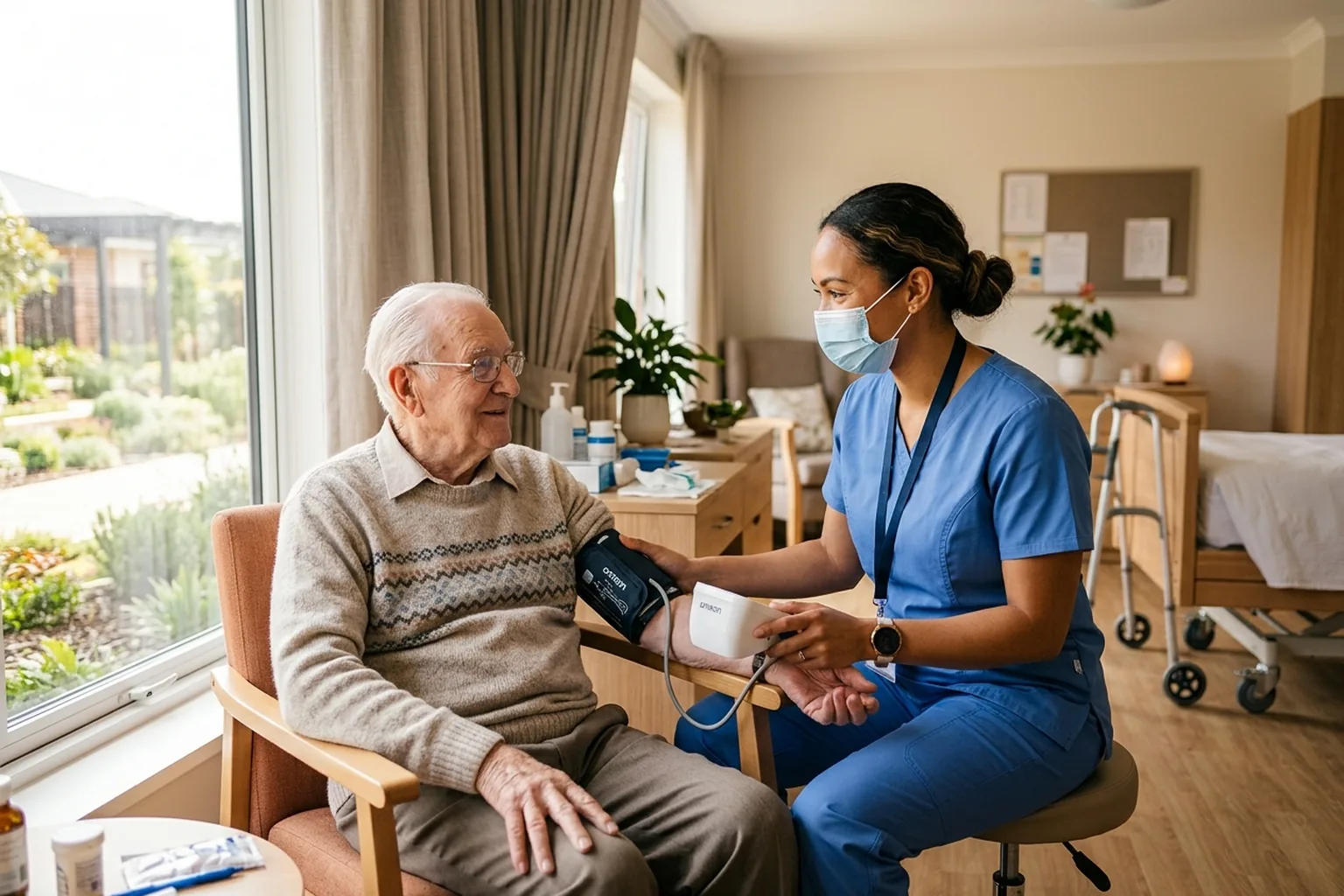
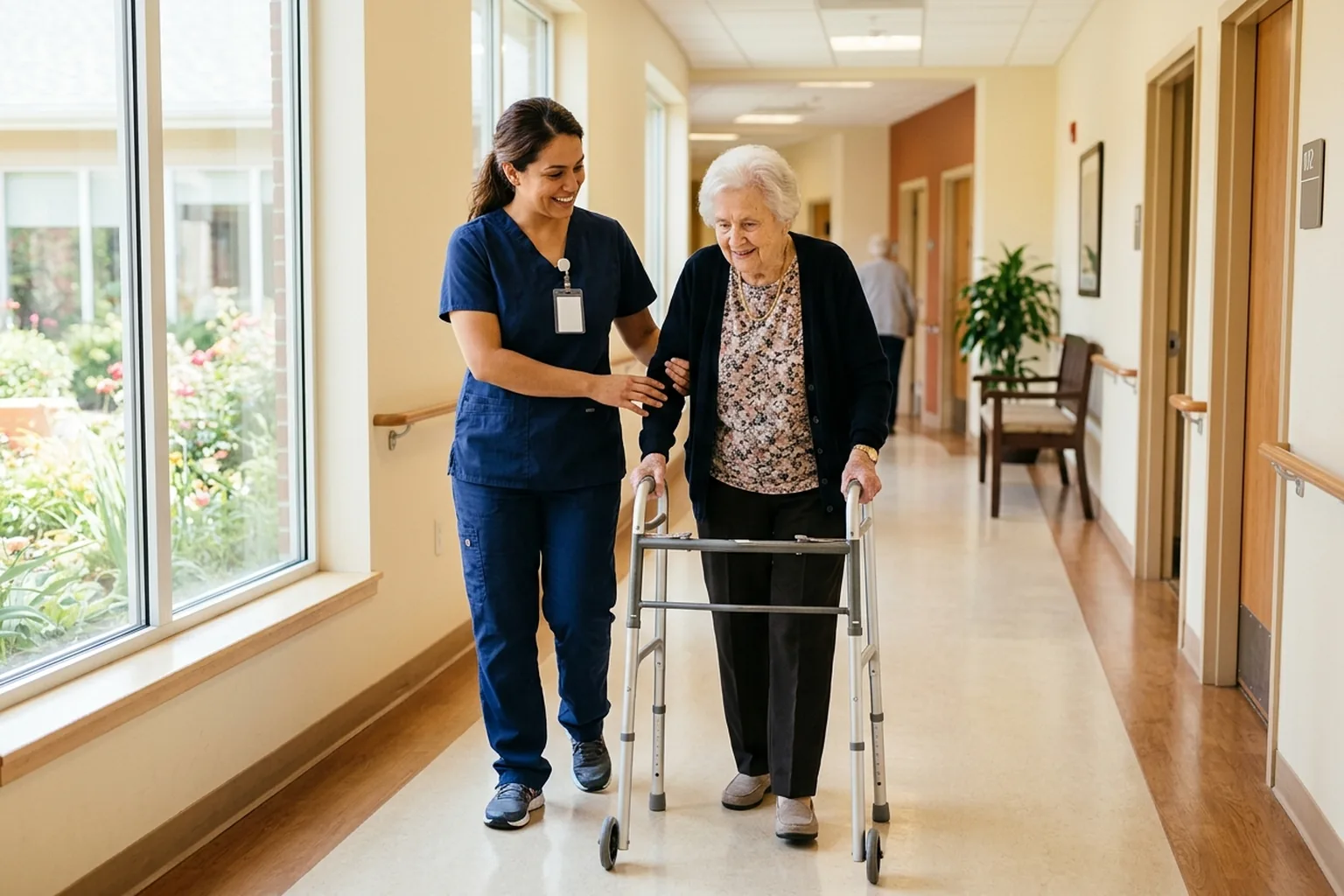
Certified nursing assistants provide hands-on, everyday care under the supervision of a licensed nurse. Per the BLS, that means helping patients with activities of daily living — bathing, dressing, eating, and moving — plus taking vital signs, repositioning bedridden patients, and listening to and reporting patient concerns to the nursing staff.
It’s physically demanding work. The BLS notes nursing assistants have one of the highest rates of injuries and illnesses of all occupations, and shifts often cover nights, weekends, and holidays because care facilities run 24/7. It’s also deeply human work — CNAs spend more time with patients than almost anyone else on the care team.
Why CNA Is the Fastest Way In
Compared with every other clinical credential, CNA training is short by design. The federal floor is just 75 clock hours (including at least 16 hours of supervised clinical training), set by the Omnibus Budget Reconciliation Act of 1987 and codified in 42 CFR § 483.152. In practice, most programs run 4 to 12 weeks.
Many states require more than the federal minimum:
| State | Required training hours |
|---|---|
| Federal minimum | 75 |
| Texas | 100 |
| Florida | 120 |
| Illinois | 120 |
| California | 160 |
Source: 42 CFR § 483.152 and state health-department requirements.
One important update: the American Red Cross discontinued its Nurse Assistant Training program nationwide as of December 31, 2023. If you trained through the Red Cross in the past, look to community colleges, vocational schools, or nursing facilities for current programs instead. Source: American Red Cross.
How to Become a CNA: Step by Step
- Find a state-approved training program (NATCEP). Programs are offered at community colleges, vocational schools, high school career centers, and nursing homes. Compare nursing assistant programs near you.
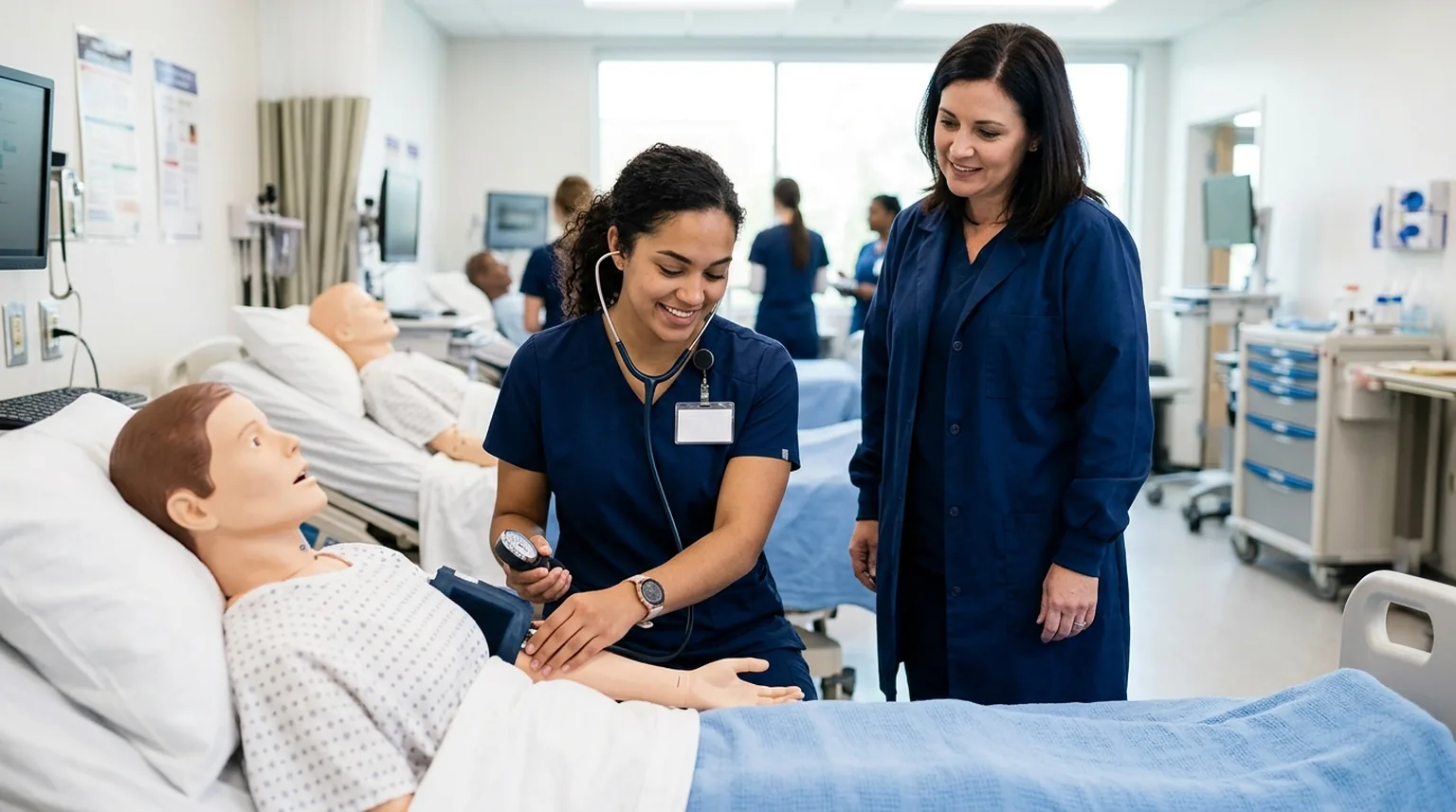
- Complete your training hours. You’ll cover basic nursing and personal-care skills, infection control, safety, and residents’ rights, combining classroom learning with supervised clinical practice.
- Pass the state competency exam. This has a written (or oral) knowledge test plus a hands-on clinical skills demonstration (details below).
- Get listed on your state’s nurse aide registry. This is required to work in any Medicare/Medicaid-certified facility; employers check it before hiring.
- Start working — or start climbing. Many CNAs begin in long-term care, then ladder up to LPN or RN.
Cost — and How to Get It Covered
CNA programs are inexpensive relative to other healthcare training — typically a few hundred to a couple thousand dollars, depending on the provider. But you may not have to pay at all:
- Employer-paid training: Under 42 CFR § 483.152(c), a nursing facility may not charge any training or testing fees to a person who is employed by — or has a job offer from — the facility at the time training begins.
- Reimbursement: If you complete a program on your own and are then hired by a Medicare/Medicaid-certified facility within 12 months, the facility is required to reimburse your training and testing costs on a pro-rata basis.
Because exact tuition varies by state and provider, confirm current costs with the specific programs you’re considering, and ask employers directly about paid-training pipelines — they’re common in long-term care.
The Competency Exam and Nurse Aide Registry
After training, every CNA candidate must pass a state competency evaluation in two parts:
- Written (or oral) test: Usually 60–70 multiple-choice questions on nursing knowledge, safety, and patient rights.
- Clinical skills test: You perform 3–5 randomly selected skills — such as handwashing, taking vital signs, range-of-motion exercises, or a patient transfer — in front of an evaluator.
Exams are delivered by state-contracted vendors such as Credentia, Prometric, or Headmaster, depending on your state. Once you pass, you’re placed on your state’s Nurse Aide Registry, a database — mandated federally under OBRA-87 — that verifies your training and confirms you have no findings of patient abuse or neglect. Registration is required to work in a nursing home. Renewal periods and any continuing-education requirements vary by state, so check your state’s nurse aide registry or use CareerOneStop’s license finder.
Salary and Job Outlook
Nursing assistants earned a national median of $39,530/year ($19.00/hour) as of May 2024, per the BLS. The lowest 10% earned under $31,390; the top 10% earned more than $50,140.
| Industry | Median annual |
|---|---|
| Government (excl. education & hospitals) | $45,760 |
| Hospitals (state, local, private) | $40,170 |
| Nursing care (skilled nursing) facilities | $39,170 |
| Continuing care / assisted living | $38,500 |
| Home healthcare services | $36,910 |
Source: BLS OOH — Pay.
On paper, growth looks slow — 2% from 2024 to 2034. But that number is misleading. Because turnover is so high (many CNAs move up into nursing), the BLS projects roughly 211,800 openings every year, making this one of the highest-volume hiring occupations in the country. Source: BLS OOH — Job Outlook. For local pay, check the BLS OEWS data or CareerOneStop.
Where CNAs Work
| Setting | Share of jobs |
|---|---|
| Nursing care (skilled nursing) facilities | 35% |
| Hospitals (state, local, private) | 33% |
| Continuing care retirement & assisted living | 11% |
| Home healthcare services | 5% |
| Government | 3% |
Source: BLS OOH — Work Environment. Hospitals tend to pay CNAs the most among standard employers, while home health is the fastest-growing setting as more patients choose to age at home.
Your Next Step: The Nursing Ladder
For many people, CNA isn’t the destination — it’s the on-ramp. The progression is well worn:
| Role | Typical education | Time | Median pay (2024) |
|---|---|---|---|
| CNA | State-approved program + exam | 4–12 weeks | $39,530 |
| LPN/LVN | Diploma/certificate | ~1 year | $62,340 |
| RN | ADN or BSN | 2–4 years | $93,600 |
Sources: BLS OOH: Nursing Assistants, LPN/LVN, and Registered Nurses.
CNA experience is highly valued by LPN and RN programs, and many hospitals offer tuition assistance to CNAs who pursue a nursing degree. There are also lateral moves — into a Patient Care Technician role (with phlebotomy and EKG skills) or, in some states, a Certified Medication Assistant credential. To learn more about the role itself, see our nursing assistant career profile. Prefer a clinic to a care facility? Compare it with becoming a medical assistant.
Getting Started
- Find an approved program. Browse nursing assistant programs and confirm it’s state-approved.
- Ask about paid training. Many nursing facilities cover training in exchange for a work commitment — and federal rules can require it.
- Confirm your state’s hours. Requirements range from the 75-hour federal minimum to 160 hours in California.
- Prepare for both exam parts. Practice the clinical skills as much as the written material — the skills test is where many candidates stumble.
- Think one step ahead. If nursing is the goal, choose a facility that supports CNA-to-LPN or CNA-to-RN advancement.
Frequently Asked Questions
How long does it take to become a CNA?
Most state-approved programs take 4 to 12 weeks. The federal minimum is 75 training hours, though many states require more — up to 160 hours in California.
How much does CNA training cost?
Usually a few hundred to a couple thousand dollars — but it can be free. Under federal rules, a nursing facility that employs or hires you can’t charge you for training, and may have to reimburse it if you’re hired within 12 months of finishing.
What’s on the CNA certification exam?
Two parts: a written (or oral) knowledge test of about 60–70 questions, and a hands-on clinical skills demonstration in which you perform 3–5 randomly selected skills for an evaluator.
How much does a CNA make?
The national median is $39,530/year ($19.00/hour) as of May 2024, per the BLS. Government and hospital settings pay above the median.
Is being a CNA worth it?
If you want into healthcare quickly, want to test whether nursing is right for you, or need a paid foothold while you study for LPN or RN, yes. The pay is modest and the work is physically hard, but the training is fast (often free) and the demand is enormous — about 211,800 openings a year.
What’s the difference between a CNA and an LPN?
A CNA provides basic personal care after a few weeks of training; an LPN completes about a year of schooling, passes the NCLEX-PN, and can administer medications and perform more advanced nursing tasks — for a median of $62,340 versus $39,530.
Sources
- U.S. Bureau of Labor Statistics — Nursing Assistants and Orderlies: Occupational Outlook Handbook — Last modified August 28, 2025
- U.S. Bureau of Labor Statistics — Occupational Employment and Wage Statistics, 31-1131 (Nursing Assistants) — May 2024
- Electronic Code of Federal Regulations — 42 CFR § 483.152 — Requirements for approval of a nurse aide training and competency evaluation program — Current as of June 2026
- American Red Cross — Nurse Assistant Training (program discontinuation notice) — Discontinued December 31, 2023
- U.S. Department of Labor — CareerOneStop License Finder and Salary Finder — Accessed June 2026