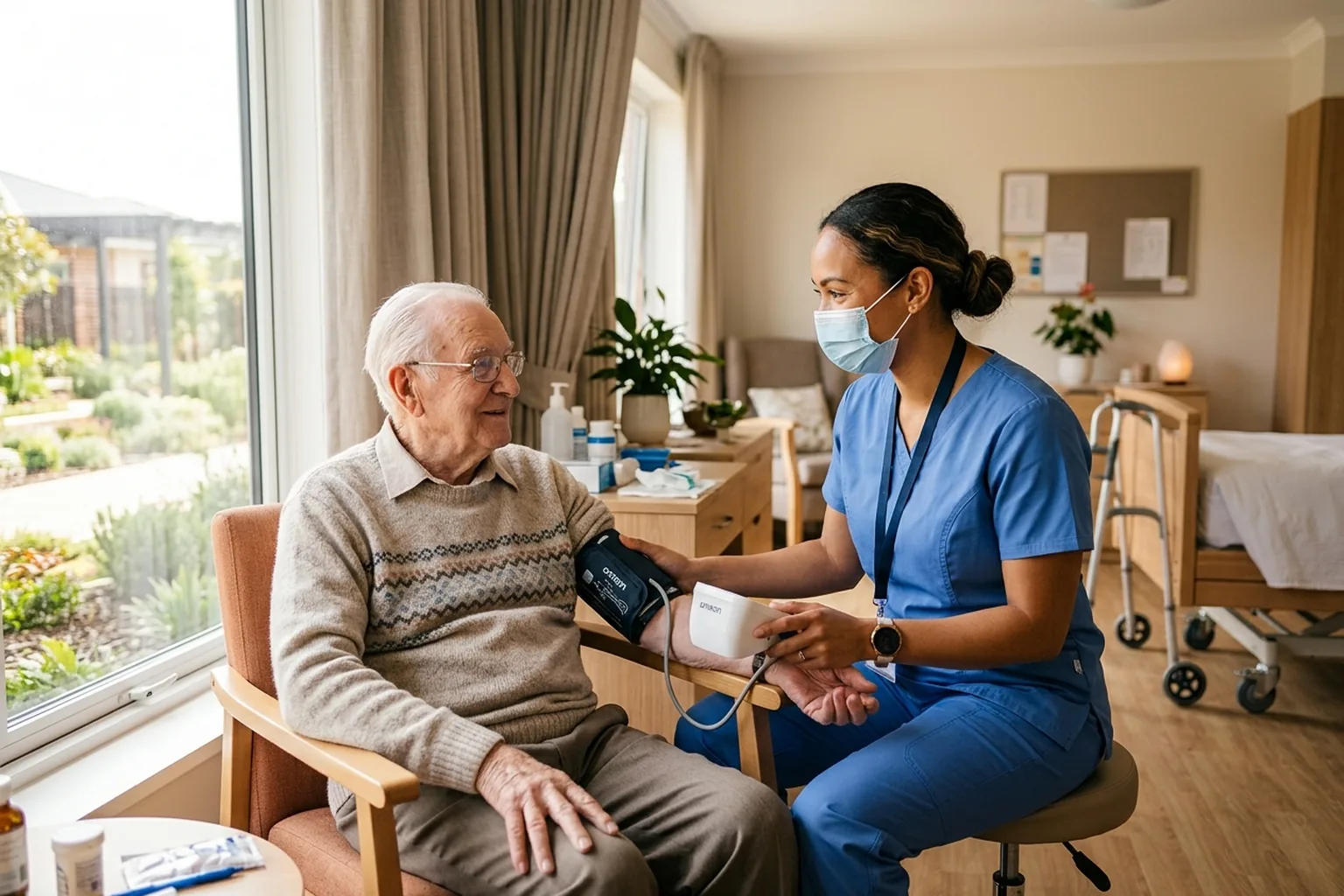

It’s 6 a.m. on a skilled nursing floor. The licensed practical nurse on shift is already moving — passing morning medications, changing a wound dressing, recording vital signs, and flagging a resident whose blood pressure looks off so the registered nurse can assess. By the time families arrive to visit, the LPN has touched nearly every patient on the hall. Practical nurses are the hands-on backbone of America’s long-term care system, and you can become one in about a year — without a four-year degree.
TL;DR
- Solid pay for a one-year credential: LPNs and LVNs earned a median of $62,340/year ($29.97/hour) in May 2024. Source: BLS Occupational Outlook Handbook.
- Steady demand: BLS projects 3% growth (2024–2034) with about 54,400 openings per year. Source: BLS OOH.
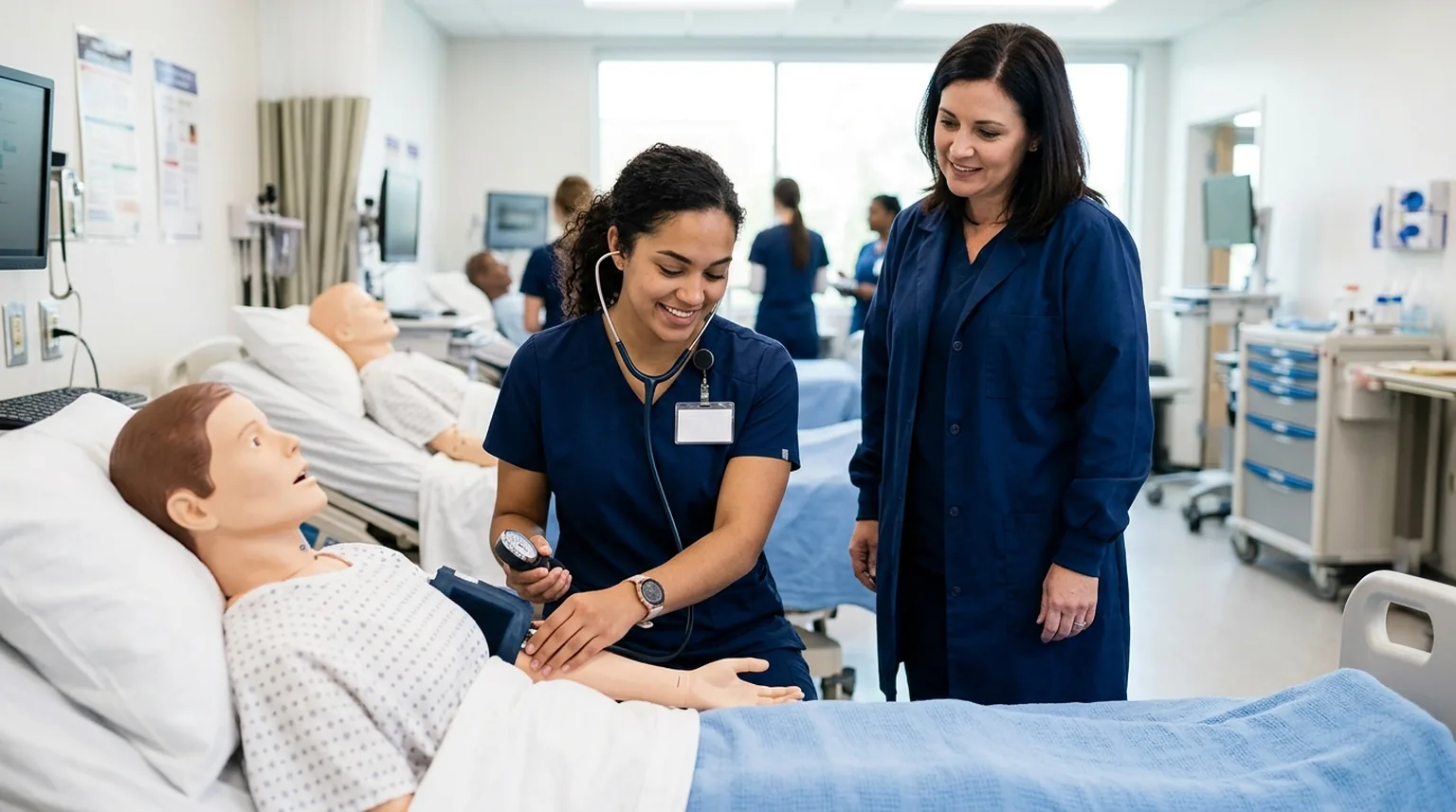
- Fast training: A state-approved practical nursing program takes about 12 months and leads to a diploma or certificate — not a degree.
- One licensing exam: You must pass the NCLEX-PN (administered by the NCSBN). First-time, U.S.-educated candidates passed at 88% in 2024. Source: NCSBN.
- Clear path up: LPN-to-RN bridge programs credit your license and experience — and RNs earn a median of $93,600, about $31,260 more per year. Source: BLS OOH: Registered Nurses.
What an LPN (or LVN) Actually Does
Licensed practical nurses provide basic, hands-on patient care under the direction of a registered nurse or physician. Day to day, that means taking vital signs, monitoring patients, changing dressings, inserting catheters, helping with bathing and dressing, collecting samples, and — in most states — administering medications. According to the BLS, LPNs report patient status to RNs and help carry out the plan of care, rather than writing it.
One naming note that confuses a lot of people: the credential is identical, but California and Texas call it “Licensed Vocational Nurse” (LVN) while the other 48 states use “Licensed Practical Nurse” (LPN). Same training, same scope, different title.
Where do LPNs work? The role is concentrated in long-term care:
| Setting | Share of LPN jobs |
|---|---|
| Nursing and residential care facilities | 37% |
| Hospitals (state, local, private) | 16% |
| Home healthcare services | 12% |
| Offices of physicians | 12% |
| Government | 6% |
Source: BLS OOH — Work Environment.
How Much Do LPNs Earn?
The national median wage for licensed practical and vocational nurses was $62,340 per year ($29.97/hour) as of May 2024, according to the BLS. The lowest 10% earned under $47,960 and the highest 10% earned more than $80,510.
Pay varies by setting:
| Industry | Median annual |
|---|---|
| Government (excl. education & hospitals) | $66,370 |
| Nursing and residential care facilities | $64,170 |
| Home healthcare services | $61,300 |
| Hospitals (state, local, private) | $59,200 |
| Offices of physicians | $57,660 |
Source: BLS OOH — Pay.
Geography matters even more than industry. The highest-paying states tend to be California, Alaska, and Washington, where median wages run well above the national figure, while several Southern states sit below it. State-by-state figures move every year, so check the current numbers for where you live using the BLS state wage data or CareerOneStop’s salary tool.
Job Outlook
The BLS projects employment of LPNs and LVNs to grow 3% from 2024 to 2034 — about as fast as the average for all occupations — rising from 651,400 jobs to 668,500. More telling than the growth rate is the volume of turnover: roughly 54,400 openings are projected each year, mostly to replace workers who retire or move up to RN roles. Source: BLS OOH — Job Outlook. An aging population, rising rates of chronic conditions, and growth in home- and community-based care are the main drivers.
How to Become an LPN: Step by Step
- Earn a high school diploma or GED. This is the baseline requirement for admission to a practical nursing program.
- Enroll in a state-approved practical nursing program. These run about 12 months and are offered at community colleges and technical/vocational schools. The U.S. Department of Education’s College Navigator lists 500+ institutions offering practical nursing (CIP 51.3901). Browse LPN/LVN training programs to compare options near you.
- Complete your clinical hours. Programs pair classroom instruction (anatomy, pharmacology, nursing fundamentals) with supervised clinical rotations in real healthcare facilities.
- Pass the NCLEX-PN. This national exam is required for licensure (details below).
- Apply for your state license. After passing, you apply to your state board of nursing, which may require a background check and fingerprinting.
What LPN Programs Cost — and How Long They Take
Most practical nursing programs take about one year (some run 10–18 months). The award is a postsecondary diploma or certificate, not a degree, which is exactly why the path is so fast.
Cost varies widely and there is no single national figure. Public community-college programs can start around a few thousand dollars, while private career schools can run $25,000–$30,000 or more. Because tuition swings so much by school and state, compare verified, current costs through the College Navigator before you enroll. Many programs also require entrance exams (such as the TEAS), CPR certification, immunizations, and a background check.
The NCLEX-PN Exam
Every LPN must pass the National Council Licensure Examination for Practical Nurses (NCLEX-PN), developed by the National Council of State Boards of Nursing (NCSBN) and delivered at Pearson VUE testing centers. Key facts:
- Format: Computerized Adaptive Testing (CAT) that adjusts question difficulty as you answer.
- Registration fee: $200 for U.S. licensure candidates. Source: NCLEX fees.
- Passing standard: −0.18 logits, in effect through March 31, 2029. Source: NCLEX passing standard.
- Pass rates (2024): 88% for first-time, U.S.-educated candidates (79% overall, including repeat and internationally educated test-takers). Source: NCSBN exam statistics.
Licensing details — renewal periods, continuing education, and fees — vary by state. Find your state board through the NCSBN directory.
LPN vs. RN: Which Path Is Right for You?
This is the decision most prospective nurses wrestle with. The trade-off is time-to-work versus pay and scope.
| LPN/LVN | Registered Nurse (RN) | |
|---|---|---|
| Entry education | Diploma/certificate (~1 year) | Associate (2–3 yrs) or Bachelor’s (4 yrs) |
| Licensing exam | NCLEX-PN | NCLEX-RN |
| Median pay (2024) | $62,340 | $93,600 |
| Scope | Basic care under supervision | Assesses patients, builds care plans, supervises LPNs/CNAs |
| Projected growth | 3% | 5% |
| Annual openings | 54,400 | 189,100 |
Sources: BLS OOH: LPN/LVN and BLS OOH: Registered Nurses.
The good news: you don’t have to choose permanently. LPN-to-RN bridge programs grant academic credit for your license and experience, letting you reach an Associate Degree in Nursing (ADN) in roughly 12–18 months or a Bachelor of Science in Nursing (BSN) in 2–3 years. Many nurses earn as an LPN while they bridge up. Learn more about the destination role in our registered nurse career profile.
Is Becoming an LPN Worth It?
For a credential you can finish in about a year, the math is compelling: a median salary above $62,000, steady demand with tens of thousands of openings annually, and a built-in ladder to RN pay. The honest caveats are that the work is physically demanding, often involves nights and weekends in 24-hour facilities, and that LPNs work under supervision rather than autonomously. If you want into healthcare quickly and intend to keep climbing, practical nursing is one of the most efficient on-ramps available. A great first step is to start as a certified nursing assistant — many LPNs begin there.
Getting Started
- Browse accredited programs. Compare LPN/LVN training programs and verify costs on the College Navigator.
- Confirm prerequisites early. Most programs want a diploma/GED, an entrance exam, immunizations, CPR certification, and a background check.
- Budget for the NCLEX-PN. Plan for the $200 exam fee and dedicated study time.
- Check your state board. Requirements differ — use the NCSBN directory to find yours.
- Plan your ladder. If RN is the goal, pick a program with a clear LPN-to-RN bridge agreement.
Frequently Asked Questions
How long does it take to become an LPN?
About 12 months for most state-approved practical nursing programs, plus the time to pass the NCLEX-PN and receive your state license. Programs range from roughly 10 to 18 months.
What’s the difference between an LPN and an LVN?
None in practice. “Licensed Vocational Nurse” is simply the title used in California and Texas; the other 48 states use “Licensed Practical Nurse.” The training, exam, and scope of practice are the same.
How much does an LPN make?
The national median is $62,340 per year ($29.97/hour) as of May 2024, per the BLS. Pay is higher in government and nursing-facility settings and in states like California, Alaska, and Washington.
Do I have to take the NCLEX to become an LPN?
Yes. Passing the NCLEX-PN is required for licensure in every state. The registration fee is $200, and first-time U.S.-educated candidates pass at about 88%.
Can an LPN become an RN?
Yes — LPN-to-RN bridge programs credit your existing license and experience, shortening the path to an ADN (~12–18 months) or BSN (2–3 years). RNs earn a median of $93,600, about $31,260 more than LPNs.
Is becoming an LPN worth it?
For a one-year, non-degree credential, the pay (median $62,340), steady demand (54,400 annual openings), and clear path to RN make it one of the strongest value propositions in healthcare — provided you’re comfortable with physically demanding, shift-based work.
Sources
- U.S. Bureau of Labor Statistics — Licensed Practical and Licensed Vocational Nurses: Occupational Outlook Handbook — Last modified August 28, 2025
- U.S. Bureau of Labor Statistics — Registered Nurses: Occupational Outlook Handbook — Last modified August 28, 2025
- U.S. Bureau of Labor Statistics — Occupational Employment and Wage Statistics, 29-2061 (LPN/LVN) — May 2024
- National Council of State Boards of Nursing — NCLEX Passing Standard and Fees — Effective through March 31, 2029
- National Council of State Boards of Nursing — Nurse Licensure and NCLEX Exam Statistics — 2024 edition
- National Center for Education Statistics — College Navigator: Practical Nursing Programs (CIP 51.3901) — Accessed June 2026
- U.S. Department of Labor — CareerOneStop Salary Finder — Accessed June 2026