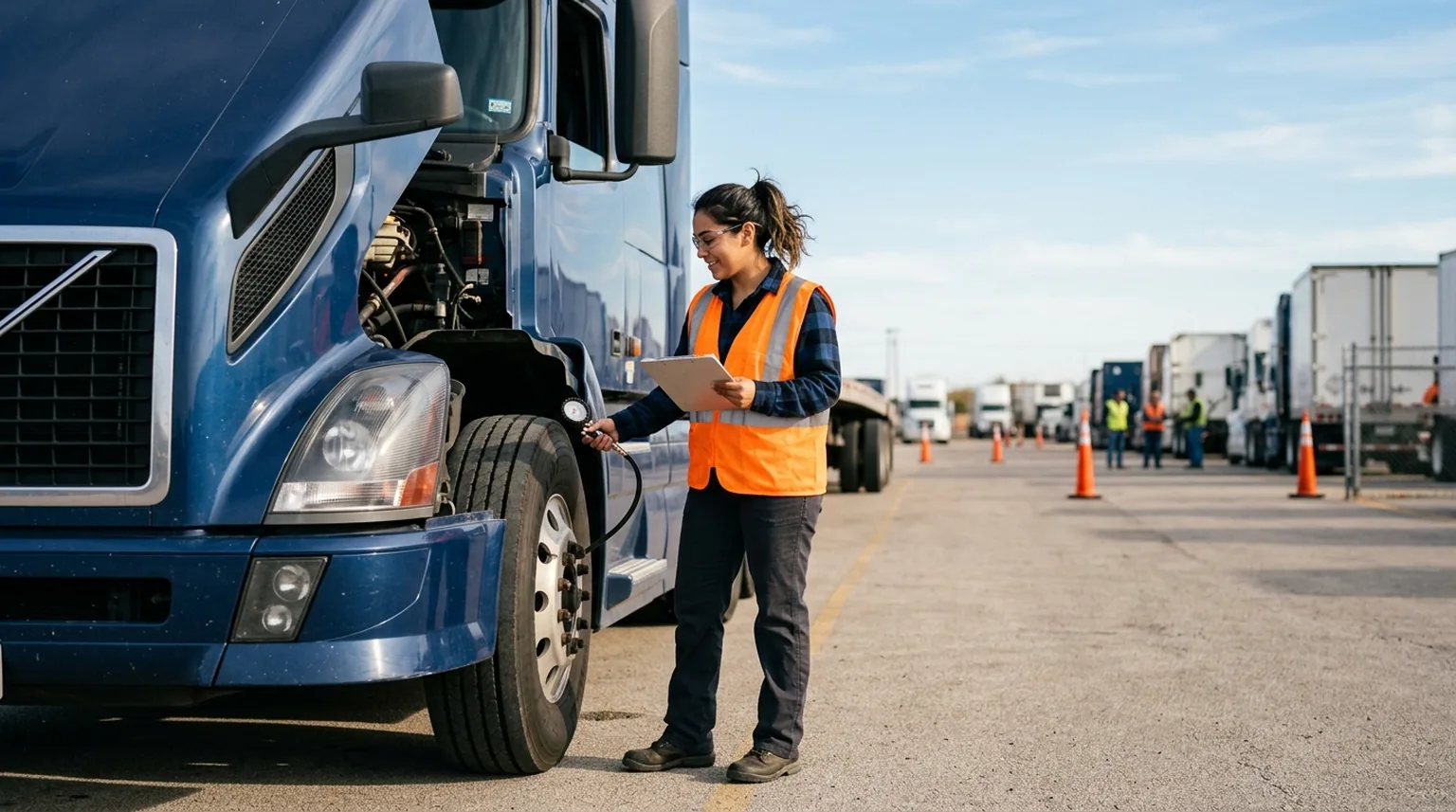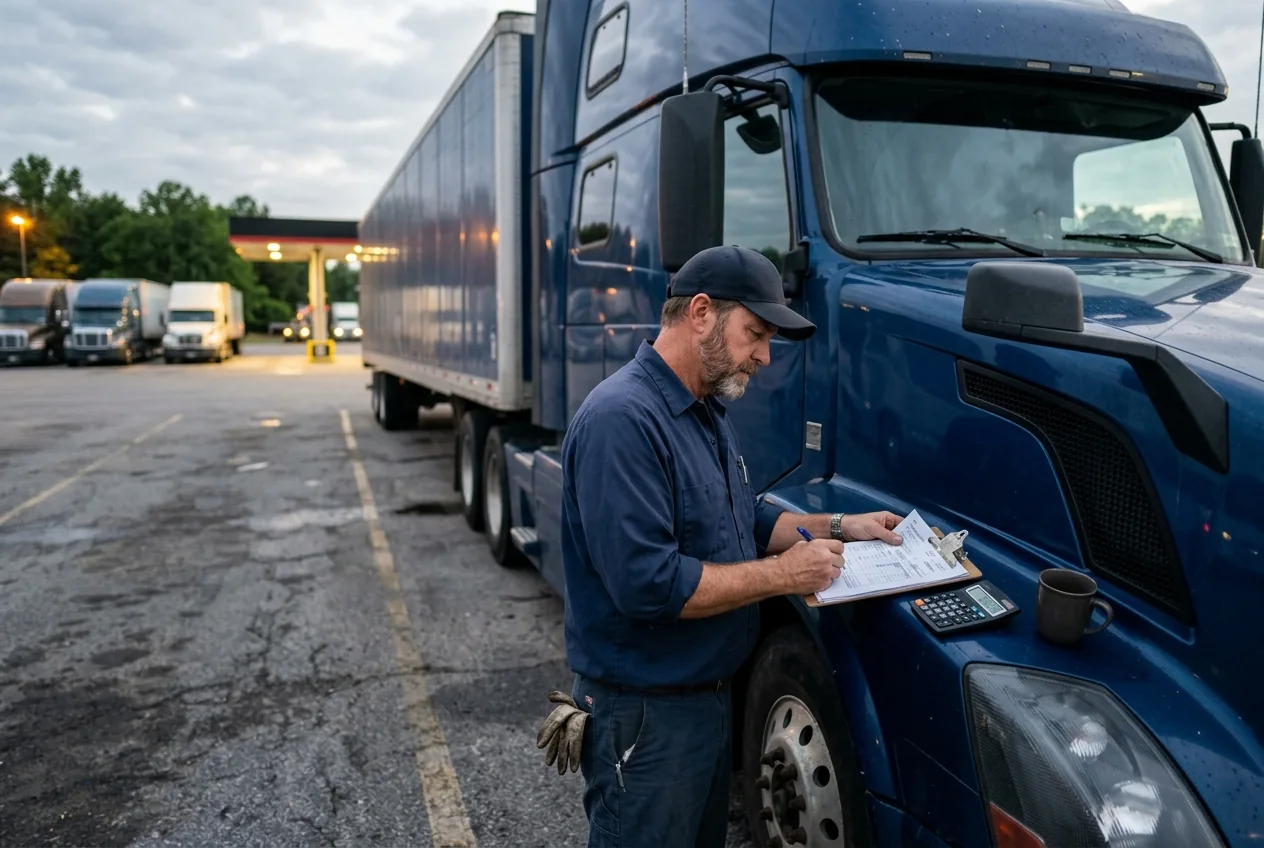

Here’s the direct answer: heavy and tractor-trailer truck drivers earned a median of $57,440 in the latest BLS wage data (May 2024). The bottom 10% — mostly first-year drivers — earned under $38,640, and the top 10% earned more than $78,800. Owner-operators can gross $200,000+, but after the truck, fuel, and insurance take their cut, the average owner-operator nets roughly $65,000–$72,000 — often within a few thousand dollars of a good company job, with far more risk.
That last sentence is the one the recruiting ads leave out. This guide walks through what company drivers actually earn by experience, freight type, and state — and then does the honest owner-operator math so you can compare the two paths on take-home pay, not gross revenue.
TL;DR
- Median company driver pay: $57,440/yr (BLS, May 2024). Realistic first-year range: $45,000–$55,000. Experienced over-the-road (OTR) and specialized drivers: $65,000–$85,000+.
- Pay scales with freight type: dry van sits at the bottom; flatbed, tanker, and hazmat-endorsed work pay premiums; LTL and union jobs top the employee scale.
- Top-paying states cluster in the West and Northeast — Alaska ($64,890 median), New Jersey ($64,720), Washington ($63,760).
- Owner-operators average ~$65,000–$72,000 net after expenses (ATBS data) — on gross revenue that can exceed $200,000.
- Demand is structural: about 241,200 openings per year nationally over the next decade.
How Much Do Company Truck Drivers Make?
The national wage curve for heavy and tractor-trailer drivers (BLS OEWS, May 2024, ~2.07 million employed):
| Percentile | Annual pay |
|---|---|
| 10th (entry/first year) | $38,640 |
| Median | $57,440 |
| Mean | $58,400 |
| 90th (experienced/specialized) | $78,800+ |
Most company drivers are paid per mile, not per hour. Typical company rates in 2026 run roughly $0.50–$0.75 per mile depending on experience, region, and freight; at a common 2,000–2,500 miles per week, the math lands right on top of the BLS numbers above. Some fleets pay percentage-of-load (usually 25–30% of linehaul) and most local/LTL work pays hourly.
What moves you up the curve:
- Freight type. Dry van is the entry point. Refrigerated (reefer) pays slightly better, flatbed adds a physical-work premium, and tanker — especially fuel and chemical — sits near the top.
- Endorsements. HazMat (H), tanker (N), and doubles/triples (T) endorsements each unlock better-paying freight. The combination X endorsement (tanker + hazmat) is the classic pay-raise ticket.
- Segment. LTL (less-than-truckload) carriers and private fleets generally out-pay OTR common carriers, and unionized LTL jobs are the best employee deal in trucking — top scale drivers there clear the 90th percentile.
- Home time trade-off. OTR pays more per year than local driving at the same experience level, but you’re buying that with weeks away from home. Local and dedicated routes trade income for predictability.
Truck Driver Pay by State
Median pay for heavy-truck drivers varies by more than $20,000 across states (BLS OEWS, May 2024):
| State | Median annual pay |
|---|---|
| Alaska | $64,890 |
| New Jersey | $64,720 |
| Washington | $63,760 |
| District of Columbia | $63,610 |
| Oregon | $61,180 |
| Minnesota | $61,090 |
Cost of living explains part of the spread, but not all of it — port states, union density, and dedicated freight lanes matter too. Volume is a different story: Texas alone projects over 30,000 truck-driver openings per year, more than any other state. If you’re choosing where to get licensed, our highest-paying trade jobs by state breakdown covers how to weigh pay against living costs, and the trade schools by state pages show what CDL training is available near you.
Owner-Operator Pay: The Gross vs. Net Trap
Owner-operator recruiting pitches quote gross revenue — and gross revenue is genuinely large. A dry van owner-operator running steady freight can gross $180,000–$250,000+ a year. The problem is what’s left after the truck gets paid:
| Expense (typical annual, one truck) | Rough range |
|---|---|
| Truck payment (or lease) | $24,000–$45,000 |
| Fuel (after surcharge offsets) | $50,000–$70,000 |
| Insurance (liability, cargo, physical damage) | $12,000–$20,000 |
| Maintenance, tires, repairs | $15,000–$25,000 |
| Permits, plates, parking, ELD, factoring fees | $5,000–$12,000 |
Run the subtraction and the money left over converges on a much smaller number. ATBS — the largest tax and accounting firm for owner-operators, with data from tens of thousands of clients — put average owner-operator net income around $71,800 in 2025, and its mid-year benchmarking has tracked in the $64,000–$72,000 band for years. That’s real money — but it’s also within striking distance of a top company job that carries zero equipment risk, paid benefits, and no 2 a.m. repair bills.
Owner-operators who genuinely out-earn that average tend to share three traits: they bought used equipment outright (no payment), they run specialized or niche freight with direct customers instead of load boards, and they treat it as a business with disciplined cost-per-mile tracking. Owner-operators who net less than company drivers — and in soft freight markets, plenty do — usually signed an inflated lease-purchase deal with the carrier that recruited them. Treat any “lease-purchase, no money down, be your own boss” pitch as a red flag until an accountant who isn’t affiliated with the carrier has seen the contract.
Company Driver vs. Owner-Operator: Side by Side
| Company driver | Owner-operator | |
|---|---|---|
| Typical take-home | $45K–$85K depending on experience/freight | ~$65K–$72K average net (ATBS); wide variance |
| Startup cost | $0 (many fleets reimburse CDL school) | $20K–$60K down, or a lease |
| Benefits | Health insurance, 401(k), paid time off | Self-funded |
| Risk | Layoff risk only | Equipment, fuel prices, freight-market swings |
| Control | Dispatcher sets your freight | You pick loads, lanes, and home time |
| Upside path | LTL/union/specialized: $80K–$100K+ | Small fleet ownership, direct freight contracts |
The honest sequencing most veteran drivers recommend: drive company for at least 2–3 years first. You’ll learn the industry’s cost structure on someone else’s equipment, build the safety record that cuts your future insurance in half, and find out whether you even want the business side — all while banking a down payment if the answer is yes.
How Truck Driver Pay Grows
Trucking pay follows experience faster than most trades because insurance drives hiring: a driver with two clean years is dramatically cheaper for a carrier to insure than a fresh CDL holder.
- Year 1: $45,000–$55,000 at most OTR carriers. This is the grind year — take it at a carrier with real trainer time, not the cheapest one.
- Years 2–3: jump to a better fleet, dedicated route, or regional gig; add endorsements. $60,000–$70,000 is realistic.
- Years 3+: LTL, private fleet, tanker/hazmat, or union roles put $75,000–$95,000+ in reach — as an employee, with benefits.
Long-term demand supports the wage floor: BLS projects about 241,200 openings per year for heavy-truck drivers over the decade — most from retirements — which is why carriers keep funding tuition-reimbursement and paid-CDL programs.
How to Get Started
The entry cost is one of the lowest in the trades: a Class A CDL program runs 3–6 months. Two things matter when you pick one:
- The school must be on the FMCSA Training Provider Registry — federally required since 2022, or your training literally doesn’t count toward the license. Our guide to choosing a CDL school covers how to verify a program and compare private, community-college, and company-paid training.
- Match the school to the job you want. If you’re targeting tanker or hazmat pay, pick a program that preps those endorsements from day one. The full licensing walkthrough is in how to become a truck driver.
If you’re still weighing trucking against other fast-entry trades, see trade careers with the shortest training time for how a CDL stacks up against HVAC, welding, and CNC on time-to-paycheck.
Sources
- U.S. Bureau of Labor Statistics — Occupational Employment and Wage Statistics (OEWS), May 2024 — Heavy and Tractor-Trailer Truck Drivers — bls.gov
- U.S. Bureau of Labor Statistics — Occupational Outlook Handbook — Heavy and Tractor-Trailer Truck Drivers — bls.gov
- FreightWaves / ATBS — Average owner-operator earnings benchmarking, 2025 — freightwaves.com
- Projections Central — State long-term occupational projections (2022–2032) — projectionscentral.org
- FMCSA — Training Provider Registry — tpr.fmcsa.dot.gov