Service automobiles, buses, trucks, boats, and other automotive or marine vehicles with fuel, lubricants, and accessories. Collect payment for services and supplies. May lubricate vehicle, change motor oil, refill antifreeze, or replace lights or other accessories, such as windshield wiper blades or fan belts. May repair or replace tires.
Automotive and Watercraft Service Attendants
SOC: 53-6031 O*NET: 53-6031.00
Median Salary
$35,670
per year
Job Growth
➡️ 3.8%
Average (2024-2034)
Annual Openings
12.9
projected jobs/year
Education Level
High school diploma or equivalent
Job Zone 2
Service automobiles, buses, trucks, boats, and other automotive or marine vehicles with fuel, lubricants, and accessories. Collect payment for services and supplies. May lubricate vehicle, change motor oil, refill antifreeze, or replace lights or other accessories, such as windshield wiper blades or fan belts. May repair or replace tires.
What does a Automotive and Watercraft Service Attendants do?
How much can you earn?
Entry Level
$28,630
10th percentile
Early Career
$31,300
25th percentile
Median
$35,670
50th percentile
Experienced
$39,320
75th percentile
Top Earners
$46,060
90th percentile
National Salary Distribution
10th
$28,630
25th
$31,300
Middle 50%
MEDIAN
$35,670
Mean: $36,780
75th
$39,320
90th
$46,060
Middle 50% of earners
Median salary
Mean (average)
Key Insights
- •Salary range spans $17,430 from entry level to top earners
- •Middle 50% earn between $31,300 and $39,320
- •Salary spread is 22.5% around the median, showing low variation
- •Total national employment: 102,010 professionals
What's the job outlook?
Job Market Intelligence
Medium Demand
Market demand
Medium Risk
Automation risk
Current Employment
National Employment:102,400
Top Industries
Retail Trade55.7%
Other Services (except Public Administration)35.4%
Repair and Maintenance35.3%
10-Year Outlook
Growth Rate:+3.8%
Annual Openings:12,900
Employment Projections
2025 (Current)102,400
Current
2035 (Projected)106,300
+3.8%
+3,900
Employment Change
+3.8%
Growth Rate
10
Year Projection
Growth Category: As fast as average
Geographic Salary & Employment Data
Explore where Automotive and Watercraft Service Attendants professionals work across the United States
Showing 15 of 50 locations
New Jersey
11,050 jobs$35,3503.93x
California
10,190 jobs$41,7700.85x
Texas
6,880 jobs$33,6700.74x
Oregon
6,270 jobs$34,2804.86x
Florida
5,150 jobs$34,8600.79x
Georgia
4,210 jobs$30,9501.31x
Virginia
4,060 jobs$30,3501.51x
New York
3,770 jobs$37,1800.59x
Michigan
3,390 jobs$31,2801.17x
Indiana
3,090 jobs$35,7001.47x
Colorado
2,980 jobs$38,3701.58x
Ohio
2,930 jobs$34,9900.80x
Tennessee
2,840 jobs$31,9701.32x
North Carolina
2,790 jobs$33,6800.86x
Wisconsin
2,770 jobs$36,5501.43x
Understanding the Data
Location Quotient (LQ):
- • LQ > 1.0: More jobs than national average
- • LQ = 1.0: Same as national average
- • LQ < 1.0: Fewer jobs than national average
Data Source:
Bureau of Labor Statistics Occupational Employment and Wage Statistics (OEWS), May 2025
Key Growth Factors
- •Average growth expected
What skills do you need?
Top 10 Most Important Skills
#1
Customer and Personal Service
100%
#2
Operation and Control
100%
#3
Oral Expression
100%
#4
Service Orientation
94%
#5
Oral Comprehension
92%
#6
Mechanical
88%
#7
Speaking
86%
#8
Finger Dexterity
82%
#9
Time Management
80%
#10
Sales and Marketing
76%
Skills Overview
Customer and Personal Service
advanced5.0
100%
Operation and Control
advanced5.0
100%
Oral Expression
advanced5.0
100%
Service Orientation
advanced4.7
94%
Oral Comprehension
advanced4.6
92%
Mechanical
intermediate4.4
88%
Speaking
intermediate4.3
86%
Finger Dexterity
intermediate4.1
82%
Skills are rated on a scale of 0-5, with 5 being the most important. The complexity level indicates how advanced the skill typically needs to be.
Filter:
Sort by:
Customer and Personal Service
advancedImportance100%
knowledge
5.0/5.0
Operation and Control
advancedImportance100%
abilities
5.0/5.0
Oral Expression
advancedImportance100%
abilities
5.0/5.0
Service Orientation
advancedImportance94%
skills
4.7/5.0
Oral Comprehension
advancedImportance92%
abilities
4.6/5.0
Mechanical
intermediateImportance88%
knowledge
4.4/5.0
Speaking
intermediateImportance86%
skills
4.3/5.0
Finger Dexterity
intermediateImportance82%
abilities
4.1/5.0
Time Management
intermediateImportance80%
skills
4.0/5.0
Sales and Marketing
intermediateImportance76%
knowledge
3.8/5.0
Active Listening
intermediateImportance74%
skills
3.7/5.0
Trunk Strength
intermediateImportance74%
abilities
3.7/5.0
Highly Transferable Skills
These skills are valuable across multiple career paths, making career transitions easier:
Segmental Pavers67%
5 shared skills
Nannies54%
5 shared skills
Commercial Divers54%
5 shared skills
Concierges54%
5 shared skills
Continuous Mining Machine Operators54%
5 shared skills
Explosives Workers, Ordnance Handling Experts, and Blasters54%
5 shared skills
Skills by Career Stage
Entry Level
Must Have:
- ✓Service Orientation
- ✓Speaking
- ✓Time Management
- ✓Customer and Personal Service
- ✓Mechanical
Learn on the Job:
- →Equipment Maintenance
- →Coordination
- →Administration and Management
Mid Career
Expected:
- ✓Service Orientation
- ✓Speaking
- ✓Time Management
- ✓Customer and Personal Service
- ✓Mechanical
Senior Level
Mastery Required:
- ★Service Orientation
- ★Speaking
- ★Customer and Personal Service
- ★Mechanical
- ★Operation and Control
Skill Development Tips
- •Focus on developing the top 5 skills first - they have the highest impact on career success
- •Transferable skills open doors to related careers and provide flexibility
- •Balance technical skills with soft skills for well-rounded professional development
- •Entry-level positions prioritize foundational skills that can be built upon over time
What technology will you use?
Technology & Digital Skills
Essential technology proficiencies for Automotive and Watercraft Service Attendants
Technology Intensity
High
Digital Literacy Requirements
This career requires advanced digital literacy
1
Basic
2
Intermediate
3
Advanced
4
Expert
Key Digital Competencies:
Proficiency with specialized softwareTechnical documentationData analysis toolsSystem integration
🔥
Hot Technologies in Demand
These technologies are currently trending and highly sought after in this field
Microsoft Outlook
🔥 Hot TechApple Safari
🔥 Hot TechMicrosoft Edge
🔥 Hot TechMozilla Firefox
🔥 Hot TechMicrosoft Windows
🔥 Hot TechMicrosoft Excel
🔥 Hot TechTechnology Stack
Technology Stack Overview
Key technologies used in this career
Microsoft Outlook
Apple Safari
Microsoft Edge
Mozilla Firefox
Microsoft Windows
Microsoft Excel
📚 Technology Learning Resources
Recommended Certifications
- •Vendor-specific software certifications
- •Industry-recognized technology credentials
- •Professional development courses
Online Learning Platforms
- •LinkedIn Learning - Comprehensive technology courses
- •Coursera - University-level programs
- •Udemy - Practical skills training
💡 Technology Skill Development Tips
- •Focus on mastering hot technologies first - they're currently most in-demand
- •Build a portfolio demonstrating your proficiency with key tools and software
- •Stay current through continuous learning - technology evolves rapidly
- •Consider vendor certifications to validate your skills to employers
What's the work environment like?
🏢
Location
MOSTLY INDOOR
💪
Physical Demand
HIGH
👥
Team Orientation
MOSTLY TEAM
🤝
Customer Interaction
CONSTANT
💡Is This Work Environment Right for You?
Consider these factors when evaluating if you'll thrive in this work environment:
- •Are you comfortable working in mostly indoor environments?
- •Can you meet high physical demands?
- •Do you enjoy mostly team team environments?
- •Are you comfortable working with safety protocols and protective equipment?
What are the key tasks?
Tasks & Responsibilities
14
Core Tasks
8
Daily Tasks
20
Work Activities
0
Emerging Tasks
Filter:
Sort by:
General Responsibilities (11)Documentation & Record-Keeping (2)Operations & Execution (1)
1
Collect cash payments from customers, and make change or charge purchases to customers' credit cards, providing customers with receipts.
🔴Daily
Importance:
General Responsibilities100% perform100%
2
Activate fuel pumps and fill fuel tanks of vehicles with gasoline or diesel fuel to specified levels.
🔴Daily
Importance:
General Responsibilities97% perform98%
3
Prepare daily reports of fuel, oil, and accessory sales.
🔴Daily
Importance:
Documentation & Record-Keeping94% perform96%
4
Clean parking areas, offices, restrooms, or equipment, and remove trash.
🔴Daily
Importance:
General Responsibilities91% perform94%
5
Provide customers with information about local roads or highways.
🔴Daily
Importance:
General Responsibilities88% perform92%
6
Perform minor repairs, such as adjusting brakes, replacing spark plugs, or changing engine oil or filters.
🔴Daily
Importance:
Operations & Execution85% perform90%
7
Order stock, and price and shelve incoming goods.
🔴Daily
Importance:
General Responsibilities82% perform88%
8
Rotate, test, and repair or replace tires.
🔴Daily
Importance:
General Responsibilities79% perform86%
9
Maintain customer records and follow up periodically with telephone, mail, or personal reminders of services due.
🟡Weekly
Importance:
Documentation & Record-Keeping76% perform84%
10
Grease and lubricate vehicles or specified units, such as springs, universal joints, or steering knuckles, using grease guns or spray lubricants.
🟡Weekly
Importance:
General Responsibilities73% perform82%
💡 Key Takeaways
- •Daily tasks focus primarily on general responsibilities activities
- •50% of tasks are performed by most workers in this occupation
- •Career advancement brings increased leadership and strategic responsibilities
What career paths are available?
Career Pathways
0
Advancement Opportunities
0
Lateral Move Options
0%
Avg. Salary Increase
Advancement Opportunities
Typical career progression paths from Automotive and Watercraft Service Attendants
💡 Career Planning Tips
- •Most successful advancement happens after 3-5 years of experience
- •Lateral moves can provide valuable cross-functional experience for future leadership roles
- •Focus on developing skills that are transferable across multiple career paths
- •Consider industry trends when planning long-term career moves
Is this career right for you?
Personality & Values Fit
Is This Career Right for You?
Automotive and Watercraft Service Attendants professionals typically have a RCE Holland code and highly value support
RRealistic
CConventional
EEnterprising
Important Personality Traits
Work styles that contribute to success as a Automotive and Watercraft Service Attendants
Attention to Detail
CriticalAttention to Detail
Importance Level4.68
Self-Control
Very ImportantSelf-Control
Importance Level4.33
Dependability
Very ImportantDependability
Importance Level4.27
Analytical Thinking
Very ImportantAnalytical Thinking
Importance Level4.21
Integrity
Very ImportantIntegrity
Importance Level4.19
Cooperation
Very ImportantCooperation
Importance Level4.04
Complete Work Styles Profile
Attention to Detail
4.7
Self-Control
4.3
Dependability
4.3
Analytical Thinking
4.2
Integrity
4.2
Cooperation
4.0
Initiative
4.0
Stress Tolerance
4.0
Adaptability/Flexibility
3.8
Leadership
3.7
💡 Tips for Career Fit Success
- •While personality fit is important, skills can be developed with practice and training
- •Consider informational interviews to better understand the day-to-day personality requirements
- •Work environments vary by employer - research specific companies for cultural fit
- •Your interests and values may evolve - reassess periodically throughout your career
What education is required?
Education Level
High school diploma or equivalent
Typical duration: High school diploma or GED
Preparation Level
Job Zone 2
Some Preparation Needed
Experience Needed
Some previous work-related skill, knowledge, or experience may be helpful
📚 Education Requirement
Required Level:High school diploma or equivalent
These occupations usually require a high school diploma and may require some vocational training or job-related course work.
Training:
Training of a few months to a year
💼 Experience Requirement
Some previous work-related skill, knowledge, or experience may be helpful
Common pathways to gain experience:
- • Some previous work-related skill, knowledge, or experience
- • Vocational school programs (6 months to 2 years)
- • Industry certifications helpful
2
Job Zone Two: Some Preparation Needed
These occupations usually require a high school diploma and may require some vocational training or job-related course work.
Some previous work-related skill, knowledge, or experienceVocational school programs (6 months to 2 years)Industry certifications helpful
Ready to Start Your Journey?
Explore educational programs that can help you become a Automotive and Watercraft Service Attendants.
Browse Training Programs →Trade Colleges That Train for Automotive and Watercraft Service Attendants
Top trade colleges by completions in fields that prepare students for this career.
Advanced Career Institute
Visalia, CA
952 program completions/year
U.S. Truck Driver Training School
Sterling Heights, MI
790 program completions/year
New England Tractor Trailer Training School of Rhode Island
Pawtucket, RI
626 program completions/year
New England Tractor Trailer Training School of CT-Bridgeport
Bridgeport, CT
483 program completions/year
Delta Technical College-Mississippi
Horn Lake, MS
475 program completions/year
New England Tractor Trailer Training School of Connecticut
Somers, CT
430 program completions/year
New England Tractor Trailer Training School of Massachusetts
Haverhill, MA
396 program completions/year
M T Training Center
Desoto, TX
343 program completions/year
HDS Truck Driving Institute
Tucson, AZ
324 program completions/year
Diesel Driving Academy-Baton Rouge
Baton Rouge, LA
313 program completions/year
All-State Career School
Essington, PA
306 program completions/year
City Colleges of Chicago-Olive-Harvey College
Chicago, IL
303 program completions/year
From the Blog
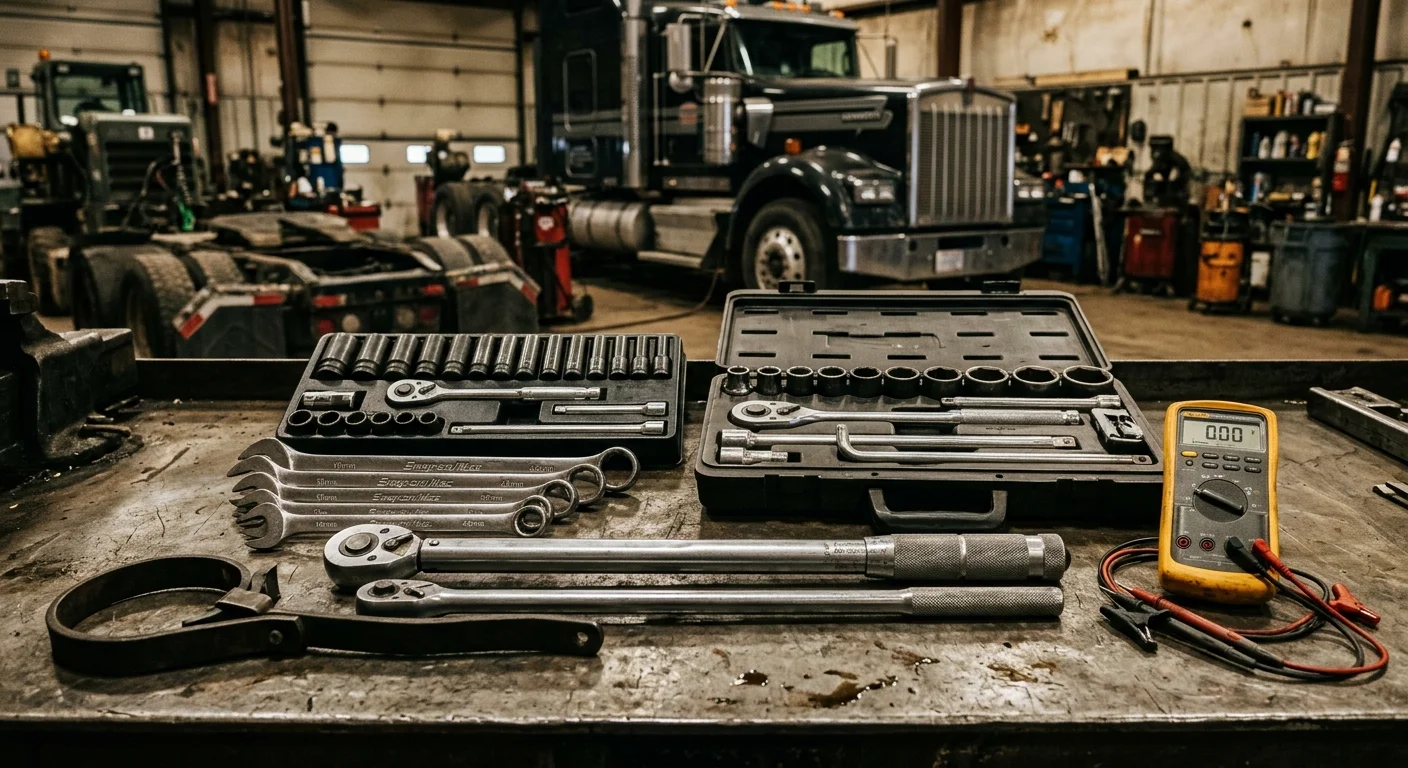
Tools & Equipment
Essential Tools & Gear for Automotive Technicians: A Complete Guide
Discover the must-have tools, safety gear, and equipment every automotive technician needs — from student starter kits to professional setups.
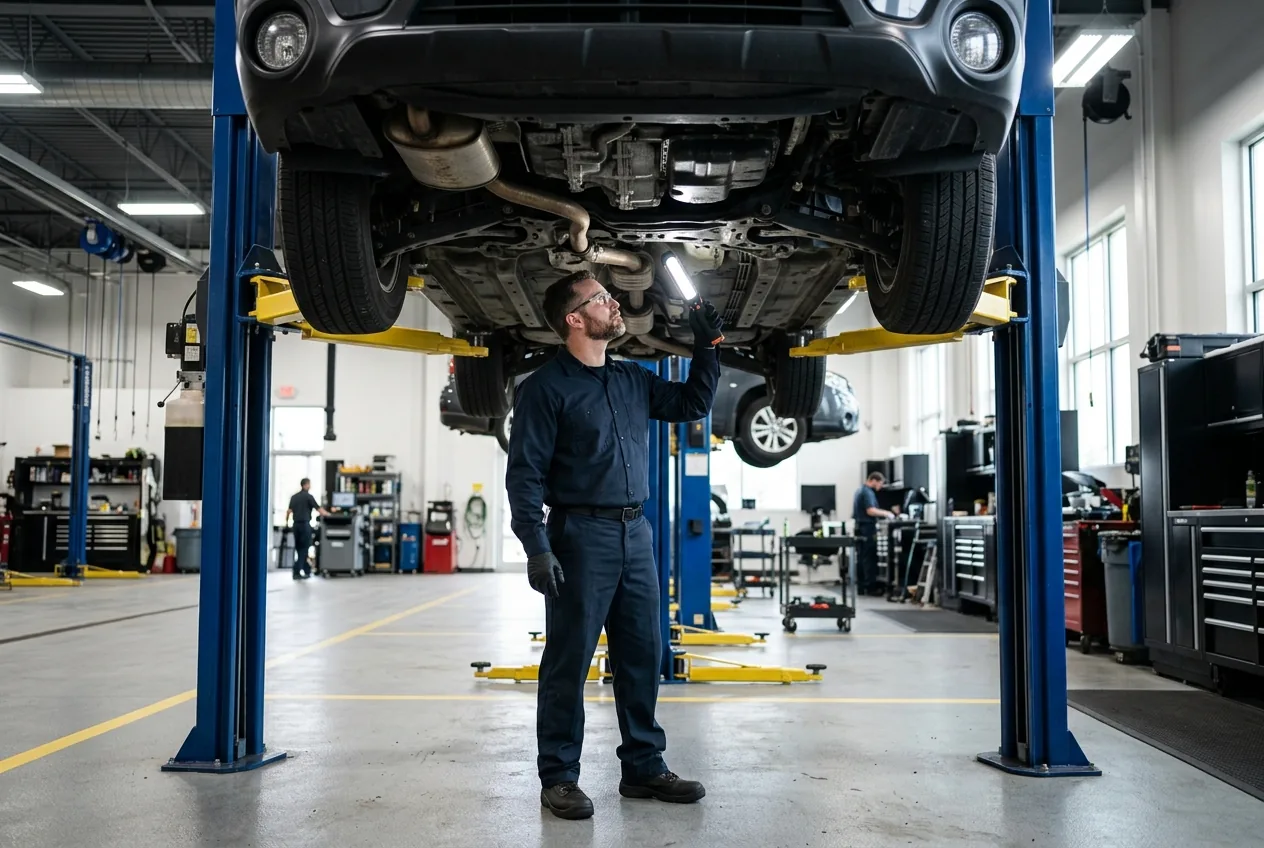
Trade Programs
How to Become an Auto Mechanic: ASE Certification Path from Lube Tech to Master Tech
A step-by-step guide to becoming an auto mechanic — the lube-tech entry ladder, community college vs manufacturer programs like Toyota T-TEN, the full ASE A1–A8 Master Technician path, real tool costs, flat-rate pay explained, and what the EV shift means for the trade.
Career Guidance
Best Trades for Introverts, Ranked by Contact Data (2026)
Which skilled trades actually involve the least dealing with the public — ranked using O*NET's 'Deal With External Customers' work-context scores for every trade occupation, paired with BLS median wages, plus the trades commonly recommended to introverts that the data does not support.

State & Regional Guides
Best Trade Schools in New York 2026 (Ranked by Cost)
Best trade schools in New York 2026: 148 schools, 82 cities. CUNY at $4,800/yr vs private NYC programs — rankings, salaries, demand drivers.