Assess injuries and illnesses and administer basic emergency medical care. May transport injured or sick persons to medical facilities.
Emergency Medical Technicians
SOC: 29-2042 O*NET: 29-2042.00
Median Salary
$44,470
per year
Job Growth
📈 5.8%
Faster (2024-2034)
Annual Openings
13.8
projected jobs/year
Education Level
Vocational school, on-the-job training, or associate degree
Job Zone 3
Assess injuries and illnesses and administer basic emergency medical care. May transport injured or sick persons to medical facilities.
What does a Emergency Medical Technicians do?
How much can you earn?
Entry Level
$34,130
10th percentile
Early Career
$37,960
25th percentile
Median
$44,470
50th percentile
Experienced
$50,100
75th percentile
Top Earners
$62,500
90th percentile
National Salary Distribution
10th
$34,130
25th
$37,960
Middle 50%
MEDIAN
$44,470
Mean: $46,830
75th
$50,100
90th
$62,500
Middle 50% of earners
Median salary
Mean (average)
Key Insights
- •Salary range spans $28,370 from entry level to top earners
- •Middle 50% earn between $37,960 and $50,100
- •Salary spread is 27.3% around the median, showing moderate variation
- •Total national employment: 180,510 professionals
What's the job outlook?
Job Market Intelligence
Medium Demand
Market demand
Medium Risk
Automation risk
Current Employment
National Employment:181,900
Top Industries
Ambulatory Health Care Services50.9%
Other Ambulatory Health Care Services47.1%
Ambulance Services46.3%
10-Year Outlook
Growth Rate:+5.8%
Annual Openings:13,800
Employment Projections
2025 (Current)181,900
Current
2035 (Projected)192,500
+5.8%
+10,600
Employment Change
+5.8%
Growth Rate
10
Year Projection
Growth Category: As fast as average
Geographic Salary & Employment Data
Explore where Emergency Medical Technicians professionals work across the United States
Showing 15 of 50 locations
California
21,880 jobs$46,3801.03x
New York
14,840 jobs$48,4001.32x
Texas
12,770 jobs$37,2600.78x
Pennsylvania
10,160 jobs$43,3101.44x
Illinois
7,840 jobs$42,2601.11x
North Carolina
6,680 jobs$44,2501.17x
Georgia
6,260 jobs$45,5501.10x
New Jersey
6,120 jobs$53,6101.23x
Florida
6,060 jobs$39,8700.53x
Ohio
5,560 jobs$40,2200.86x
Massachusetts
4,550 jobs$50,2301.08x
Virginia
4,490 jobs$45,4200.94x
Michigan
4,230 jobs$39,8700.83x
Indiana
4,160 jobs$42,7401.12x
South Carolina
4,010 jobs$40,3701.50x
Understanding the Data
Location Quotient (LQ):
- • LQ > 1.0: More jobs than national average
- • LQ = 1.0: Same as national average
- • LQ < 1.0: Fewer jobs than national average
Data Source:
Bureau of Labor Statistics Occupational Employment and Wage Statistics (OEWS), May 2025
Key Growth Factors
- •Average growth expected
What technology will you use?
Technology & Digital Skills
Essential technology proficiencies for Emergency Medical Technicians
Technology Intensity
High
Digital Literacy Requirements
This career requires advanced digital literacy
1
Basic
2
Intermediate
3
Advanced
4
Expert
Key Digital Competencies:
Proficiency with specialized softwareTechnical documentationData analysis toolsSystem integration
🔥
Hot Technologies in Demand
These technologies are currently trending and highly sought after in this field
MEDITECH software
🔥 Hot TechMicrosoft Office software
🔥 Hot TechMicrosoft PowerPoint
🔥 Hot TechMicrosoft Excel
🔥 Hot TechMicrosoft Word
🔥 Hot TechTechnology Stack
Technology Stack Overview
Key technologies used in this career
MEDITECH software
Microsoft Office software
Microsoft PowerPoint
Microsoft Excel
Microsoft Word
📚 Technology Learning Resources
Recommended Certifications
- •Vendor-specific software certifications
- •Industry-recognized technology credentials
- •Professional development courses
Online Learning Platforms
- •LinkedIn Learning - Comprehensive technology courses
- •Coursera - University-level programs
- •Udemy - Practical skills training
💡 Technology Skill Development Tips
- •Focus on mastering hot technologies first - they're currently most in-demand
- •Build a portfolio demonstrating your proficiency with key tools and software
- •Stay current through continuous learning - technology evolves rapidly
- •Consider vendor certifications to validate your skills to employers
What's the work environment like?
🏗️
Location
Varies
💪
Physical Demand
LOW
👥
Team Orientation
Varies
🤝
Customer Interaction
NONE
💡Is This Work Environment Right for You?
Consider these factors when evaluating if you'll thrive in this work environment:
- •Are you comfortable working in varies environments?
- •Can you meet low physical demands?
What are the key tasks?
Tasks & Responsibilities
12
Core Tasks
8
Daily Tasks
0
Work Activities
0
Emerging Tasks
Filter:
Sort by:
General Responsibilities (4)Analysis & Evaluation (1)Planning & Development (1)Communication & Coordination (2)Training & Development (1)Documentation & Record-Keeping (2)Management & Supervision (1)
1
Administer first aid treatment or life support care to sick or injured persons in prehospital settings.
🔴Daily
Importance:
General Responsibilities100% perform100%
2
Assess nature and extent of illness or injury to establish and prioritize medical procedures.
🔴Daily
Importance:
Analysis & Evaluation97% perform98%
3
Attend training classes to maintain certification licensure, keep abreast of new developments in the field, or maintain existing knowledge.
🔴Daily
Importance:
Planning & Development94% perform96%
4
Comfort and reassure patients.
🔴Daily
Importance:
General Responsibilities91% perform94%
5
Communicate with dispatchers or treatment center personnel to provide information about situation, to arrange reception of survivors, or to receive instructions for further treatment.
🔴Daily
Importance:
Communication & Coordination88% perform92%
6
Coordinate work with other emergency medical team members or police or fire department personnel.
🔴Daily
Importance:
Communication & Coordination85% perform90%
7
Decontaminate ambulance interior following treatment of patient with infectious disease, and report case to proper authorities.
🔴Daily
Importance:
General Responsibilities82% perform88%
8
Drive mobile intensive care unit to specified location, following instructions from emergency medical dispatcher.
🔴Daily
Importance:
Training & Development79% perform86%
9
Immobilize patient for placement on stretcher and ambulance transport, using backboard or other spinal immobilization device.
🟡Weekly
Importance:
General Responsibilities76% perform84%
10
Maintain vehicles and medical and communication equipment, and replenish first aid equipment and supplies.
🟡Weekly
Importance:
Documentation & Record-Keeping73% perform82%
💡 Key Takeaways
- •Daily tasks focus primarily on general responsibilities activities
- •58% of tasks are performed by most workers in this occupation
- •Career advancement brings increased leadership and strategic responsibilities
What career paths are available?
Career Pathways
0
Advancement Opportunities
0
Lateral Move Options
0%
Avg. Salary Increase
Advancement Opportunities
Typical career progression paths from Emergency Medical Technicians
💡 Career Planning Tips
- •Most successful advancement happens after 3-5 years of experience
- •Lateral moves can provide valuable cross-functional experience for future leadership roles
- •Focus on developing skills that are transferable across multiple career paths
- •Consider industry trends when planning long-term career moves
Is this career right for you?
Personality & Values Fit
Is This Career Right for You?
Emergency Medical Technicians professionals typically have a SRI Holland code
SSocial
RRealistic
IInvestigative
Important Personality Traits
Work styles that contribute to success as a Emergency Medical Technicians
Complete Work Styles Profile
💡 Tips for Career Fit Success
- •While personality fit is important, skills can be developed with practice and training
- •Consider informational interviews to better understand the day-to-day personality requirements
- •Work environments vary by employer - research specific companies for cultural fit
- •Your interests and values may evolve - reassess periodically throughout your career
What education is required?
Education Level
Vocational school, on-the-job training, or associate degree
Typical duration: Varies
Preparation Level
Job Zone 3
Medium Preparation Needed
Experience Needed
Previous work-related skill, knowledge, or experience required
📚 Education Requirement
Required Level:Vocational school, on-the-job training, or associate degree
Most occupations in this zone require training in vocational schools, related on-the-job experience, or an associate's degree.
Training:
Training of more than one year
💼 Experience Requirement
Previous work-related skill, knowledge, or experience required
Common pathways to gain experience:
- • Associate degree programs
- • Apprenticeships (1-2 years)
- • Vocational training with related experience
3
Job Zone Three: Medium Preparation Needed
Most occupations in this zone require training in vocational schools, related on-the-job experience, or an associate's degree.
Associate degree programsApprenticeships (1-2 years)Vocational training with related experience
Ready to Start Your Journey?
Explore educational programs that can help you become a Emergency Medical Technicians.
Browse Training Programs →The Apprenticeship Route: Earn While You Learn
You don't necessarily need to pay for school to enter this field. There are 115 registered apprenticeship sponsors for this occupation in the U.S. DOL system — including 7 union/joint labor-management programs. Apprentices earn a wage from day one, typically starting at 40–50% of the journeyman rate, and finish with no tuition debt.
Most sponsors: SC (43) , PA (9) , GA (8) , TN (8) , IA (6)
How apprenticeships work →Source: U.S. Department of Labor, Registered Apprenticeship sponsors (apprenticeship.gov)
Trade Colleges That Train for Emergency Medical Technicians
Top trade colleges by completions in fields that prepare students for this career.
Ivy Tech Community College
Indianapolis, IN
11.1k program completions/year
South Florida Institute of Technology
Miami, FL
2.8k program completions/year
Des Moines Area Community College
Ankeny, IA
2.3k program completions/year
Northwest Career College
Las Vegas, NV
2.1k program completions/year
Central Georgia Technical College
Warner Robins, GA
1.9k program completions/year
Hondros College of Nursing
Columbus, OH
1.7k program completions/year
Madison Area Technical College
Madison, WI
1.7k program completions/year
Mountainland Technical College
Lehi, UT
1.5k program completions/year
Bluegrass Community and Technical College
Lexington, KY
1.4k program completions/year
Northeast Wisconsin Technical College
Green Bay, WI
1.4k program completions/year
Gateway Technical College
Kenosha, WI
1.4k program completions/year
Milwaukee Area Technical College
Milwaukee, WI
1.4k program completions/year
From the Blog
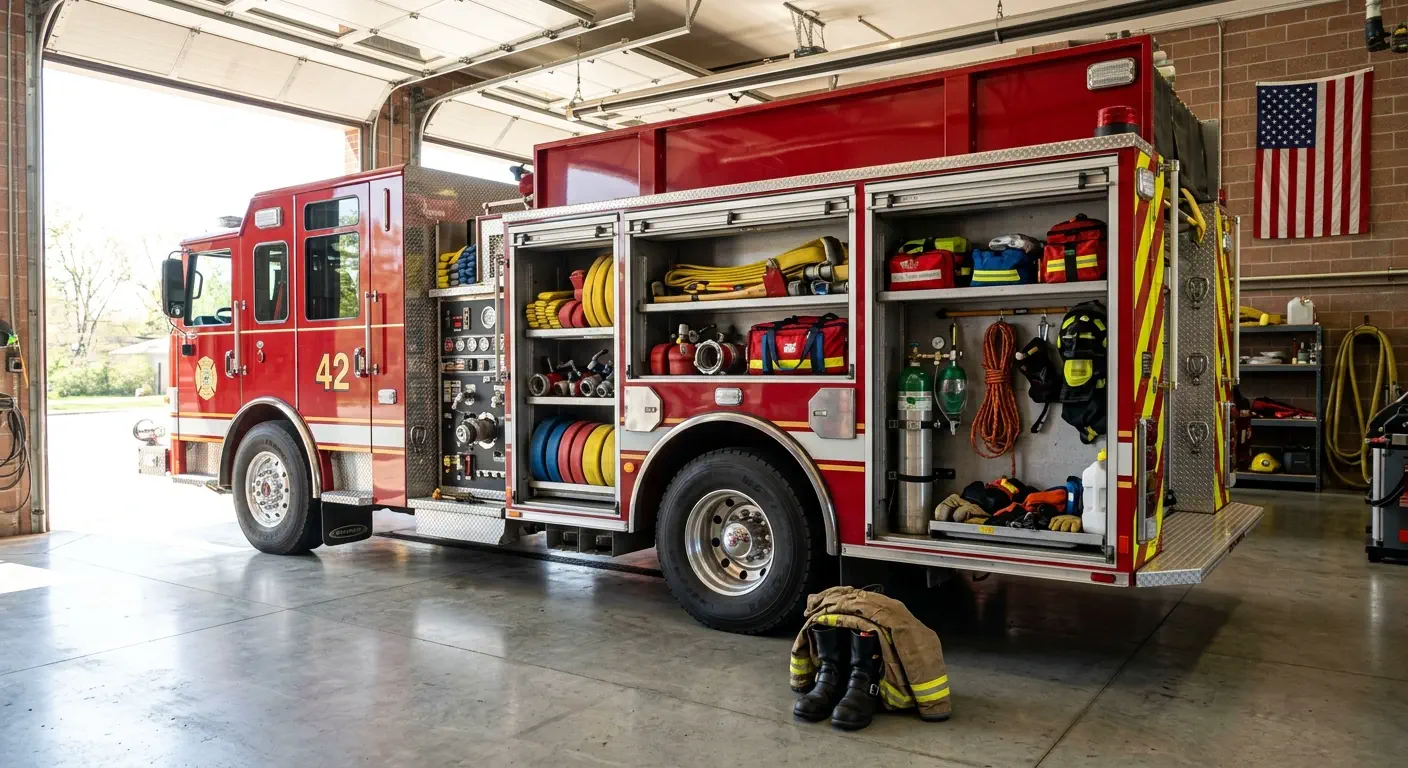
Trade Programs
Firefighter and EMT Career Opportunities: Training, Salary, and Job Outlook
A practical guide to firefighter and EMT careers — training paths, salary data, the workforce shortage creating opportunity, and how to get started through trade school and community college programs.

Career Guidance
Getting Patient-Care Experience Before You Apply: A Volunteering Guide for Healthcare-Bound Students
A practical guide for students headed into nursing, medical assisting, phlebotomy, and other caregiving careers: how to get real, hands-on patient experience before you enroll or apply — including hospice volunteering, where federal law actually requires hospices to recruit and train volunteers.