You’re weighing a career change into healthcare, and you keep circling back to the same question: is there a path that pays a real professional wage without four years of school and the debt that comes with it? Dental hygiene is one of the strongest answers the numbers can give you. The BLS Occupational Outlook Handbook puts the median wage for dental hygienists at $94,260 as of May 2024 — nearly double the $49,500 median for all U.S. workers — with 7% projected growth from 2024 to 2034 and about 15,300 openings per year.
Here’s the honest part up front: dental hygiene asks more of you than most trades. Unlike welding or HVAC, you can’t get there with a certificate alone — every state requires you to graduate from an accredited associate degree program, pass a national written board, pass a hands-on clinical exam, and hold a state license. That’s a two-to-three-year climb, and the programs are competitive. But it’s also why the credential holds its value: even the lowest-paid tenth of hygienists earned more than $66,470, per the same BLS data.
This guide walks the entire path — from zero experience to Registered Dental Hygienist (RDH) — one step at a time.
Why Dental Hygiene Is Worth the Climb
Before you commit two-plus years, look hard at what you’re climbing toward.
According to the American Dental Hygienists’ Association (ADHA), becoming an RDH comes down to three requirements that every state builds its licensure on:
- Graduate from an accredited dental hygiene program
- Pass the written National Board Dental Hygiene Examination (NBDHE)
- Pass a regional or state clinical board examination
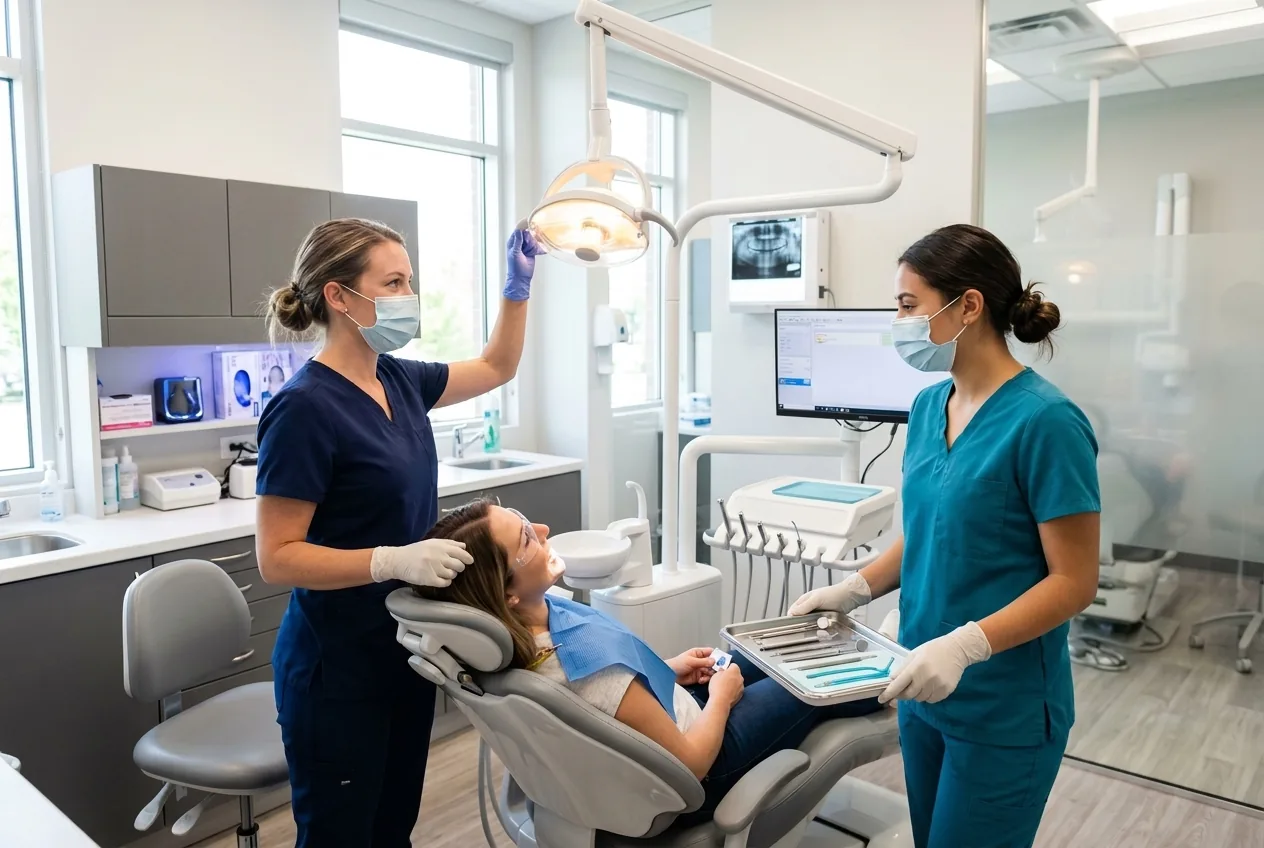
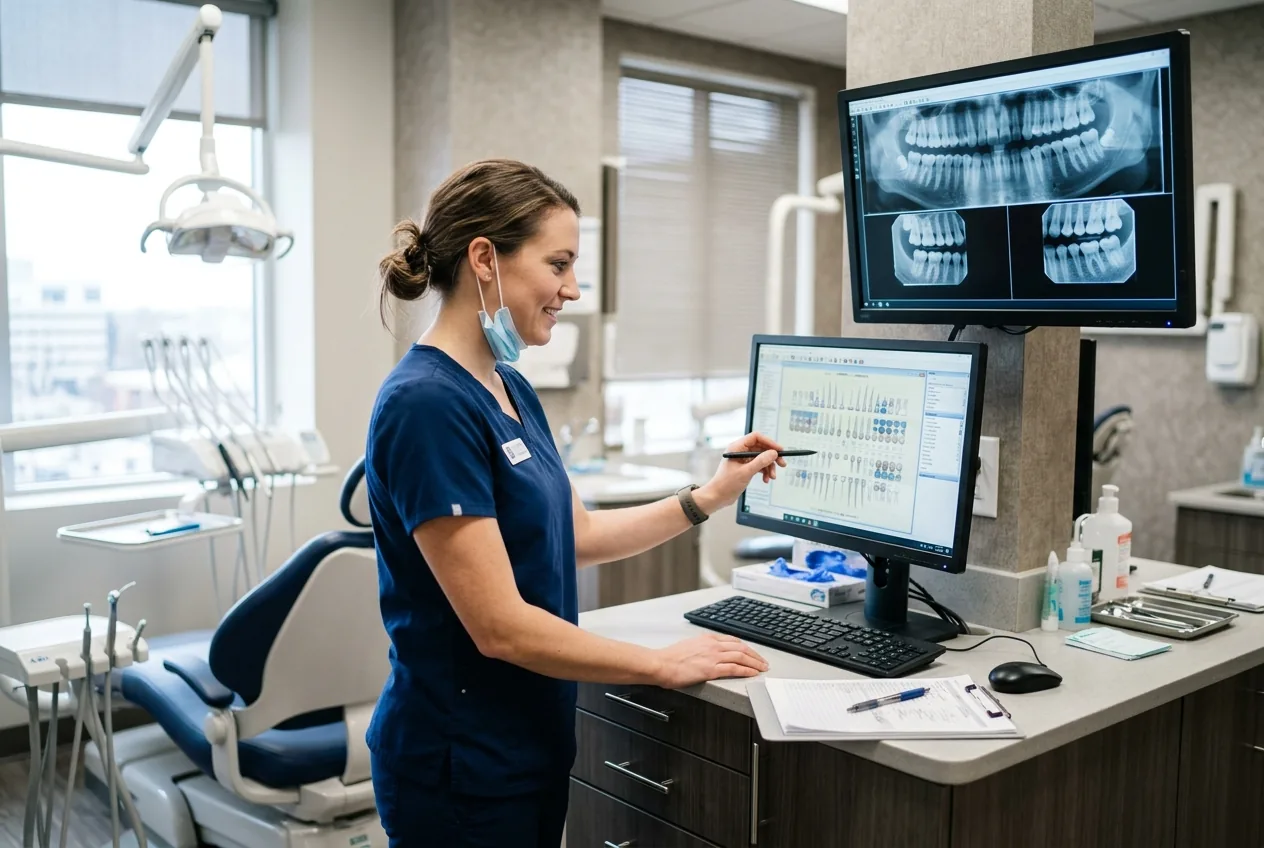
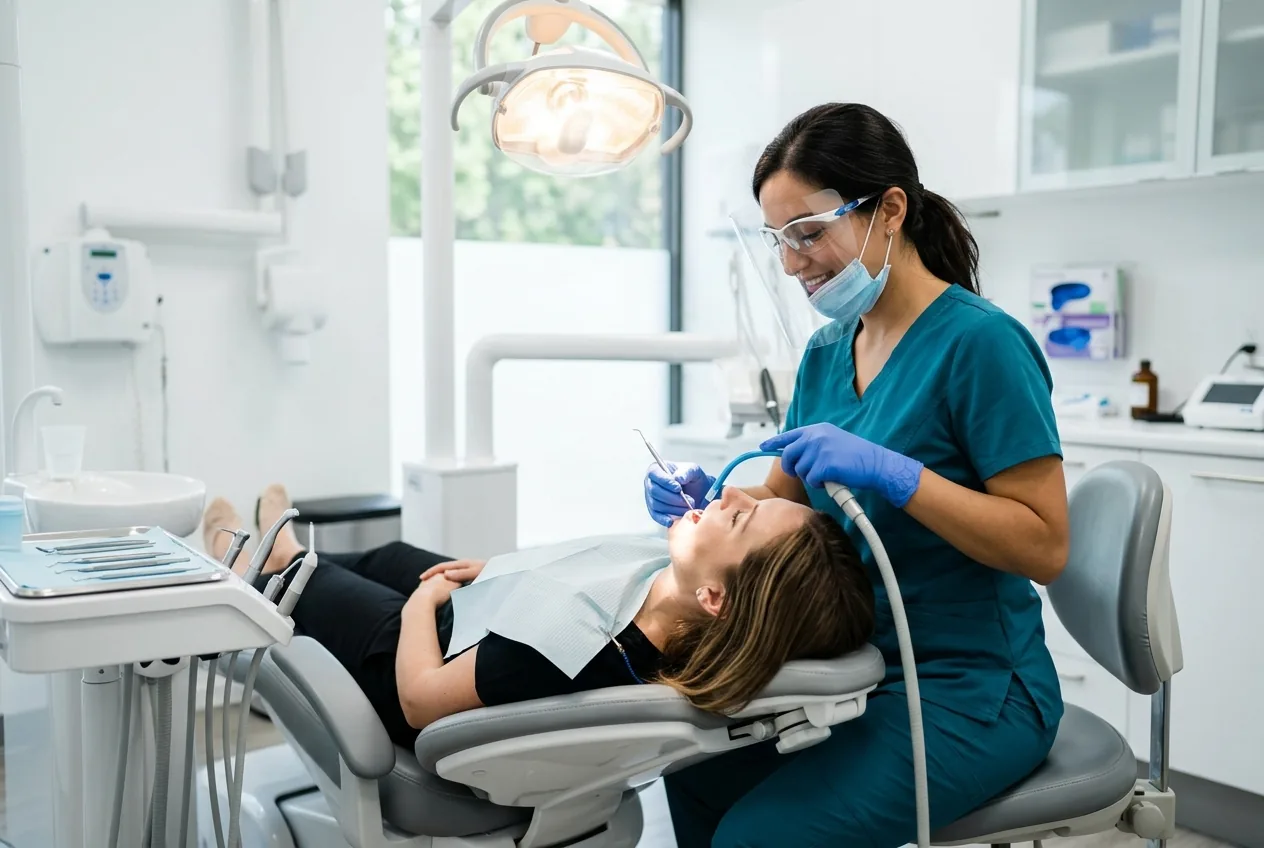
The work itself is preventive care: cleanings, periodontal assessments, x-rays, sealants, and patient education, usually in a dentist’s office, usually on a schedule you can shape — part-time and multi-office arrangements are common in this field. And the demand drivers are durable: an aging population keeping more natural teeth and growing awareness of the link between oral health and overall health, per the BLS outlook.
For the full wage and employment picture — including how pay varies by state — see our dental hygienists career page. If you’re deciding between this and a faster entry point into dentistry, our comparison of dental hygienist vs. dental assistant lays out the trade-offs side by side.
If the destination looks right, the next question is whether you can start the climb this year.
Step 1: Meet the Prerequisites
You don’t need any healthcare background to start — but you do need to clear the gates programs set:
- High school diploma or GED. Non-negotiable for every accredited program.
- Prerequisite coursework. Most programs expect high-school or college-level biology and chemistry; many also require anatomy & physiology, microbiology, and English composition before you can enroll in the hygiene core. Career changers often spend one or two semesters knocking these out at a community college first.
- A competitive GPA. Dental hygiene programs routinely receive more applications than they have seats. Strong grades in your science prerequisites are the single best lever you control.
- Observation or experience hours. Some programs ask applicants to document hours observing or working in a dental office. If yours does, chairside time as a dental assistant counts double — it strengthens your application and tells you whether you actually like the environment. Our guide to dental assistant career opportunities covers how people use assisting as a stepping stone.
If you’re staring at that list at 30 or 40 and wondering if it’s too late to sit in a classroom again — that fear is normal, and the data doesn’t share it. The prerequisites are measured in months, not years, and every one of them transfers into the degree you’ll earn next.
Your move here: pull up two or three programs near you and write down their exact prerequisite lists. That list becomes your first-semester plan.
Step 2: Choose a CODA-Accredited Program
This is the decision that everything downstream depends on, so get it right: the program must be accredited by the Commission on Dental Accreditation (CODA), the ADA-affiliated body that accredits dental education programs in the United States.
Why it’s non-negotiable: the NBDHE’s eligibility rules are built around graduation from a CODA-accredited program, and the ADHA notes that graduation from an accredited program is almost always stipulated by state law for licensure. A non-accredited program can cost you years and leave you unable to sit for boards. Verify any school you’re considering through CODA’s official Find a Program search.
What to compare once accreditation is confirmed:
- Degree level. Most entry-level programs award an associate degree — the typical entry credential per BLS — and take two to three years once you’re in, on top of any prerequisite semesters. Entry-level bachelor’s programs exist too; they take longer but shorten the road to advancement roles later.
- Board pass rates. The ADHA specifically advises applicants to ask programs for their national board and clinical exam pass rates and their graduates’ employment outcomes. A program that won’t share those numbers is answering your question anyway.
- Cost and aid. Community college programs are usually the value play. Federal aid, scholarships, and workforce grants all apply — our guide to financing trade school walks through Pell Grants, WIOA funding, and employer tuition assistance.
- Clinic facilities and rotation sites. You’ll spend hundreds of hours in the program’s clinic. Tour it before you apply.
To see how programs stack up nationally and in your state, start with our ranked list of the best dental hygiene programs, then browse the full dental hygiene program directory to compare schools near you.
Pick your top three, note their application deadlines, and work backward — many programs admit only once a year.
Step 3: Make It Through Clinical Training
Once you’re in, the program splits into two tracks that run in parallel: classroom science (head and neck anatomy, periodontology, radiography, pharmacology, pathology) and clinical skill-building, where the real transformation happens.
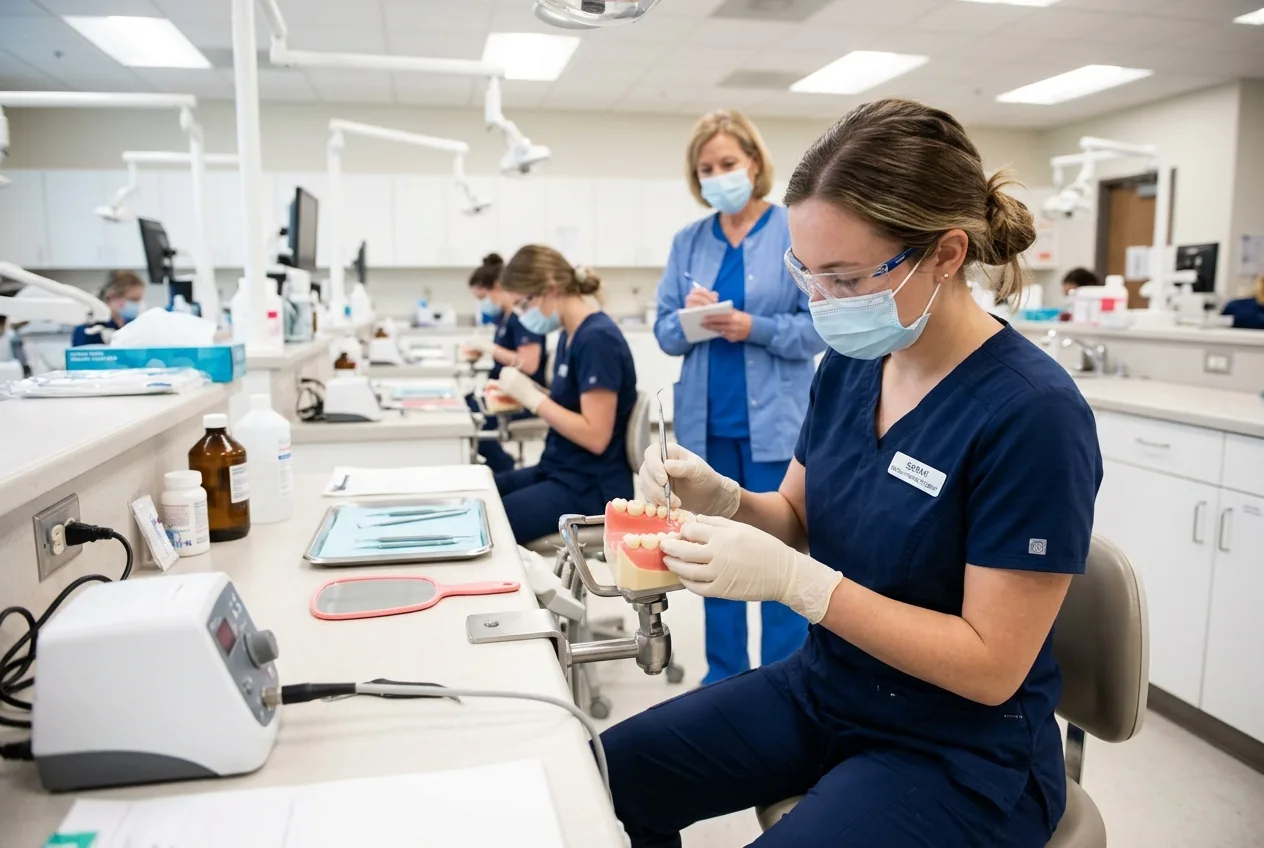
Your clinical education escalates deliberately. You’ll start on typodonts — model mouths mounted at a clinic station — learning instrumentation: how to hold a scaler, how to adapt it to each tooth surface, how to remove calculus without damaging enamel or tissue. Then you’ll graduate to practicing on classmates, and finally to treating real patients in the program’s supervised clinic, building the documented experience hours your program requires.
Two honest warnings from this stretch of the path:
- The schedule is demanding. Clinic sessions, lab time, and patient documentation make dental hygiene one of the harder associate degrees to complete while working full-time. Many students cut back to part-time work during the clinical years. Budget for that now — it’s exactly the kind of gap grant and scholarship funding exists to cover.
- Finding patients is part of the job. Many programs require you to recruit some of your own clinic patients — often people with specific periodontal conditions. Treat it as early practice in the patient communication skills you’ll use every working day.
Every hour in that clinic is doing double duty: meeting graduation requirements and rehearsing you for the two exams that come next.
Step 4: Pass the NBDHE
The National Board Dental Hygiene Examination is the written national board, developed and administered by the Joint Commission on National Dental Examinations (JCNDE) and delivered at Pearson VUE test centers. Results are accepted by every U.S. licensing jurisdiction.
Here’s the exam at a glance, per the 2026 NBDHE Candidate Guide:
| Component | Items | Time |
|---|---|---|
| Session One — discipline-based | 200 questions | 3 hours 30 minutes |
| Session Two — case-based (12–15 patient cases) | 150 questions | 4 hours |
| Total | 350 questions | 7.5 testing hours (9-hour appointment) |
Key facts worth planning around, all from the same candidate guide:
- Results are reported as pass or fail — there’s no numeric score to chase.
- The examination fee is $600 (2026), which includes official results reporting.
- You don’t have to wait for graduation. Students in CODA-accredited programs become eligible when their program director (or designee) approves them as prepared — most candidates sit for the NBDHE during their final year.
- The case-based session mirrors your clinic work: patient histories, radiographs, and periodontal charts you’ll interpret and act on. Your best preparation is treating your program’s clinic patients like board cases all along.
Start structured review two to three months out, use the JCNDE’s official preparation materials rather than relying only on third-party question banks, and schedule your test date before graduation momentum fades.
Step 5: Pass Your Clinical Board Exam
The NBDHE proves what you know. The clinical exam proves what your hands can do — demonstrating skills like periodontal assessment and calculus removal under examination conditions.
Most of the country has consolidated on one exam here: the ADEX Dental Hygiene Examination, developed by the American Board of Dental Examiners and administered through the CDCA-WREB-CITA testing agency. According to ADEX’s acceptance map, the ADEX hygiene exam is accepted for initial licensure in every U.S. jurisdiction except Delaware and Nebraska, which maintain their own requirements.
Because formats, patient requirements, and accepted exams still vary by jurisdiction, do these two things before you register:
- Check your state dental board’s website first. Confirm exactly which clinical exam(s) your state accepts and in what format. The ADHA maintains an overview of regional and state clinical examinations that’s a useful orientation.
- Register early. Testing windows at clinical exam sites fill up, and most candidates take the clinical exam in the final months of their program or right after graduation, while their instrumentation skills are sharpest.
Your program’s faculty run students through this exam every year — lean on them for format-specific preparation. Then gather your documents, because the finish line is administrative.
Step 6: Get Your State License
Licensure is granted by each individual state, and requirements vary by location, but the core application package is consistent: proof of graduation from your CODA-accredited program, your NBDHE pass, and your clinical exam results. Many states add their own layers — commonly a written jurisprudence exam covering the state’s dental practice act, current CPR certification, and a background check. Your state board’s licensure checklist is the authoritative list; read it early so nothing surprises you at the end.
Budget for the paperwork stage, too: application and initial licensure fees vary by state, and processing takes time. Apply as soon as your exam results post.
When the license arrives, you’ve earned the letters: RDH. Now put them to work.
Step 7: Land Your First Job
Dental hygiene has one of the more straightforward job markets in healthcare — with about 15,300 projected openings per year, most hygienists work in dentists’ offices, and hiring is local and relationship-driven. That plays to your advantage:
- Start with your clinic network. The dentists, adjunct faculty, and rotation sites you worked with during your program are your first and warmest leads. Tell every one of them when you’re licensed.
- Consider temping to start. Fill-in and part-time days at multiple practices build speed, expose you to different office systems, and regularly convert into permanent offers.
- Interview the practice back. Ask about appointment lengths, instrument maintenance, and how the office supports periodontal treatment planning. The answers tell you whether you’ll be set up to practice the way you were trained.
Compare wage levels and employment concentration in your state on our dental hygienists career page before you negotiate — walking in with the regional numbers changes the conversation.
Step 8: Keep Climbing — BSDH and Beyond
The associate-to-RDH path is the trailhead, not the summit. Where hygienists go from clinical practice:
- Degree completion (BSDH). ADHA outlines degree-completion pathways where working RDHs finish a bachelor of science in dental hygiene — often online, while employed — opening doors in education, research, sales, and public health administration. Master’s programs extend the ladder further.
- Public health and direct access. According to the ADHA, 42 states now authorize some form of direct access — letting hygienists initiate care without a dentist present in settings like school programs, community clinics, and long-term-care facilities. Scope varies significantly by state, so check your state’s rules.
- Expanded functions. Some states permit additional duties — such as administering local anesthesia — with added certification. Each expansion raises your value to a practice.
You don’t need to map the whole ladder today. Just know it’s there: this is a licensed profession with real rungs above the entry credential.
Your Timeline at a Glance
Here’s the whole path condensed, assuming you’re starting from zero:
- Months 0–12: Complete prerequisite courses; apply to CODA-accredited programs (verify via CODA’s program search).
- Years 1–3: Complete the associate degree — coursework plus supervised clinical training.
- Final year: Sit the NBDHE with your program director’s approval; take your clinical board exam near graduation.
- At graduation + exams passed: Apply for state licensure; become an RDH.
- Year 3–4 and beyond: First job, then optional BSDH completion and expanded roles.
Roughly three years, start to license, for a credential with a $94,260 median wage. Few two-to-three-year investments in any field come with numbers like that — and none of them start until you do.
What You Can Do This Week
Not next year. This week:
- Open our ranked list of the best dental hygiene programs and shortlist three CODA-accredited schools within reach.
- Write down each school’s prerequisites and application deadline.
- If you’d have to self-fund the prerequisite semester, read our financing trade school guide and start one grant or scholarship application.
Two to three years from now, you can either hold an RDH license in a profession growing much faster than average — or still be circling the same question. The path is mapped. Take the first step.
Sources
- U.S. Bureau of Labor Statistics — Occupational Outlook Handbook: Dental Hygienists — May 2024 wage data, 2024–34 projections — https://www.bls.gov/ooh/healthcare/dental-hygienists.htm
- Joint Commission on National Dental Examinations (JCNDE) — National Board Dental Hygiene Examination (NBDHE) — https://jcnde.ada.org/nbdhe
- JCNDE — 2026 NBDHE Candidate Guide — 2026 — https://jcnde.ada.org/-/media/project/ada-organization/ada/jcnde/files/2026_nbdhe_candidate_guide.pdf
- American Dental Hygienists’ Association (ADHA) — Becoming a Dental Hygienist — https://www.adha.org/students/becoming-a-dental-hygienist/
- ADHA — Direct Access — https://www.adha.org/advocacy/scope-of-practice/direct-access/
- ADHA — Overview of Regional and State Dental Hygiene Clinical Examinations — 2023 — https://www.adha.org/wp-content/uploads/2023/01/Overview_Clinical_Examinations.pdf
- Commission on Dental Accreditation (CODA) — About CODA / Find a Program — https://coda.ada.org/about-coda — https://coda.ada.org/find-a-program
- American Board of Dental Examiners (ADEX) — ADEX Acceptance Maps — https://adextesting.org/adex-acceptance-map/