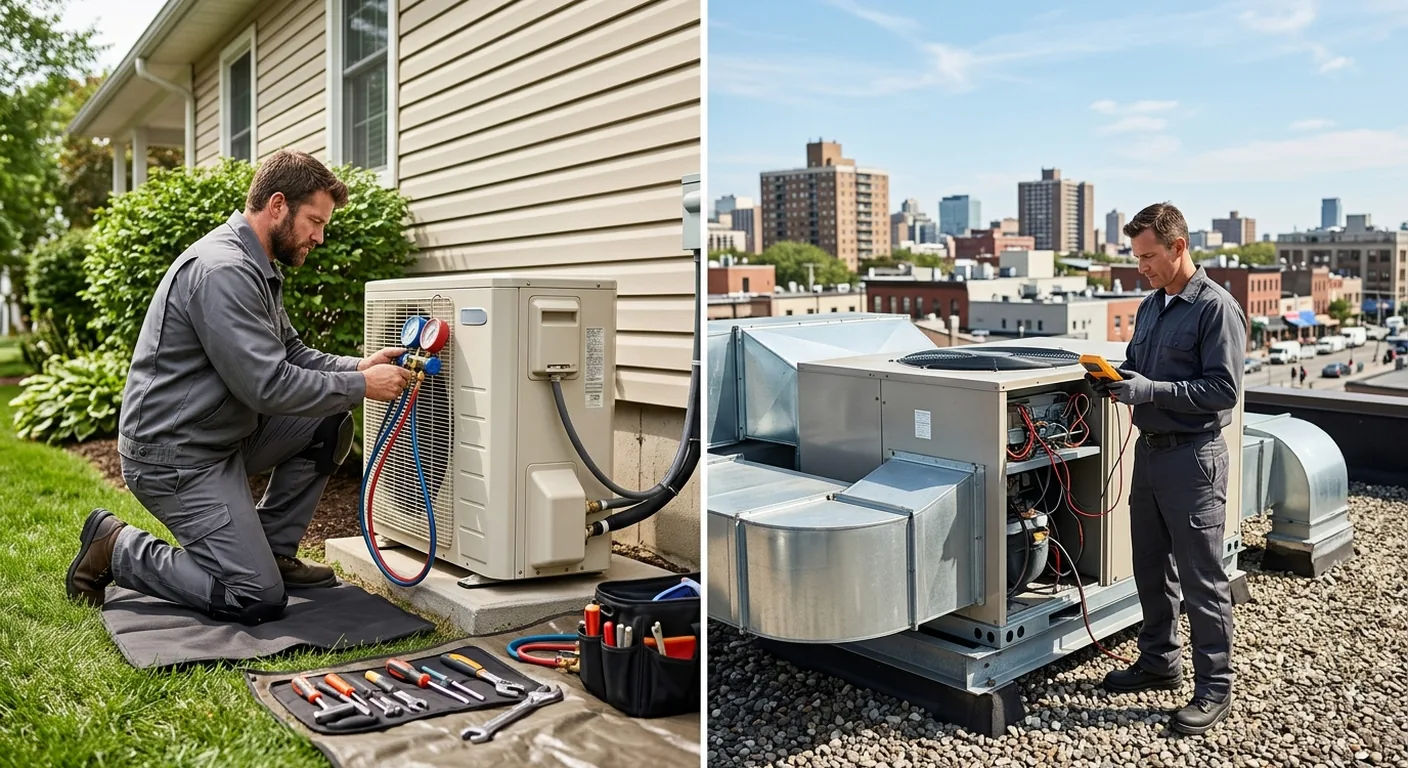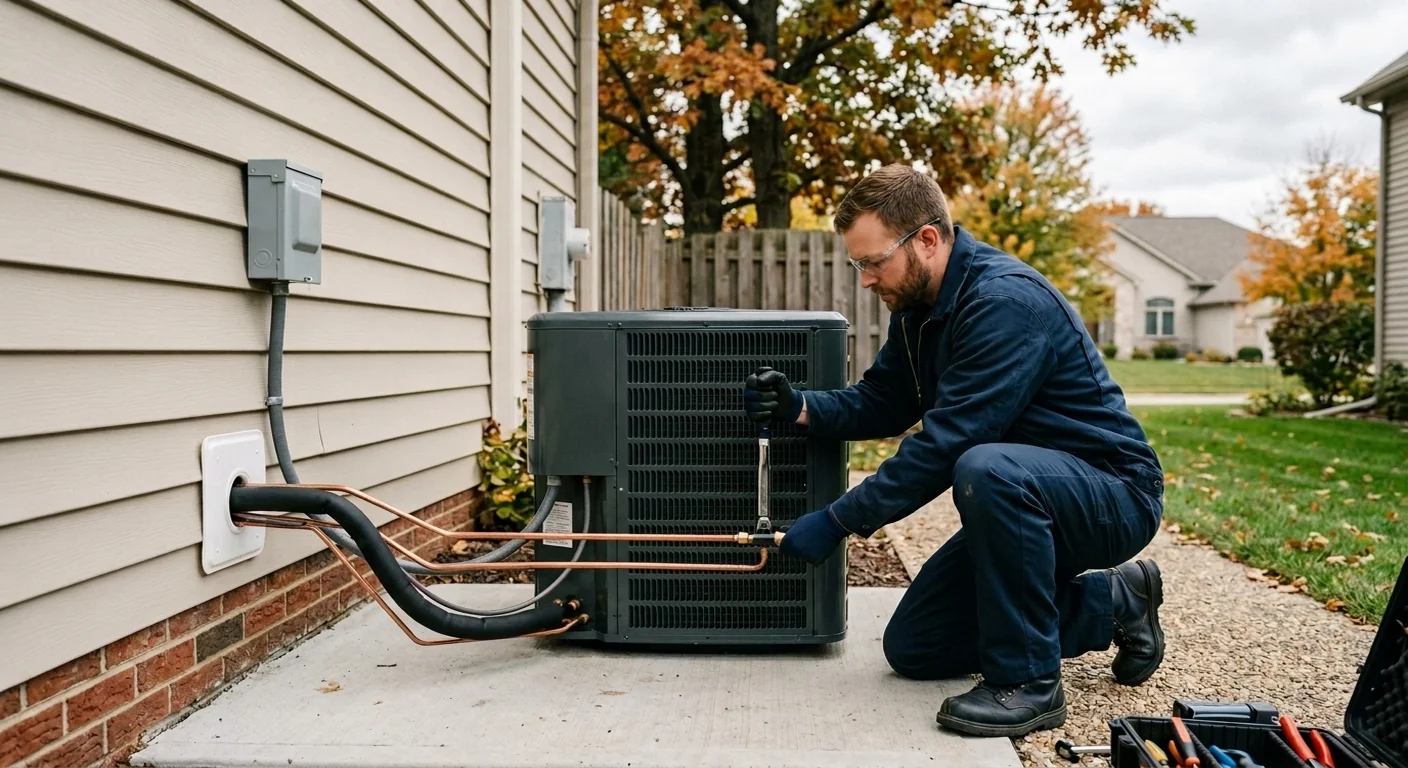

Two techs work at the same residential HVAC company. Both passed EPA 608 their first year. Both have three years of field time. One is NATE-certified, the other isn’t. The NATE-certified tech makes $4 more per hour, gets the maintenance contracts at the medical office park (the contracts that require NATE), and is on the shortlist for the comfort-advisor opening. The other tech is told, repeatedly, that he should “really sit for NATE this year.”
Neither of them is wrong. NATE certification is a credential the industry rewards, but only some employers and some career tracks pay it back. For a working HVAC technician trying to decide whether to spend the money and the study time, the right answer depends on where you work, who pays you, and what you want your career to look like in five years.
This guide walks the actual certification structure, the fees, the manufacturer rules that quietly require it, and the breakeven math on when the test fee earns itself back. If you don’t have your EPA 608 yet, start with our how to become an HVAC technician guide first — NATE assumes you have the basics.
TL;DR
- NATE (North American Technician Excellence) is the most-recognized industry HVAC credential. Unlike EPA 608, it is not legally required — but it functions as the de-facto employer-preferred mark of competence.
- Two paths: Traditional (Core exam + one Specialty exam) or CHP-5 (five domain exams). Either earns you the professional NATE certification.
- Specialty menu: Air Conditioning, Air-to-Air Heat Pump, Gas Heating, Oil Heating, Hydronics (Gas/Oil), Light Commercial Refrigeration, Commercial Refrigeration, HVAC Efficiency Analyst, plus a Distribution specialty. Pick by where the work is in your region. Source: NATE certificates and certification exams.
- Cost: Per-exam fees run roughly $130–$250 each. Total to earn full professional certification typically lands in the $300–$500 range. Source: HVAC Exam Master NATE Guide.
- Pay premium: Industry guides and certification comparisons report a 15–25% earnings differential for NATE-certified technicians (often described as $3–$6 per hour). Source: Lennox NATE guide and CBT Tech Institute HVAC certifications guide.
- Manufacturer rules: Carrier’s Factory Authorized Dealer program requires that at least 50% of a dealer’s service technicians maintain NATE certification. Source: Carrier NATE certification page.
- Recertification: Two-year cycle. Either retake the exam or complete 16 hours of continuing education (most manufacturer training counts). Source: NATE Getting Started.
- Median pay context: Heating, A/C, and refrigeration mechanics and installers earned a median annual wage of $59,810 in May 2024 per the BLS Occupational Outlook Handbook. Employment is projected to grow 9% from 2024 to 2034.
What NATE Actually Is
North American Technician Excellence is a non-profit certification body founded in 1997. It was created by an industry coalition (manufacturers, trade associations, contractors, utilities) specifically to standardize what “competent HVAC technician” means in a trade that has no single licensing authority across all 50 states. From Trane’s NATE glossary entry: NATE is the only nationwide HVAC certification developed, owned, supported, and recognized by the entire industry.
Three points are worth holding clearly in mind before you decide whether to pursue it:
- NATE is not the same as EPA 608. EPA 608 is a federal legal requirement to handle refrigerants under Section 608 of the Clean Air Act. You can be NATE-certified without EPA 608 (you can’t actually do refrigerant work, but the credential itself is independent). For the EPA side, see the EPA 608 certification guide.
- NATE is industry-recognized, not government-issued. No state requires NATE to work. Many employers prefer it; some manufacturer programs require a quota of NATE-certified techs on staff.
- NATE is renewable. It expires every two years. If you stop paying for it and stop earning continuing-education hours, the credential lapses and you go back to “previously NATE-certified.”
That last point matters because most of the working-life value of NATE comes from continuously holding it, not from having once passed the exam.
The Two Pathways
NATE offers two routes to professional certification. Both end at the same credential.
Traditional Pathway: Core + Specialty
You sit for the NATE Core exam (general HVAC fundamentals — safety, tools, soft skills, heat transfer, electrical) and then one Specialty exam in the domain you actually work in. Pass both at 70% or higher and you’re NATE-certified in that specialty.
This is the path most service technicians take when they already work primarily in one area — a residential AC tech sits for AC; a furnace specialist sits for Gas Heating; a strip-mall commercial-refrigeration tech sits for Light Commercial Refrigeration.
CHP-5 Pathway: Five Domain Exams
The HVAC/R Certified Professional (CHP-5) pathway breaks the same content into five smaller domain exams:
- HVAC Fundamentals
- Electrical and Controls
- Comfort and Airflow
- Installation
- Service
Pass all five and you receive NATE certification. Each exam is shorter and more focused than the Core + Specialty combination, which makes it the path of choice for techs who prefer studying in narrower chunks rather than for one large specialty exam.
The credential at the end is the same. The choice between Traditional and CHP-5 is a study-style and scheduling question. Source: NATE certificates and certification exams.
The Credential Ladder
NATE sells more than the professional certification. The full ladder, from lowest barrier to highest:
| Credential | Experience Recommended | What It Signals |
|---|---|---|
| Ready-to-Work Certificate | None — entry-level | You know the vocabulary and the safety basics. Useful for high-school graduates entering an apprenticeship or trade-school students. |
| HVAC Support Technician | 6–12 months field experience | You can be a productive helper on a service truck without close supervision on every task. |
| NATE-Certified Professional (Traditional or CHP-5) | 2 years recommended | You are a competent technician in your specialty. The credential most employers mean when they say “NATE-certified.” |
| Senior-Level (HVAC Efficiency Analyst) | Several years post-NATE | You can perform whole-system diagnostics, load calculations, and efficiency tuning. The credential homeowners search for when they want a tune-up that actually saves them money. |
Most working techs target the Professional NATE certification first. The Senior credential is worth pursuing only after you’ve been NATE-certified for a few years and want to move toward consulting, energy-audit work, or commercial-grade efficiency roles.
The Specialty Menu — Pick the One That Matches Your Work
The Traditional path requires choosing one specialty. The full list from the NATE exam catalog:
- Air Conditioning — split systems, package units, residential and light commercial cooling. The default specialty for most residential service techs.
- Air-to-Air Heat Pump — increasingly relevant. The IRA’s electrification incentives are pushing heat-pump installation to record volumes; specializing here puts you on the right side of the demand curve. See Heat Pump Installer Careers: Why IRA Incentives Are Reshaping HVAC Hiring for the demand background.
- Gas Heating — gas furnaces, boilers, atmospheric and condensing equipment. Strong specialty in northern markets.
- Oil Heating — fewer installations nationally, but a working specialty in the Northeast where heating oil is still common.
- Hydronics (Gas/Oil) — boiler-based heating systems with circulators and zone valves. A specialty that travels well into light commercial work.
- Light Commercial Refrigeration — walk-in coolers, reach-in freezers, ice machines. Common entry point into commercial work for techs starting on the residential side.
- Commercial Refrigeration — supermarket racks, multi-evaporator systems. Higher pay band; higher complexity.
- HVAC Efficiency Analyst (Senior) — the highest specialty. Diagnostic and analytical work above the wrench level.
- Distribution — duct design, airflow, and balance. Often pursued by installation supervisors.
The right specialty is the one that matches the work you actually do. A residential tech who picks Commercial Refrigeration because it “sounds better” will struggle on the exam (the question bank assumes you’ve handled the equipment) and then never use the credential. Pick by your daily work, not by aspiration. If you want to switch tracks, see our breakdown of commercial vs residential HVAC pay and burnout — the credential to chase depends on which side of the industry you intend to settle on.
The Fee Math
NATE testing fees vary by exam length and proctoring format. Per current published guides:
- Ready-to-Work Certificate: roughly $50
- HVAC Support Technician: roughly $75–$120
- Core exam: roughly $130–$170
- Specialty exam: roughly $150–$250
- Total for Traditional NATE certification: typically $300–$500 depending on testing center and proctoring choice
- CHP-5 pathway: five exams; total cost lands in a similar $300–$500 band depending on per-exam pricing
- Recertification: $40–$100 administrative fee every two years, plus the cost of CEUs (most manufacturer CEH courses are free to dealers and authorized service techs)
Source breakdown: HVAC Exam Master NATE Guide and the manufacturer dealer-program pages from Trane, Carrier, and Lennox.
Now the breakeven question. If a NATE certification earns a $3/hour pay bump and you work 2,000 hours a year, that’s $6,000 in incremental annual wages against a one-time $400 outlay — a payback inside the first month back at work. If the bump is closer to 15% on a $60,000 base, the differential is $9,000 a year.
The math only fails to work in two situations: (a) your employer doesn’t pay a NATE differential and the local labor market doesn’t reward it (rare, but real in some small-town markets), or (b) you don’t continue working as a technician long enough to recoup, which is also a question about how much you like the trade.
The Manufacturer Rules Most Techs Don’t Hear Until Year Two
Three of the largest residential HVAC manufacturers — Carrier, Trane, and Lennox — operate dealer programs that tie financial incentives, lead routing, and brand-display rights to NATE-certified technician headcount.
- Carrier Factory Authorized Dealer (FAD): dealers must have at least 50% of their service technicians maintain NATE certification to keep FAD status, per Carrier’s NATE page. Loss of FAD status means loss of the program’s marketing materials, lead-generation, and rebate eligibility — material to any dealer running on Carrier-branded equipment.
- Trane Comfort Specialist and Lennox Premier Dealer programs publish similar preferences. From the Trane glossary: NATE certification is positioned as the industry standard the brand recommends; Trane-branded service organizations frequently use NATE headcount as one of the requirements for top-tier dealer status.
The practical consequence for a working tech: if you join a Carrier FAD, a Trane Comfort Specialist shop, or a Lennox Premier dealer, getting NATE-certified isn’t optional in the long run. It’s expected within the first 18–24 months. The shop’s dealer status, and your manager’s bonus, depend on it.
If your employer is non-affiliated (independent contractor, regional comfort-systems chain that doesn’t run a single-brand program), the NATE pressure is softer. The credential is still useful but no one is going to chase you about renewing it.
When NATE Is Worth It
Buy the test fee if:
- You work for, or want to work for, a Carrier FAD, Trane Comfort Specialist, Lennox Premier Dealer, or any similar branded program. The clock is already ticking.
- You want to move into comfort advisor or sales-overlay roles. NATE is the credential homeowners can look up; service-and-sales hybrid roles use it as a trust marker.
- You’re crossing state lines (military spouse, regional contractor moves, snowbird-market work). NATE is portable and resume-recognized in a way that state-level apprenticeship hours sometimes aren’t.
- You handle commercial maintenance contracts that specify NATE-certified service. Hospital, school district, and government building contracts increasingly list it as a requirement.
- You want to specialize. The Senior-level HVAC Efficiency Analyst is the most credible path to consulting and energy-audit work.
When NATE Is Not Worth It (Yet)
Hold off if:
- You’re in your first 12 months as a technician. The pass rates for Specialty exams skew toward techs with at least two years of field exposure (NATE recommends two years for Traditional and CHP-5). Sitting too early means paying for retakes.
- You’re aiming for commercial controls and building automation systems. BAS-specific credentials (manufacturer-issued by Honeywell, Johnson Controls, Tridium for Niagara) carry more weight in that lane than NATE. See our commercial vs residential HVAC breakdown for what to chase on the controls side.
- You’re an owner-operator in a small market where customers don’t know what NATE is. Your money is better spent on marketing and a second service van.
- You don’t plan to keep paying for renewals. A lapsed NATE on your resume is worth less than a current one, and the renewal fee plus 16 CEU hours every two years is the actual sustained cost.
The Honest Pass-Rate Conversation
NATE does not publish exam pass rates. Industry study guides estimate two to four weeks of prep time for the Core exam and four to eight weeks for a Specialty exam, assuming an experienced technician studying around full-time work. Source: HVAC Exam Master prep guidance.
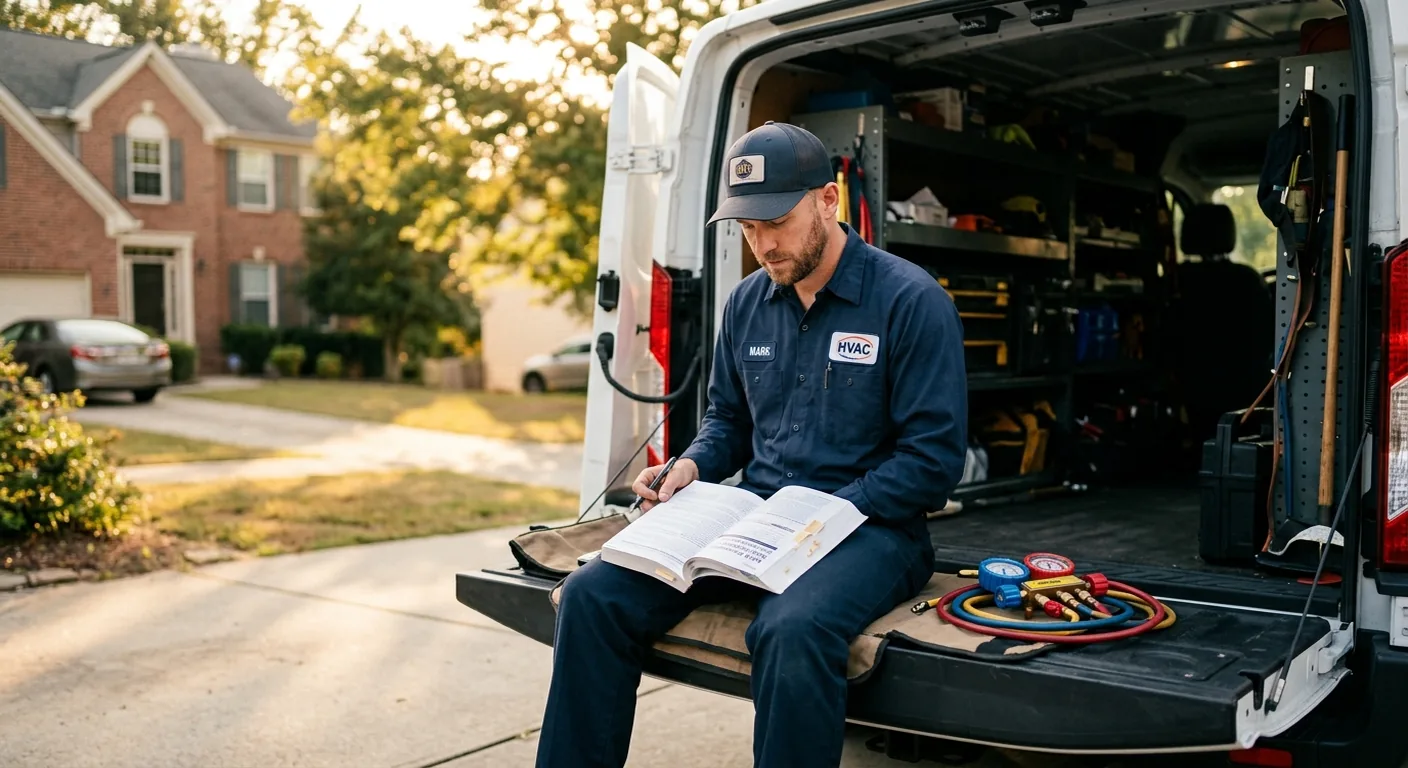
The “studied a weekend, walked in, passed” testimonials you’ll find on forums are usually accurate but unrepresentative — they tend to be experienced techs sitting for the specialty they’ve worked in for five years. If you’ve been doing residential service for one year, you should plan on the longer end of the prep timeline. The exam costs the same whether you pass on the first attempt or the third; the cheap path is studying.
A practical prep stack:
- One of the published NATE study guides (most cost $50–$80)
- Your manufacturer-issued service literature for the specialty (free if your employer carries the line)
- A free question bank from a continuing-education provider (most offer demo questions)
- Hands-on review of the equipment with a senior tech in the shop, focused on the diagnostic procedures the specialty exam questions tend to cover
Renewal: The 16-CEU Cycle
NATE certifications last two years. To renew without retaking the exam, you complete 16 hours of continuing education through approved providers. Most of those hours can come from free manufacturer training: Carrier, Trane, Lennox, Daikin, and Mitsubishi all run NATE-approved CEH courses for technicians working on their equipment, and most are free to authorized service techs.
Practical advice: track your CEU hours in a single document (paper, spreadsheet, the NATE Tech Tracker app — whichever you’ll actually update). Renewal lapses because techs lose track of which courses counted, not because the hours are hard to earn. The hours are the easy part.
Bottom Line
NATE certification is worth the test fee for most working HVAC technicians who plan to stay in the trade for more than a few years and work for an employer that pays a credential differential or runs a single-brand dealer program. The fee is small enough that even a modest pay premium pays it back inside a year. The trap is paying for the test and then not renewing — a lapsed credential signals less than a current one, and the recurring 16 CEUs every two years is the cost most newer techs underestimate.
If you’re sitting for the exam this year, sit for the specialty you actually work in, plan on four to eight weeks of evening study, and confirm with your employer in advance which exam they want on file. Most shops will reimburse the fee once you pass.
For the full pay-and-demand picture of the trade, see our HVAC career opportunities guide and the heating, air conditioning, and refrigeration mechanics career profile. For accredited training programs by state, see the HVAC program directory.
Sources
- U.S. Bureau of Labor Statistics — Occupational Outlook Handbook: Heating, Air Conditioning, and Refrigeration Mechanics and Installers — May 2024 wage and 2024–2034 employment projections — https://www.bls.gov/ooh/installation-maintenance-and-repair/heating-air-conditioning-and-refrigeration-mechanics-and-installers.htm
- NATE (North American Technician Excellence) — Certificates and Certification Exams — official exam catalog and pathways — https://natex.org/technician/take-an-exam/nate-certificates-and-certification-exams
- NATE — Become NATE Certified: Getting Started — https://natex.org/
- Carrier — NATE Certification — Factory Authorized Dealer 50% requirement — https://www.carrier.com/residential/en/us/homeowner-resources/hvac-glossary/nate-certification/
- Trane — NATE Certification: What It Means for Your HVAC — https://www.trane.com/residential/en/resources/glossary/what-is-nate-certification/
- Lennox — NATE-Certified Glossary Entry — https://www.lennox.com/residential/buyers-guide/guide-to-hvac/glossary/nate-certification
- HVAC Exam Master — NATE Certification Guide: Requirements, Cost, Exams and Specialties — fee schedule and prep timelines — https://hvacexammaster.com/nate-certification/
- TradeCareerPath — NATE Certification for HVAC Techs: Exams, Cost, Renewal — credential ladder and recertification — https://tradecareerpath.com/trades/hvac/nate-certification/
- CBT Technology Institute — Best HVAC Certifications to Get in 2026 — NATE pay premium claim — https://www.cbt.edu/blog/best-hvac-certifications-to-get-in-2026/