Part of our Trade Business series — see also how to start a plumbing business.
California regulates electricians more heavily than almost any other state, and that’s exactly why a licensed local shop is worth building there: the barrier that slows you down also thins out your competition. Nationally, the Bureau of Labor Statistics counts 818,700 electrician jobs, projects 9% growth from 2024 to 2034 — far above the average for all occupations — and expects about 81,000 openings a year. Roughly 8% of electricians already work for themselves.
The catch in California is that “going out on your own” means clearing two separate hurdles that most other states combine into one: a state certification to perform electrical work (run by the Department of Industrial Relations) and a C-10 contractor license to run an electrical business (run by the Contractors State License Board). Miss either one and you’re not a business — you’re an unlicensed contractor with legal exposure. This guide walks through both, plus the entity, insurance, pricing, and customer steps, in the order they actually happen.
First, the Education: What Has to Happen Before Any of This
In California, the education isn’t just preparation — it’s literally the raw material of your future licenses. Both hurdles below are measured in documented hours, and hours only count when they’re logged the right way.
The standard route, per the Bureau of Labor Statistics, is a high school diploma followed by a 4–5 year apprenticeship mixing paid on-the-job training with classroom instruction. In California specifically, the hours that count toward the state’s general electrician certification must come from work performed for an electrical contractor — installing, constructing, or maintaining systems covered by the National Electrical Code. Working uncertified and off the books doesn’t just risk penalties; it produces hours you can’t claim.
Three ways to build those hours, roughly in order of how often they lead to business ownership:
- A union apprenticeship through an IBEW/NECA joint training committee — paid from day one, classroom instruction included, and the classic route to journeyman status. Our guide on how to get into an IBEW apprenticeship covers the application process and aptitude test.
- A non-union (merit shop) apprenticeship through a state-approved program — same hour-logging principle, different sponsor.
- Trade school plus the trainee route — enrolling in an electrician program lets you register and legally work while you accumulate hours. See our comparison of the best electrician schools and IBEW/NECA apprenticeships, and California’s own certification overview for which route fits your situation. Browse trade programs in California to see what’s near you.
Then there’s the business education, and California is unusually explicit about it: the CSLB licensing process tests you on law and business — contracts, employment rules, and finances — alongside the trade exam. A few evenings on the SBA’s Learning Platform, which offers no-cost short courses on business planning, financing, and marketing, doubles as exam prep and survival training. Do this while you’re still on someone else’s payroll; the worst time to learn bookkeeping is the month your first invoice goes unpaid.
If you’re starting from zero, begin with our full guide on how to become an electrician. The rest of this article assumes the hours are behind you.
Step 1: Clear California’s Two-Layer License System
This is the step that trips up electricians moving from other states, so it’s worth being precise.
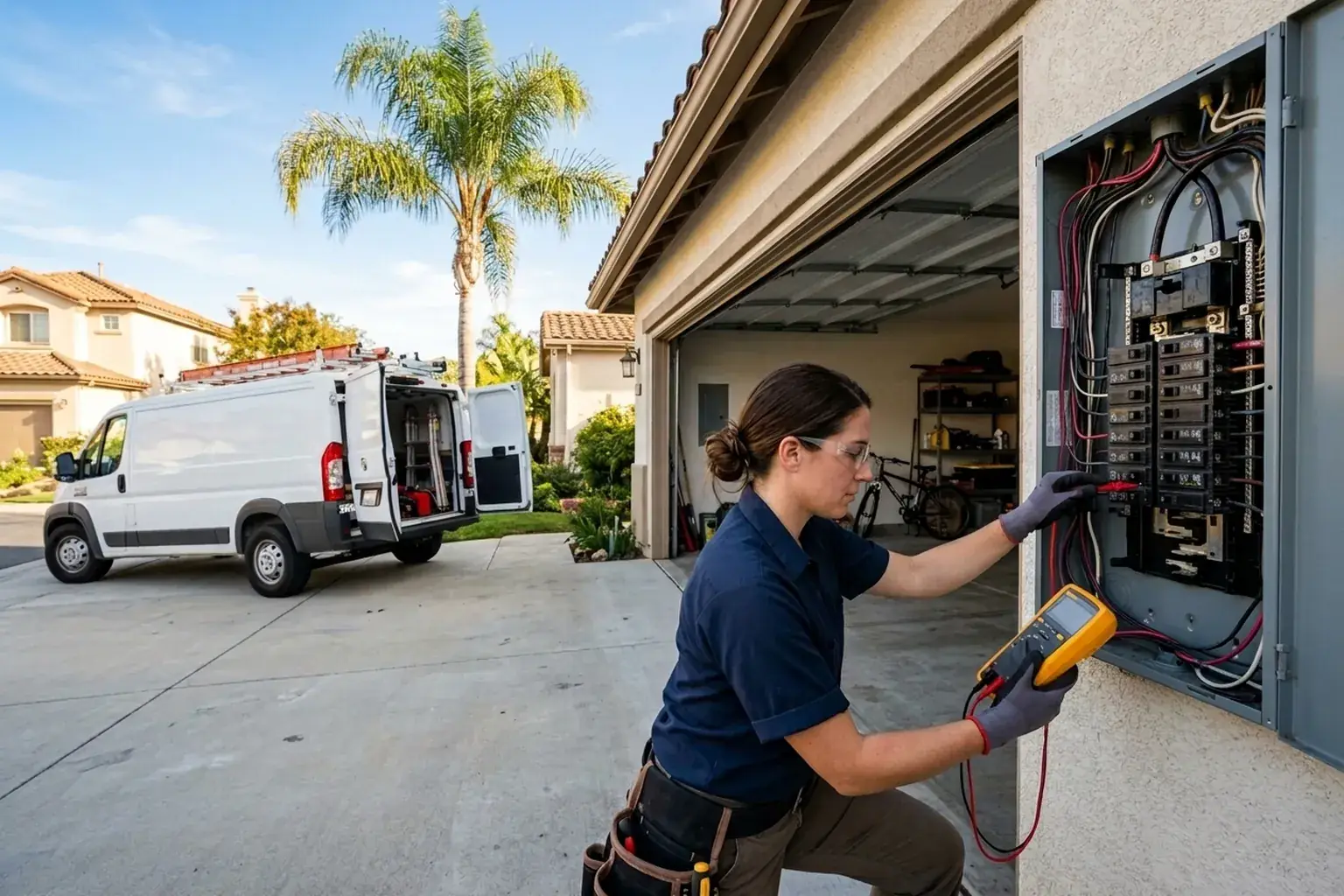
Layer 1 — DIR electrician certification (permission to do the work). California requires certification for anyone performing electrical work for a C-10 contractor. The general electrician certification requires 8,000 hours of work for an electrical contractor on systems covered by the National Electrical Code, then a passing score on the state certification exam. The Department of Industrial Relations publishes who needs to be certified and the qualifying routes.
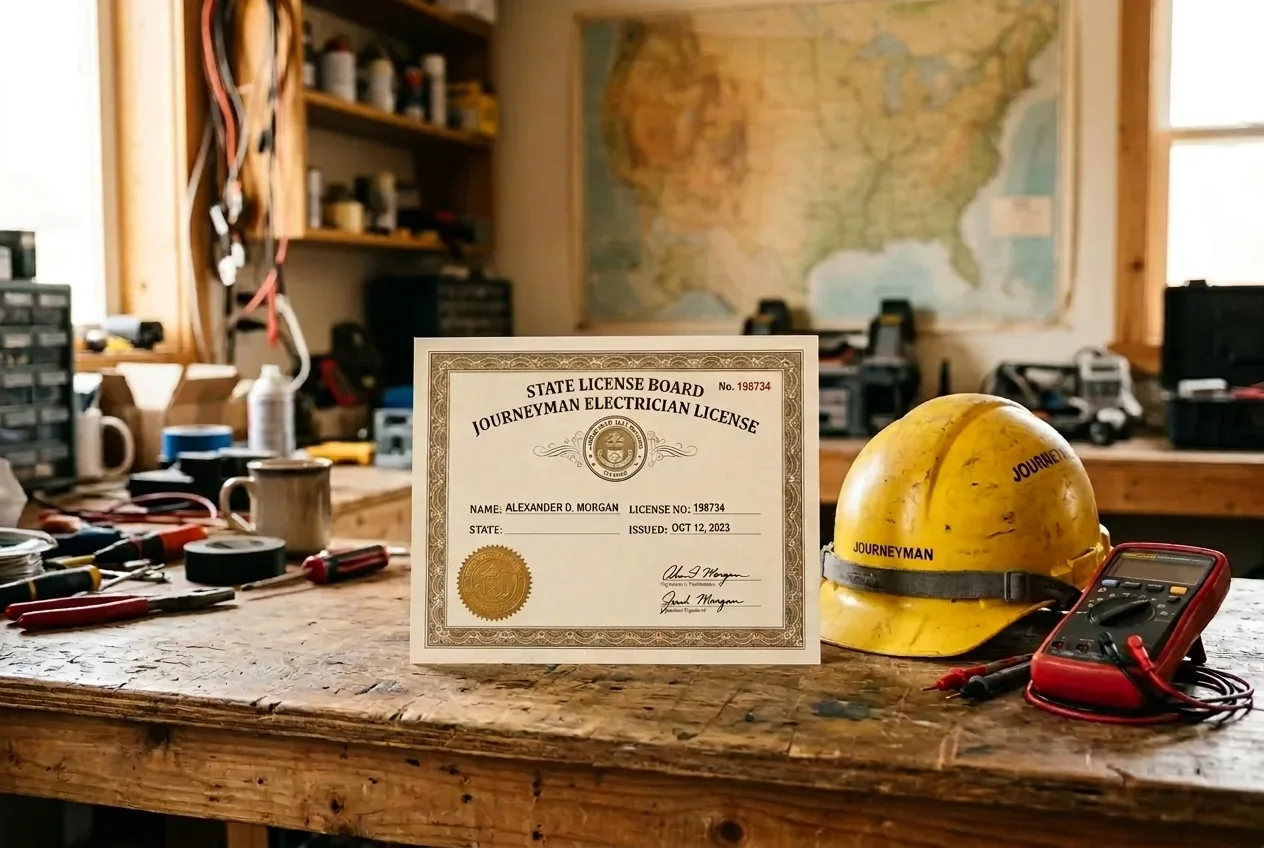
Layer 2 — CSLB C-10 license (permission to run the business). To contract for electrical work under your own name — bid jobs, pull permits, advertise — you need the C-10 Electrical Contractor classification from the Contractors State License Board. CSLB requires at least four years of journey-level experience, earned within the last ten years, in the classification you’re applying for, before you can sit for the exams. You’ll take two: the C-10 trade exam and the law-and-business exam.
The good news: the same well-documented apprenticeship-and-journeyman years usually satisfy both layers. The bad news: “well-documented” is doing a lot of work in that sentence. CSLB requires written certification of your experience, so keep pay stubs, apprenticeship completion records, and the contact information of every licensee you’ve worked under.
Action: Confirm your DIR certification is current, then download the C-10 application and map your documented journey-level years against CSLB’s four-year requirement before paying any filing fee.
Step 2: Form the Business — and Budget for California’s $800 Floor
Structure. An LLC or corporation separates your personal assets from business liabilities — meaningful in a trade where a wiring fault can mean a fire claim. One California-specific line item to plan for: the Franchise Tax Board charges every LLC doing business in the state an $800 annual tax, due even in years with no income. It’s not a reason to skip the entity; it’s a number that belongs in your break-even math from day one.
Note that your CSLB license attaches to a specific legal entity. Decide on the structure before you apply for the C-10, not after — relicensing under a new entity is paperwork you don’t want twice.
EIN and bank account. Get the Employer Identification Number directly from the IRS — it costs nothing — and open a dedicated business account before the first invoice goes out.
Name. Local and literal wins: a homeowner in Fresno searches “electrician Fresno,” not a clever brand name. Check availability three ways — the California Secretary of State’s business search, the .com domain, and an unclaimed Google Maps listing.
Action: Choose the entity with an accountant’s input, file it, get the EIN, and only then start the C-10 application under that entity’s name.
Step 3: Write the One-Page Plan
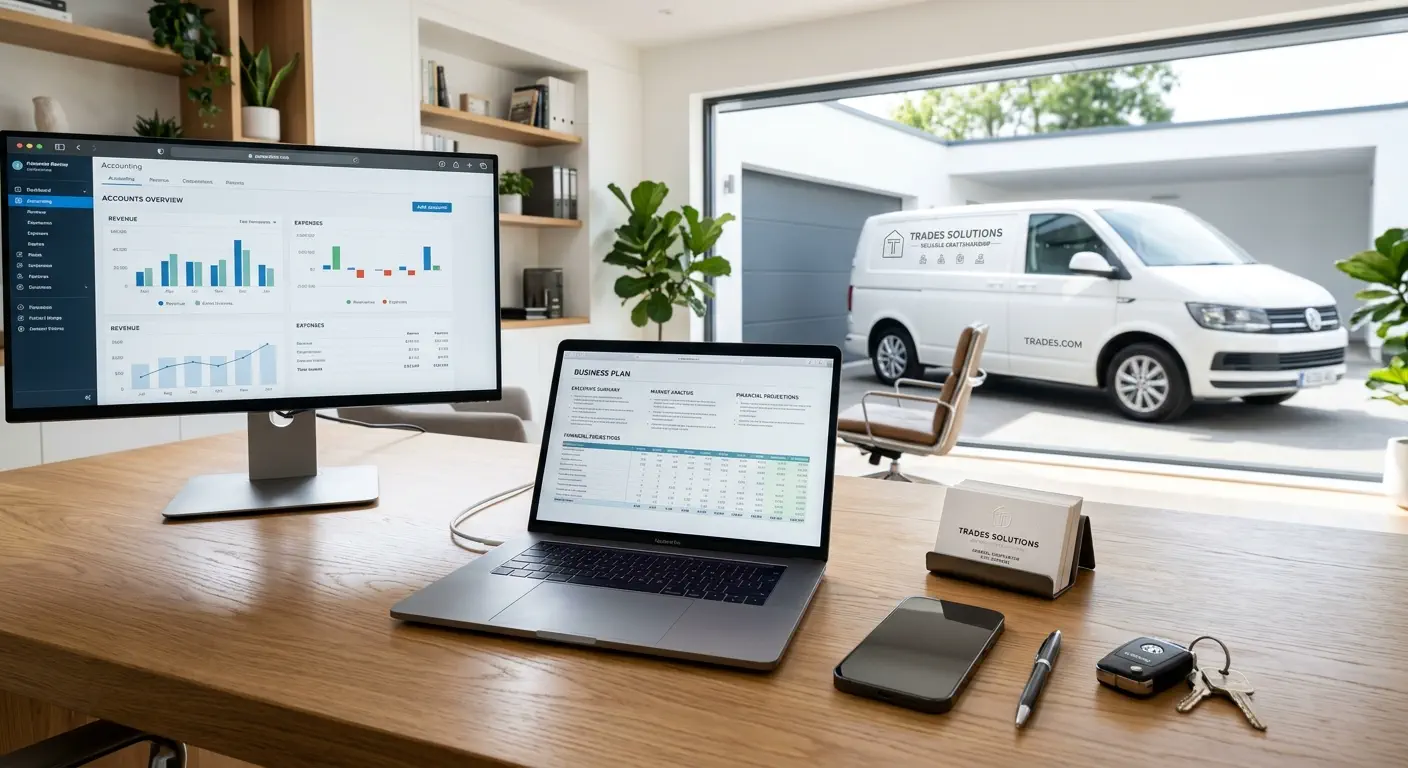
One page, four answers: who do I serve, what do I charge, what does it cost me to operate monthly, and how many jobs cover that?
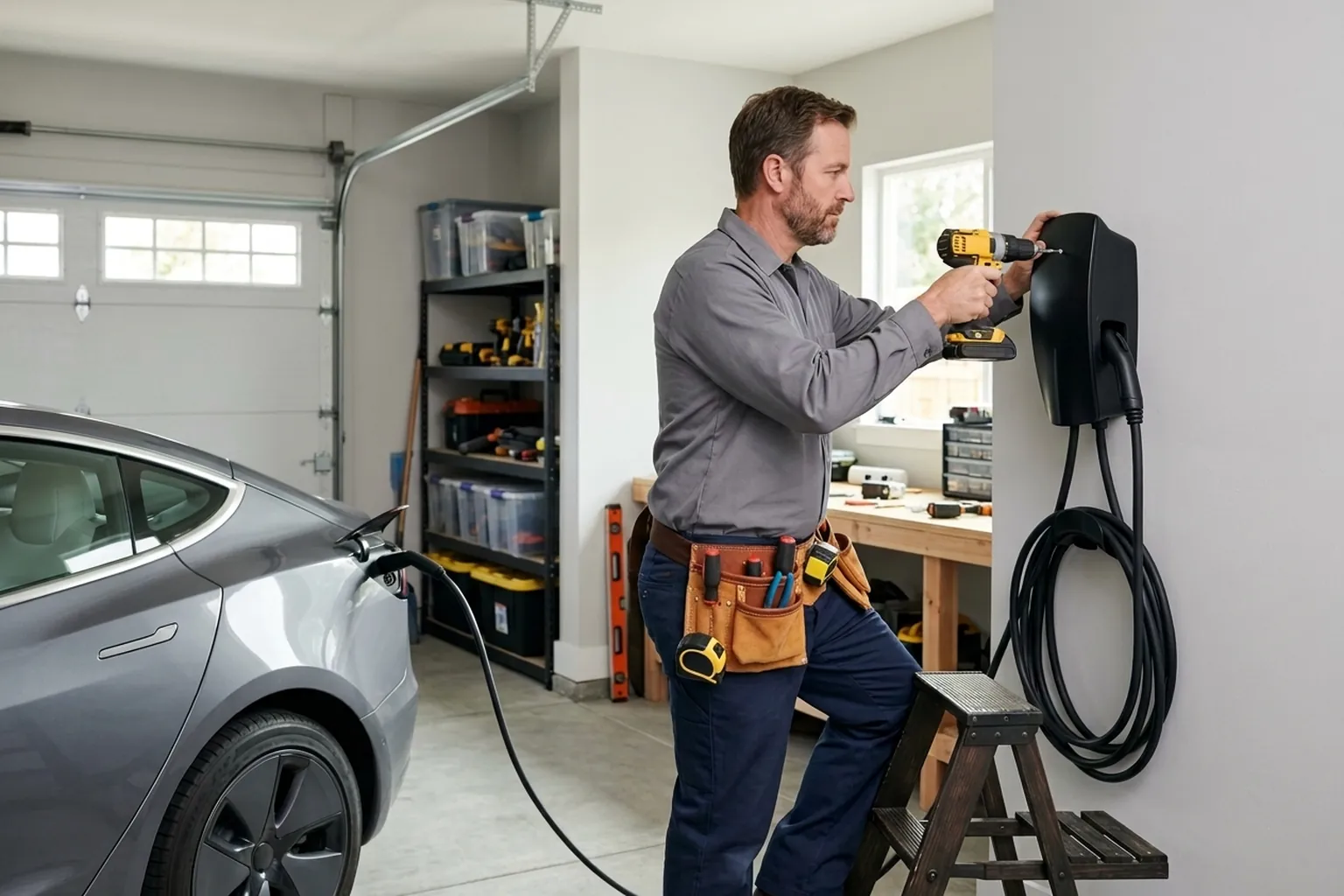
Pick your lane deliberately. Residential service and panel upgrades, EV charger installation, remodel work, solar-adjacent work, and commercial tenant improvements are different businesses with different cash-flow rhythms — residential service pays same-day, commercial work pays on 30-to-90-day terms that new businesses struggle to float.
Then compute the break-even: every monthly cost — insurance, bond premium, the $800 franchise tax amortized monthly, van, fuel, phone, software, your own pay — divided by average profit per job. That’s the number of jobs per month that keeps you alive, and it should live somewhere you see it daily.
Action: Write the one-pager before spending on anything in Step 5.
Step 4: Insurance and the $25,000 Bond
The contractor bond. California requires every licensed contractor to file a $25,000 bond with CSLB as a condition of an active license. You don’t deposit $25,000 — you pay an annual premium that’s a small percentage of the face amount, priced mostly on your credit.
General liability. Insureon, which brokers small-business coverage, reports electricians pay an average of $57 per month for general liability insurance — about half the $115 monthly average it reports for plumbing businesses. Your quote will vary with revenue, crew size, and the kind of work you do.
Workers’ compensation. Insureon’s electrician average is about $217 per month once you have employees. Confirm the current CSLB workers’ comp rules for your license situation when you apply — the requirements depend on classification and change over time.
Commercial auto. A personal policy won’t cover the work van. Non-negotiable.
Action: Get bond and general liability quotes from two or three brokers who work with California contractors, and have the certificates ready when CSLB asks for them — the license won’t activate without the bond on file.
Step 5: The Van, the Tools, and the Tech
You own the hand tools; see our essential tools for electricians checklist if you’re auditing gaps. Startup spending concentrates in three places:
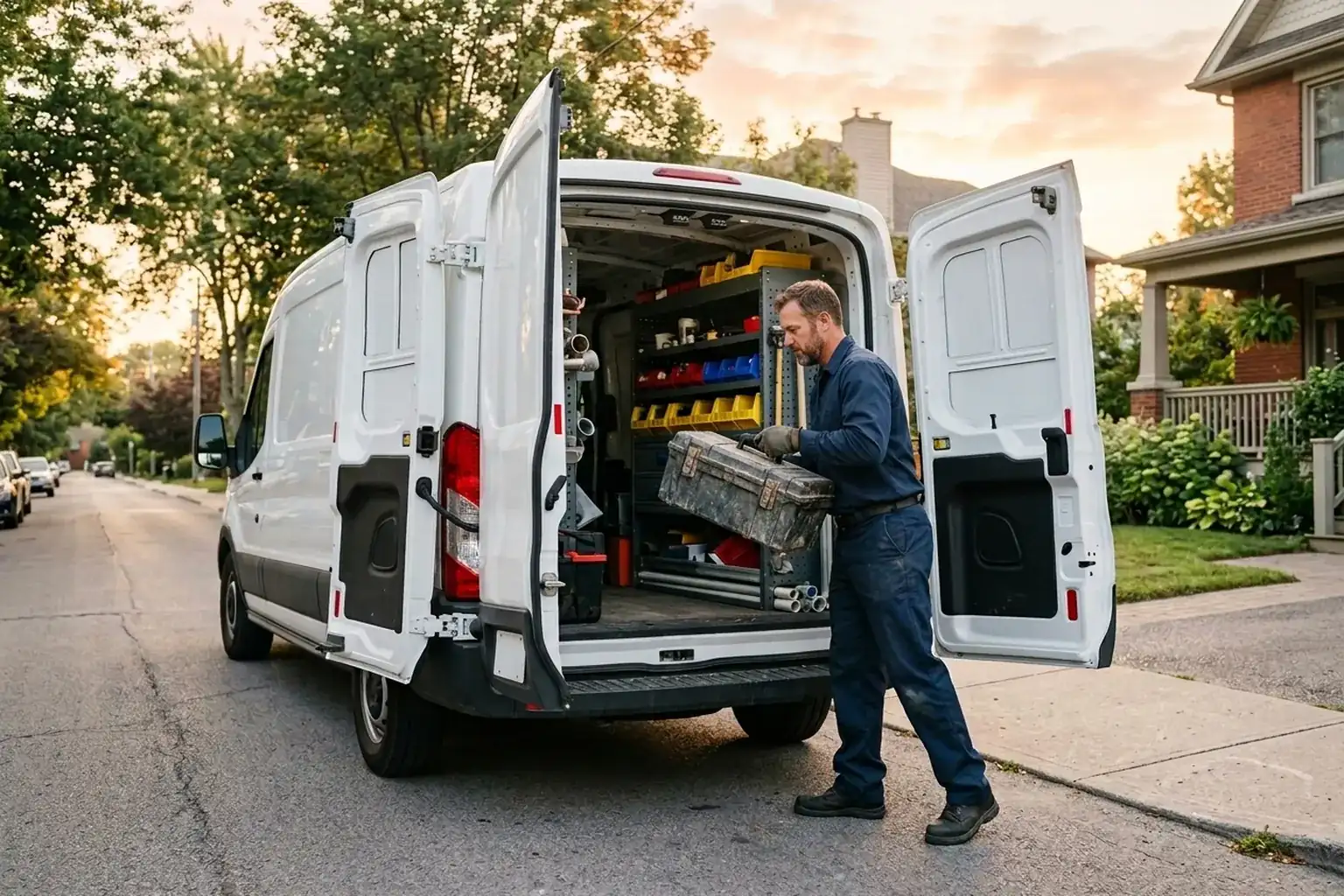
- The van. Clean and used beats new-with-a-payment. Shelve it, organize it, and letter it with your name, phone number, and C-10 number — CSLB’s advertising guidelines require the license number on all advertisements and on commercially registered vehicles.
- Stock. Breakers, wire, boxes, receptacles, and the common panel parts for your service area’s housing stock. Supply-house runs mid-job are unbilled time.
- The office in your pocket. Card payments on site, estimating and invoicing software, a scheduling system, and a business line separate from your personal cell.
Action: Build your launch list with real prices and drop the total into the Step 3 one-pager.
Step 6: Price for California Overhead
The BLS median electrician wage is $29.98 an hour ($62,350 a year) — an employee number, and a national one. Your shop rate has to carry everything your old employer used to absorb — insurance, bond, the $800 franchise floor, fuel at California prices, taxes, slow weeks, and profit — spread across the hours you can honestly bill, which for a solo operator is well under a full week once drive time, estimates, and paperwork take their share.
Flat-rate pricing (a set price per job) is the residential-service standard: customers get certainty, and you keep the reward for being fast and right the first time. Time-and-materials is simpler to launch with but penalizes your own efficiency. Either way, derive the rate from your cost sheet — never by undercutting the next van’s sticker.
Action: Total your real monthly costs, divide by honest billable hours, and treat the result as your floor for every quote.
Step 7: Make the Phone Ring
- Google Business Profile. The map results for “electrician near me” are Google Business Profiles, and a complete one — photos, services, hours, service area, license number — outranks a sparse one. Setting it up costs nothing.
- Reviews. Ask every satisfied customer before you leave. In local service work, a steady flow of recent reviews is the single strongest trust signal a new shop has.
- A one-page website. Services, service area, C-10 number, and a phone number that’s easy to tap. It anchors your Google ranking and gives referrals a way to check you’re real.
- The referral network. General contractors, property managers, real estate agents, solar installers, and the other trades — plumbers and HVAC techs constantly meet homeowners who need an electrician next.
Paid lead platforms can come later, once you know your numbers well enough to price what a lead is worth.
Action: Publish the completed Google Business Profile the week you activate the license, and make review-asking a habit from job one.
The Launch Checklist, in Order
- Log the education and hours — apprenticeship or approved-school trainee route, documented from day one
- Hold current DIR certification, then qualify for and pass the CSLB C-10 exams
- Form the entity (budget the $800 annual tax), get the EIN, open the business account
- Write the one-page plan and memorize your break-even number
- File the $25,000 bond, bind liability and commercial auto coverage
- Outfit and letter the van, stock it, set up payments and scheduling
- Build the rate from your cost sheet, not the competition’s
- Launch the Google Business Profile and collect reviews relentlessly
California makes you earn this twice — once in hours, once in paperwork. That’s the moat. The electricians who clear both layers operate in a market where 81,000 openings a year meet a licensing wall most people never finish climbing, and the ones who add even basic business discipline to a C-10 license are hard to compete with.
Sources
- U.S. Bureau of Labor Statistics — Occupational Outlook Handbook — “Electricians” — updated August 28, 2025 — https://www.bls.gov/ooh/construction-and-extraction/electricians.htm
- California Department of Industrial Relations — “General Electrician Certification” — https://www.dir.ca.gov/dlse/ecu/1a.html
- California Department of Industrial Relations — “Who Needs to Be Certified to Work in California as an Electrician” — https://www.dir.ca.gov/dlse/ecu/elecat.html
- California Contractors State License Board — “Step 3: Qualifying Experience for the Examination” — https://www.cslb.ca.gov/contractors/applicants/contractors_license/exam_application/experience_for_exam.aspx
- California Contractors State License Board — “Bond Requirements” — https://www.cslb.ca.gov/contractors/maintain_license/bond_information/bond_requirements.aspx
- California Franchise Tax Board — “Limited Liability Company — Annual Tax” — https://www.ftb.ca.gov/file/business/types/limited-liability-company/index.html
- Insureon — “Electrician Insurance Costs” — https://www.insureon.com/construction-contracting-business-insurance/electricians/cost
- California Contractors State License Board — “Advertising Guidelines for Contractors” — https://www.cslb.ca.gov/resources/guidesandpublications/advertisingguidelines.pdf
- U.S. Small Business Administration — “SBA Learning Platform” — https://www.sba.gov/sba-learning-platform