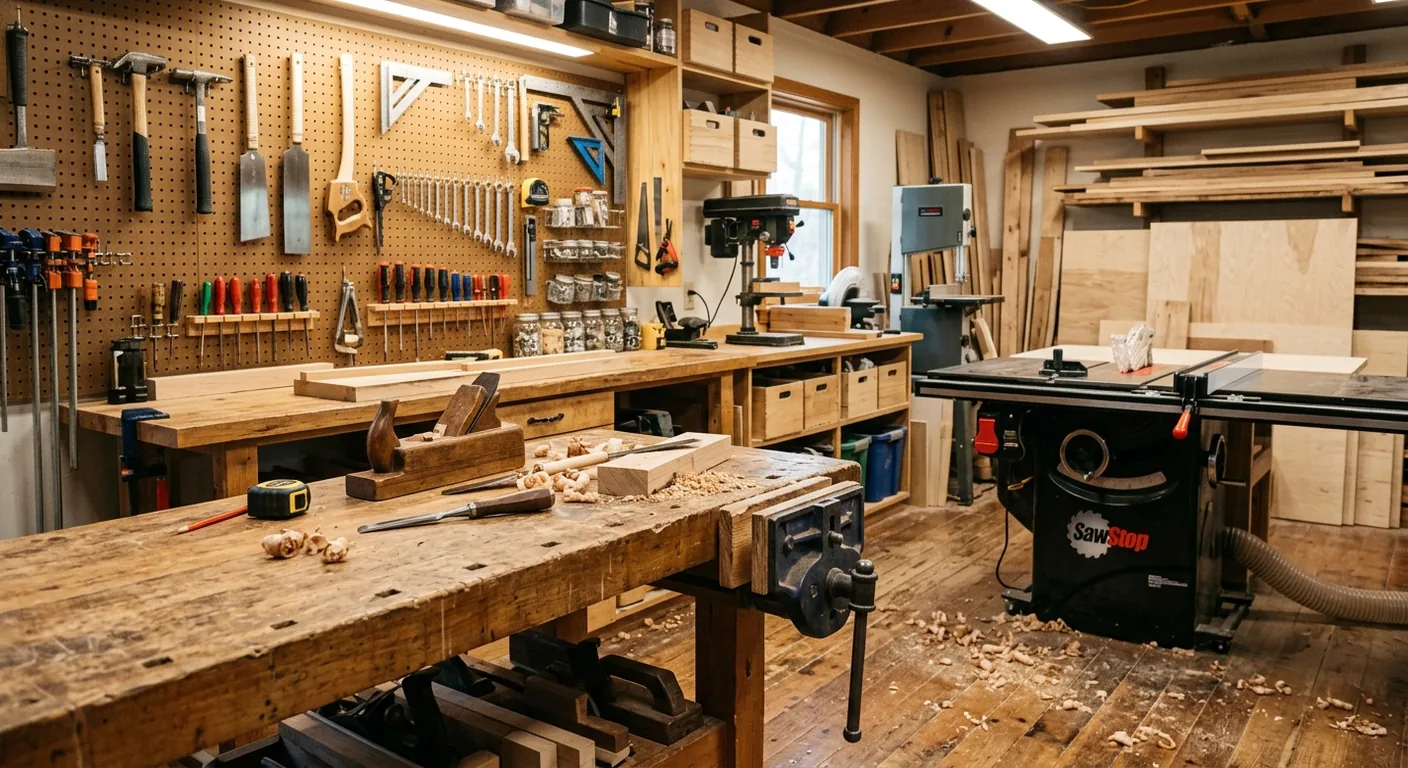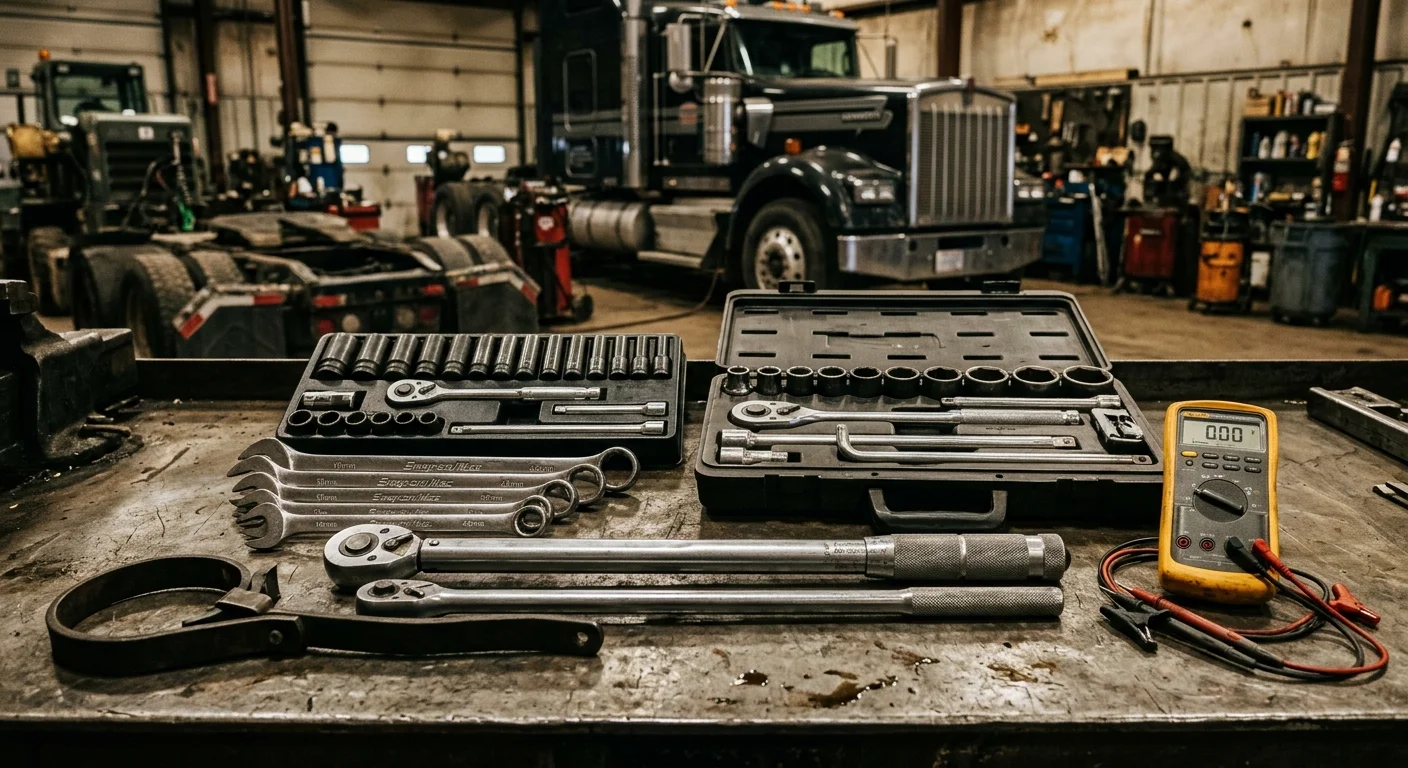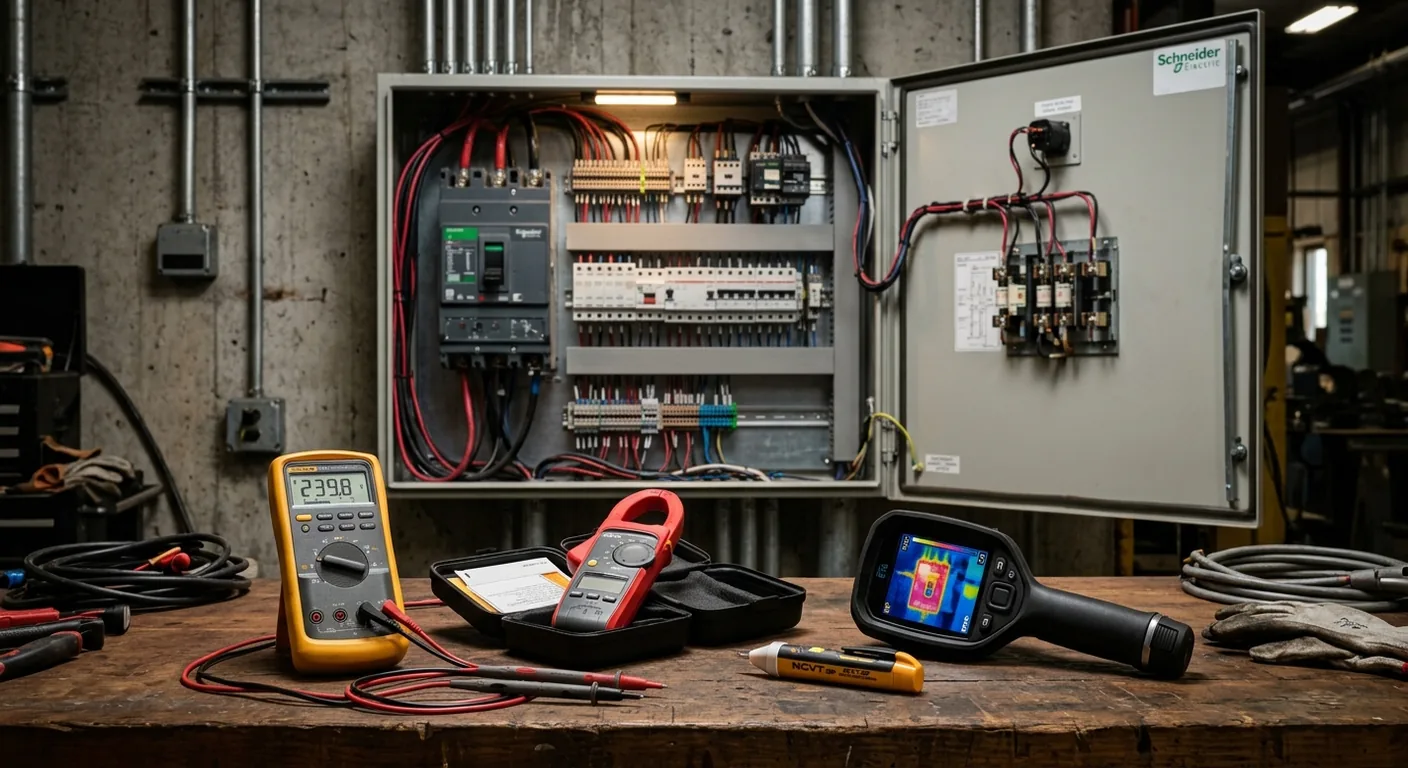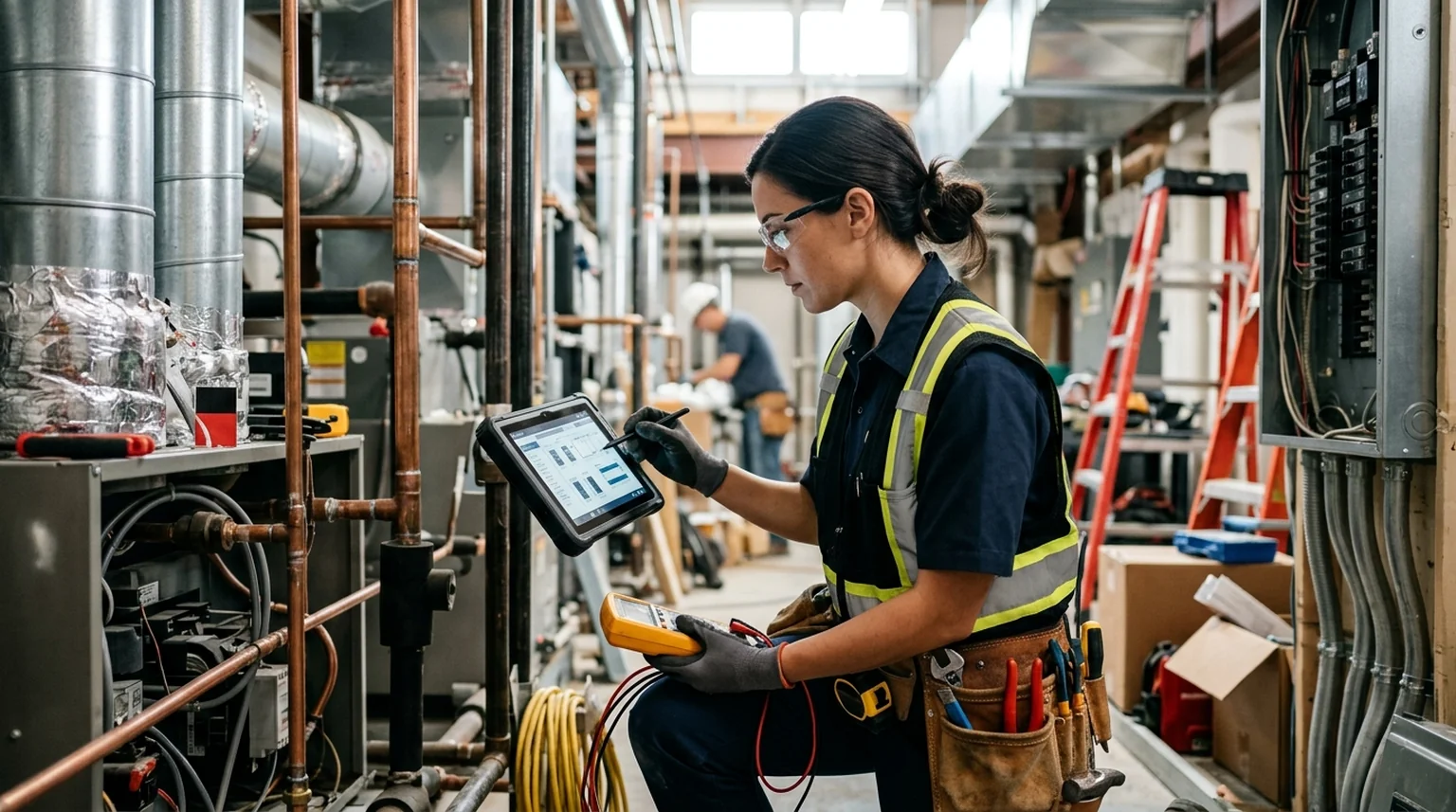
A decade ago, a trade professional’s toolkit was almost entirely physical — hand tools, power tools, a van, and a paper calendar. That’s no longer the full picture. Digital tools have become just as essential as a multimeter or pipe wrench for running a successful trade business or advancing in a trade career.
This isn’t speculation. According to ServiceTitan’s 2025 AI in the Skilled Trades Report, 46% of contractors are already using or experimenting with AI, and 72% believe AI is relevant to their business. Beyond AI specifically, the broader shift toward digital platforms for scheduling, estimating, documentation, and communication is well underway across every major trade.
Whether you’re an experienced contractor looking to streamline operations or a trade school student preparing to enter the workforce, knowing what’s out there — and what’s actually worth your time — gives you an edge. This guide covers the most practical digital tools across categories, with real data on adoption and impact.
Field Service and Business Management Platforms
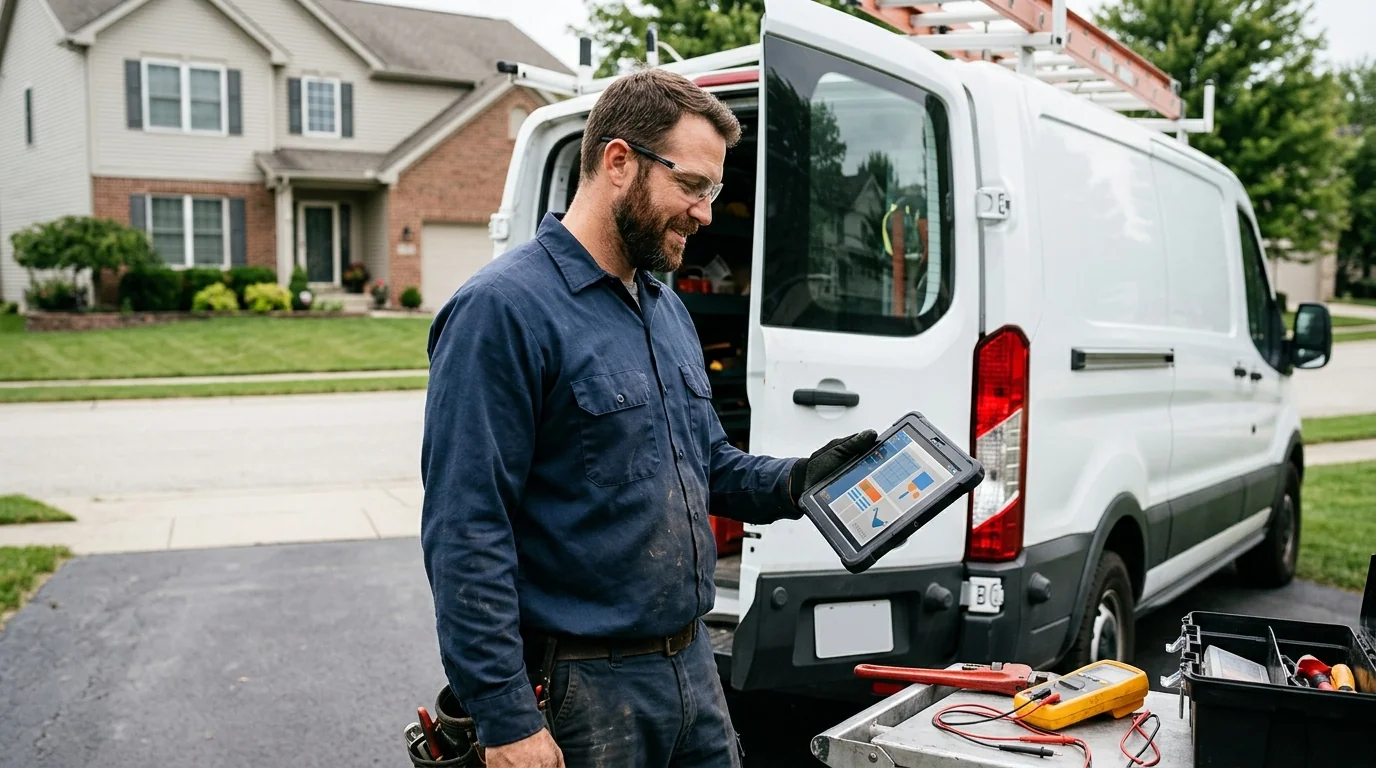
If there’s one category of software that’s transformed how trade businesses operate day-to-day, it’s field service management (FSM) platforms. These handle the core operations that used to live in filing cabinets and desk calendars: scheduling, dispatching, invoicing, customer communication, and payment processing.
ServiceTitan is the enterprise-level option, built for larger HVAC, plumbing, and electrical companies. It handles everything from marketing attribution to dispatching to revenue reporting. The platform is powerful but comes with a learning curve and a price point that makes more sense for companies with multiple crews and significant revenue. For larger operations, it’s become an industry standard.
Jobber targets small-to-mid-size contractors and has built a massive user base — more than 350,000 service professionals use the platform. Jobber’s Q4 2025 report showed that online payments surpassed 50% of all transactions processed through the platform, a milestone that reflects how quickly the industry is moving away from paper checks and cash. For a one-to-ten person operation, Jobber covers scheduling, quoting, invoicing, and client management without the overhead of an enterprise system.
Housecall Pro occupies similar territory to Jobber with a particularly strong mobile experience. It’s worth testing alongside Jobber to see which workflow feels more natural for your business.
For construction-focused trades, Procore leads the project management space. The numbers back up the investment: Procore’s ROI research found that 82% of optimized users saw project performance benefits, nearly half save five or more hours per week on coordination tasks, and 77% reported higher profit margins. That time savings alone can justify the subscription cost for busy contractors.
The common thread across all of these platforms is that they eliminate double data entry, reduce scheduling conflicts, and make it possible to run professional operations from a phone. For trade professionals who are also thinking about the broader technology shifts reshaping the industry, these platforms are the foundation everything else builds on.
Project Management and Documentation

Visual documentation has gone from “nice to have” to expected by customers and required by many general contractors. Taking photos of job site conditions before, during, and after work protects you legally, helps with warranty claims, and builds a portfolio that wins future jobs.
CompanyCam has built its entire business around this need. The app lets field crews take photos and videos that are automatically organized by job address, time-stamped, and shareable with the office, customers, or subcontractors. It’s become popular enough that CompanyCam was valued at $2 billion as of 2025 — a clear signal of how much the industry values visual documentation.
Buildertrend is widely used among residential contractors and remodelers. It combines project scheduling, financial tracking, and customer communication into one platform, which reduces the number of separate apps a small company needs to manage.
Fieldwire focuses on task management for field crews, particularly on commercial construction sites. Supervisors can assign tasks, share blueprints with markups, and track completion from a tablet. It bridges the gap between office planning and field execution.
The practical value here is straightforward: documented work reduces disputes, speeds up payment, and creates a record that builds your reputation over time.
Trade-Specific Technical Apps
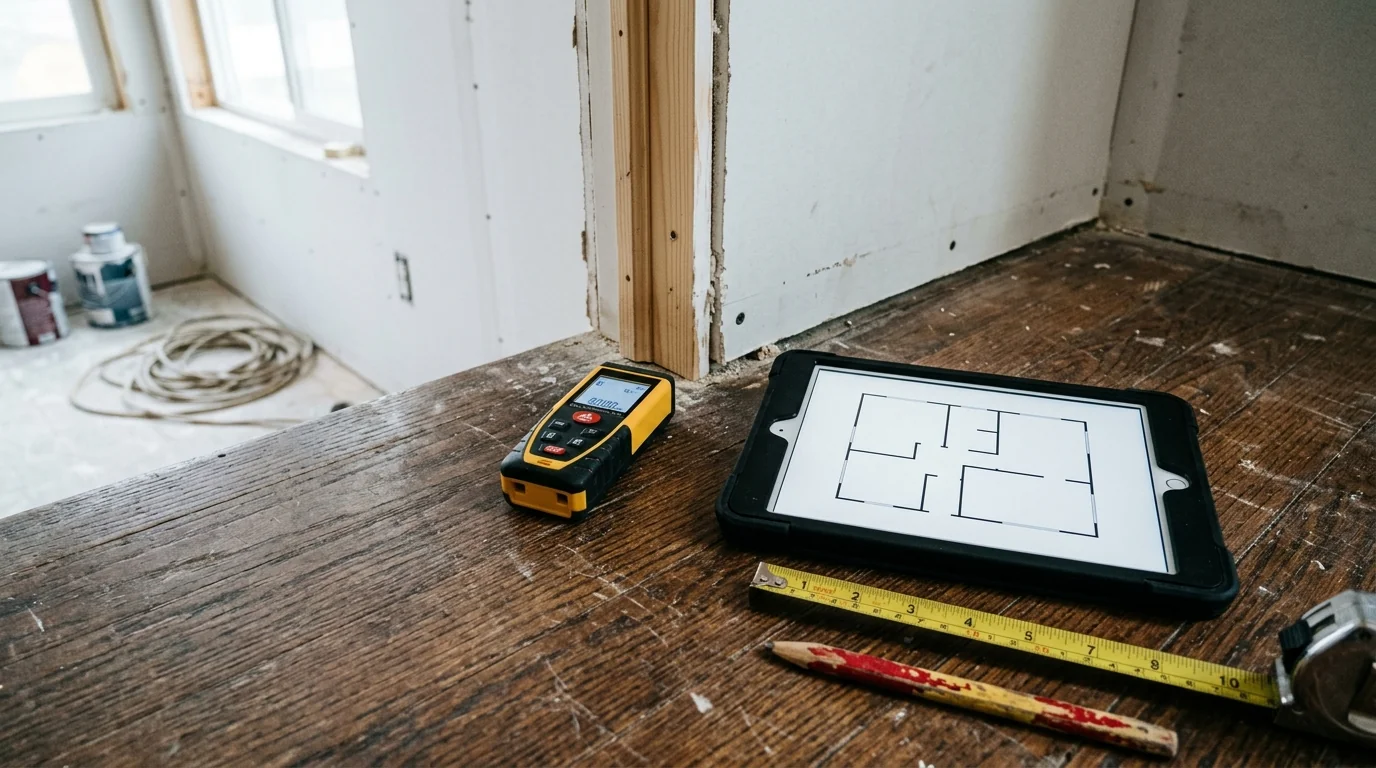
This is where digital tools get most directly useful for hands-on trade work. General business platforms help you run a company, but trade-specific apps help you do the technical work faster and more accurately.
HVAC
The HVAC industry has been particularly active in developing trade-specific digital tools. ACCA (Air Conditioning Contractors of America) launched “Ask ACCA,” an AI-powered app that pulls answers directly from Manual J, Manual D, and Manual S standards — the core reference documents for residential HVAC design. Instead of flipping through hundreds of pages, technicians can ask questions in plain language and get standard-referenced answers.
For load calculations in the field, HVAC Load Plus handles Mobile Manual J calculations without needing a laptop. Duct Calc Elite is a standard tool for duct sizing calculations, replacing the old cardboard duct calculators that HVAC technicians used to carry. If you’re building your HVAC toolkit, these apps pair well with the physical tools every HVAC technician needs.
Electrical
NEC (National Electrical Code) reference apps put the entire codebook on your phone with search functionality that’s far faster than flipping through the printed edition. Load calculation apps handle the math for panel sizing and circuit design. Wire sizing calculators account for voltage drop over distance — a calculation that’s easy to get wrong by hand when you’re rushing. These digital references complement the essential physical tools in an electrician’s kit.
Plumbing
Plumbing code lookup apps vary by jurisdiction but save significant time when you need to verify fixture counts, pipe sizing requirements, or venting rules. Pipe sizing calculators handle the hydraulic calculations for supply and drainage systems. For plumbers building out their complete toolkit, we have a separate guide to essential plumbing tools and equipment.
Cross-Trade Measurement Tools
One standout tool that works across all trades is Magicplan PrecisionLink. It connects to more than 20 Bluetooth laser meters from Bosch, Leica, Hilti, DeWalt, and other manufacturers. Measurements transfer instantly from the laser to your mobile device, where you can build floor plans and room layouts that export as DXF files for AutoCAD or SketchUp. This eliminates the handwritten-measurements-on-a-notepad workflow that introduces transcription errors and slows down the estimating process.
Estimating and Bidding Tools

The estimating process is where many trade businesses lose money — not because they can’t do the work, but because they underbid, forget line items, or spend so much time on proposals that they can’t bid enough jobs to keep the pipeline full.
Digital estimating tools address all three problems. They use templates and historical data to reduce the chance of missing items. They calculate material quantities from measurements rather than guesswork. And they produce professional-looking proposals that build customer confidence — important when you’re competing against five other bids.
The tools range from simple to sophisticated. On the simple end, well-structured spreadsheet templates with built-in formulas can dramatically improve accuracy over doing math on scrap paper. On the more sophisticated end, platforms like ServiceTitan and Jobber include built-in estimating modules that pull from your actual job history, material costs, and labor rates. The estimate becomes a quote, the quote becomes an invoice, and the invoice becomes a payment — all in one system.
For welders and fabrication professionals, digital tools are increasingly important for quoting custom work. Accurate material takeoffs and time estimates separate profitable shops from those that consistently underbid. The welding tools guide covers the physical side of a fabrication setup, but the business side increasingly depends on digital estimating.
The key insight is that estimating software doesn’t replace trade knowledge — it organizes it. You still need to know how long a task takes and what materials it requires. The software just makes sure that knowledge gets captured consistently rather than lost to hurried mental math.
AI Tools Entering the Trades
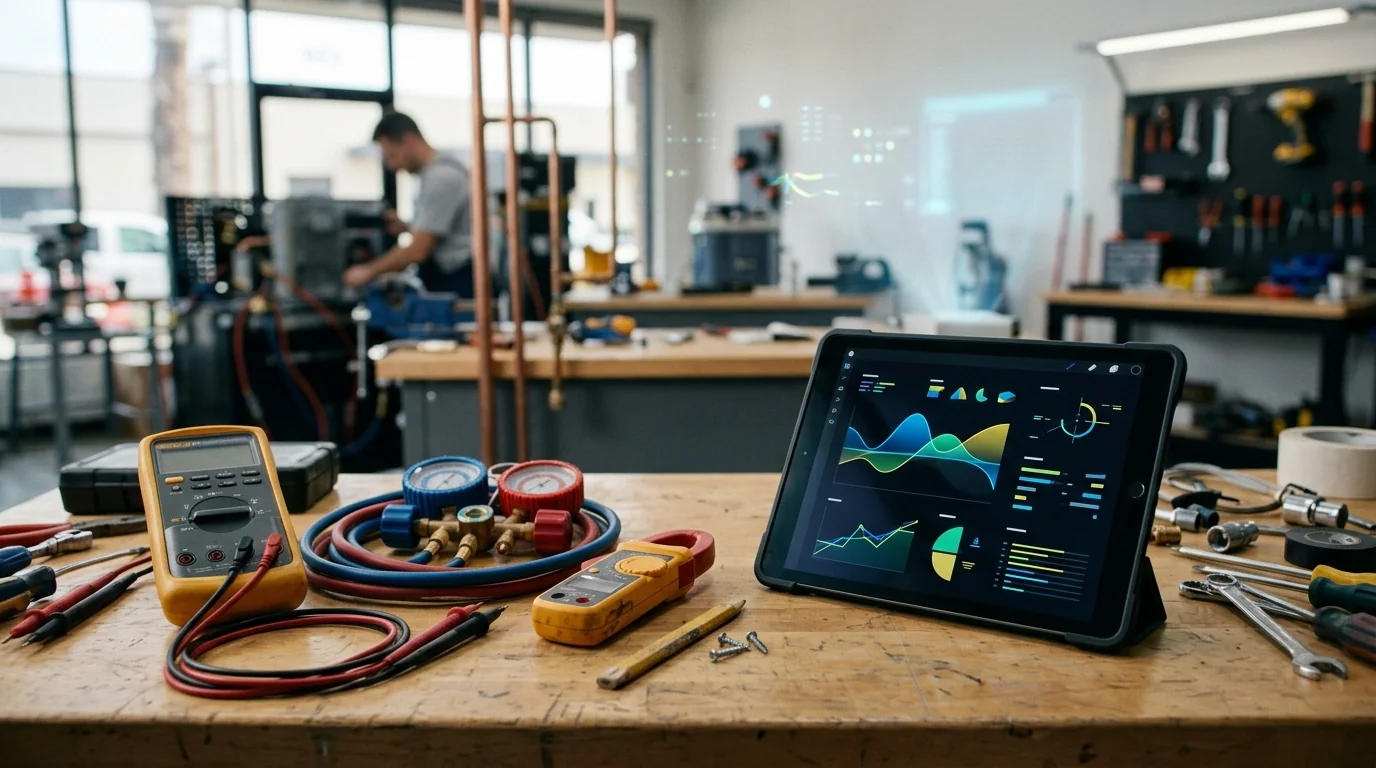
AI in the trades is no longer a theoretical conversation. A survey by Area Development found that 95% of respondents agree AI has a place in day-to-day job functions. That’s near-unanimous — and it reflects real experience, not just optimism.
What are contractors actually using AI for right now? According to ServiceTitan’s report, the top use cases are administration (59%) and marketing/sales (51%). Think auto-generated follow-up emails, call summarization, marketing copy, and administrative task automation. These aren’t flashy applications, but they free up hours that business owners would otherwise spend at a desk instead of on a job site.
The industry believes this is just the beginning. ACHR NEWS reported that 66% of trade professionals believe AI will transform their industry within one to three years. The same reporting identified the top barriers to adoption: training and staffing (44%), understanding available tools (38%), and lack of clear ROI (37%).
Here’s what’s encouraging: employee resistance — often assumed to be the biggest barrier — sits at just 18%. Trade workers are more ready for these tools than many business owners expect.
On the technical side, AI is starting to appear in diagnostic tools, energy modeling software, and design assistance. The digital transformation in HVAC and sheet metal contracting is a good example — digital fabrication workflows now connect design software to CNC machines, with AI-assisted optimization reducing material waste.
It’s worth being honest about limitations, though. AI tools in 2026 are strongest at text-based tasks (writing, summarizing, analyzing data) and weakest at anything requiring physical judgment. No app is replacing the experienced technician who can diagnose a problem by the sound a compressor makes or the smell of an overheating wire. AI augments trade expertise — it doesn’t replace it.
Getting Started Without Overwhelm
The biggest mistake trade professionals make with digital tools is trying to adopt everything at once. That leads to half-configured accounts, abandoned subscriptions, and the conclusion that “this stuff doesn’t work for my business.”
A better approach:
Identify your single biggest operational pain point. Is it scheduling conflicts? Slow invoicing? Inaccurate estimates? Disorganized job photos? Pick the one problem that costs you the most time or money, and find a tool that addresses it specifically.
Use free trials before committing. Jobber, Housecall Pro, and most other platforms offer 14-day trials. ServiceTitan typically provides demos. Test the tool on real jobs during the trial period — that’s the only way to know whether it fits your workflow.
Start with the basics before adding advanced features. Get scheduling and invoicing working reliably before you turn on automated marketing campaigns or AI call analysis. Each layer of functionality is more valuable when the foundation underneath it is solid.
Budget for a learning curve. Any new tool costs time before it saves time. Expect two to four weeks of slower operations while you and your team adjust. After that, the efficiency gains typically compound.
Talk to other contractors in your trade. Online forums, trade association meetings, and even conversations with competitors can reveal which tools are actually being used — and which ones have great marketing but poor follow-through.
The trades are in the middle of a real digital shift, and the contractors and technicians who build digital fluency now will have a meaningful advantage in the years ahead. That doesn’t mean you need to become a software expert. It means choosing the right tools, learning them well, and letting them handle the work that used to eat your evenings and weekends.
Sources
- ServiceTitan 2025 AI in the Skilled Trades Report
- Jobber Q4 2025 Home Service Report
- Procore Dodge ROI Report
- CompanyCam: Top Project Management Apps for Contractors
- ACHR NEWS: ACCA Launches New AI App
- SimPRO: Best HVAC Apps
- R&R Magazine: Magicplan Launches PrecisionLink
- Area Development: The Skilled Trades Are Ready for a Digital Future
- ACHR NEWS: ServiceTitan’s 2025 AI in the Skilled Trades Report
- ACHR NEWS: How Digital Tools Are Transforming HVAC/Sheet Metal Contracting